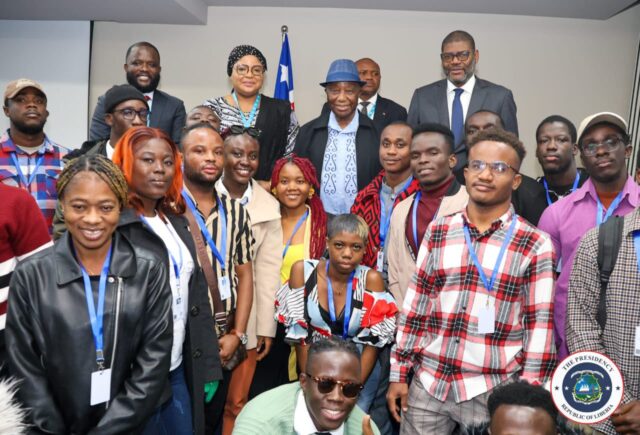
TANGIER, Morocco – President Joseph Nyuma Boakai, Sr. has assured Liberian students studying in Morocco that his government will review stipend cuts, address documentation problems, and better track the country’s human capital abroad, during an informal town-hall meeting on the margins of the 17th MEDays Forum in Tangier.
The students, some of whom traveled from as far as Casablanca, raised concerns about expired or missing travel documents, reduced scholarship benefits under the previous government’s “harmonization” program, and limited engagement from Liberian authorities.
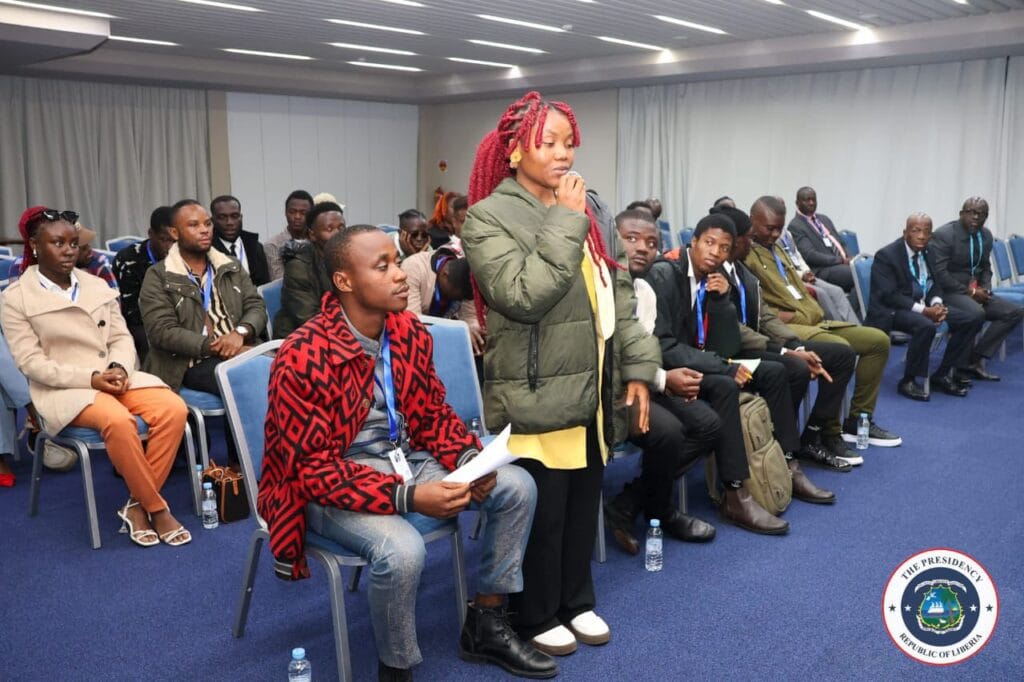
One student, Joseph Saah Patrick, said many Liberians had been in Morocco for years without valid documents.
“We’ve been here for long. We don’t have traveling documents. Some of us, our documents have expired,” he told the President. “We are so happy you are here. We believe you can make it possible for us by the grace of God.”
Patrick, who recalled meeting Boakai years ago at a county league football match when the President was Vice President, said he had come “mainly to remind you” of the challenges Liberians face in Morocco and to offer his service again in security.
“Wherever Liberians Are, They Are Citizens of Their Country”
Responding, President Boakai thanked the students for turning out and stressed that his government considers Liberians abroad an integral part of the nation.
“Wherever we go, we do want to encourage Liberians, which is good, because we are all part of the world,” he said. “Wherever Liberians are, they are citizens of their country.”
He urged them to maintain regular contact with the Liberian Embassy, not only when they run into trouble.
“One of the things I always tell people is that wherever you are, make your embassy know that you’re there, not just when you get into trouble,” he cautioned.
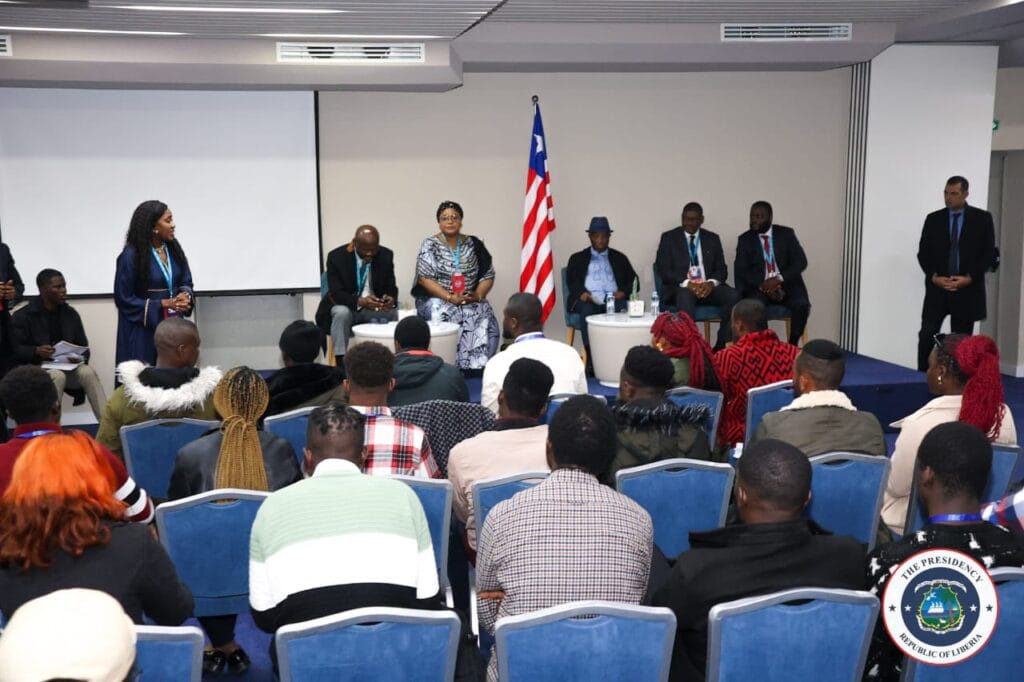
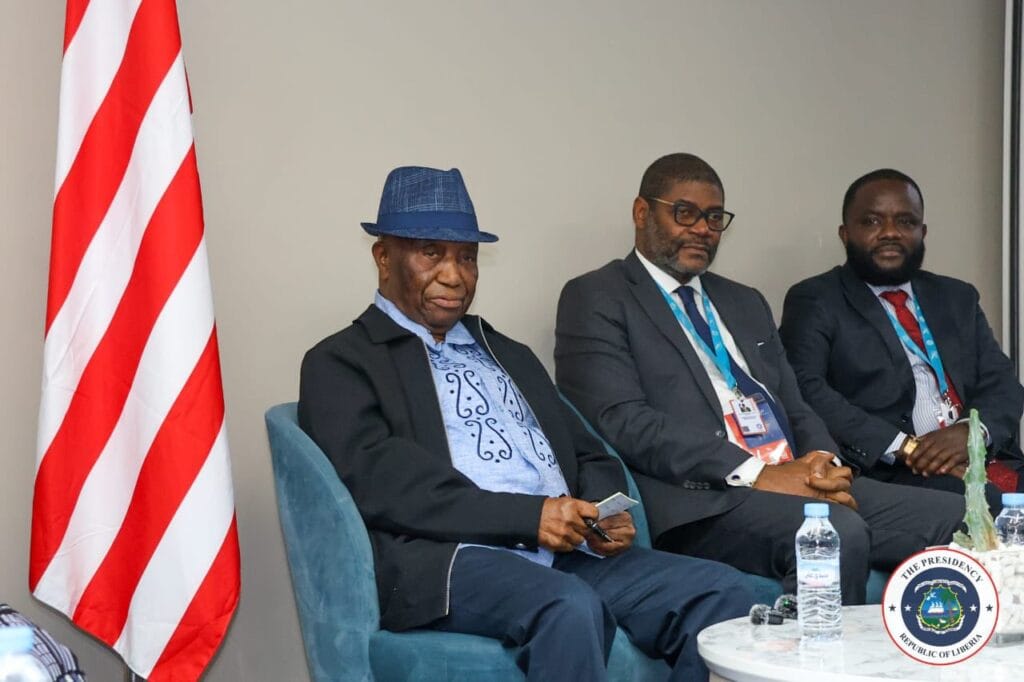
Boakai introduced members of his delegation, including Liberia’s new ambassador to Morocco Joseph F. Johnson, Minister of State without Portfolio Mamaka Bility, Senator Gbehzohngar Findley, National Port Authority Managing Director Sekou Dukuly, and Press Secretary Kula Fofana, encouraging students to see them as points of contact.
Reviewing “Harmonization” and Scholarship Reductions
The President acknowledged that many Liberian students abroad suffered when the previous administration reduced allowances under the much-criticized “harmonization” policy.
“I know whatever you are receiving, that was reduced. That period had a name—harmonization. They were harmonizing everybody, whatever you got,” Boakai said. “It will be a nice thing that we look into those cases.”
He said his administration inherited serious financial obligations, including arrears to embassies and scholarship programs, but insisted that honoring international commitments remains a priority.
“We are committed to making sure that people who are out of the country serving government, and maybe going to school… that we make sure we honor those obligations,” he said. “Even when there are shortfalls, they should not be mistreated because of that.”
Boakai instructed Ambassador Johnson to engage closely with scholarship students in particular:
“I would ask the ambassador… to find time where you can get more closely with students who are on scholarship,” he said, stressing the need to distinguish between self-sponsored students and those formally supported by the Liberian state.
He criticized the practice of slashing student stipends without considering the real-world impact:
“One of the things in life that you don’t do—you may not increase people’s salary, but to reduce people is creating embarrassment for them,” he said. “If I’m in a room that I’m paying so much, you reduce, then that means I’ve got to go look around for somewhere else.”
Call for a Database of Liberian Students Abroad
Boakai said the government needs accurate data on how many Liberians are studying in Morocco and in which fields, to better plan for the country’s future and to prepare for their eventual return—or ongoing contribution abroad.
“I’m interested in knowing, actually, Mr. Ambassador, the number of students that are here and the critical areas—whether they’re engineers, whether they’re medical students, or just students in general,” he said. “While we’re negotiating with the people, we should have an idea who is here, who has been prepared.”
He cited past examples of Liberian medical students trained in Morocco who later became a neurosurgeon and a highly sought specialist in the United States, underlining the value of investing in high-level training.
“These people, young people, are saving their country,” he said. “The way the world is going, and we’re looking for best-trained minds, it helps also in terms of our planning to know who is where.”
“Always Be on the Safe Side” – On Documentation
Addressing concerns about expired passports and residency papers, the President urged students to work with the Embassy to regularize their status.
“We also want to make sure that when you are somewhere, you should have your documents, because you don’t want to be every day people hunting you and people looking for you,” Boakai said. “It’s just good to be on the safe side.”
He told those with documentation problems to inform the ambassador so that the government can “try to see how they can rectify that.”
“Even if you are in school, every now and then the police are looking for you and you can’t be at peace,” he warned. “Always be on the safe side.”
“The Future Belongs to You”
The President praised the students for choosing education over less constructive paths often available in the diaspora.
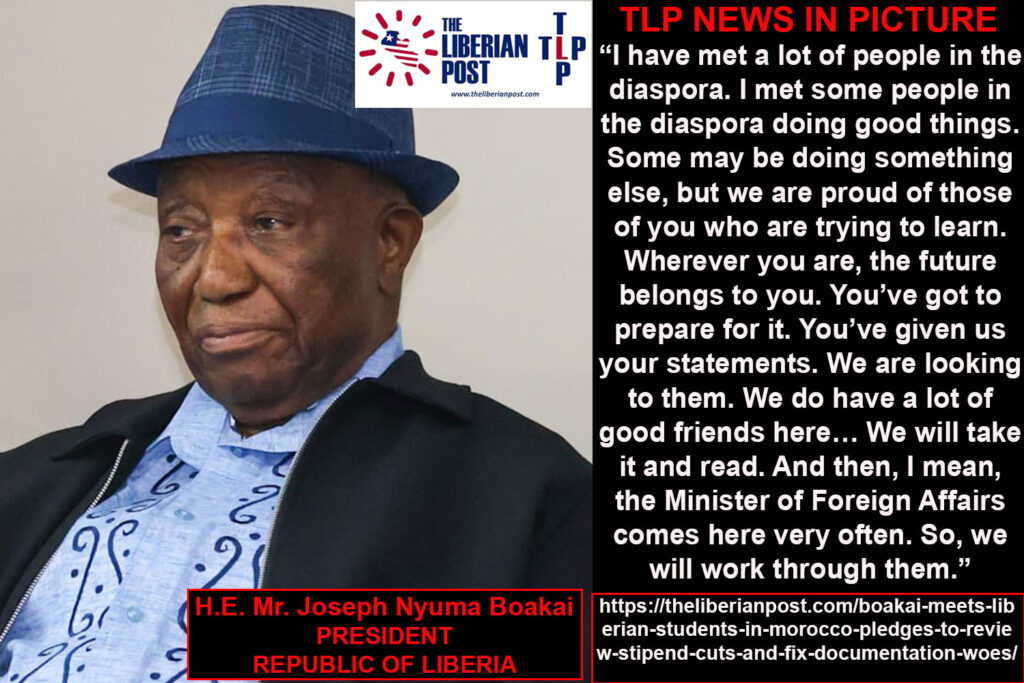
“I have met a lot of people in the diaspora. I met some people in the diaspora doing good things. Some may be doing something else, but we are proud of those of you who are trying to learn,” he said. “Wherever you are, the future belongs to you. You’ve got to prepare for it.”
He promised to review the written petitions submitted by the students and to work through the Ministry of Foreign Affairs and Embassy in Rabat to address the most pressing issues.
“You’ve given us your statements. We are looking to them,” he said. “We do have a lot of good friends here… We will take it and read. And then, I mean, the Minister of Foreign Affairs comes here very often. So, we will work through them.”
As the short visit ended—Boakai was due to travel to Casablanca and then return to Liberia—the President said he was praying that none of the students would “get into a problem here” and encouraged them to keep their eyes on a future in which they can “render pure service in your home.”
For the young Liberians in Morocco, the encounter offered both a rare chance to speak directly to their Head of State and a clear message in return: the government expects them to succeed, and they, in turn, can expect their country not to forget them.