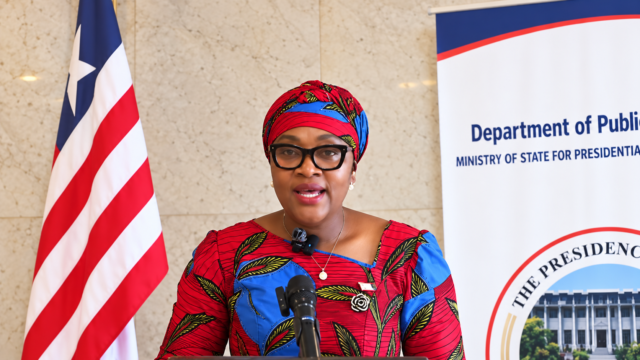
–Presidential Press Secretary Kula Fofana Says Justice Transition Is Deliberate, Reveals South Africa-Rwanda Lessons for Liberia’s Memorialization Effort and Details Upcoming Diaspora Conference
MONROVIA, Liberia — The administration of President Joseph Nyuma Boakai is defending its latest shake-up at the Ministry of Justice as a deliberate leadership transition while simultaneously advancing a broader agenda focused on national reconciliation, carbon-market development, the fight against transnational crime and deeper engagement with Liberians in the diaspora.
Presidential Press Secretary Kula Bona Nyei Fofana made the disclosure Friday, September 4, during a regular press briefing at the Executive Mansion, where she outlined several initiatives being pursued by the President as his administration approaches another critical phase of its governance agenda.
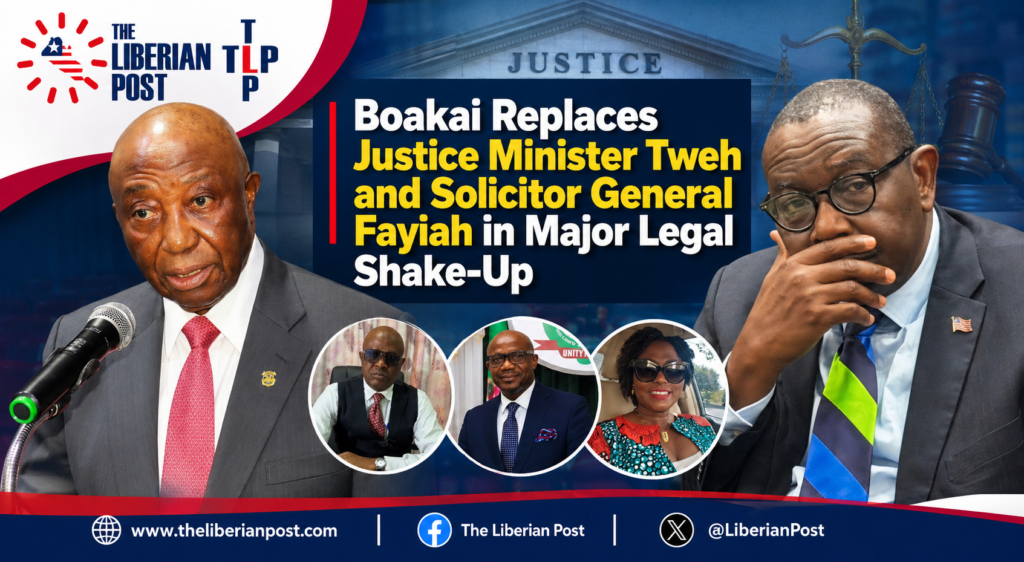
The Justice Ministry changes emerged as one of the most significant issues discussed during the briefing, following President Boakai’s nomination of Betty M. Lamin-Blamo as Minister of Justice and Abraham Boimah Sillah Sr. as Solicitor General.
Fofana pushed back against suggestions that the changes were sudden or politically motivated, saying the President’s decision was neither an “apt” nor a “knee-jerk” reaction.
She said the President had thanked outgoing Justice Minister Natu Oswald Tweh and Solicitor General Augustine C. Fayiah for their service and had instructed that a transition process be undertaken before the new team assumes responsibility.
“The President had a meeting with the outgoing team and the incoming team,” Fofana said, describing the engagement as cordial and emphasizing that presidential appointments, reshuffling and reassignment are within the President’s constitutional authority.
Justice Transition Comes Amid Major Rule-of-Law Challenges
Fofana said the outgoing Justice Minister and Solicitor General would remain in their positions for approximately one week to facilitate the transition.
She explained that because the Legislature is currently in recess, the President has the authority to make nominations that allow an incoming official to act pending Senate confirmation.
According to Fofana, Lamin-Blamo is expected to begin acting as Justice Minister after the transition period, while Tweh remains in office during that period.
She said the transition is particularly important because the Justice Ministry is dealing with numerous ongoing court cases and broader rule-of-law challenges.
“The new team needs a transition period,” Fofana said, stressing that the change should not be interpreted as an abrupt removal but as part of the administration’s effort to ensure continuity within the ministry.
The leadership change comes at a particularly sensitive time for Liberia, with the government pursuing high-profile criminal and corruption cases while facing intense public debate over the independence and effectiveness of the justice system.
Fofana, however, maintained that the changes should be viewed through the lens of presidential administrative authority rather than as an immediate reaction to any single case.
Boakai Pushes Reconciliation Beyond the Politics of the Past
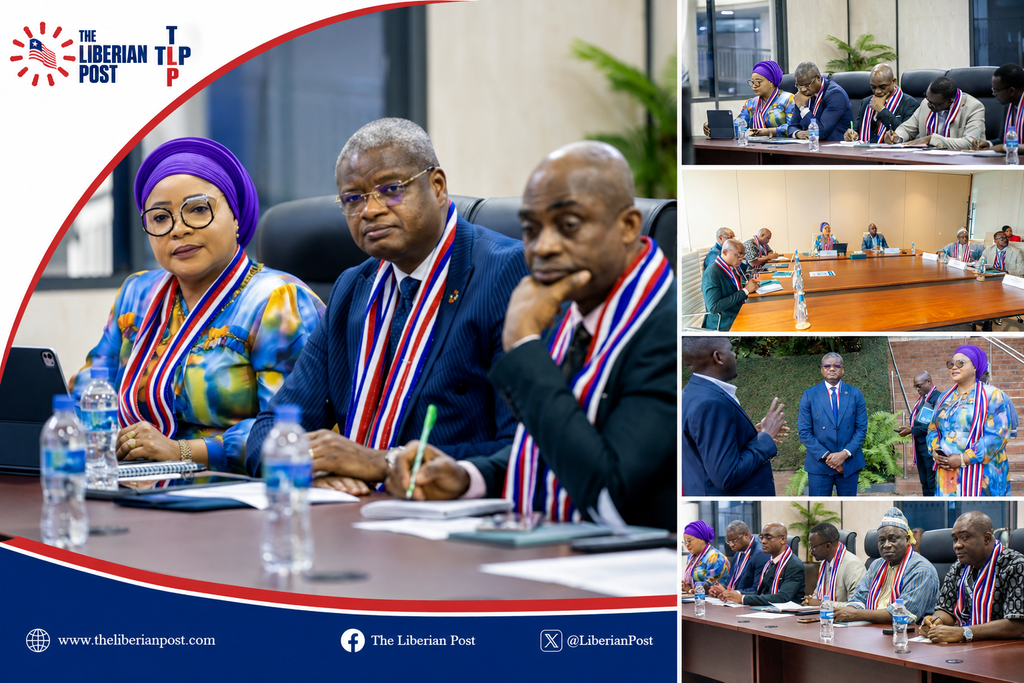
Beyond the Justice Ministry, Fofana disclosed that President Boakai is intensifying efforts to develop a more structured national reconciliation and memorialization process.
The President has established a team led by Minister of State Haja Mamaka Bility to examine how Liberia can strengthen its reconciliation efforts and preserve the history of the country’s prolonged civil conflict.
Members of the team, including UNDP Resident Representative Ali Mamadou Dia and other officials, recently spent approximately two weeks studying reconciliation and memorialization experiences in Rwanda and South Africa.
Fofana said the delegation examined Rwanda’s experience following the 1994 genocide, including its documentation and memorial sites, as well as South Africa’s efforts to preserve the history of apartheid and the struggle for democracy.
She said both countries expressed interest in supporting Liberia as it develops its own approach, with South Africa expected to send a joint team to Liberia.
For Liberia, the initiative could represent a significant attempt to move reconciliation beyond political speeches and toward permanent institutions and physical spaces where the country’s history can be documented and preserved.
Fofana pointed to Liberia’s 14 years of civil conflict, during which families were destroyed, communities displaced and an entire generation lost valuable time.
She said the government is considering how Liberia can properly document that history so future generations understand what happened and why the country must not return to conflict.
Liberia’s Truth and Reconciliation Commission already collected extensive testimonies and recommended, among other measures, memorialization and the creation of a war crimes court.
Fofana said the administration believes those recommendations should not remain confined to historical records.
She spoke of the need for lasting museums and memorial spaces where Liberians and future generations can learn about the country’s painful past.
Carbon Policy Opens Another Economic Front
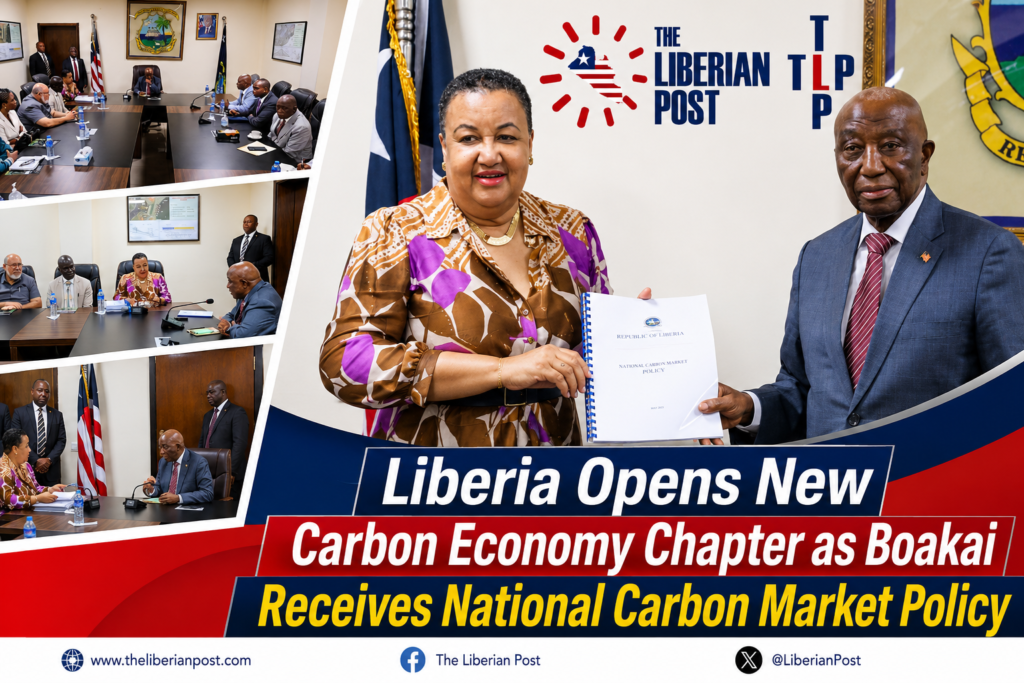
President Boakai has also received Liberia’s National Carbon Market Policy, marking what the administration describes as an important step toward establishing a formal framework for the country’s participation in carbon markets and climate finance.
Fofana said the policy is the first time Liberia has placed its carbon-market guidance into a formal national document following consultations involving communities, the Environmental Protection Agency and relevant government institutions.
The policy is expected to provide guidance on the development of Liberia’s carbon market and how the country can ensure that benefits from carbon-related activities serve national interests.
Fofana said the President expects the process to move next toward the development of a strategic plan for implementation.
The development of a carbon-market framework could potentially give Liberia another avenue for mobilizing international climate finance while creating mechanisms for communities and other stakeholders to participate in the benefits generated from the country’s forests and other natural resources.
But the issue is also likely to remain closely watched by civil society and communities concerned about land rights, transparency and the distribution of carbon-market revenues.
Boakai Takes Drug Fight to International Stage
Fofana also said President Boakai is preparing for his upcoming participation in the United Nations General Assembly, where Liberia is expected to present its priorities on the international stage.
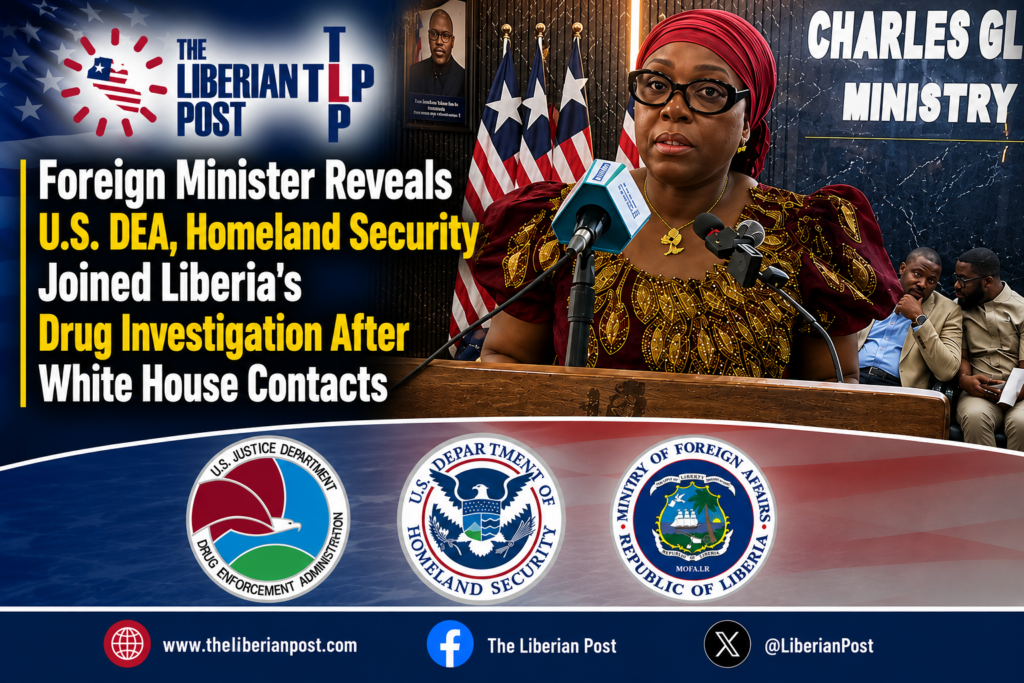
She said the President will use the opportunity to highlight his administration’s achievements and Liberia’s efforts to confront drugs and transnational crime.
The government has increasingly made the fight against illicit drugs a central component of its national security agenda amid a major investigation into alleged international narcotics trafficking.
Fofana said the administration’s commitment to tackling the drug problem remains “unrelenting.”
She also linked the fight against drugs to the President’s broader objective of “rescuing the country across all fronts,” including improvements in public services, education and healthcare.
Liberia’s growing cooperation with international partners on narcotics enforcement is expected to feature prominently in the government’s international engagement as it seeks stronger support against transnational criminal networks.
Government Turns to Diaspora for Investment, Not Just Remittances
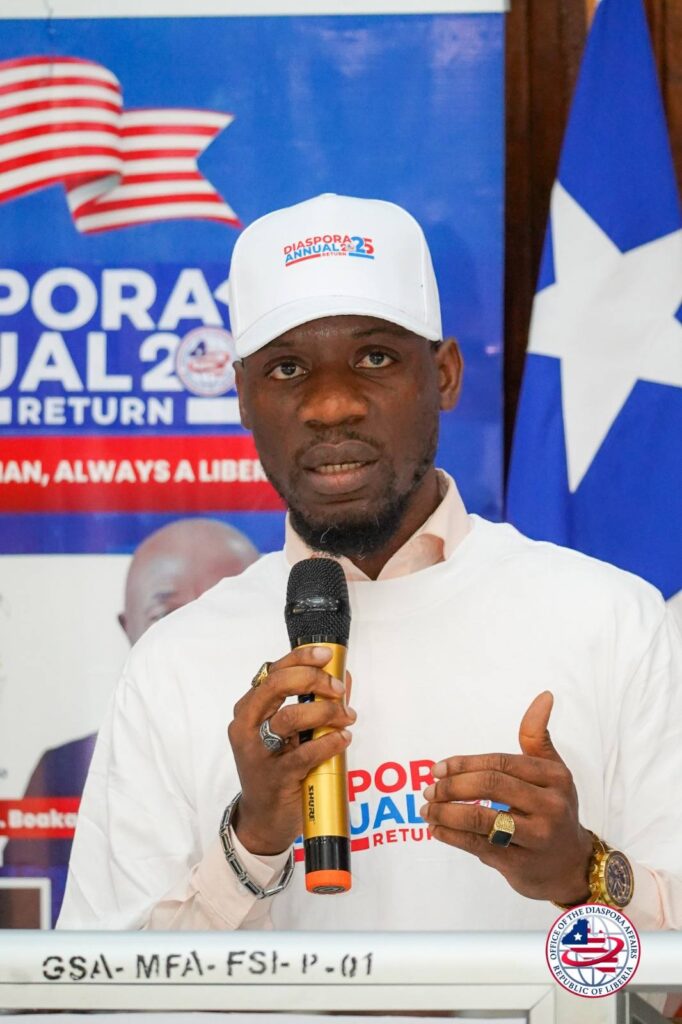
Another major component of the administration’s agenda is its effort to transform the Liberian diaspora from primarily a source of remittances into a more active source of investment and national development.
Fofana said President Boakai has approved the establishment of a Diaspora Investment Steering Committee tasked with developing a comprehensive diaspora investment plan.
The committee includes representatives from the Ministry of State, financial experts, the National Investment Commission, Ministries of Finance and Commerce, the Central Bank of Liberia, the Diaspora Affairs Office and UNDP, along with a representative of the Liberia Business Association in the diaspora.
The administration wants Liberians abroad to contribute not only through remittances but also through investments in education, healthcare, businesses and other productive sectors.
That strategy will receive another major platform later this month when the government convenes its second Diaspora Conference.
The conference is scheduled for September 25–26, 2026, at the Hilton Alexandria Mark Center in Alexandria, Virginia, under the theme:
“From Dialogue to Delivery, Mobilizing the Global Liberian Diaspora for National Transformation.”
Fofana said Friday’s opening activities will focus on welcoming and networking, while the main conference on Saturday will include an address by President Boakai and discussions designed to connect Liberians abroad with development opportunities at home.
The agenda is expected to include discussions on women of impact, investment roundtables, community connections and opportunities for U.S. businesses to explore Liberia’s investment potential.
A Presidency Managing Several Fronts
The briefing offered a broad picture of an administration attempting to advance several major priorities simultaneously.
On the domestic front, President Boakai is reorganizing the leadership of the Justice Ministry while pursuing a difficult national fight against drugs and transnational crime.
At the same time, his administration is attempting to build a more structured reconciliation process, formalize Liberia’s participation in carbon markets and create new channels for diaspora investment.
Fofana also announced that President Boakai wants greater engagement with journalists, including exclusive interactions with the press as part of his broader public communication strategy.
A presidential dinner is scheduled for September 12, while the President’s international schedule will include his participation in the United Nations General Assembly and engagements with Liberians in the United States.
Taken together, the initiatives reveal an administration attempting to connect governance, justice, reconciliation, international diplomacy, climate finance and investment into a broader national-development strategy.
The immediate political and institutional test, however, will be whether these initiatives translate into measurable results—and whether the administration can maintain public confidence while navigating increasingly contentious questions over justice, accountability, security and governance.
For President Boakai, the coming weeks will therefore be about more than international appearances. They will test his administration’s ability to demonstrate that its ambitious agenda can produce concrete institutional changes and tangible benefits for Liberians.
For breaking news, in-depth analysis, and exclusive reports from Liberia and around the world, follow The Liberian Post on Facebook (https://web.facebook.com/profile.php?id=61576017166570) and X, formerly Twitter (https://x.com/LiberianPost).