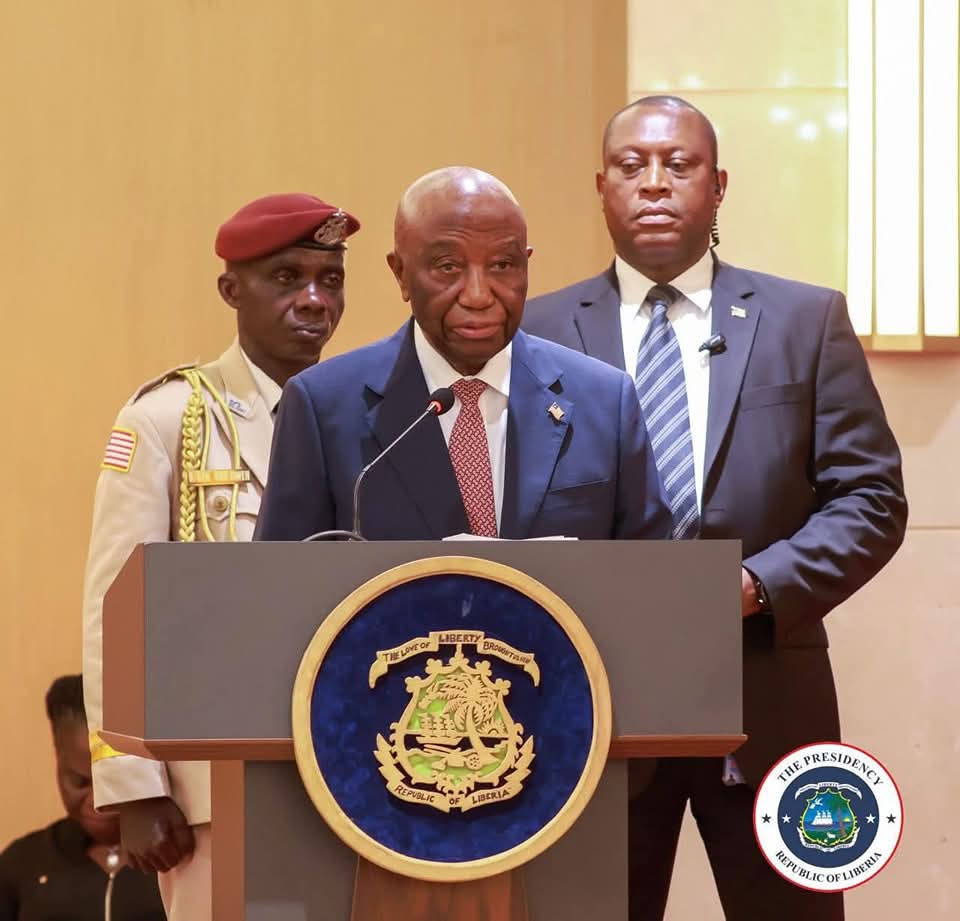
MONROVIA — President Joseph Nyuma Boakai has issued Executive Order No. 164, renewing the mandate of the Office of the War and Economic Crimes Court for Liberia for an additional one year, reaffirming his administration’s commitment to justice, accountability, and the fight against impunity.
The Executive Order, signed in May 2026, extends the life of the Office originally established to lay the groundwork for the creation of a War and Economic Crimes Court and a National Anti-Corruption Court, two key institutions aimed at addressing Liberia’s historical and systemic governance challenges.
Renewed Commitment to Transitional Justice
According to the order, the Office has already made significant progress, including conducting research, consulting with stakeholders, and drafting two critical legislative instruments: one for the establishment of the War and Economic Crimes Court and another for the Anti-Corruption Court.
The President emphasized that the continuation of the Office is essential to sustaining momentum toward full operationalization of the courts.
The initiative is part of Liberia’s broader commitment to transitional justice, particularly in addressing crimes linked to the country’s civil conflict and longstanding governance deficiencies.
Defined Responsibilities and Strategic Focus
Under the renewed mandate, the Office is tasked with several key responsibilities, including:
- Continued engagement with international partners and funding institutions to mobilize resources for the courts
- Providing technical guidance to the Legislature to support the passage of draft bills
- Developing comprehensive implementation frameworks covering logistics, administration, operations, and financing
- Monitoring progress and ensuring consistent reporting to the President through the Ministry of Justice
The Office is also required to maintain transparency and accountability, with all reports subject to independent verification and audit by authorized government institutions.
Strict Implementation Timeline
The Executive Order outlines a detailed timeline to guide implementation:
- Within 60 days, the Office must submit a comprehensive resource mobilization and stakeholder engagement plan
- Within 90 days, it is expected to initiate and structure legislative engagement to facilitate passage of the court-related bills
- Within 120 days, full implementation frameworks must be developed and submitted
Additionally, the Office must provide quarterly operational and financial reports, beginning no later than July 31, 2026, ensuring continuous oversight and accountability.
A mid-term consolidated report is also required within six months, detailing progress, challenges, and recommended adjustments.
Funding and Institutional Structure
The Executive Order provides for the Office to operate as a semi-independent entity, funded through the national budget under the Ministry of Justice.
An annual allocation of US$2 million has been approved, to be disbursed in quarterly installments, reflecting the government’s financial commitment to advancing the initiative.
Clear End Date and Transition Plan
Importantly, the mandate is time-bound. The Executive Order stipulates that the Office will begin preparations for dissolution no later than March 1, 2027, culminating in a final operational, financial, and administrative report.
A comprehensive final report and transition plan must be submitted by April 15, 2027, outlining recommendations for transitioning responsibilities to fully established courts or successor institutions.
Safeguards for Citizens’ Rights
The President underscored that nothing in the Executive Order should be interpreted as undermining the rights of Liberian citizens.
“Nothing in this Executive Order shall be interpreted to interfere with, hinder, or diminish the rights of any citizen of the Republic of Liberia,” the document states.
A Critical Step Toward Accountability
The renewal of the mandate signals a decisive step by the Boakai administration to move Liberia closer to establishing long-anticipated accountability mechanisms.
For years, calls for a War and Economic Crimes Court have remained central to national and international discussions on justice and reconciliation. With this renewed push, the government appears intent on translating those calls into concrete institutional action.
Follow The Liberian Post on Facebook and X (formerly twitter)