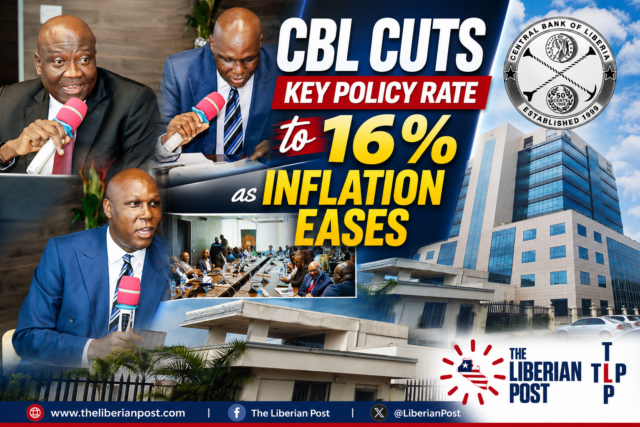
–Monetary Policy Committee Reduces Benchmark Rate for First Time in Months, Maintains Tight Stance While Warning Non-Performing Loans Remain a Major Concern
MONROVIA – The Central Bank of Liberia (CBL) has lowered its benchmark Monetary Policy Rate (MPR) by 25 basis points to 16 percent, citing moderating inflation, improving exchange rate conditions, stronger foreign reserve buffers and a resilient banking sector, in a move aimed at supporting economic growth while preserving macroeconomic stability.
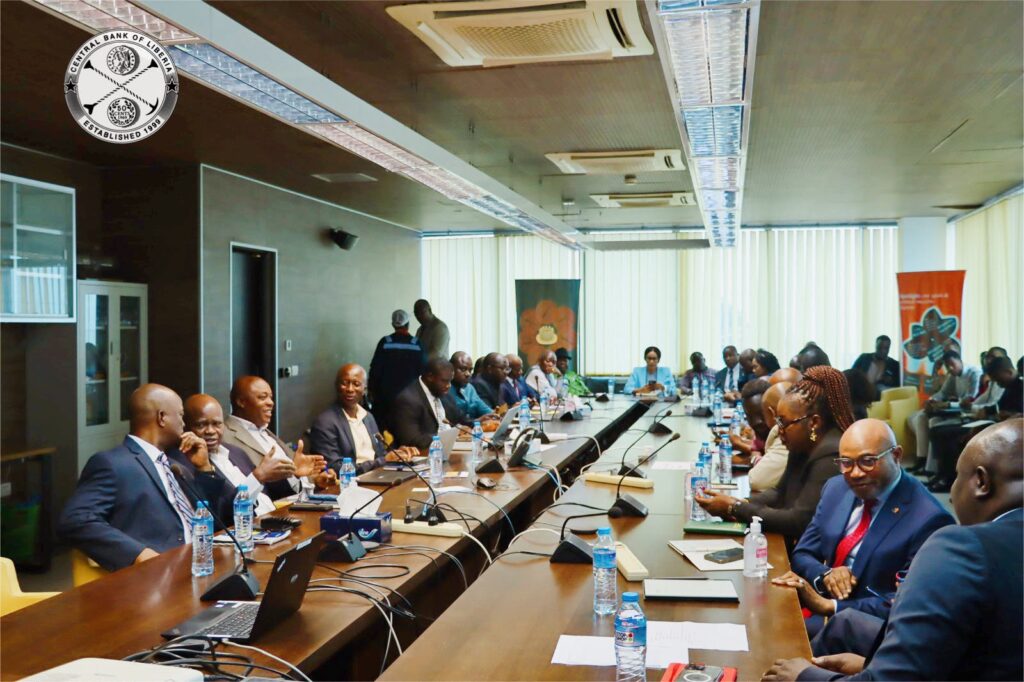
The decision, announced following the Monetary Policy Committee’s (MPC) meeting held on July 15, 2026, marks the first easing of the policy rate since the Bank maintained it at 16.25 percent during its previous meeting, reflecting growing confidence that inflationary pressures are gradually coming under control without jeopardizing financial stability.
The latest policy adjustment also narrows the Standing Deposit Facility (SDF) and Standing Credit Facility (SCF) corridor to improve the effectiveness of monetary policy transmission, while reserve requirements remain unchanged at 25 percent for Liberian dollar deposits and 10 percent for U.S. dollar deposits.

A Delicate Balance Between Growth and Stability
The MPC said the reduction reflects confidence that Liberia’s economy is gaining momentum while inflation remains manageable.
Although headline inflation rose to an estimated 5.4 percent during the second quarter—largely because of higher imported food and fuel prices linked to geopolitical tensions in the Middle East—the Committee expects inflation to ease to 4.4 percent, plus or minus two percentage points, in the third quarter as recent policy measures continue to take effect.
“The MPR of 16 percent remains sufficiently restrictive to reinforce the Bank’s commitment to price stability while supporting the ongoing economic recovery,” the Committee stated.
The Bank stressed that while monetary conditions are being modestly relaxed, its overall policy stance remains cautious given persistent global uncertainties.
Borrowing Could Become Slightly Cheaper
For households and businesses, the policy decision could gradually translate into lower borrowing costs.
According to the CBL, easier monetary conditions are expected to improve access to credit for farmers, market women and small businesses while helping to stabilize household purchasing power through controlled inflation.
The Bank noted that stable prices are essential for protecting consumers from sudden increases in the cost of food, transportation and other essential commodities.
For Liberia’s growing small and medium-sized enterprise (SME) sector, the lower policy rate is intended to encourage banks to expand lending to productive sectors, thereby supporting business expansion, job creation and private sector investment.
Economy Continues Strong Recovery
The MPC painted an optimistic picture of Liberia’s domestic economy.
Real Gross Domestic Product (GDP) is estimated to have expanded by 5.5 percent during the second quarter of 2026, driven by stronger domestic demand, increased mining activity, agricultural production, manufacturing recovery and continued growth in the services sector. Year-on-year growth improved to 5.2 percent, up from 4.6 percent in the first quarter.
The Composite Index of Economic Activity also rose by 20.4 percent, signaling sustained economic momentum across several sectors.
The MPC projects that economic growth will remain at approximately 5.5 percent for the year, provided external conditions remain broadly supportive.
Banking Sector Remains Strong
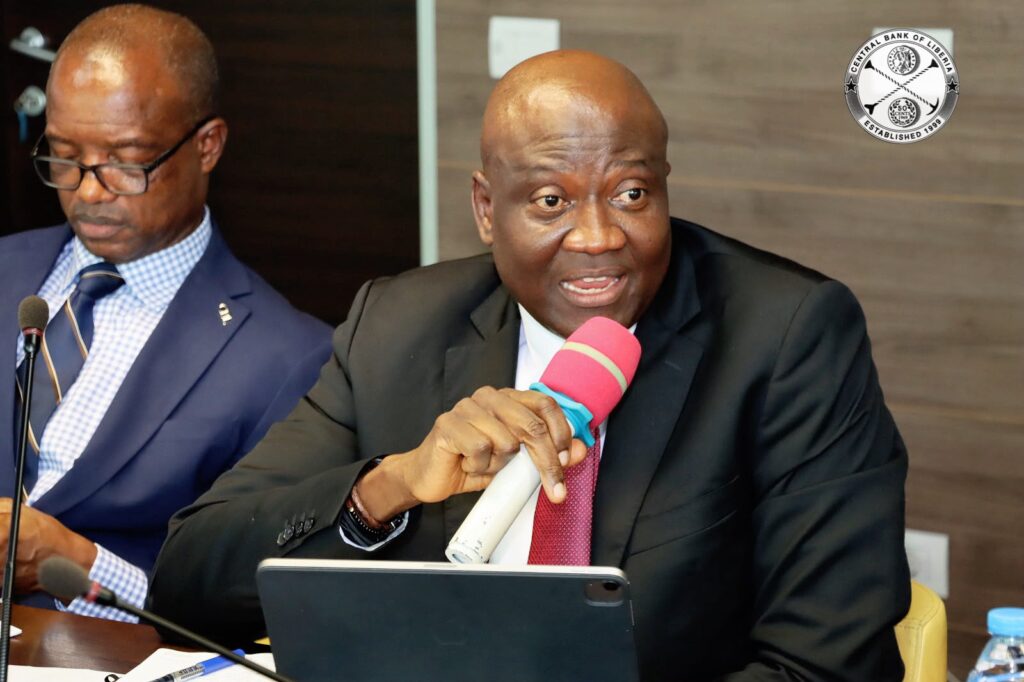
Despite global uncertainty, Liberia’s banking system continues to demonstrate resilience.
The Committee reported that commercial banks remain well-capitalized, with total banking sector capital rising to L$53.68 billion (US$293.58 million).
Banks’ Capital Adequacy Ratio reached 40.63 percent, more than four times the regulatory minimum of 10 percent, while liquidity strengthened to 61.96 percent, far above the required 15 percent threshold.
These indicators, according to the MPC, suggest that Liberia’s banks possess sufficient capital and liquidity to absorb potential shocks and continue supporting economic activity.
Non-Performing Loans Still a Major Concern
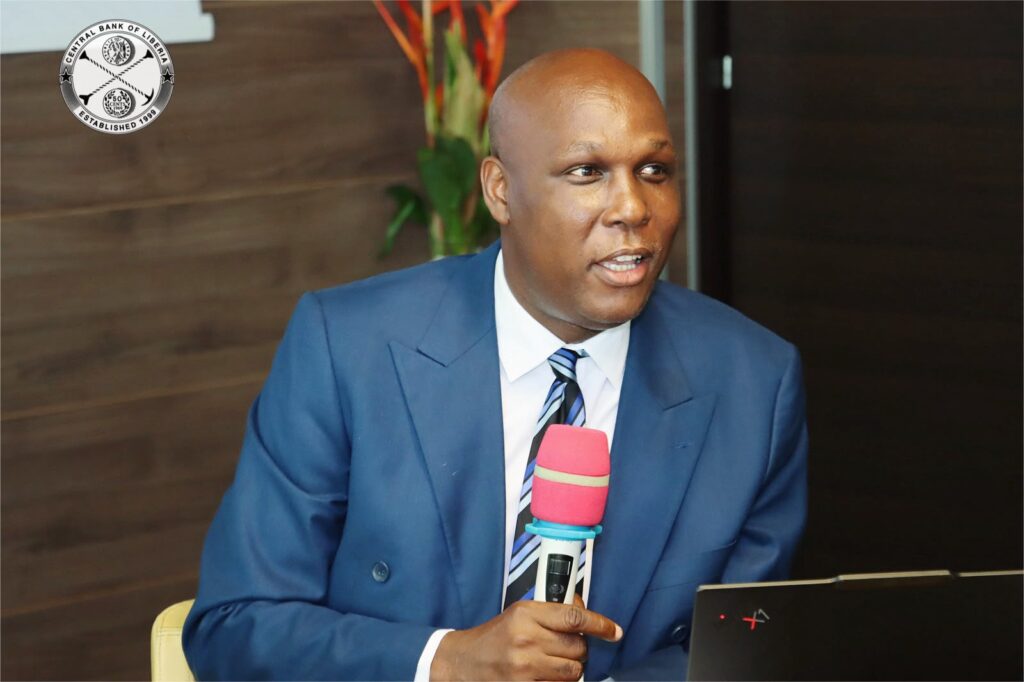
While commending the banking sector’s resilience, the Central Bank cautioned that non-performing loans (NPLs) continue to pose one of the most significant risks to financial stability.
The Committee reported that NPLs remain at 12.62 percent of total loans, exceeding the regulatory ceiling.
Although U.S. dollar-denominated bad loans declined modestly, delinquent loans denominated in Liberian dollars increased during the quarter, prompting the MPC to call for stronger supervision and improved credit risk management across commercial banks.
The Committee also observed that bank lending remains heavily concentrated in trade, personal and service-related activities, while agriculture and manufacturing—two sectors considered critical for structural transformation and inclusive growth—continue to receive relatively limited financing.
The issue of bad loans has remained a recurring concern for the Central Bank. During its previous Monetary Policy Committee meeting earlier this year, the MPC maintained the policy rate at 16.25 percent, citing persistent concerns over rising non-performing loans despite improving macroeconomic fundamentals.
External Buffers Continue to Improve
The Committee also highlighted continued improvements in Liberia’s external position.
Gross international reserves increased sufficiently to provide 3.9 months of import cover, strengthening the country’s ability to withstand external shocks.
Meanwhile, continued stability of the Liberian dollar, improved remittance inflows and stronger reserve buffers helped moderate imported inflation despite a slight widening of the country’s trade deficit.
Global Risks Still Cloud Outlook
Despite the encouraging domestic outlook, the MPC warned that significant external risks remain.
The Committee cited continuing geopolitical tensions in the Middle East, volatile energy prices, commodity market fluctuations, tightening global financial conditions and possible disruptions to international supply chains as major threats that could reverse recent gains.
International Monetary Fund projections indicate that global economic growth is expected to slow to 3.0 percent in 2026 from 3.5 percent in 2025, reflecting the effects of conflict, higher energy prices and persistent trade uncertainties.

CBL Pledges Continued Vigilance
Looking ahead, the Central Bank said it remains committed to maintaining price stability while supporting sustainable economic growth.
The MPC emphasized that future policy decisions will continue to be guided by incoming economic data and evolving domestic and international developments.
“The Committee remains positive that Liberia’s macroeconomic fundamentals are broadly sound,” the communiqué concluded, adding that it stands ready to adjust its policy stance whenever necessary to preserve macroeconomic stability. The next regular meeting of the Monetary Policy Committee is scheduled for October 8, 2026.
For breaking news, in-depth analysis, and exclusive reports from Liberia and around the world, follow The Liberian Post on Facebook (https://web.facebook.com/profile.php?id=61576017166570) and X, formerly Twitter (https://x.com/LiberianPost).