-Information Ministry’s J. Rufus Paul Accuses Prominent Cleric of ‘Blasphemy’ and ‘Pulpit Politics’ After Fiery Sermon Praising George Weah
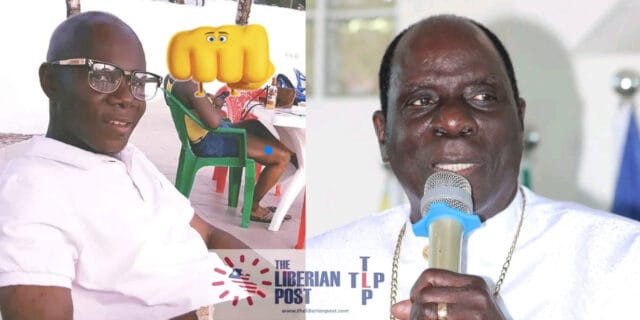
MONROVIA – A Sunday sermon by Bishop Isaac Winker has sparked a firestorm of political and religious debate after the influential cleric warned that “God will deal with” Liberians who fail to support former President George Weah — a statement that drew sharp condemnation from Assistant Information Minister J. Rufus Paul.
Speaking during a thanksgiving service at the Forkay Klon Jlaleh Family Fellowship Center in the Baptist Seminary Community Sunday, October 19, held in honor of the successful ground breaking of the Congress for Democratic Change (CDC) new headquarters construction, Bishop Winker urged Liberians to show unwavering support for the former President, insisting that Weah’s leadership was divinely significant.
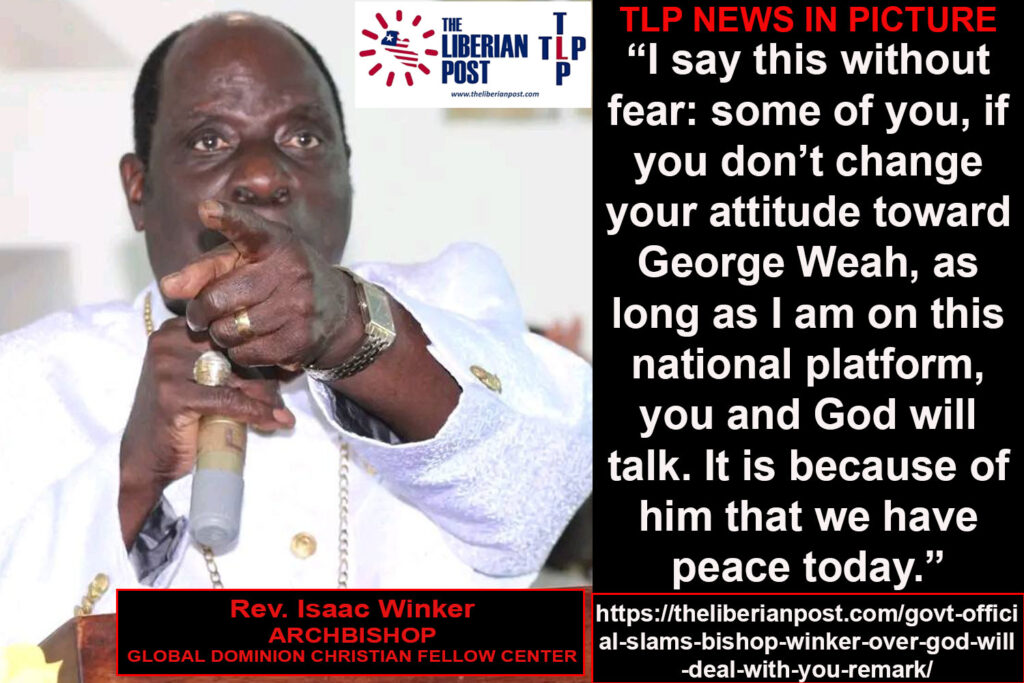
“I say this without fear: some of you, if you don’t change your attitude toward George Weah, as long as I am on this national platform, you and God will talk,” the Bishop declared, as party loyalists cheered.
Winker, a well-known preacher with a history of weighing in on national issues, went on to describe Weah as a stabilizing force. “It is because of him that we have peace today,” he said, adding that his message was meant to promote unity and gratitude.
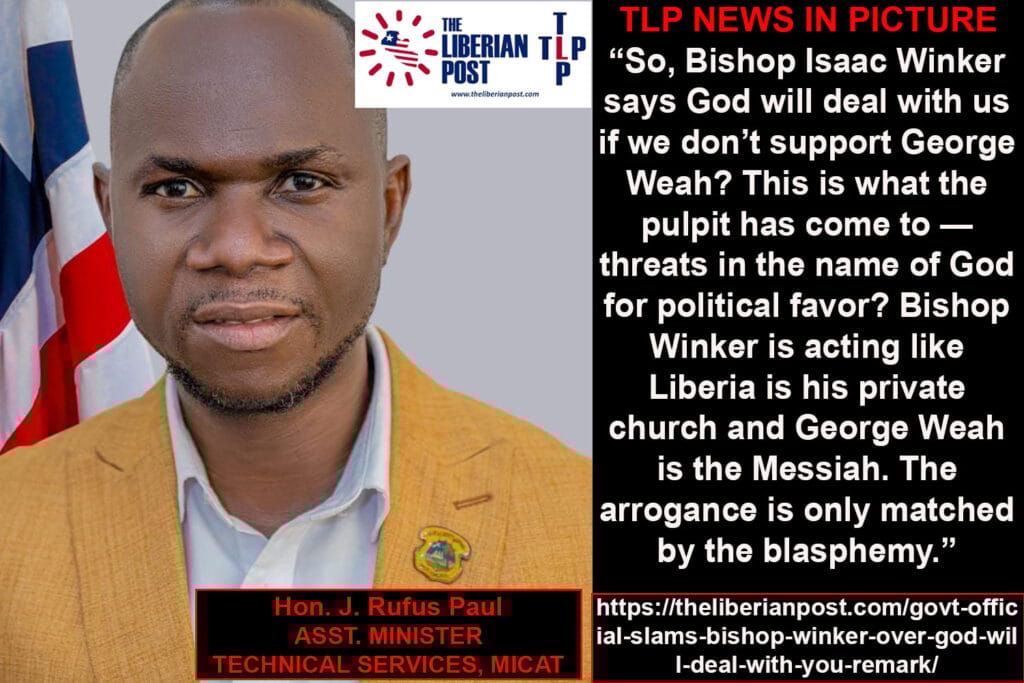
But the remarks drew a swift and fiery reaction from Assistant Information Minister for Technical Services, J. Rufus Paul, who blasted the Bishop’s statement as “blasphemous, arrogant, and politically motivated.”
Taking to Facebook hours after the event, Paul wrote:
“So, Bishop Isaac Winker says God will deal with us if we don’t support George Weah? This is what the pulpit has come to — threats in the name of God for political favor?”
Paul accused Winker of abusing his religious influence for political gain, saying, “Bishop Winker is acting like Liberia is his private church and George Weah is the Messiah. The arrogance is only matched by the blasphemy.”
The government spokesman also challenged the Bishop’s claim that Weah was responsible for Liberia’s peace.
“Tell that to the families of the four auditors who died under mysterious circumstances,” Paul wrote. Tell that to the young people Weah used for votes and abandoned in the ghettos to rot on drugs.”
Paul argued that the Bishop’s remarks disrespected Liberians who fought and sacrificed for peace, as well as the country’s international partners who helped secure stability after the civil war.
“When spiritual leaders abandon truth for access, they cross the line from pastor to false prophet,” Paul added. “We stand for truth and accountability. We reject pulpit politics, manipulation, and fear tactics disguised as prophecy.”
The exchange between the Bishop and the Assistant Minister has since ignited widespread public debate, with many Liberians questioning the growing entanglement of the church and partisan politics.
While some defended Bishop Winker’s right to express political views, others accused him of using the sacred pulpit for political endorsement as his Dominion Christian Fellowship’s members are not all Weah supporters.
Observers say the controversy highlights a larger national conversation about the role of faith leaders in shaping public opinion — and the risks when spiritual authority intersects with political influence.
As reactions continue to pour in, the episode has drawn attention not only to Liberia’s volatile mix of religion and politics but also to the uneasy space where faith, loyalty, and national leadership collide.