MONROVIA, Liberia – Disturbing testimony has emerged in the ongoing human trafficking trial before Criminal Court “A” at the Temple of Justice, where state witnesses have alleged that dozens of Liberians were lured with promises of travel to Canada, only to be confined in heavily secured compounds where they endured abuse, intimidation, exploitation, and in some cases, sexual violence.
The case, being heard before Judge Roosevelt Z. Willie, involves allegations of Trafficking in Persons, Theft of Property, and Criminal Conspiracy against several defendants accused of operating an elaborate recruitment scheme targeting vulnerable Liberians.
Victims Allegedly Promised Overseas Opportunities
According to testimony presented by state witnesses, recruiters traveled across various counties promising victims opportunities to relocate to Canada for employment and a better life.
Witnesses told the court that they paid between US$1,000 and US$3,000 in processing fees after being assured that travel documents and immigration arrangements were underway.
However, upon arriving in Monrovia, they were allegedly transported to fenced compounds and informed that they would remain there while awaiting completion of their travel documentation.
Several witnesses testified that once inside the compounds, they were not allowed to leave and were subjected to strict supervision.
They told the court they slept on bare floors, had their mobile phones confiscated, and survived on limited food, including pepper kala and gari. Witnesses further alleged that they were repeatedly pressured to contact relatives and friends to send additional money.
According to testimony, those who refused to comply were subjected to punishment, including strenuous physical exercises, prolonged kneeling, and being forced to consume large quantities of water.
Witness Recounts Alleged Confinement
One of the prosecution’s witnesses, Precious Thomas, testified that she and her boyfriend raised US$3,000 after months of communication with recruiters who promised to facilitate her travel to Canada.
Thomas told the court that upon arriving in Monrovia, she was taken to a fenced compound near the beach where she met several of the defendants now standing trial.
She alleged that after paying the money, she was not permitted to leave the premises and was effectively cut off from communication with her family.
Thomas further described what she characterized as harsh living conditions within the compound, alleging that security personnel carried weapons, including cutlasses, knives, pepper spray, and shovels.
According to her testimony, residents frequently slept on the ground and survived on inadequate food supplies.
She also recounted the illness and subsequent death of a young woman identified as Ophelia, alleging that another resident became seriously ill but was denied permission to leave the compound for medical treatment.
Thomas testified that the situation ultimately reached a breaking point when residents managed to attract the attention of passersby by shouting for help. She said this created an opportunity for occupants to force open the gate and escape.
Following their escape, the group reported the matter to authorities, initially at the Paynesville Town Hall Court before the case was transferred to law enforcement agencies for investigation.
Alleged Sexual Assault Detailed in Court
Another prosecution witness, Racheal Lakpor, offered testimony that largely corroborated the accounts of previous witnesses.
Lakpor told the court that while residing in Nimba County in May 2024, she was approached by a man identified as Maxim Wuonabaye, who allegedly offered her an opportunity to travel abroad.
After her family raised US$1,000, she traveled to Monrovia and met him.
According to Lakpor, she was first taken to a residence in Kissi Camp before being moved to another fenced compound in Mambas Town.
She alleged that shortly after arriving, Wuonabaye sexually assaulted her.
Lakpor further testified that she later discovered she was pregnant and informed him of the pregnancy. She alleged that he subsequently provided medication intended to terminate the pregnancy and pressured her to take it despite her objections.
She also testified that her mobile phone was confiscated and that she was repeatedly instructed to call relatives and friends to solicit additional money.
According to her testimony, family members and friends sent thousands of dollars through mobile money transfers after she was coached on what to say during telephone conversations.
Despite the payments, she said, no travel arrangements were ever made.
Lakpor also corroborated testimony regarding poor living conditions and the death of another resident identified as Ophelia Miaway.
Former Defendant Becomes State Witness
In one of the trial’s most significant developments, former defendant Shirley Johnny has become a key prosecution witness after charges against her were dropped in exchange for cooperation with the state.
Court records indicate that during proceedings on June 10, Johnny informed the court that she wished to testify despite advice from her lawyer to remain silent.
When questioned by the court, she reportedly stated:
“Some are true and what I saw is what I will talk because myself, I was there.”
Following discussions with prosecutors, the state invoked Chapter 18, Section 18.1 of Liberia’s Criminal Procedure Law and entered a nolle prosequi, resulting in all charges against Johnny being dismissed.
The court subsequently removed her from the list of defendants and qualified her as a prosecution witness.
Testifying before the jury, Johnny said she was recruited from Nimba County with promises of traveling to Canada after paying US$2,000 toward a US$3,500 processing fee.
She alleged that she and other victims were later taken to a compound in Mambas Town where occupants were pressured to recruit additional people and solicit money from relatives.
Johnny further testified that those who failed to comply faced punishment, including kneeling under the sun, forced exercises, verbal abuse, and other forms of mistreatment.
She also recounted the death of fellow resident Ophelia Miatay and said she chose to cooperate with prosecutors because she wanted the truth about conditions inside the compound to be known.
Defense Challenges Evidence
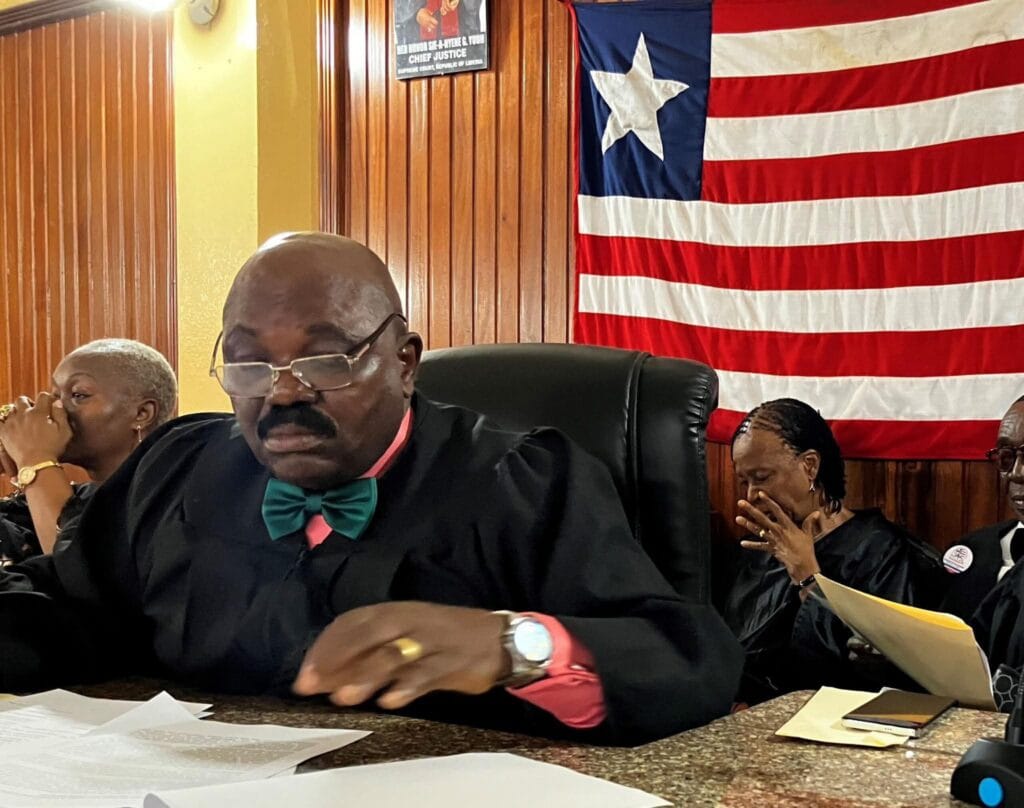
During the proceedings, defense lawyers objected to the introduction of certain police documents, arguing that portions of the materials had not been disclosed to the defense team.
Judge Willie overruled the objection, ruling that the witness could proceed with identifying the documents and that it would ultimately be up to the jury to determine their authenticity and evidentiary value.
Allegations Involve 57 Victims
According to the indictment, the alleged trafficking operation involved 57 victims, including 22 females and 35 males, ranging in age from 18 to 35 years old.
Prosecutors allege that between October 2024 and 2025, victims were recruited from at least seven counties and transported to various locations within and outside Monrovia under the promise of traveling to Canada for better opportunities.
The defendants currently on trial deny the allegations and remain presumed innocent unless proven guilty in a court of law.
The trial continues before Criminal Court “A”.
Follow The Liberian Post on Facebook (https://web.facebook.com/profile.php?id=61576017166570) and X, formerly twitter (https://x.com/LiberianPost).