MONROVIA — Hundreds of young Liberians turned out in overwhelming numbers Monday as the Armed Forces of Liberia (AFL) launched its nationwide recruitment exercise, with many hopefuls reportedly spending the night outside the Barclay Training Center (BTC) in anticipation of securing a place.
The early-morning rush underscored both a strong sense of patriotism and the limited employment opportunities facing Liberia’s youth. But beyond the enthusiasm, a simple screening process introduced by the AFL has triggered a nationwide conversation—one centered on literacy and the state of the country’s education system.
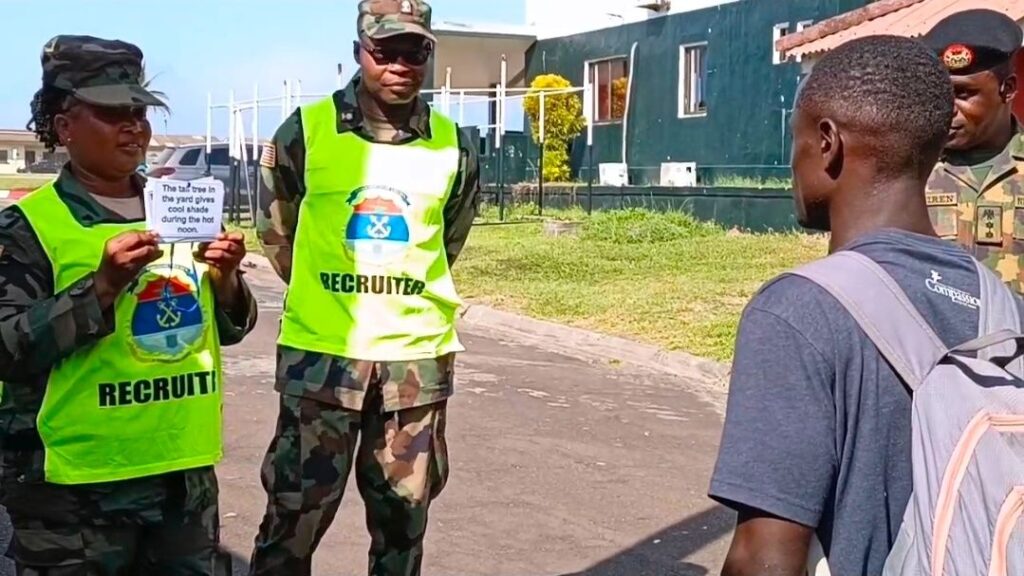
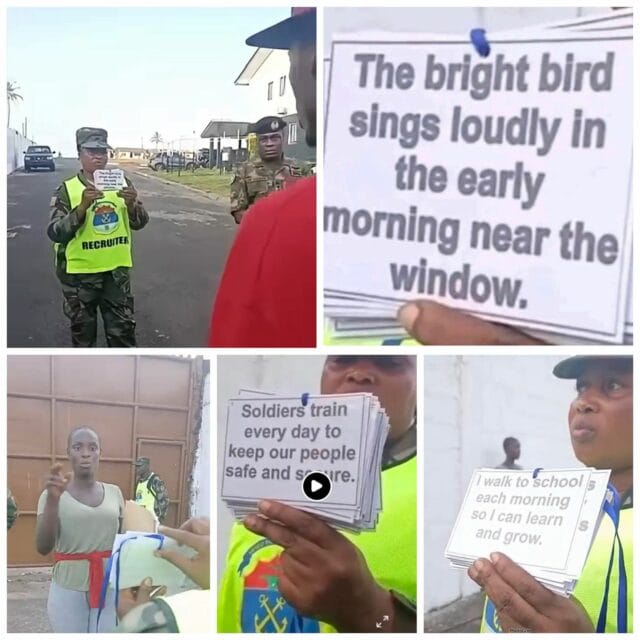
At the heart of the debate is a basic reading test administered to applicants before they are allowed to proceed further into the recruitment process. A video released by the AFL on its official Facebook page shows recruits being asked to read short, simple sentences from flashcards under the supervision of military personnel.
“Stand right on the line and read loud what you see… Read when ready,” one officer is heard instructing applicants.
Some candidates successfully read sentences such as: “The brave soldier faces danger with calmness and steady resolve” and “I respect the laws and follow the rules that keep our society safe.”
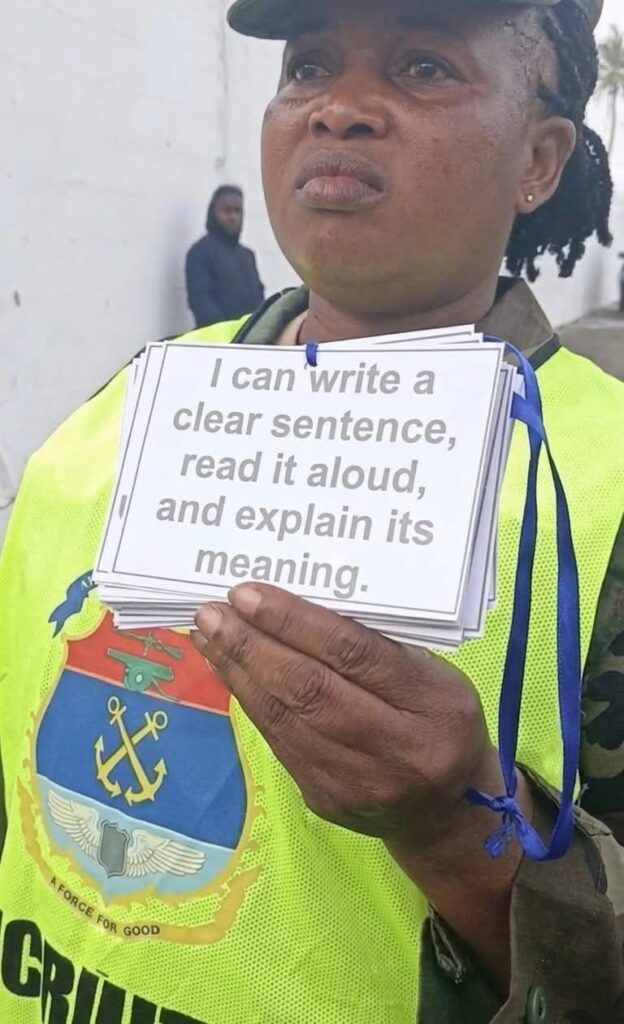
Others, however, struggled.
In several moments captured in the footage, recruits hesitated or failed to read entirely, prompting officers to either encourage them or redirect them. “If you can’t read, just calm down… we usually allow those who can’t read to sit somewhere and wait,” an officer is heard saying, reflecting a measured but firm approach to the screening process.
The video has since gone viral, igniting intense debate across Liberian social media platforms. While some citizens have commended the AFL for maintaining professional standards, others argue that the exercise exposes deeper systemic failures in the country’s education sector.
“This is not just about recruitment—it’s about the future of our country,” one commentator noted online. “If young people with school certificates cannot read simple sentences, then something is fundamentally wrong.”
The AFL has historically emphasized discipline and professionalism, particularly following its post-war restructuring in 2006 after years of civil conflict. Originally established as a militia in the 19th century and later formalized as the Liberian Frontier Force in 1908, the modern AFL has undergone extensive reforms aimed at building a capable, accountable military force.
As part of those reforms, minimum educational standards—including basic literacy—have remained a key requirement for enlistment.
Defense authorities say the recruitment process is merit-based and designed to ensure that new entrants can effectively carry out military duties, including communication, training, and operational responsibilities.
However, the unfolding situation has broadened the conversation beyond the military. Analysts say the incident highlights long-standing issues in Liberia’s human capital development, including low literacy rates and gaps in foundational education.
Despite the criticism, many of the young applicants have been praised for their determination and willingness to serve their country, even under challenging conditions.
As the recruitment exercise continues across the country, the images from BTC present a powerful dual narrative: a generation eager to serve—and a nation confronted with urgent questions about the quality of its education system.
Follow The Liberian Post on Facebook and X (formerly twitter)