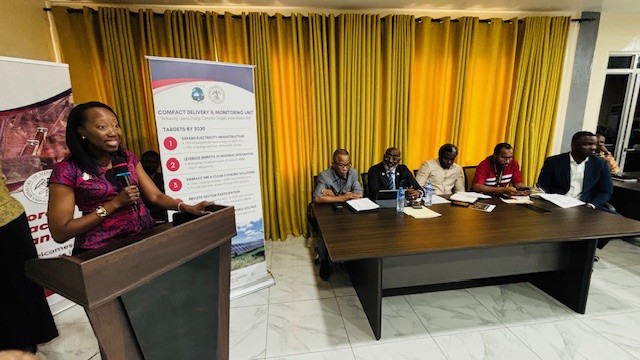
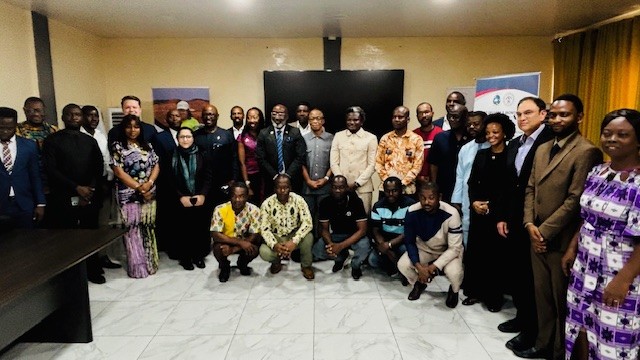
MONROVIA, Liberia — The Mines and Energy Ministry hosted the launch of Liberia’s Energy Compact Delivery and Monitoring Unit (CDMU), a strategic coordination and oversight mechanism designed to drive the implementation of Liberia’s National Energy Compact under the Mission 300 initiative. World Bank Liberia Country Manager Georgia Wallen delivered remarks at the event, which brought together senior government officials and development partners, including representatives from the World Bank, African Development Bank, European Union, Rockefeller Foundation, and the Global Energy Alliance for People and Planet (GEAPP).
On behalf of the World Bank, Wallen said the ceremony marks a pivotal step in Liberia’s energy transition. “Liberia plans to transform its energy sector over the next five years, and the CDMU will play an important role in making that happen.” She underscored the compact’s bold vision to accelerate access to energy, expand renewable generation, improve sector performance, and provide households with clean cooking solutions.
The National Energy Compact, endorsed by President Joseph Boakai at the Mission 300 Africa Energy Summit in Tanzania, sets an ambitious target: expand energy access to reach 75% of Liberians within five years. Wallen noted that achieving this scale requires “strong leadership, focus, and sustained effort,” a premise that the CDMU embodies by ensuring disciplined delivery and oversight. She added, “what gets measured gets done,” highlighting the CDMU’s role in tracking progress and ensuring accountability.
Officials emphasized that the CDMU’s establishment aligns with Liberia’s broader development framework. The World Bank’s Country Partnership Framework (CPF) for 2025–2030 anchors the collaboration, building on a record of delivering results, including more than 800,000 Liberians gaining energy access through World Bank financing. In parallel, the Liberia Electricity Corporation (LEC) has achieved notable efficiency gains, reducing commercial losses from 48% in 2021 to 27% in 2024. Additional projects—LESSAP (Energy Sector Strengthening and Access) and the Regional Program Distributed Access through Renewable Energy Scaleup (DARES)—are expected to extend these gains to hundreds of thousands more households.
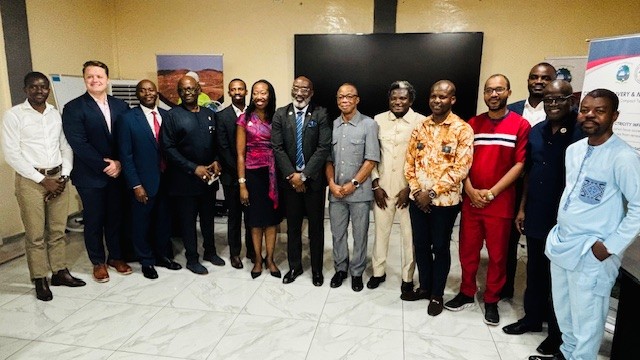
The CDMU brings together strong partners within a shared mission: to accelerate meaningful improvements in energy access and reliability while ensuring transparent, data-driven progress. Wallen highlighted the collaboration among the government, the AfDB, the Rockefeller Foundation, GEAPP, and other partners as essential to sustaining momentum and delivering tangible benefits to Liberians—connecting people to opportunity, powering businesses, and strengthening essential services.
In closing, Wallen praised Liberia’s leadership and the foreign and development partners present. “Thank you for the opportunity to partner with Liberia on this journey,” she said, confirming that the launch of the CDMU signals a new era of coordinated action and measurable impact in the country’s energy sector.
As Liberia moves from planning to concrete implementation, officials and partners alike expect the CDMU to turn ambitious targets into everyday realities for Liberian families—improving livelihoods, boosting economic activity, and advancing the country’s energy transition.
Follow The Liberian Post on Facebook and X (formerly twitter)