–Presidential WASH Compact Seeks to Overhaul Fragmented Sector as Commission Intensifies Inspections, Digitizes Services and Prepares Nationwide Sanitation Reforms
MONROVIA, Liberia – The National Water, Sanitation and Hygiene (WASH) Commission has unveiled an ambitious reform agenda designed to transform Liberia’s water and sanitation sector, with the Government targeting an open defecation-free Liberia by 2030 through stronger regulation, institutional reforms, digital innovation, and expanded access to safe drinking water.
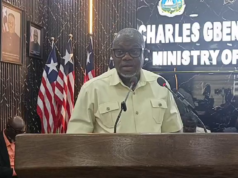
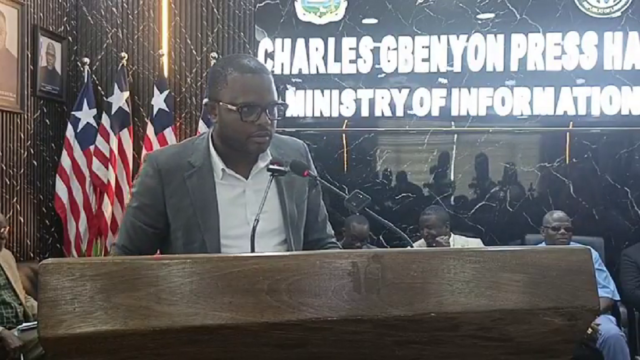
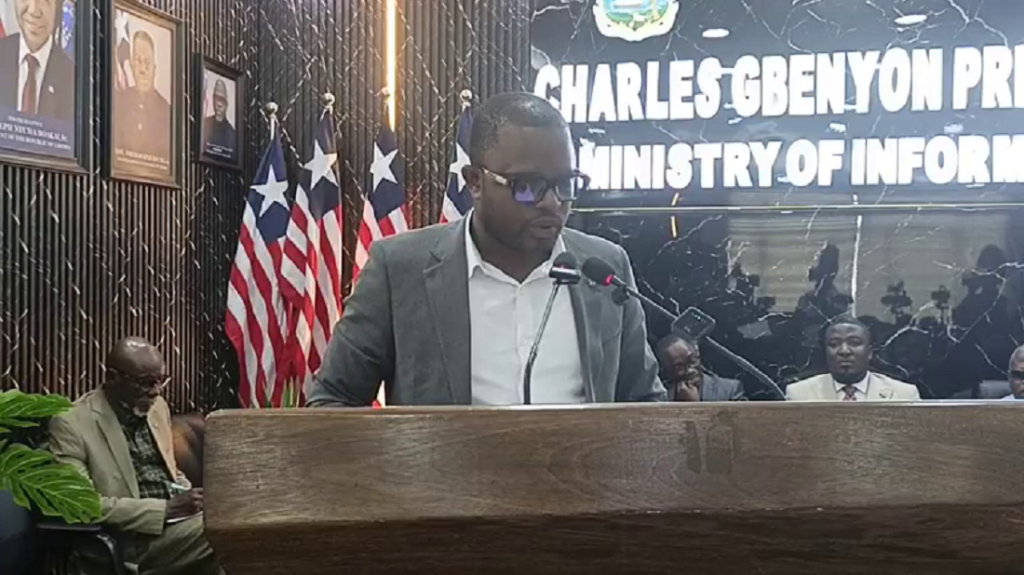
Presenting the Commission’s progress report during Thursday’s regular press briefing at the Ministry of Information (MOI), Executive Director Morris G. Gono Jr. said the reforms are intended to address longstanding governance weaknesses that have hindered the country’s ability to provide safe water, improved sanitation, and hygiene services to all Liberians.
At the center of the reform agenda is a Presidential WASH Compact, described as a high-level governance instrument that will unify Liberia’s fragmented water, sanitation, and hygiene sector under a single national vision.
According to Gono, the proposed Compact has already been submitted to President Joseph Nyuma Boakai Sr., who has instructed a committee to review the document before taking final action.
“The WASH Compact is a Head of State initiative,” Gono explained. “It is intended to bring together key ministries, agencies, development partners and the private sector around measurable actions that will improve sector financing, strengthen service delivery, and enhance regulatory oversight.”
Fragmented System to Undergo Major Reform
Gono acknowledged that Liberia’s WASH responsibilities are currently spread across several government institutions, including the Ministries of Public Works, Health, Education, Mines and Energy, the Liberia Water and Sewer Corporation, and local government authorities.
He said this institutional fragmentation has resulted in overlapping mandates, inconsistent standards, weak coordination, and reduced accountability throughout the sector.
“The Institutional Reform Agenda recognizes these challenges,” he said. “The Compact seeks to reduce duplication, improve efficiency, strengthen climate-resilient water security planning, and ensure better coordination among all sector actors.”
Officials believe the reform will provide clearer leadership while enabling government and development partners to better coordinate investments in water and sanitation infrastructure.
Government Intensifies Nationwide Sanitary Inspections
The Commission also announced that a nationwide food safety and sanitary inspection exercise is currently underway following instructions from President Boakai.
Gono disclosed that an Inter-Agency Joint Task Force on Food Safety and Sanitary Inspection was officially launched in April under the coordination of the Ministry of Health.
The inspection exercise, which began on June 11, involves multiple government institutions conducting assessments of hotels, restaurants, food processing centers, water factories, and other public facilities to ensure compliance with national sanitation and public health standards.
“So far, our teams have inspected more than 300 facilities across the country,” Gono revealed, adding that the exercise will continue for 23 working days.
He explained that while the Ministry of Health coordinates the overall initiative, the WASH Commission is leading the field inspection component as part of its regulatory mandate.
Open Defecation Still Major Public Health Concern
Despite ongoing investments in sanitation, Liberia continues to face significant challenges in eliminating open defecation.
According to the Commission, approximately 34 percent of Liberia’s population—both in rural and urban areas—still lacks access to adequate sanitation facilities and continues to practice open defecation.
To address the problem, the Commission, with support from UNICEF, has updated Liberia’s Open Defecation-Free Roadmap, which provides a strategic framework for eliminating the practice nationwide by 2030.
The roadmap outlines interventions intended to expand sanitation infrastructure, improve hygiene education, and mobilize communities toward behavioral change.
Officials say ending open defecation will significantly reduce the spread of waterborne diseases, improve environmental health, and enhance the dignity of vulnerable communities.
Water Projects Continue Despite Funding Challenges
Gono also announced that the Commission successfully managed the transition of several community water supply projects following funding disruptions caused by the suspension of certain international assistance programs.
Working with development partners, the Commission ensured the continuation of water projects serving communities including Doe Community, Riverview, Yarling Town, Boeglay Town, and Sarah Johnson Community.
Once completed, the projects are expected to provide safe drinking water to approximately 2,500 residents through elevated water towers and improved distribution systems.
“This intervention ensured that communities would continue receiving safe drinking water despite the funding gap,” Gono said.
Commission Embraces Digital Transformation
In another major development, the WASH Commission has begun digitizing many of its regulatory services.
Businesses and service providers can now apply electronically for permits and regulatory clearances, replacing the previous paper-based system.
The Commission has also secured initial support from Catholic Relief Services (CRS) to establish Liberia’s first centralized WASH digital information platform.
The new system will consolidate nationwide data on water, sanitation, and hygiene, allowing government agencies and development partners to better monitor sector performance and coordinate interventions.
Officials say the platform will significantly improve planning and evidence-based decision-making across Liberia’s WASH sector.
Preparing for Flood Emergencies
Recognizing the increasing impact of climate change and seasonal flooding, the Commission is also developing a national WASH Contingency Preparedness Plan in partnership with UNICEF.
The plan will allow emergency water, sanitation, and hygiene supplies to be pre-positioned in vulnerable communities before disasters occur, enabling faster responses during floods and other emergencies.
Currently, emergency responses often begin weeks after disasters strike, officials said.
The new preparedness strategy seeks to dramatically reduce those delays while protecting communities from disease outbreaks associated with flooding.
Challenges Remain
Despite the progress, Gono acknowledged that significant challenges continue to affect the sector.
Among them are inadequate funding, fragmented institutional responsibilities, inconsistent data sharing among government agencies, and the absence of a standalone cabinet-level ministry dedicated exclusively to water, sanitation, and hygiene.
He said greater government investment, stronger donor support, and improved coordination will be essential if Liberia is to achieve universal access to safe water and sanitation by 2030.
“The National Water, Sanitation and Hygiene Commission remains fully committed to leading an inclusive, climate-resilient WASH sector,” Gono said.
“Through sustained partnerships, stronger governance, digital innovation, and strategic investment, we will continue working toward universal access to safe water, improved sanitation, and hygiene services for every Liberian.”
The Commission also appealed to government institutions, development partners, the private sector, civil society organizations, and local communities to support the country’s ongoing WASH reforms, describing access to safe water and sanitation as fundamental to public health, human dignity, and national development.
As Liberia continues implementing the ARREST Agenda for Inclusive Development, officials believe a stronger and more coordinated WASH sector will play a pivotal role in improving health outcomes, reducing disease, promoting environmental sustainability, and enhancing the quality of life for citizens across the country.
For breaking news, in-depth analysis, and exclusive reports from Liberia and around the world, follow The Liberian Post on Facebook (https://web.facebook.com/profile.php?id=61576017166570) and X, formerly Twitter (https://x.com/LiberianPost).