–73% Unaware of Food Regulations, 78% Fail to Follow Formal Standards as Food Authority Unveils Five-Year Overhaul With US$11.3M Financing Gap
MONROVIA — Liberia’s food-safety system is facing significant regulatory and enforcement gaps, with a nationwide assessment finding that most food businesses surveyed were either unaware of relevant regulations or failing to follow formal food-safety standards.
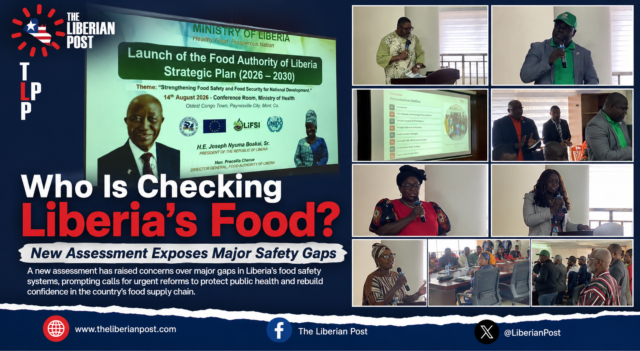
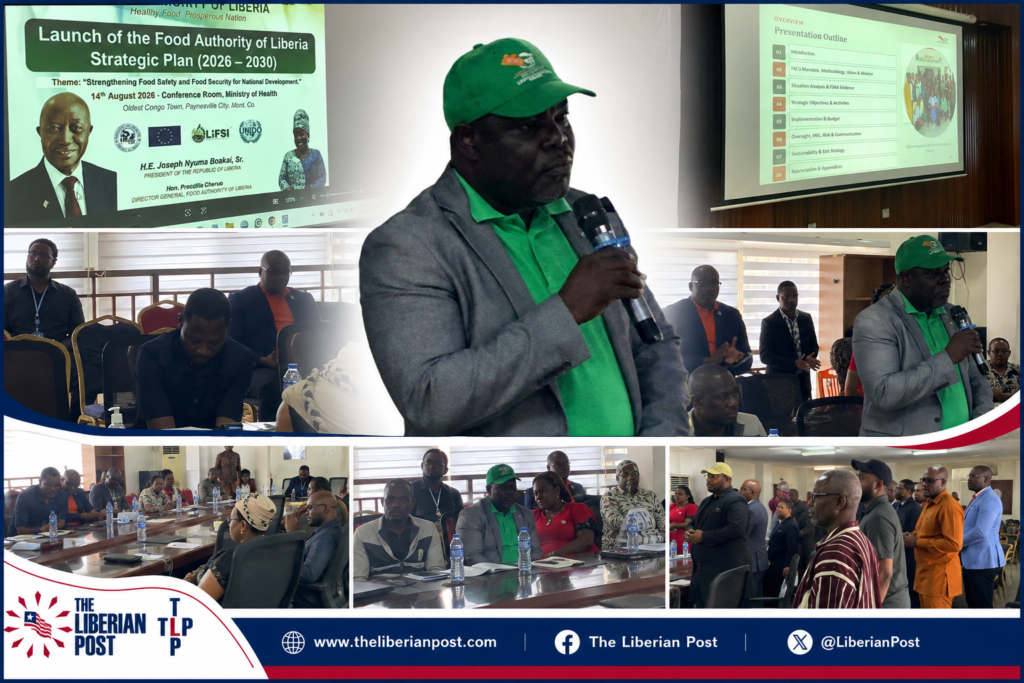
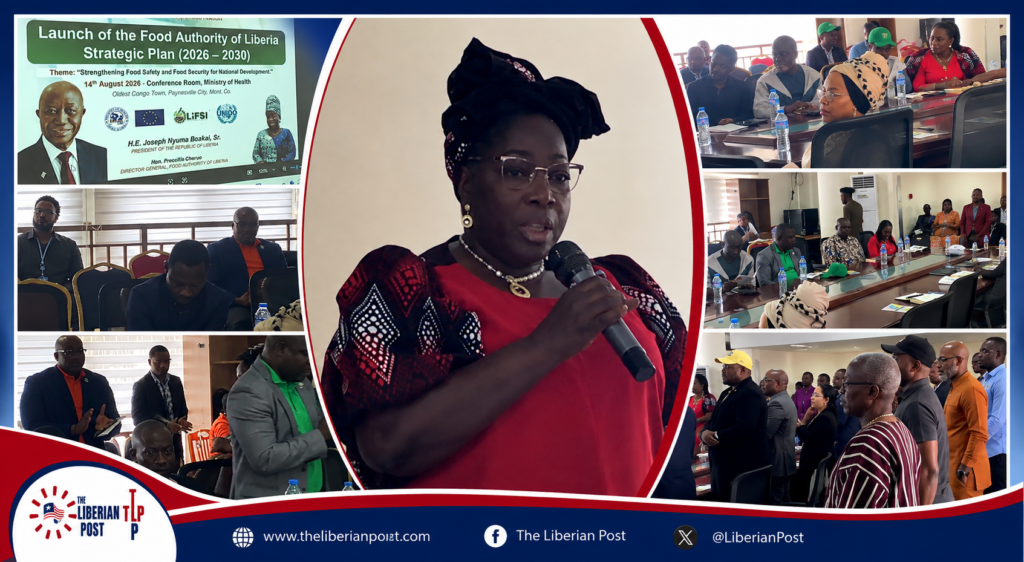
The findings were disclosed Friday, August 14, 2026, as the Food Authority of Liberia (FAL) launched its 2026–2030 Strategic Plan in Monrovia under the theme “Strengthening Food Safety and Food Security for National Development.” The five-year plan seeks to overhaul Liberia’s food-control system through stronger regulation, risk-based inspections, improved laboratory capacity, digital registration and traceability, public education, and greater institutional coordination.
The assessment, conducted by FAL in 2025 with support from the EU-funded Liberia Food Safety Initiative, paints a troubling picture of the country’s food-safety environment.
According to Theophilus Ndorbor, FAL’s Deputy Director General for Technical Services, 73 percent of those surveyed were unaware of relevant food-safety regulations, while 78 percent did not follow formal procedures or standards in operating their food businesses.
The assessment further found that 34 percent had never been inspected by a public authority, while fewer than one in ten had received formal food-safety training. Only 3 percent of respondents expressed interest in receiving food-safety training.
Ndorbor said the findings suggest that the problem goes beyond deliberate non-compliance, pointing instead to a serious lack of “regulatory literacy” among food operators and consumers.
The assessment comes against a backdrop of structural weaknesses that FAL says expose Liberians to food-safety risks.
Liberia remains heavily dependent on informal food businesses and street vendors, while also relying substantially on imported staples and processed foods. The Authority identified inadequate cold-storage infrastructure, uneven enforcement of hygiene and quality requirements, and weak traceability across the food and feed value chain as major vulnerabilities.
It also identified risks associated with microbial and chemical contamination, food spoilage, unsafe storage, adulteration, poor labeling and other food-quality problems.
Eight People Fall Ill as Food Safety Agencies Respond
The urgency of the issue was underscored by an incident disclosed during the launch in which eight people reportedly became unconscious after eating food.
Officials said a coordinated response involving the Liberia Standards Authority, the Ministry of Health, county health authorities, surveillance personnel and FAL was mounted after the incident.
Food and water samples were collected for laboratory testing, while officials reported that all eight affected persons were recovering and that there had been no fatalities at the time of the launch.
The available information did not establish that contaminated food caused the incident, as laboratory testing was still underway.
The episode nevertheless offered a practical illustration of the kind of food-safety emergency the new strategic plan is intended to address.
FAL Director General Precellia Cherue said the plan represents more than an institutional roadmap, describing it as a national framework for building a modern, science-based, risk-informed and consumer-centered food-control system.
Cherue said the Authority’s ambitions extend beyond conducting inspections and issuing regulations.
She said success should ultimately be measured by healthier children, safer markets, more confident consumers, responsible food businesses, prosperous farmers, competitive industries and expanded trade.
US$23.5M Plan Faces US$11.3M Funding Gap
But implementing the ambitious strategy will require substantially more resources.
FAL estimates that it will need approximately US$23.5 million over the five-year period to implement the plan. Its projected revenue, however, is about US$12.25 million, leaving an estimated US$11.3 million financing gap.
The Authority says it intends to address the shortfall through government funding, fees, partnerships and resource mobilization, while also strengthening financial controls, quarterly performance reviews, audits and public reporting.
The Ministry of Finance and Development Planning has already increased FAL’s allocation.
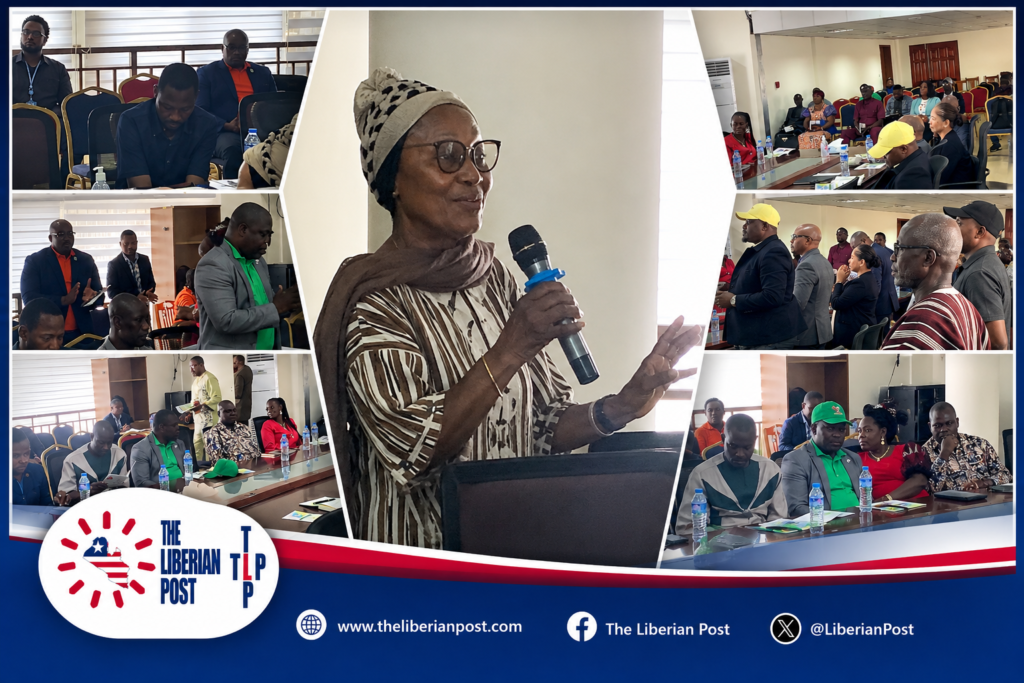
A representative of the Ministry told the gathering that FAL received US$200,000 in 2025, its first year of budgetary support, before its allocation rose to US$655,075 in the 2026 budget—a reported 257.5 percent increase.
The Ministry maintained that the current allocation makes the Authority’s program achievable, while acknowledging that additional financing will depend on the growth of Liberia’s overall fiscal space.
Government Links Food Safety to Economic Transformation
The government is also framing food safety as an economic issue rather than solely a public-health concern.
Representing President Joseph Nyuma Boakai, Sr. at the launch, Ambassador Ora Richards said a credible food-safety system is essential to strengthening agricultural value chains, supporting agro-processing, attracting investment and enabling Liberian products to compete in regional and international markets.
The government’s ambition, she said, is for Liberia to increasingly grow what it eats, while adding value to locally produced food and ensuring that products moving from farms to markets meet sanitary and quality standards.
The government further wants Liberian products to meet standards required to compete under ECOWAS and the African Continental Free Trade Area, with stronger certification, inspection, laboratory testing, digital registration and traceability systems forming part of the effort.
The remarks are consistent with President Boakai’s broader development agenda, which places agriculture, human development, economic transformation and stronger institutions among its priorities.
The President’s representative urged FAL to ensure that its strategic plan does not remain a policy document but becomes an implementation framework with measurable results.
Health Ministry Calls for Joint Surveillance
The Ministry of Health has also committed to closer collaboration with FAL.
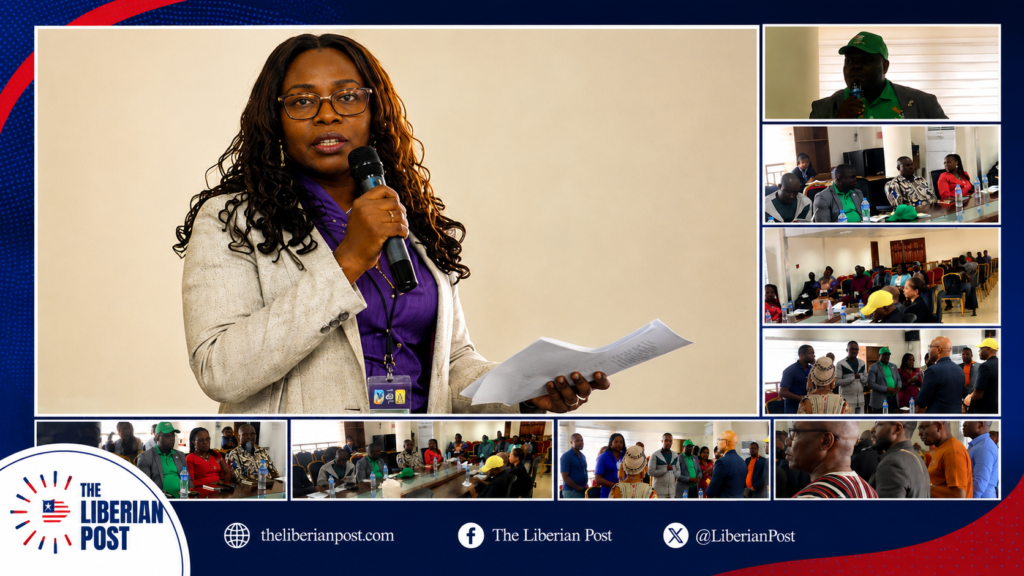
Speaking for the Ministry, an Assistant Minister said food safety and health security are inseparable, arguing that Liberia cannot claim a healthy population while its food system remains inadequately regulated and protected.
The Ministry pledged to deepen cooperation with FAL through data sharing, joint surveillance of foodborne illnesses and coordinated regulatory action.
The Ministry said the ultimate test of the strategic plan would be whether it translates into “real protection for every Liberian” rather than remaining a policy document.
First Major Five-Year Framework
FAL’s strategic plan establishes five broad priorities: system strengthening, safety compliance, collaborative partnership, technical competence and institutional strengthening.

The Authority plans to map and modernize Liberia’s regulatory framework, align standards with international frameworks such as Codex, expand food-safety awareness nationwide, strengthen agricultural and production practices, improve laboratory operations and develop a stronger technical workforce.
The plan also calls for a nationwide food-safety awareness campaign across all 15 counties, the development of guidelines for small and medium-sized enterprises, improved risk-based inspections and stronger cooperation with regional institutions.
FAL says it wants Liberia to play a more prominent role in regional food-safety governance and is seeking a leadership position within the African Food Regulatory Authorities Forum (AFRAF).
Food Safety as a Trade and Consumer Issue
The Liberia Standards Authority is expected to be a key partner in implementing the plan because food safety ultimately requires testing, inspection, conformity assessment and certification.
The Authority’s Director General, Stephen Y. Mambu, has previously emphasized that Liberia’s standards infrastructure is critical to consumer protection, industrial competitiveness and access to international markets.
That partnership is becoming increasingly important as Liberia seeks to improve the quality of locally produced goods and expand agricultural and food exports.
In May 2026, UNIDO and the Government of Israel announced a two-year initiative to strengthen FAL’s institutional and regulatory capacity, including training and skills development aimed at enabling Liberian food products—and food entering the country—to meet required standards.

From Reactive Enforcement to Prevention
The strategic plan ultimately seeks to move Liberia away from a largely reactive approach to food safety toward a system built around prevention, surveillance, education and science.
By 2030, FAL envisions nationwide inspection, a functioning reference laboratory, integrated surveillance, digitized licensing and registration, stronger institutional systems and better-informed food operators and consumers.
The challenge will be implementation.
With 73 percent of surveyed respondents reportedly unaware of food-safety regulations, 78 percent failing to follow formal standards, significant gaps in inspection and infrastructure, and an US$11.3 million financing shortfall, Liberia’s new food-safety strategy begins against a system that officials themselves acknowledge requires substantial strengthening.
For Cherue and FAL, the five-year plan now puts the responsibility squarely on the Authority and its partners to turn those commitments into measurable improvements in what reaches Liberian tables.
The stakes are not limited to food on the dinner table.
They extend to public health, farmers, businesses, consumer confidence, investment and Liberia’s ability to place products carrying the “Made in Liberia” label on competitive regional and international markets.
For breaking news, in-depth analysis, and exclusive reports from Liberia and around the world, follow The Liberian Post on Facebook (https://web.facebook.com/profile.php?id=61576017166570) and X, formerly twitter (https://x.com/LiberianPost).