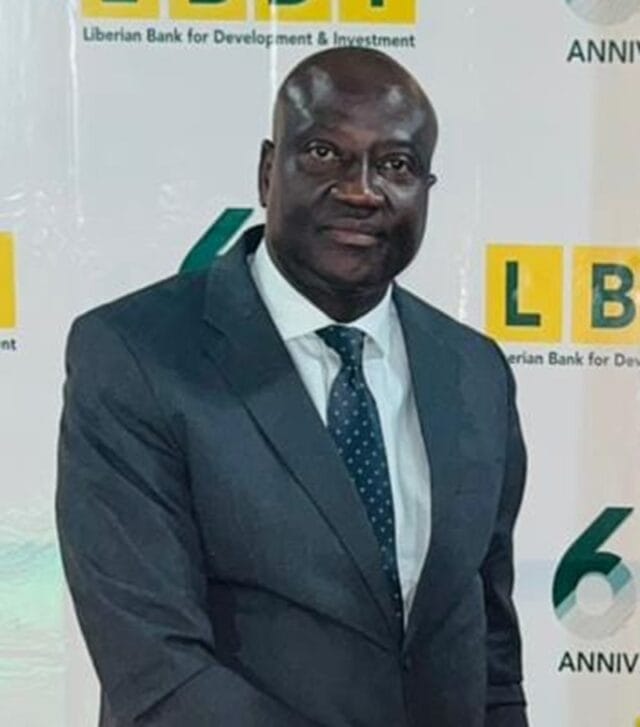
MONROVIA, Liberia — Central Bank of Liberia (CBL) Executive Governor Henry F. Saamoi has urged banks operating in Liberia to accelerate digital innovation, strengthen risk management, and integrate climate-related financial risks into their business models, as the country’s financial sector confronts a rapidly evolving global banking environment.
Speaking Saturday evening at the 60th Anniversary celebration of the Liberian Bank for Development and Investment (LBDI), Saamoi said Liberia’s banking system stands at a critical crossroads, where innovation, resilience, and responsible regulation must work together to sustain growth and public confidence.
“The Central Bank recognizes that digital financial services are no longer optional,” Saamoi said. “They are essential to financial inclusion, economic efficiency, and competitiveness.”
LBDI’s Legacy and Role in National Development
Saamoi described LBDI—Liberia’s oldest and only indigenous bank—as a cornerstone of the country’s financial system, noting its founding mission to provide investment capital for national development and its survival through decades of economic shocks.
“Over the last six decades, LBDI has played a pivotal role in nation-building, supporting Liberia’s economic growth and laying the foundation for a more prosperous future,” he said, adding that the bank’s journey reflects the anniversary theme, “From Challenge to Triumph – The Journey of Renewal.”
He praised the bank’s extensive national footprint, strong Liberian ownership, and sustained support for small and medium enterprises, infrastructure financing, and inclusive access to financial services.
Central Bank’s Regulatory Vision
Saamoi emphasized that effective regulation extends beyond licensing and supervision, stressing that the CBL’s role is to create an enabling environment where banks can thrive while protecting depositors and the wider economy.
“Effective regulation is not only about authority,” he said. “It is about creating an environment where financial institutions can grow while safeguarding the interests of depositors, investors, and the broader economy.”
He noted that since the establishment of the CBL in 1999, Liberia’s banking sector has expanded significantly despite periodic institutional and systemic challenges, contributing meaningfully to economic transformation.
Digital Transformation and Payment System Reforms
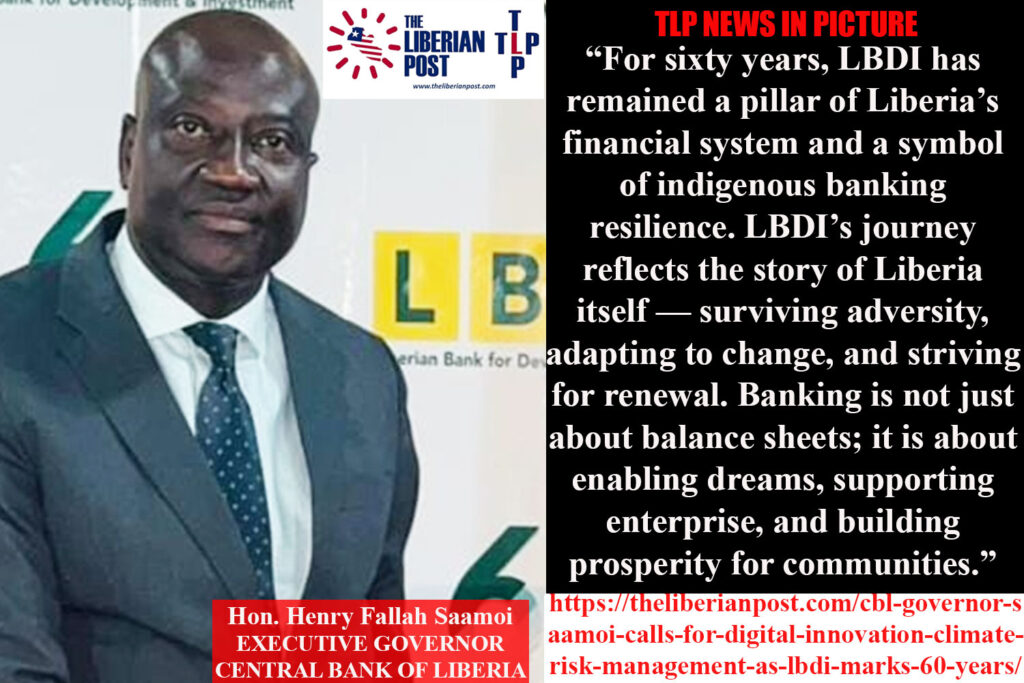
A major focus of Saamoi’s address was the digital transformation of Liberia’s financial system. He said mobile banking, digital payments, fintech innovations, and emerging technologies are reshaping financial services worldwide, presenting both opportunities and risks.
To support this transition, Saamoi disclosed that the CBL, with funding from the World Bank, is developing a modern national electronic payment switch.
“As a first step, we are poised to launch the first instant and inclusive payment and settlement system,” he said, noting that the initiative will promote interoperability between mobile money operators—a development he described as “a major milestone.”
He said the CBL is also working on a comprehensive regulatory framework to encourage digital innovation while addressing cybersecurity, data privacy, consumer protection, and financial-crime risks.
Climate Change as a Financial Stability Risk
Saamoi warned that climate change poses direct and growing risks to Liberia’s financial system, with potential impacts on loan portfolios, collateral values, and borrower creditworthiness.
“Climate risk is a financial stability risk,” he declared.
He said the CBL is beginning to integrate climate considerations into its supervisory framework, including requirements for banks to assess and disclose climate-related risks and guidance to promote sustainable lending, renewable energy financing, and climate-smart agriculture.
Partnership with LBDI and the Banking Sector
Saamoi assured LBDI and other banks that the Central Bank views itself not as a distant regulator, but as a strategic partner in building a resilient and inclusive financial sector.
“The strength of our banking system lies not in buildings or balance sheets alone, but in the trust between financial institutions and the communities we serve,” he said.
He commended LBDI’s leadership and staff for surviving decades of adversity and adapting when necessary, while remaining committed to Liberia’s long-term development.
Call to Action
In closing, Saamoi urged regulators, bankers, policymakers, and citizens to work collaboratively to build a financial system aligned with international standards and national development priorities.
“Let us embrace innovation while managing risk,” he said. “Let us expand access while maintaining stability. And let us never forget that banking is about enabling dreams and building prosperity for individuals, families, and communities.”
The ceremony marked six decades of LBDI’s operations and reaffirmed its place as a key partner in Liberia’s financial and economic future.