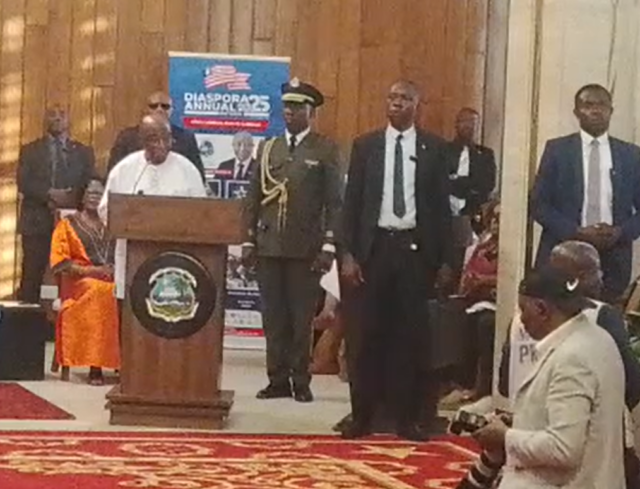
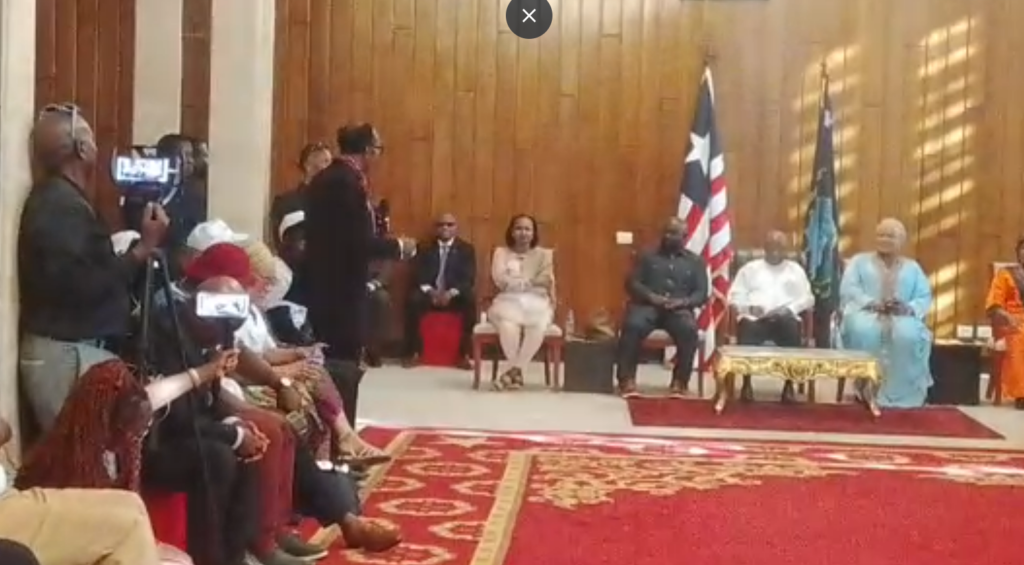
The Diaspora Farewell Program at the Executive Mansion was more than a closing ceremony to Liberia’s 2025 Annual Diaspora Return. Taken together—the President’s valedictory message, the remarks of the United Nations Resident Coordinator, and the comprehensive account of diaspora activities—it offered a revealing snapshot of what Liberia gains when it treats its diaspora not as visitors, but as partners in national renewal.
What emerged most clearly is this: the Liberian diaspora is no longer peripheral to development discourse. It is central.
President Joseph Nyuma Boakai, in bidding farewell to returning Liberians from across the globe, framed diaspora engagement as a pillar of national reconstruction. His remarks were notable not for lofty rhetoric, but for their tone of expectation. The President did not praise the diaspora merely for coming home; he challenged them to remain invested—economically, intellectually, and morally—in Liberia’s future: that framing matters. It signals a shift from symbolic engagement to outcome-driven partnership.

Equally important was the President’s insistence that diaspora contribution is not charity. It is nation-building. From professional expertise to capital inflows, from mentorship to institutional reform, the diaspora was acknowledged as a force that complements domestic effort rather than substitutes for it. This clarity is essential if diaspora engagement is to mature beyond annual programs into sustained national policy.
The United Nations Resident Coordinator’s remarks reinforced this point from a development perspective. By situating diaspora engagement within global best practices, the UN underscored that Liberia’s approach aligns with international development models that leverage migration, skills transfer, and remittances as tools for resilience and growth. The message was unambiguous: countries that succeed do not lose their diaspora—they activate it.
The UN’s emphasis on coordination, inclusion, and sustainability was particularly instructive. Diaspora engagement, the Coordinator stressed, must be structured, measurable, and inclusive of youth and women. That observation speaks directly to Liberia’s challenge. Goodwill alone does not deliver development. Institutions do. Programs must therefore evolve into platforms that track impact, support reintegration, and convert enthusiasm into long-term contribution.
Perhaps the most compelling evidence of diaspora value came not from speeches, but from the ledger of accomplishments presented by the Diaspora Affairs Office. According to Erasmus Williams, diaspora Liberians contributed tangibly across sectors—healthcare outreach, school renovations, skills training, technology support, and humanitarian interventions in underserved communities. These were not ceremonial gestures. They were practical, localized solutions delivered where state capacity is often stretched.
This is where the editorial lens must sharpen. Liberia cannot afford to treat such contributions as episodic goodwill tied to December returns. The scale of need—and the scale of diaspora capacity—demands continuity. If diaspora Liberians can mobilize clinics, classrooms, and capital in weeks, imagine what structured year-round engagement could achieve.
Yet, the farewell program also exposed lingering gaps. Too much diaspora engagement remains personality-driven rather than policy-anchored. Too many initiatives depend on individual goodwill rather than institutional frameworks. Too often, returning Liberians encounter bureaucratic friction that undermines their enthusiasm. These are not insurmountable problems, but they require deliberate reform.
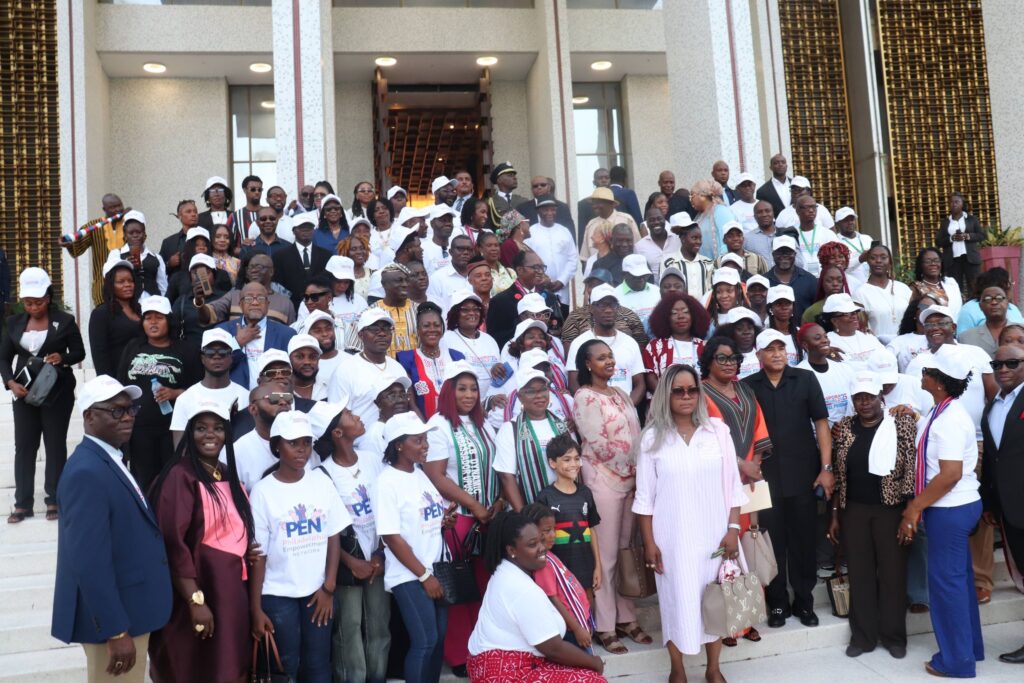
The Boakai administration has an opportunity—perhaps a narrow one—to institutionalize what the farewell program symbolized. This means embedding diaspora participation into national development planning, investment policy, and skills deployment. It means simplifying reintegration processes, protecting diaspora investments, and creating transparent channels for collaboration between government, private sector, and diaspora networks.
The diaspora, for its part, must also evolve. Engagement cannot be seasonal. Patriotism cannot peak only during holidays. Sustainable contribution requires organization, accountability, and alignment with national priorities. Emotional attachment must mature into strategic commitment.
The farewell ceremony closed one chapter of the 2025 Diaspora Return, but it opened a more consequential question for 2026 and beyond: Will Liberia finally move from celebrating its diaspora to structurally partnering with it?
The answer will determine whether future farewell programs mark the end of visits—or the continuation of impact.
Liberia’s diaspora is not a crowd to be applauded. It is a national asset to be integrated. The real work begins after the goodbye.