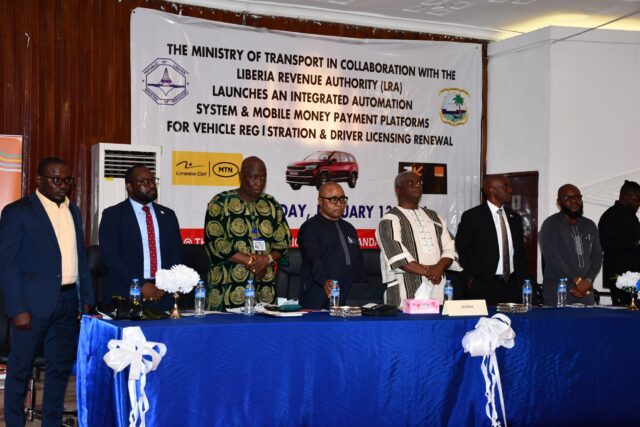
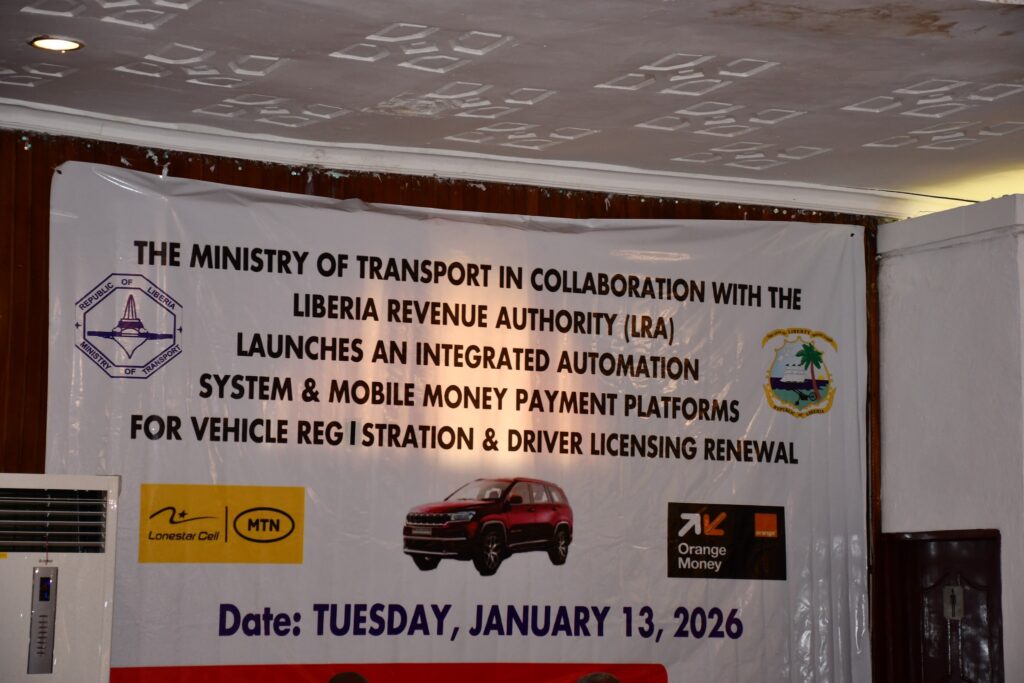
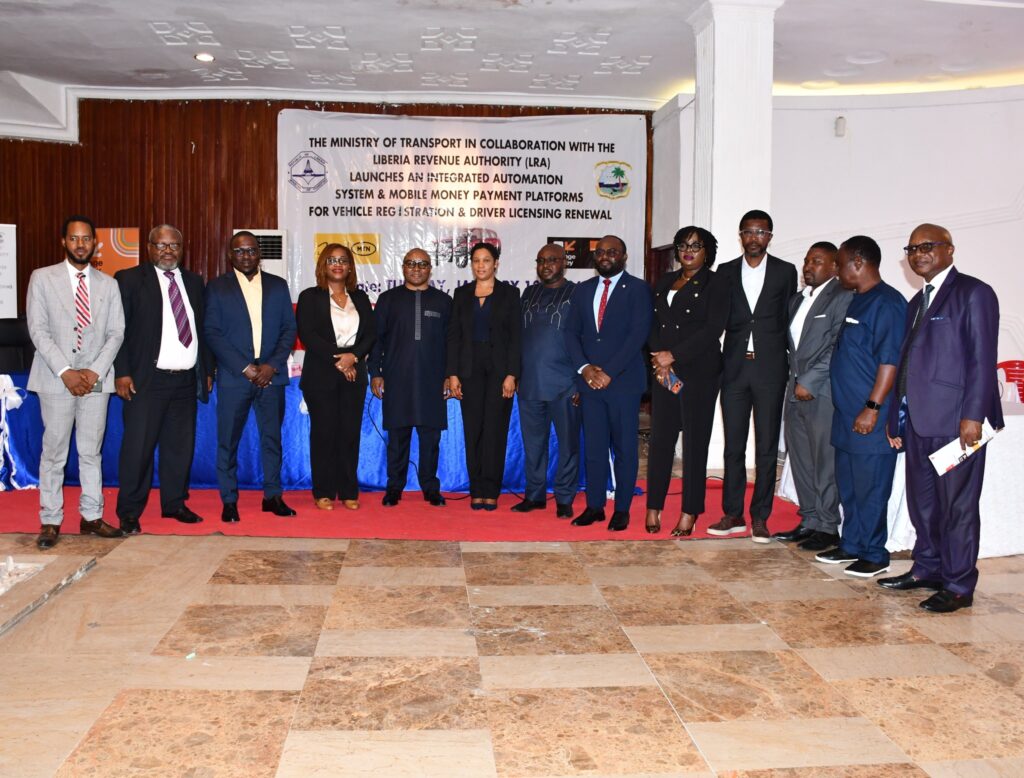
MONROVIA — The Ministry of Transport, in collaboration with the Liberia Revenue Authority (LRA), has launched an Integrated Automation System and mobile money payment platforms aimed at modernizing vehicle registration and driver’s licensing services, tightening controls against document fraud, and improving domestic revenue collection.
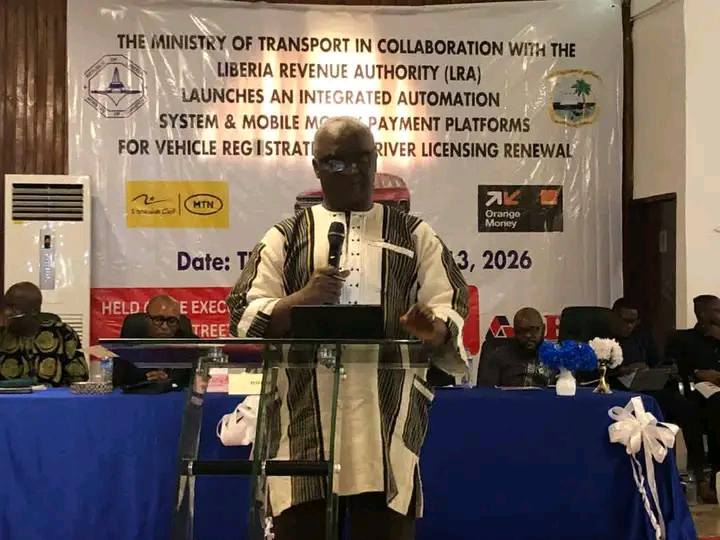
Speaking at the launch ceremony, Mr. James Dorbor Jallah, Commissioner-General of the LRA, said the new system is expected to address longstanding problems in the transport registry, including the issuance and circulation of duplicate driver’s licenses, duplicate license plates, and duplicate vehicle registration documents.
“To correct…too many problems I’ve had: there were duplications—duplicate drivers’ licenses, duplicate license plates, duplicate registration documents,” Jallah said, adding that the new platform should make such irregularities “a thing of the past.”
Revenue Boost Expected as Compliance Becomes Easier
Jallah said government’s best estimate is that the reforms could significantly increase revenue from transport-related services. He indicated that collections—placed around US$10 million—could double in 2026, as digital payments and tighter verification reduce leakages and make compliance easier.
For years, he noted, registration and license renewals have been associated with long queues, cash payments, and delays, conditions that often discourage compliance.
“Today, that story changes,” Jallah said. “With this new system…we are making public services simple, secure, and modern.”
“Cash to Confidence”: Traceable Payments, Stronger Accountability
At the core of the reform is a shift away from cash-based transactions toward digital payment options, including mobile money, which the LRA chief said will improve transparency and public trust.
“Digital payment is not just about technology; it is about trust,” Jallah told the audience. “When payments are digital, money is traceable, records are [kept], leakages are reduced, [and] public confidence [improves].”
He described the initiative as a product of inter-agency collaboration and said it aligns with the government’s ARREST agenda, bringing together “accountability, reform, service delivery, and technology.”
Duty-exempt Vehicle Transfers to Be Tracked Under New Controls
Jallah also used the occasion to warn about abuse surrounding duty-exempt vehicles, saying some vehicles brought in under exemption have been transferred to owners who are not entitled to those benefits.
He cited the legal requirement that when a duty-exempt vehicle changes ownership to a non-exempt person, the applicable duties must be paid by the new owner. Jallah said the enhanced system will support stricter tracking of vehicle ownership changes and enforcement of lawful payments.
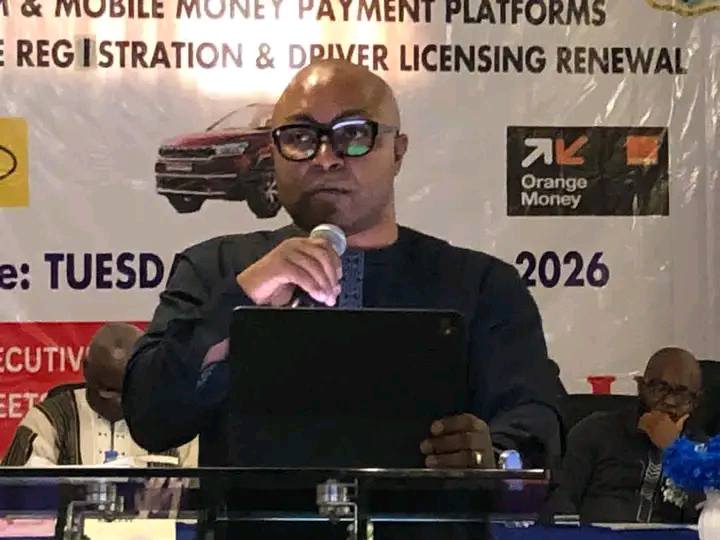
System Demonstrated Live
Following Jallah’s remarks, project officials conducted a live demonstration of the platform. Mr. Anuj Kipowo, introduced as an assistant director at the Ministry of Transport and head of the project, walked participants through key steps, including the requirement for users to create an account before making payments through the new channels.
Jallah, serving as chief launcher, formally declared the platform operational, describing it as “a system built for the people” and “designed for the future.”
The Ministry of Transport and LRA have not yet released a detailed rollout timetable, but officials said the reform is intended to make registration and licensing services faster, more secure, and easier to access while improving government oversight and revenue performance.