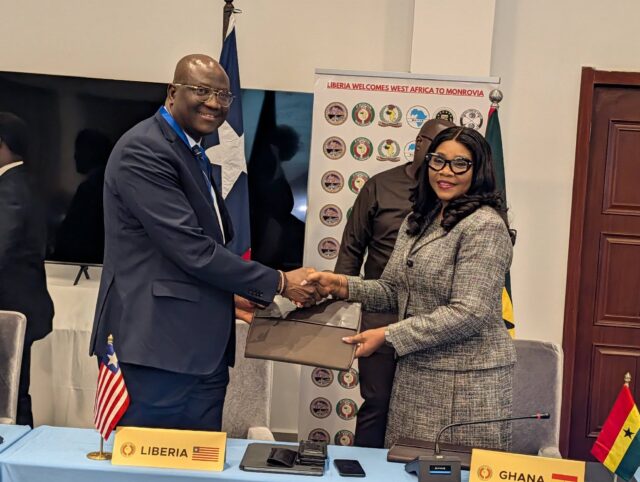
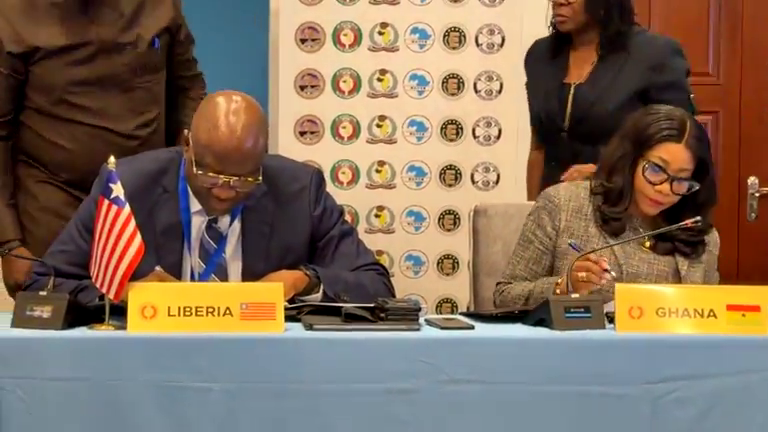
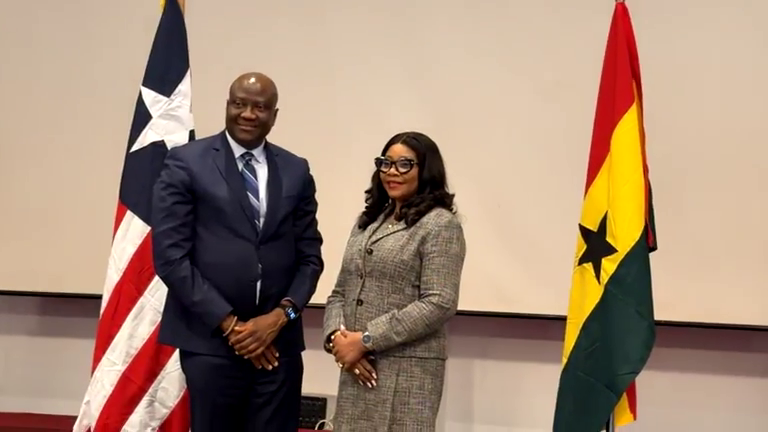
FARMINGTON HOTEL, UNIFICATION TOWN, Margibi County — In a significant boost to regional financial cooperation within the West African Monetary Zone (WAMZ), the Central Bank of Liberia (CBL) and the Bank of Ghana (BoG) have signed a Memorandum of Understanding (MOU) on technical cooperation and capacity building, marking what officials described as a “strategic and timely” partnership between the two sister institutions.
The signing ceremony, held at the close of the ECOWAS and WAMZ Convergence Council meetings in Liberia, drew senior central bank governors, finance ministers, and regional financial technocrats from across West Africa.
The three-year agreement, with a two-year non-binding extension option, will facilitate staff exchanges, technical attachments, joint research initiatives, and structured knowledge-sharing between the two central banks.
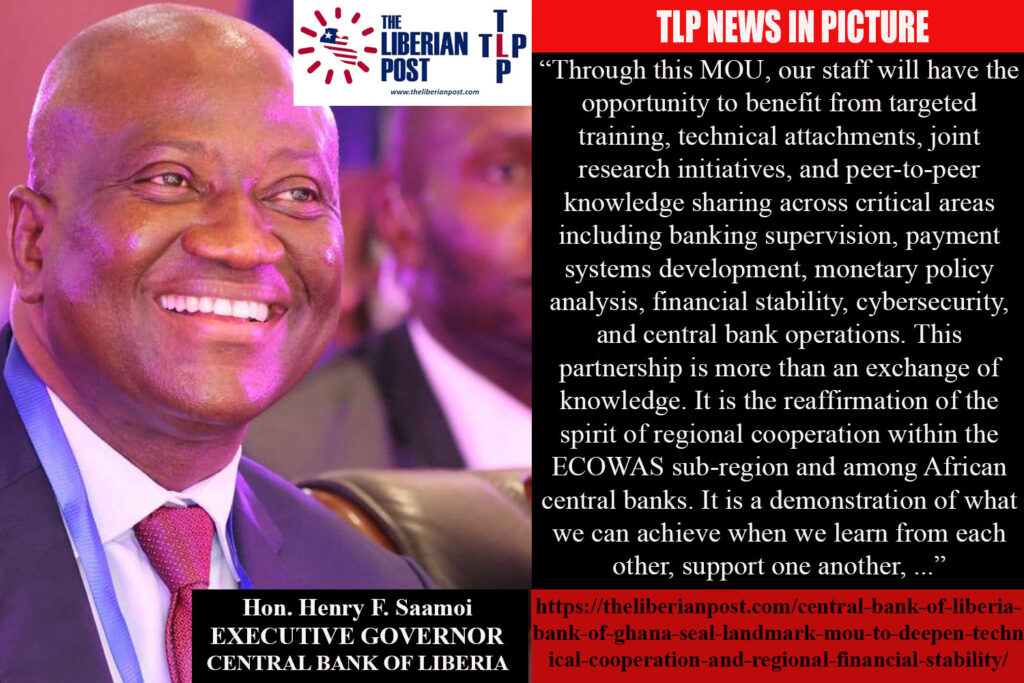
Saamoi: “A Significant Milestone”
Delivering remarks before the signing, CBL Executive Governor Henry F. Saamoi described the agreement as a critical step in strengthening Liberia’s institutional capacity.
“Today marks a significant milestone in our ongoing efforts to strengthen the institutional capabilities of the Central Bank of Liberia,” Governor Saamoi declared.
He emphasized that in an increasingly complex financial environment—both regionally and globally—building a skilled and well-trained workforce remains fundamental to the Bank’s mandate.
“As we continue to navigate an increasingly complex financial landscape—regional, continental, and global—our ability to build a highly skilled, well-trained, and informed workforce is fundamental to the fulfillment of our mandate,” he said.
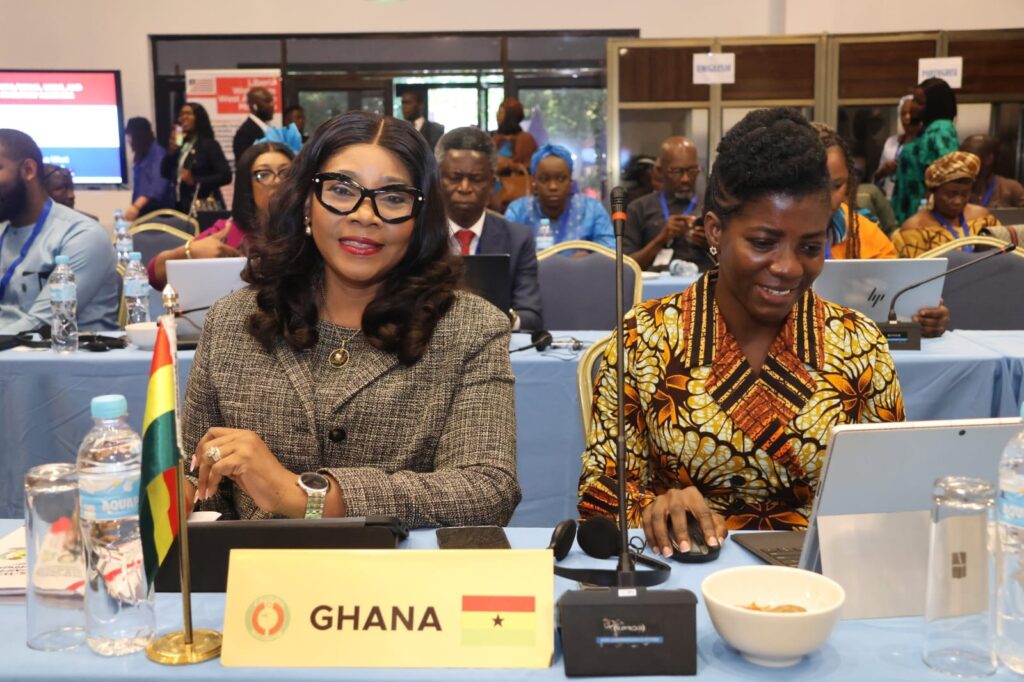
Governor Saamoi noted that the Bank of Ghana is widely respected across Africa for its regulatory strength and supervisory rigor.
“The Bank of Ghana has long been recognized across the continent for its robust regulatory frameworks, strong supervisory practices, innovative approaches to fee-based monetization, and resilient monetary policy management,” he said.
He stressed that the collaboration would directly support Liberia’s reform agenda.
“Through this MOU, our staff will have the opportunity to benefit from targeted training, technical attachments, joint research initiatives, and peer-to-peer knowledge sharing across critical areas including banking supervision, payment systems development, monetary policy analysis, financial stability, cybersecurity, and central bank operations.”
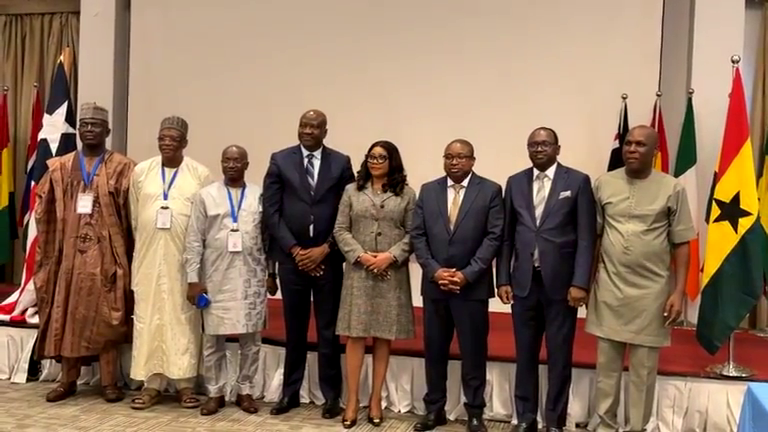
Governor Saamoi was unequivocal that the agreement extends beyond technical exchanges.
“This partnership is more than an exchange of knowledge. It is the reaffirmation of the spirit of regional cooperation within the ECOWAS sub-region and among African central banks.”
He added: “It is a demonstration of what we can achieve when we learn from each other, support one another, and work collectively towards shared goals of stability, growth, and financial sector resilience.”
Addressing CBL staff directly, he described the MOU as a long-term institutional investment.
“This agreement is an investment in you. The future of our institution rests upon the quality of human capital, and we are determined to ensure that you are equipped with the skills and expertise that will contribute to continuous improvement, innovation, and institutional strengthening.”
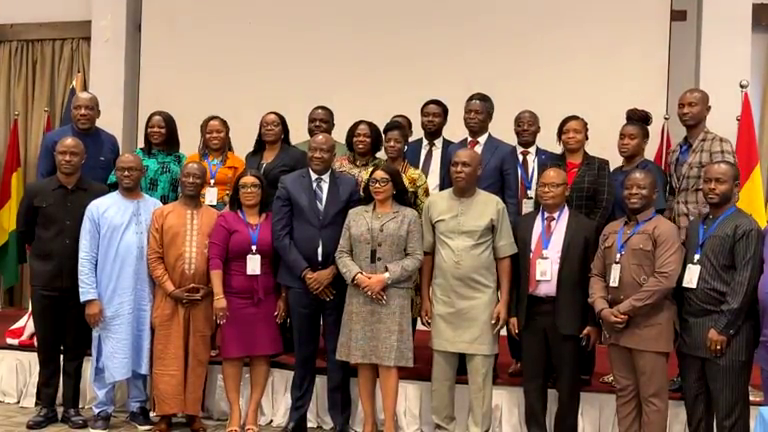
Ghana: “A Historic Milestone”
Representing the Bank of Ghana, Second Deputy Governor Matilda Asante-Asiedu characterized the MOU as the formal deepening of an already cordial relationship.
“Today marks a historic milestone in our relationship as we formally deepen and strengthen it through the signing of this memorandum of understanding,” she said.
She conveyed greetings from Bank of Ghana Governor Dr. Johnson Pandit Asiama and reaffirmed Ghana’s commitment to structured institutional collaboration.
“This memorandum represents our collective commitment to delivering effective technical assistance, advancing capacity-building initiatives, and providing mutual support in key areas of central banking operations.”
According to her, the scope of the MOU encompasses both traditional and emerging pillars of central banking, including macroeconomic forecasting, monetary policy operations, reserve management, anti-money laundering frameworks, central bank communications, digital currencies, cryptocurrency regulation, and currency design.
“These areas reflect not only the traditional pillars of central banking but also the innovative frontiers that define the future of our institutions and our economic success,” she noted.
She underscored the philosophy behind the partnership:
“Our collective strength far exceeds our individual capabilities.”
Regional Endorsement
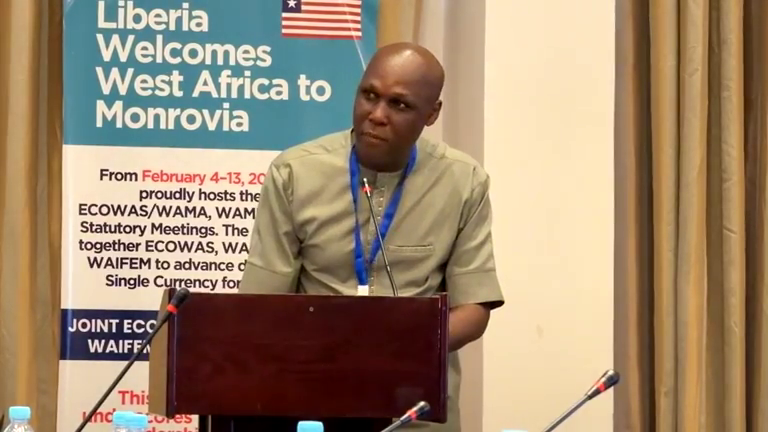
The agreement received strong endorsement from other regional officials in attendance. The Deputy Governor of the Central Bank of The Gambia praised the initiative as a model of “south-south cooperation,” urging greater intra-African technical collaboration rather than reliance on external consultants.
He described the MOU as a practical step toward strengthening homegrown expertise within the sub-region, noting that such structured cooperation among central banks enhances long-term institutional resilience.
Strengthening WAMZ Integration
The signing comes at a time when WAMZ member states are intensifying efforts toward macroeconomic convergence and the eventual realization of a common regional currency.
By institutionalizing technical cooperation between two key monetary authorities, the agreement reinforces broader ECOWAS objectives around policy harmonization, financial stability, and regulatory convergence.
For Liberia, the partnership aligns squarely with the CBL’s ongoing reform strategy and financial inclusion agenda, while positioning the country more firmly within regional monetary governance structures.
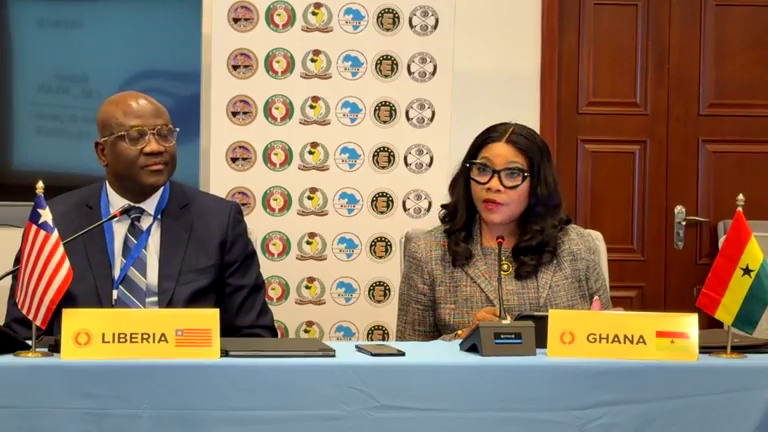
Governor Saamoi expressed optimism about the future of the collaboration:
“With partners such as the Bank of Ghana, we are confident that we will continue to make meaningful progress toward a stable and inclusive financial system that supports sustainable economic development in Liberia.”
As the ceremony concluded and the MOU was formally signed, regional observers described the moment as emblematic of a maturing West African financial architecture—one increasingly defined by cooperation, technical solidarity, and shared institutional strengthening.
Follow The Liberian Post on Facebook and X (formerly twitter)