By Daniel Henry Smith, PhD
When the Voice of the Presidency Speaks, It Cannot Whisper as a Private Citizen.
Introduction
On February 16, 2026, the Ministry of Justice of the Republic of Liberia issued a firm, unambiguous, and legally grounded press release ordering the immediate cessation and desistance of all activities associated with the so-called “National Fula Security of Liberia (NFSL).” The Ministry’s statement left no room for interpretation: the group is unauthorized, unregistered, and illegal. It declared that the Government of Liberia “will not recognize, legitimize, or tolerate the formation of unauthorized security structures, particularly those organized along ethnic, tribal, communal, or sectarian lines.” This was not merely a bureaucratic memo. It was a definitive pronouncement of government policy on a matter of national security, issued by the constitutionally mandated authority responsible for public safety and the regulation of security entities in the Republic.
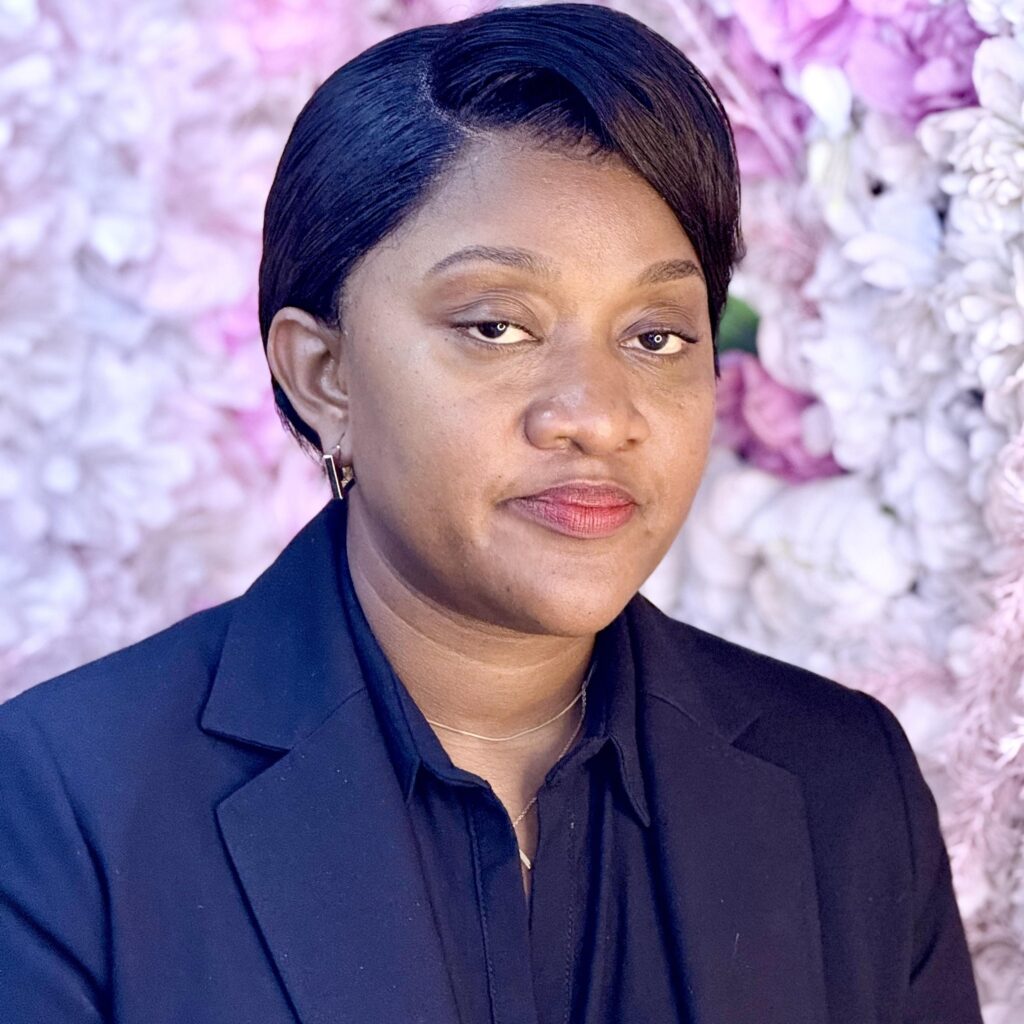
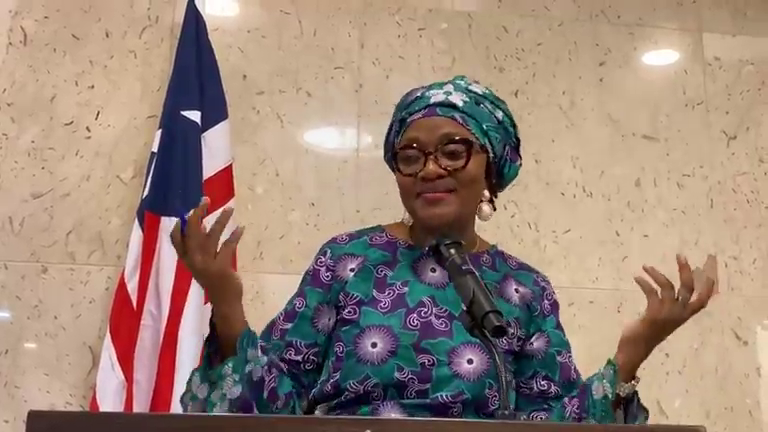
Yet, almost simultaneously, Atty. Kula Bonah Nyei Fofana, the Presidential Press Secretary of the Republic of Liberia, published a lengthy personal opinion piece titled “Releasing the Accelerator a Bit: The Fulani Security Saga,” in which she systematically defended the existence of the NFSL, minimized its illegality, compared it to church ushers, and urged the government and the public to “slow down” rather than enforce the law. She prefaced this opinion with a thin disclaimer: “This is a personal opinion and does not reflect my office or portfolio.”
This article undertakes a rigorous, paragraph-by-paragraph rebuttal of Atty. Fofana’s opinion. It argues that her disclaimer is constitutionally meaningless, that her opinion directly contradicts and undermines the official position of the Government she serves, that her analogy between the NFSL and church ushers is fundamentally flawed and historically inaccurate, that her activism on this matter promotes dangerous tribal sentiment, and that her intervention brings the presidency into public disrepute. In essence, this article contends that Atty. Fofana’s piece is not merely a harmless expression of personal belief but rather a dangerous act of institutional self-sabotage that no Presidential Press Secretary in any functioning democracy should be permitted to undertake without consequence.
The Myth of the “Personal Opinion”: Why a Presidential Press Secretary Cannot Separate Herself from Her Office
Atty. Fofana opens her article with a disclaimer stating that her views are personal and do not reflect her office or portfolio. She further identifies herself as “an active member of the Muslim Community,” as though this secondary identity can be cleanly separated from her primary, official role as the spokesperson of the President of the Republic of Liberia. This is both a legal fiction and a political impossibility.
The office of the Presidential Press Secretary exists for one singular purpose: to communicate the position of the President and, by extension, the Ministry of Presidential Affairs to the public. The person who holds this office is not merely an employee who clocks in and out. She is the embodiment of presidential communication. Every word she speaks, every opinion she publishes, and every public stance she takes is inevitably and inextricably linked to the presidency. The public does not have the luxury of parsing which sentences come from “Atty. Fofana the private citizen” and which come from “Atty. Fofana the Presidential Press Secretary.” The office follows the officeholder everywhere, at all times, on all matters, but especially on matters of national security.

Consider the fundamental absurdity of the situation: the Ministry of Justice, an arm of the same Executive Branch that Atty. Fofana serves, declares the NFSL illegal and orders its immediate disbandment. Hours later, the President’s own spokesperson publishes an article arguing that the group should not be disbanded but rather “guided,” “regulated,” and “integrated.” Which position is the public supposed to accept as the government’s stance? The answer should be obvious, but Atty. Fofana’s intervention makes it anything but.
This shows when two voices emerge from the same government on a matter as sensitive as national security, and those voices are diametrically opposed, the result is not democratic debate but institutional incoherence. The Ministry of Justice, clothed with the constitutional authority to speak on matters relating to national security, public safety, and the regulation of security formations, has rendered its position. That position is not an opening argument in a public negotiation. It is a legal directive backed by the full authority of the Republic. For the Presidential Press Secretary to publicly offer an alternative framework, one that counsels patience, regulation, and partnership rather than cessation and desistance, is to tell the Liberian people that the government does not know its own mind.
It tells the organizers of the NFSL that the order from the Ministry of Justice is negotiable. It tells other groups contemplating the formation of unauthorized ethnic security structures that there are sympathetic voices within the highest corridors of power willing to advocate on their behalf. And it tells the international community, which has invested billions of dollars in Liberia’s post-conflict security architecture, that the Liberian government cannot maintain message discipline on even the most fundamental questions of security governance. The damage is not hypothetical. It is immediate, tangible, and potentially irreversible. A government that contradicts itself on national security does not inspire confidence. It inspires doubt, and doubt, in a post-conflict society, is the precursor to instability.
In established democracies, the principle is well understood. White House Press Secretaries in the United States, spokespersons for 10 Downing Street in the United Kingdom, and communication directors across the democratic world operate under an unwritten but ironclad rule: you do not publicly contradict your own government’s policy, especially not on matters of national security. If you disagree, you resign first and speak second. You do not get to enjoy the privileges and authority of your office while simultaneously undermining the very government that appointed you. Atty. Fofana’s disclaimer is therefore not a shield. It is an admission. It acknowledges that she knows her opinion contradicts official government policy, and yet she published it anyway. That is not the exercise of free speech. That is the abdication of institutional responsibility.
Contradicting the Ministry of Justice is a Direct Assault on Constitutional Authority
The most damaging aspect of Atty. Fofana’s article is that it stands in direct, irreconcilable conflict with the official press release of the Ministry of Justice. To appreciate the depth of this contradiction, it is necessary to examine the two documents side by side.
The Ministry of Justice stated “unequivocally that no authorization, permit, registration, license, or operational approval has been granted by the Government of the Republic of Liberia for the creation, operation, recruitment, or deployment of any entity under the name ‘National Fula Security of Liberia’ or any similar formation.” The Ministry further confirmed that “the individuals or organizers associated with this entity have not obtained the requisite permits, have not undergone governmental assessment.” The Ministry then ordered “the immediate cessation and desistance of all recruitment, organizational, operational, promotional, or mobilization activities” and warned that any continuation “will be considered a direct violation of the laws of the Republic of Liberia and will attract the full weight of criminal and administrative sanctions.” This language is absolute. There is no ambiguity, no invitation to dialogue, and no suggestion that the matter is open for negotiation or alternative interpretation.
Now consider what Atty. Fofana writes. In her Section 6 of her article, she argues that “rather than accelerating toward confrontation, or calling for cessation, authorities such as the Ministry of Justice and law enforcement agencies should treat this as a teaching moment.” She urges that “community volunteerism should not automatically be criminalized if it can be properly regulated.” In her Section 5, she advocates for “proper registration under national law, clear operational guidelines, coordination with state security agencies” rather than disbandment.
The contradiction is staggering. The Ministry of Justice has already determined that the NFSL is operating illegally. Atty. Fofana is telling the Ministry of Justice, her own government’s law enforcement authority, that it should reconsider its position and treat the matter as an opportunity for partnership. She is not merely disagreeing with the Ministry. She is publicly instructing it to reverse course, and she is doing so from the most visible communication platform in the Liberian government, the office of the Presidential Press Secretary.
Under Liberian law, the Ministry of Justice, through its Division of Public Safety, is the sole authority empowered to authorize, regulate, or disband security formations. This authority is not shared with the Presidential Press Secretary. It is not subject to the personal opinions of political appointees who happen to have community affiliations. When the Ministry of Justice speaks on matters of national security and public safety, it speaks with the full weight of the law. For the President’s own spokesperson to publicly challenge that authority is to create a constitutional crisis of communication, one that leaves citizens, security agencies, international partners, and even the organizers of the NFSL uncertain about what the government’s actual position is.
This uncertainty is not academic. It has real consequences. If organizers of the NFSL read Atty. Fofana’s article, they may reasonably conclude that there is a faction within the Executive Branch sympathetic to their cause. They may choose to continue their activities, believing that the Presidential Press Secretary’s voice carries more weight than the Ministry of Justice. They may resist compliance, not out of defiance, but out of genuine confusion about what the government actually wants. And if confrontation results, if lives are lost, if tensions escalate, the blame will fall not only on those who organized an illegal security formation but also on the government official who publicly signaled that the formation might be acceptable.
The Church Usher Analogy is Fundamentally Flawed and Historically Inaccurate
Perhaps the most intellectually dishonest section of Atty. Fofana’s article is Section 4, in which she attempts to draw a parallel between the NFSL and Christian church ushers. She writes that during “crusades, conventions, and overnight vigils, churches often deploy organized ushers, marshals, and fellowship security teams to direct parking, control entry and exit, prevent altar overcrowding, protect visiting pastors, and manage prayer lines.” She then concludes that “the Muslim community faces similar realities” and that “the difference here appears not so much in the function but in the perception created by the name and structure.” This analogy collapses under even the most cursory examination, for several critical reasons.
First, church ushers are not organized as a national entity. No church in Liberia has formed an organization called the “National Christian Security of Liberia” or any equivalent. Church ushers operate within the confines of a specific church, for a specific congregation, during a specific service. They do not recruit across national lines, do not adopt military-style structures, do not brand themselves as a national security force, and do not produce the kind of coordinated imagery that prompted the Ministry of Justice to issue an emergency press release. The NFSL, by its very name, “National Fula Security of Liberia,” claims a national mandate organized along ethnic lines. There is no comparison between a church usher directing congregants to their seats and an ethnically organized group calling itself a national security force.
Second, there is no history in Liberia of any church forming a militia or paramilitary group under the guise of ushering. Atty. Fofana’s analogy would require us to believe that the function of ushering, which involves greeting congregants, distributing programs, collecting offerings, and maintaining decorum during worship, is somehow equivalent to the formation of a uniformed, coordinated, nationally branded security apparatus organized along ethnic lines. This is not a matter of perception. It is a matter of fact. Liberian churches have never produced entities that alarmed the Ministry of Justice. The NFSL has. The analogy therefore does not illuminate the situation. It obscures it.
Third, Atty. Fofana’s comparison reveals a fundamental misunderstanding, or deliberate mischaracterization, of the role of ushers in the church. Ushers in Christian tradition are servants of worship. Their role is liturgical and hospitality-oriented. They welcome worshippers, assist the elderly and disabled, manage seating, facilitate the orderly conduct of sacraments, and ensure that the worship experience is reverent and accessible. They are not security operatives. They do not undergo training in crowd control, they do not wear uniforms designed to project authority, and they do not operate under a national organizational umbrella. To equate them with the NFSL is to strip the ushering ministry of its spiritual character and to simultaneously launder the NFSL’s activities by associating them with a benign, universally understood church function.
Fourth, and most importantly, the Ministry of Justice’s press release explicitly addresses the flaw in this analogy. The Ministry declared that the government “will not recognize, legitimize, or tolerate the formation of unauthorized security structures, particularly those organized along ethnic, tribal, communal, or sectarian lines.” The Ministry did not say it was concerned about churches managing their congregations. It said it was concerned about an ethnically organized, nationally branded, uniformed security formation operating without authorization. Atty. Fofana’s attempt to reduce this concern to a matter of “perception” is not just wrong. It is dangerously dismissive of the legitimate security concerns that prompted the Ministry’s intervention.
A Political Activism from Inside the Government Undermines Public Policy and the Presidency of the Republic of Liberia
There is a critical distinction between civic activism and government service, and Atty. Fofana’s article demonstrates a troubling inability or unwillingness to recognize that distinction. As a private citizen, Atty. Fofana would be fully within her rights to advocate for the Muslim community, to argue for the regulation rather than disbandment of the NFSL, and to challenge government policy through the appropriate channels, public commentary, civil society engagement, legal advocacy, or political organizing. These are the hallmarks of a functioning democracy, and no one should seek to curtail them.
But Atty. Fofana is not a private citizen. She is the Presidential Press Secretary. She occupies one of the most sensitive and visible positions in the entire government. She is the voice of the President. And when she publishes an article that directly contradicts the Ministry of Justice’s position on a matter of national security, she is not exercising civic activism. She is engaging in institutional sabotage, however well-intentioned it may be.
The damage is multifold. Domestically, her article sends a signal to the Liberian public that the government is divided on the NFSL issue. Citizens who might otherwise have accepted the Ministry of Justice’s directive now have reason to question its legitimacy. If the President’s own spokesperson does not agree with the Ministry’s position, why should they? This is the corrosive effect of internal government contradictions on public trust. It does not strengthen democracy. It weakens governance.
Internationally, the optics are equally damaging. Development partners, diplomatic missions, and international security analysts monitor Liberian government communications closely. When the Ministry of Justice issues a clear directive on an unauthorized ethnic security formation, and the Presidential Press Secretary simultaneously publishes an article defending that formation, the international community is left to wonder whether the Liberian government is in control of its own messaging, its own security policy, or indeed its own appointees. This is not an abstract concern. Liberia’s post-conflict reputation, its standing with international partners, and its eligibility for security-sector support all depend on the perception that the government speaks with one voice on matters of national security.
Most critically, Atty. Fofana’s article undermines the very President she serves. The President appointed the Minister of Justice. The President’s government issued the directive against the NFSL. When the Presidential Press Secretary publicly contradicts that directive, she is not merely disagreeing with the Ministry of Justice. She is implicitly suggesting that the President either does not agree with his own Ministry’s position or does not have control over his own spokesperson. Either interpretation is devastating. The first suggests policy incoherence at the highest level. The second suggests institutional indiscipline. Neither reflects well on the presidency, and both bring the office into public disrepute.
The Tribal Dimension of Atty. Fofana’s Article Fuels the Very Sentiments She Claims to Oppose
Atty. Fofana’s article concludes with a quotation from Pastor Martin Niemöller’s famous poem about the failure to speak out against injustice: “First they came for the socialists, and I did not speak out…” The implication is unmistakable. Atty. Fofana is comparing the Ministry of Justice’s lawful enforcement action against an unauthorized ethnic security formation to the persecution of minorities in Nazi Germany. This is not merely hyperbolic. It is reckless, inflammatory, and profoundly dangerous in a country with a history of protracted tribal conflict.
Liberia endured fourteen years of civil conflict, from 1989 to 2003, in which ethnically organized armed groups devastated the nation. The wounds of that conflict are not healed. The memories are not distant. The formation of any security entity along ethnic or tribal lines is not a theoretical concern in Liberia. It is an existential one. The Ministry of Justice’s insistence that the government will not tolerate security structures “organized along ethnic, tribal, communal, or sectarian lines” is not bureaucratic overreach. It is a lesson written in blood.
By framing the government’s lawful action as persecution, by invoking Niemöller’s poem in this context, and by identifying herself explicitly as “an active member of the Muslim Community,” Atty. Fofana transforms a legal and security matter into a tribal and religious one. She invites members of the Fula community to see themselves not as citizens subject to the same laws as everyone else but as a persecuted minority whose community institutions are under attack. She invites members of other communities to see the government as selectively targeting one ethnic group. She creates precisely the kind of tribal polarization that the Ministry of Justice’s directive was designed to prevent.
This is the paradox at the heart of Atty. Fofana’s article. She opens with a disclaimer opposing violence and destabilization. She closes with rhetoric that, in a post-conflict society, has the potential to incite both. She claims to seek calm and restraint, yet her article is the single most destabilizing contribution to the public discourse on this issue, precisely because of who she is and the office she holds.
Paragraph-by-Paragraph: The Specific Failures of Atty. Fofana’s Argument on the NFSL Issue
Having addressed the overarching problems with Atty. Fofana’s article, it is necessary to examine several of her specific claims in detail.
On her claim that the NFSL “did not emerge overnight” and “has existed for years” (Section 2): The longevity of an illegal organization does not confer legitimacy. The Ministry of Justice confirmed that no authorization has ever been granted for the NFSL. That it has operated for years without authorization is not a defense. It is an aggravating factor. It means the group has been operating illegally for an extended period, accumulating organizational capacity, recruiting members, and establishing structures, all without the knowledge, approval, or oversight of the government. Atty. Fofana presents this history as evidence of benign intent. The Ministry of Justice would be justified in viewing it as evidence of sustained illegality.
On her claim that the NFSL has “worked alongside state security” (Section 2): If true, this raises more questions than it answers. Which state security officials authorized cooperation with an unregistered, unapproved security formation? Under what legal framework did this cooperation occur? Were the officers acting under orders, or were they making ad hoc arrangements that circumvented the Ministry of Justice’s regulatory authority? Cooperation with state security, absent formal authorization, does not legitimize the NFSL. It potentially implicates state security officials in facilitating illegal activities.
On her personal anecdotes about the 2018 and 2024 events (Section 2): Personal testimonials, however sincere, are not substitutes for legal compliance. The fact that the NFSL may have performed useful crowd-management functions during specific events does not exempt it from the requirement to register, obtain permits, undergo vetting, and operate within the legal framework. Many unauthorized entities perform useful functions. That does not make them legal, and it does not give the Presidential Press Secretary the right to advocate for their continued operation in defiance of the Ministry of Justice.
On her claim that there is “no record of armed activity” or “rebel affiliation” (Section 3): The Ministry of Justice’s directive is not predicated on evidence of armed activity or rebel affiliation. It is predicated on the fact that the NFSL is an unauthorized security formation organized along ethnic lines. The law does not require the government to wait until an illegal entity commits violence before acting. Prevention is not only the government’s right. It is its duty. Atty. Fofana’s framing, which implies that the NFSL should be left alone until it actually commits violence, is a dangerous inversion of the precautionary principle that underpins all security governance.
On her call for “guidance rather than rejection” (Section 5): This directly contradicts the Ministry of Justice’s order for “immediate cessation and desistance.” There is no middle ground between these two positions. The Ministry has ordered the NFSL to stop. Atty. Fofana is telling it to continue under reformed conditions. One of these positions is the law. The other is not.
On her suggestion that “authorities should treat this as a teaching moment” (Section 6): The Ministry of Justice is not a classroom. It is a law enforcement institution. When it determines that an entity is operating illegally, it does not issue lesson plans. It issues orders. Atty. Fofana’s suggestion that the Ministry should educate rather than enforce infantilizes both the Ministry and the organizers of the NFSL, who are adults capable of understanding that operating an unauthorized security formation is illegal.
On her invocation of Ramadan as justification (Section 7): The timing of Ramadan does not suspend the laws of Liberia. If additional crowd-management support is needed during religious observances, the proper course is to request assistance from the Liberia National Police, not to operate an unauthorized ethnic security force. The Ministry of Justice’s directive does not prevent the Muslim community from worshipping, gathering, or celebrating. It prevents an illegal organization from operating. These are not the same thing, and conflating them is both misleading and manipulative.
On her closing quotation of Pastor Niemöller (Section 9): This is perhaps the most offensive element of the entire article. Niemöller’s poem is about the systematic persecution and genocide of entire populations by a totalitarian state. The Ministry of Justice’s enforcement of Liberian law against an unauthorized ethnic security formation is not persecution. It is governance. To equate the two is to trivialize the Holocaust, to insult the intelligence of the Liberian public, and to inject a level of emotional manipulation into the discourse that is beneath the dignity of any government official, let alone the Presidential Press Secretary.
Conclusion: The Presidential Press Secretary Must Choose Between Activism and the Office of Presidential Press Security of the Republic of Liberia
Atty. Kula Bonah Nyei Fofana faces a choice that is as old as public service itself: the choice between personal conviction and institutional responsibility. Both are honorable in their proper spheres. A citizen-activist who advocates for her community, challenges government overreach, and demands fair treatment for marginalized groups is performing an essential democratic function. A Presidential Press Secretary who communicates the government’s position clearly, consistently, and without personal deviation is performing an equally essential institutional function.
But these two roles cannot coexist in the same person at the same time on the same issue. When the institution you represent has taken a clear, legally grounded, constitutionally authorized position on a matter of national security, and you publicly contradict that position while holding the most visible communication office in the government, you have made your choice. You have chosen activism over office, community over country, and personal conviction over institutional duty.
The consequences of that choice are severe. The government’s credibility on the NFSL issue is now compromised. The Ministry of Justice’s authority has been publicly questioned by a fellow government official. The President’s office has been brought into disrepute by the suggestion that his own spokesperson disagrees with his government’s security policy. Tribal and religious tensions have been inflamed by the framing of a legal enforcement action as ethnic persecution. And the organizers of the NFSL have been given reason to believe that compliance with the Ministry of Justice’s directive is optional.
None of this serves peace. None of this serves unity. None of this serves the President. And none of this serves the Fula community, which, like all communities in Liberia, is best served by a government that speaks with one voice, enforces its laws consistently, and ensures that no group, regardless of ethnicity or religion, operates outside the bounds of the law.
Atty. Fofana’s article was titled “Releasing the Accelerator a Bit.” The more accurate metaphor is that she has released the brake on a vehicle hurtling toward institutional chaos. The Ministry of Justice applied that brake for good reason. It is not the place of the Presidential Press Secretary to remove it.
If Atty. Fofana wishes to advocate for the NFSL, she should do so as a private citizen, from outside the gates of the Executive Mansion. If she wishes to remain the Presidential Press Secretary, she must speak as the government speaks, or she must remain silent. There is no third option. There never has been. The government of Liberia has spoken through the Ministry of Justice. The law has spoken through the Constitution. And the lessons of history have spoken through the blood of a hundred thousand Liberians who died in conflicts fueled by exactly the kind of ethnic security formations that the NFSL represents. It is time for the Presidential Press Secretary to listen or resign.