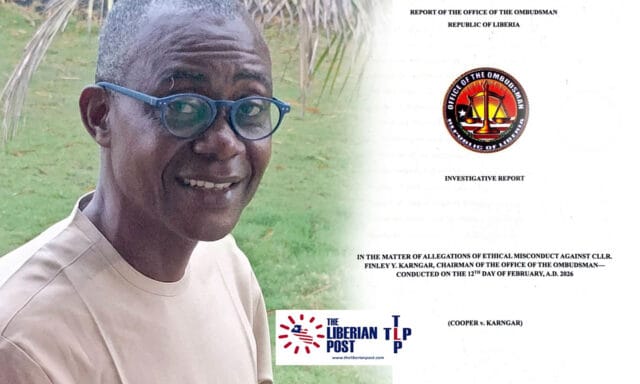
MONROVIA, Liberia – An Independent Investigative Panel of the Office of the Ombudsman has recommended the immediate dismissal and criminal prosecution of its Chairman, Finley Y. Karngar, following findings that he engaged in what the panel described as “gross ethical misconduct,” including extortion and abuse of office.
The recommendations are contained in a 12 February 2026 investigative report submitted to President Joseph Nyuma Boakai, under the title “In the Matter of Allegations of Ethical Misconduct Against Cllr. Finley Y. Karngar (Cooper v. Karngar).”
Panel Finds Salary Kickback Scheme
The investigation stems from a November 3, 2025 complaint filed by Mr. Francis K. D. Cooper, Special Assistant to the Chairman. Cooper alleged that between April and July 2025, Chairman Karngar required him to remit US$500 monthly — representing half of his salary — in addition to providing between US$30 and US$35 monthly for phone scratch cards.
According to the report, the panel reviewed secret audio recordings, SMS and WhatsApp messages, mobile money transaction records, and sworn testimonies from staff members.
Based on what it termed a “preponderance of evidence,” the panel concluded that Karngar received a total of US$2,130 over four months through what it described as a clandestine arrangement. The panel further found that Ms. Angeline Y. McGill, Administrative Assistant to the Chairman, acted as an intermediary in some of the transactions.
The report characterizes the conduct as extortion, solicitation of bribes, and misuse of public office.
Termination Deemed Retaliatory
The panel also determined that Cooper’s October 31, 2025 termination for “poor performance, incompetence, and dishonesty” was pretextual and directly linked to his refusal to continue the payments.
Investigators noted that the dismissal was carried out without adherence to Civil Service Standing Orders and without the approval of the Human Resource Director. Testimony from the HR Director indicated that Cooper had passed probation and had no negative appraisal on record.
The panel concluded that the termination was retaliatory and designed to silence the complaint.
Chairman Accused of Obstruction
The report states that Karngar declined to substantively respond to the allegations and instead challenged the jurisdiction of the panel, arguing that subordinate commissioners could not investigate their superior.
He reportedly failed to appear for multiple hearings and sought to divert the matter to the Civil Service Agency and other bodies. The panel described these actions as deliberate attempts to delay and obstruct the investigation.
Additionally, Ms. McGill filed a petition for declaratory judgment before the Civil Law Court for Montserrado County against two commissioners during the course of the inquiry — a move the panel interpreted as an effort to frustrate the investigative process.
Violations of Code of Conduct
The investigative report outlines multiple breaches of Liberia’s Code of Conduct for Public Officials, including:
- Exploitation of office for personal gain
- Abuse of power and position
- Undermining public confidence in governance institutions
- Failure to cooperate with a lawful investigation
In particularly strong language, the panel described the exploitation of an employer-employee relationship to demand a portion of a subordinate’s salary as conduct “akin to modern-day slavery.”
Recommendations to the President
Citing Part XV of the Code of Conduct, the panel urged the President to:
- Immediately dismiss Cllr. Karngar from his position as Chairman and Commissioner of the Ombudsman.
- Refer him to the Ministry of Justice and the Liberia Anti-Corruption Commission for criminal investigation into alleged extortion, bribery, and economic sabotage.
- Order repayment of the full amount received from Cooper, with interest at prevailing Central Bank of Liberia rates.
- Initiate a formal disciplinary investigation into Ms. McGill for her alleged role as an intermediary and for failure to comply with the investigative process.
Institutional Implications
The panel warned that failure to act decisively would undermine the credibility of the Ombudsman — the very institution mandated to enforce ethical standards in public service.
“To ignore or minimize these findings would be a catastrophic failure of the ethical framework of the Liberian state,” the report concludes, emphasizing that no public official should be above the law.
The matter now rests with the President, who is expected to determine the appropriate executive action in response to the recommendations.
Follow The Liberian Post on Facebook and X (formerly twitter)