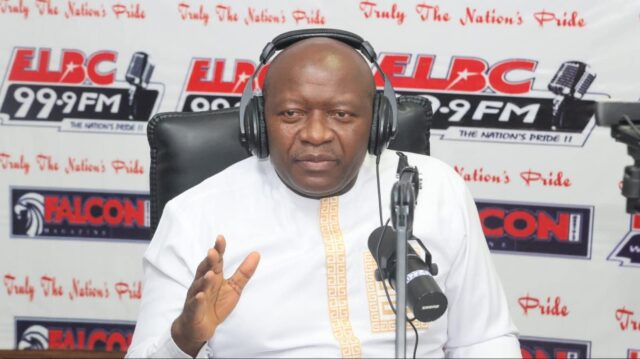
MONROVIA – Liberia’s Minister of Finance and Development Planning, Augustine Kpehe Ngafuan, has strongly defended the performance of the administration of President Joseph Nyuma Boakai, pointing to major gains in road connectivity, electricity expansion, healthcare delivery, and revenue generation as evidence that the government is making meaningful progress despite mounting public criticism.
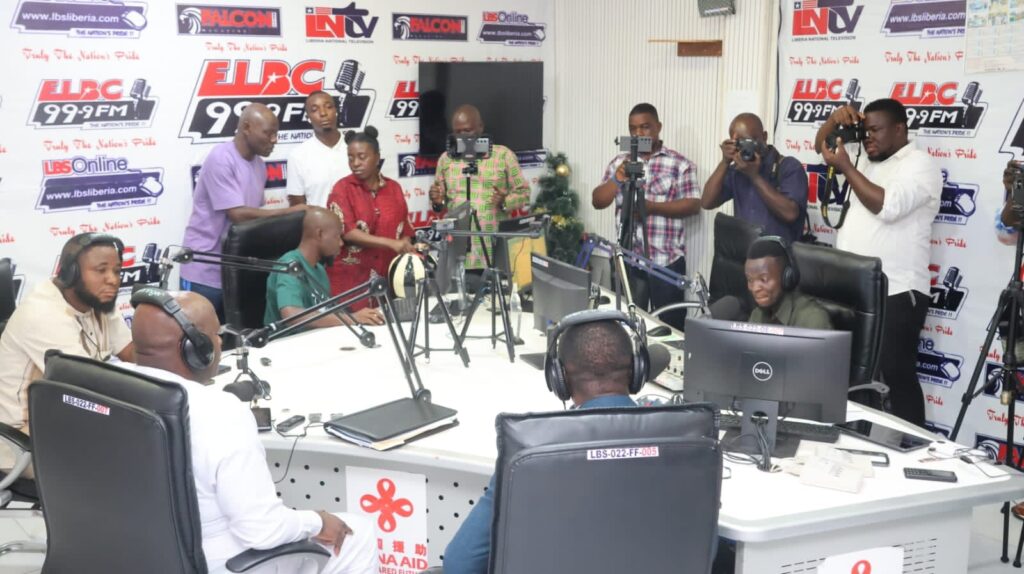
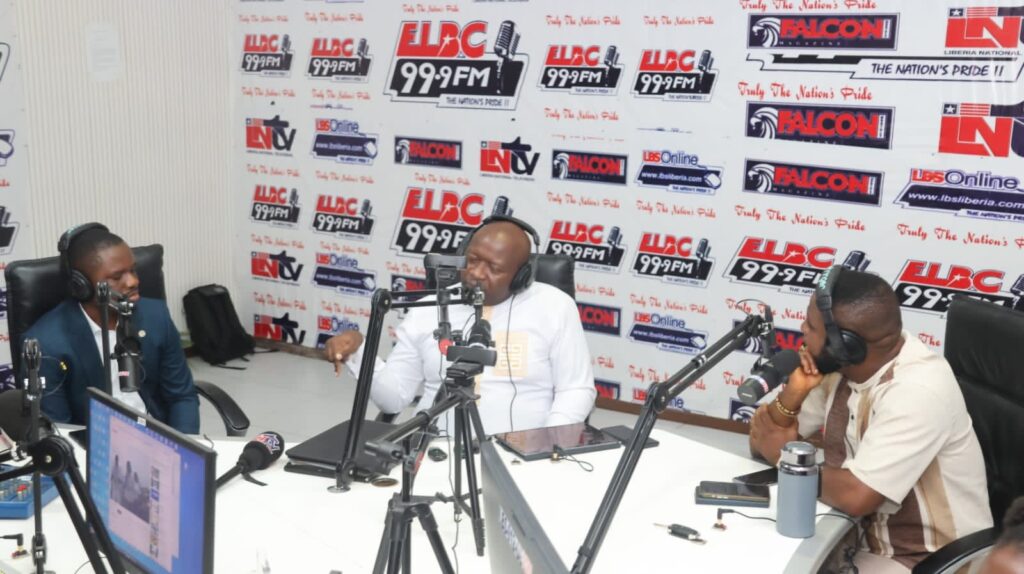
Appearing Wednesday, May 20, on ELBC/LBS, Minister Ngafuan addressed a broad range of national issues, including infrastructure development, budget expansion, youth employment, electricity challenges, revenue leakages, and ongoing reforms within Liberia’s public financial management system.
During the interview, Ngafuan acknowledged growing public expectations but argued that the government’s achievements over the last two years and four months demonstrate steady progress rather than failure.
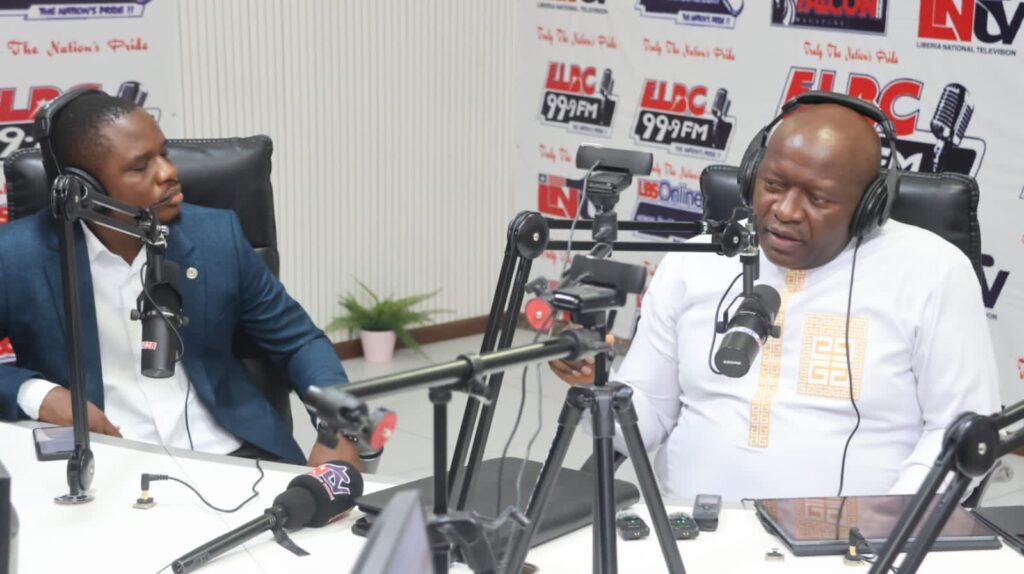
“The development journey is not a 100-meter rectilinear dash to the finish line. It is like a marathon,” Ngafuan said, emphasizing that national development requires patience, sustained effort, and long-term commitment.
Using the analogy of a journey toward Bong County, the minister argued that the administration has moved significantly forward, even if all national goals have not yet been achieved.
“If our target is Bong, we have not reached Bong yet,” he explained. “But to say that we are still at Red Light, you are dead wrong. The progress is seen and visible.”
Ngafuan highlighted several accomplishments of the Boakai administration, including improvements in road access between Monrovia and southeastern Liberia, increased drug supply across hospitals, and ongoing efforts to improve electricity distribution nationwide.
On infrastructure, the Finance Minister disclosed that the government successfully renegotiated financing arrangements with international lenders after inheriting stalled road projects caused by Liberia’s failure to meet repayment obligations under previous agreements.
According to him, the road project from Bong County to Lofa County had effectively collapsed because the Liberian government had defaulted on commitments owed to lenders, including the Kuwait Fund, Saudi Fund, and BADEA.
Ngafuan revealed that a high-level Liberian delegation traveled to Kuwait to renegotiate the financing package and restore confidence with lenders.
“We renegotiated the package, regained our credibility, and started to pay. So that road project started,” he explained.
The minister further disclosed that Liberia has now secured financing commitments for the Salayea-to-Voinjama road corridor, though procurement and related administrative processes are delaying implementation.
Addressing youth employment, Ngafuan spoke about the government’s Community Service Assistance (CSA) initiative involving approximately 1,100 young people assigned to various public institutions.
He said participants who distinguish themselves through strong performance may eventually be retained permanently by the institutions where they are assigned.
“We’ve given them the opportunity,” he stated. “It’s left with them now to score the goal.”
On the economy and public finances, the Finance Minister outlined major reforms being implemented to address revenue leakages and strengthen transparency within government financial systems.
He revealed that discrepancies had been identified between figures reported by the Liberia Revenue Authority (LRA) and amounts reflected in the government’s Consolidated Fund account at the Central Bank of Liberia (CBL).
According to Ngafuan, the government requested an investigation by the General Auditing Commission (GAC), which later produced a detailed audit report identifying variances, weaknesses in transitory accounts, and irregularities involving revenue transfers from commercial banks.
The minister said the government has already begun implementing corrective measures even before the release of the audit report.
Among the reforms, he said, are increased investment in digital systems at rural ports, deployment of Starlink technology to improve monitoring, and stricter requirements compelling commercial banks to transfer government revenue to the Consolidated Fund within 24 hours or face penalties from the Central Bank.
Ngafuan also disclosed that the government is working with private revenue assurance firms to strengthen monitoring and identify potential losses across different sectors of the economy.
He maintained that reforms aimed at closing leakages and improving tax administration have significantly contributed to the expansion of Liberia’s national budget.
According to him, Liberia’s budget has grown from approximately US$738 million in 2024 to more than US$1.3 billion following the latest supplementary appropriation.
“One of the reasons the budget has increased materially is because we are closing leakages,” Ngafuan declared.
The minister stressed that the administration remains focused on improving systems, enhancing accountability, and accelerating development despite criticism from opponents and skeptics.
“Our duty is to take action,” he said. “We are investing in better technology, enhancing transparency, and limiting manipulation.”
Follow The Liberian Post on Facebook and X (formerly twitter).