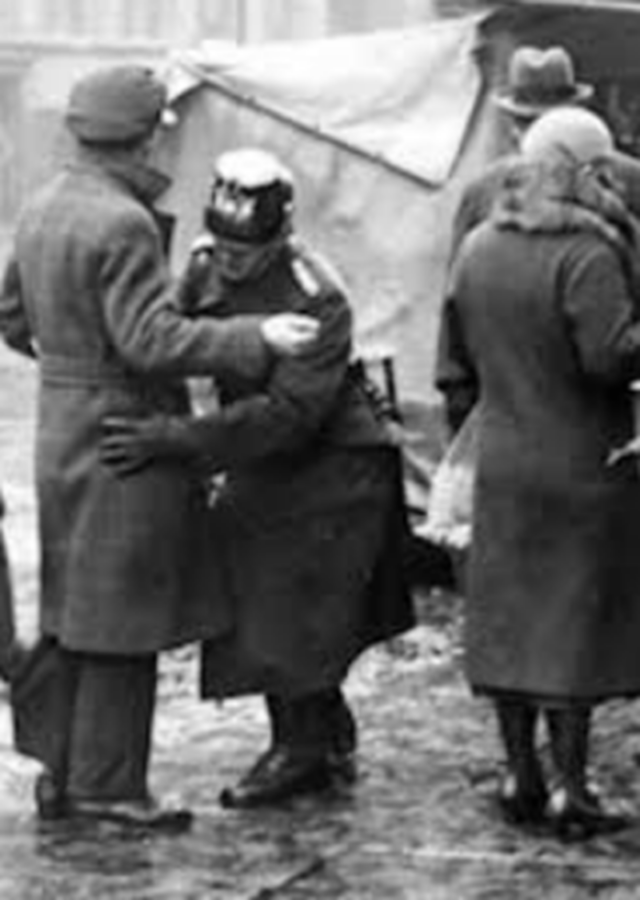
-Understanding the Historical Police Force Referenced in Death Suspect Samuel P. Jackson’s Video
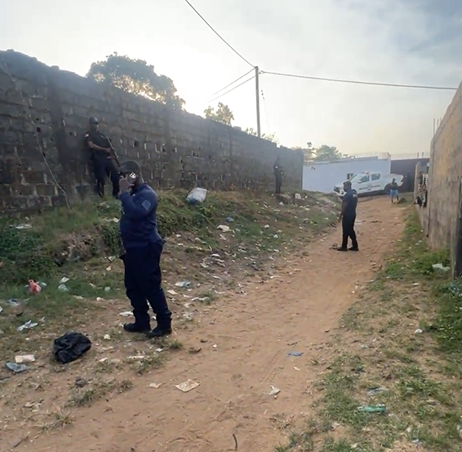
MONROVIA — The word “Gestapo” has recently entered Liberia’s public conversation after economist and political commentator Samuel P. Jackson used the term to describe officers of the Liberia National Police deployed at his residence during the investigation into the death of his wife.
In a video widely circulated on social media, Jackson angrily referred to the officers as “Gestapo,” accusing police of harassment after they surrounded his home following the incident.
The remarks quickly sparked debate across Liberia, with many citizens asking a simple question: What or who were the Gestapo?
Origins of the Gestapo
The Gestapo, short for Geheime Staatspolizei (German for “Secret State Police”), was the official secret police force of Adolf Hitler’s regime in Nazi Germany.
The organization was established in 1933, shortly after Hitler came to power, and was initially organized by Hermann Göring. It was later placed under the control of Heinrich Himmler and his deputy Reinhard Heydrich.
The Gestapo quickly became one of the most feared institutions of the Nazi state.

Role and Powers
Unlike regular police forces, the Gestapo operated with extraordinary powers and almost no legal oversight.
Its primary mission was to identify, suppress, and eliminate political opposition to the Nazi regime.
The secret police pursued anyone suspected of opposing the government, including:
- political dissidents
- journalists
- trade union leaders
- members of resistance movements
- Jews and other persecuted groups.

Gestapo agents had the authority to arrest individuals without warrants, conduct secret surveillance, interrogate suspects, and detain people indefinitely without trial.
Many of those arrested were sent to concentration camps.
Symbol of Fear and Repression
During World War II, the Gestapo expanded its operations across territories occupied by Nazi Germany.
It worked closely with the SS (Schutzstaffel) and other Nazi security agencies to enforce the regime’s policies of repression and terror.
Historians say the Gestapo’s power rested partly on fear and partly on a network of informants, as ordinary citizens sometimes reported neighbors suspected of opposing the regime.
By the end of World War II in 1945, the Gestapo had become internationally synonymous with secret policing, authoritarian power, and human rights abuses.
After Germany’s defeat, the organization was declared a criminal organization by the Nuremberg Tribunal during the famous war crimes trials.
How the Term Is Used Today
Because of its brutal reputation, the word “Gestapo” has entered global political vocabulary as a metaphor used to criticize authorities perceived as acting heavy-handedly, abusively, or without respect for civil liberties.
However, historians caution that comparing modern police forces to the Gestapo can be controversial because of the organization’s direct association with some of the worst atrocities of the 20th century.
The Liberian Context
Jackson’s comments came amid a highly sensitive investigation by the Liberia National Police into the death of his wife, a South African national, who died after reportedly sustaining severe injuries.
Police later confirmed that Jackson is being treated as a suspect while the investigation continues, although he has not yet been formally charged.

The incident has generated widespread public debate in Liberia, not only about the case itself but also about police procedures, domestic violence allegations, and the tone of public discourse.
For many Liberians, Jackson’s use of the word “Gestapo” has prompted renewed interest in the history of the infamous Nazi-era secret police force — and the dangers associated with unchecked state power.
A Reminder from History
Historians say the story of the Gestapo remains an enduring reminder of how policing institutions can become instruments of repression when they operate outside the rule of law.
While modern democratic societies maintain police forces to protect public safety, the Gestapo’s legacy serves as a historical warning of the consequences when authority is exercised without accountability.
As the investigation into Toni Jackson’s death continues, the broader debate sparked by the term highlights the powerful role that historical memory can play in contemporary political language.
Follow The Liberian Post on Facebook and X (formerly twitter).