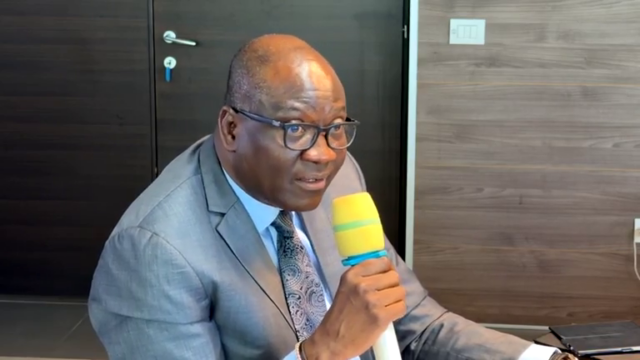
MONROVIA – The Central Bank of Liberia (CBL) has clarified concerns surrounding the printing of new banknotes, with Executive Governor Henry F. Saamoi emphasizing that currency production—both Liberian and U.S. dollars—remains a costly and complex undertaking shaped largely by Liberia’s dual currency system.
Responding directly to concerns raised during the Monetary Policy Committee (MPC) engagement, Governor Saamoi explained that the issue is not simply about printing new banknotes, but about the broader structural realities of managing liquidity in a highly dollarized economy.
Printing Currency Comes at a Cost
The Governor was explicit about the financial burden associated with currency management, noting that even Liberia’s own legal tender is not cost-free to produce.
“Even to print Liberian dollars is a cost,” Saamoi said, highlighting the logistical and financial implications of maintaining adequate cash supply in the economy.
He further underscored that the challenge is significantly greater with U.S. dollar circulation, which dominates Liberia’s economy.
“U.S. dollars do not fly to come here… we have to source them and bring them here,” he explained, pointing to the layers of international arrangements, insurance, and transportation involved in importing physical currency.
Dual Currency System Driving Pressure
Saamoi identified Liberia’s dual currency regime as a central factor complicating decisions around printing new banknotes and managing liquidity.
“That’s the reason why we have all of these issues… because we are operating a dual currency system,” he stated.
According to the Governor, the coexistence of Liberian and U.S. dollars significantly increases operational costs and limits the Central Bank’s flexibility in managing monetary policy and cash supply.
Cash-Intensive Economy Increasing Demand
The Governor also pointed to Liberia’s heavy reliance on physical cash transactions as a key driver of pressure on currency supply.
“Because our economy is so much cash-intensive, that’s the reason why you have all of these costs,” he noted, adding that demand for U.S. dollar cash—estimated to account for about 70 percent of currency in circulation—further complicates the situation.
Digital Shift as Long-Term Solution
While addressing concerns about printing new banknotes, Saamoi pivoted to what he described as a more sustainable long-term solution: reducing reliance on physical cash.
“If we can push our clientele to digital platforms, we will be able to see a significant change,” he said.
He emphasized that expanding digital transactions would lower the need for physical currency imports and printing, thereby easing cost pressures on the Central Bank.

Gradual Transition Ahead
Despite these efforts, the Governor acknowledged that Liberia cannot immediately move away from cash.
“It doesn’t negate the fact that we will not need physical cash,” he clarified, “but the level of cash we will need will be significantly reduced.”
For now, the Central Bank says it will continue balancing the cost of currency production and importation with broader monetary policy goals, while gradually steering the economy toward more efficient, less cash-dependent systems.
Follow The Liberian Post on Facebook and X (formerly twitter)