
MONROVIA — The Government of Liberia has announced a fresh increase in petroleum product prices, with new ceiling rates taking effect April 4, 2026, amid continued pressure from global oil market dynamics and domestic supply adjustments.
The latest adjustment, issued by the Ministry of Commerce and Industry in collaboration with the Liberia Petroleum Refining Company (LPRC), affects gasoline (PMS), fuel oil (AGO), jet fuel (Jet A-1), and heavy fuel oil (HFO), signaling a broad-based increase across key energy products.
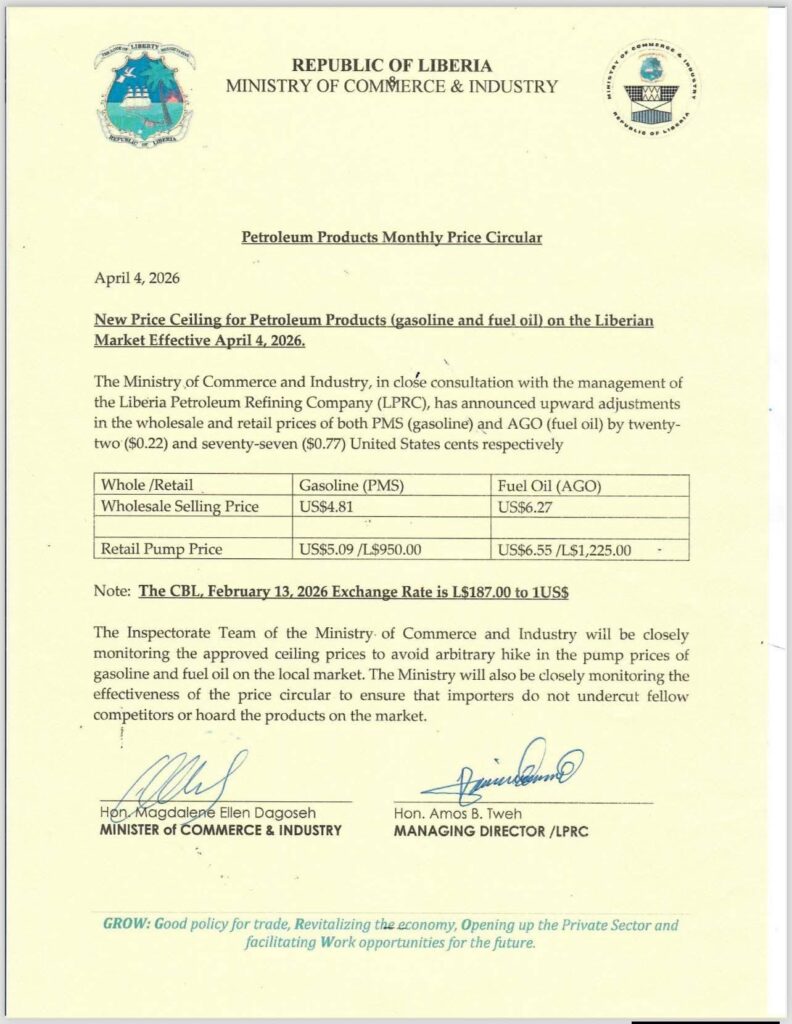
Under the new pricing structure, gasoline will retail at US$5.09 per gallon (L$950), while fuel oil (AGO) rises to US$6.55 per gallon (L$1,225). Wholesale prices are set at US$4.81 for gasoline and US$6.27 for fuel oil.
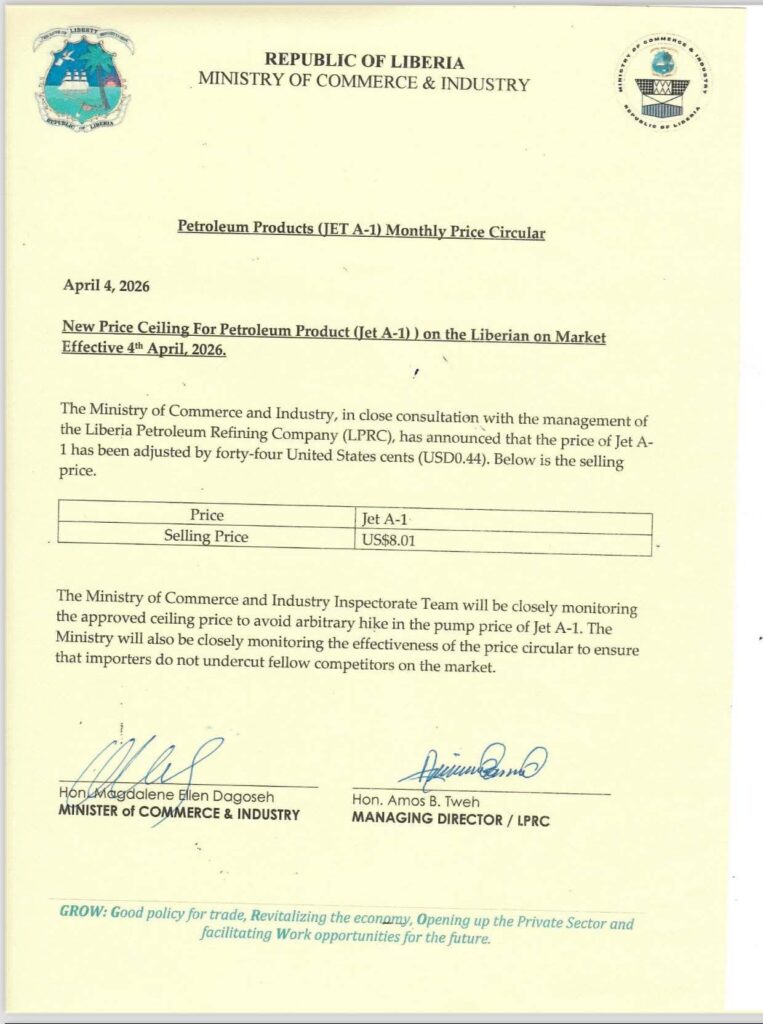
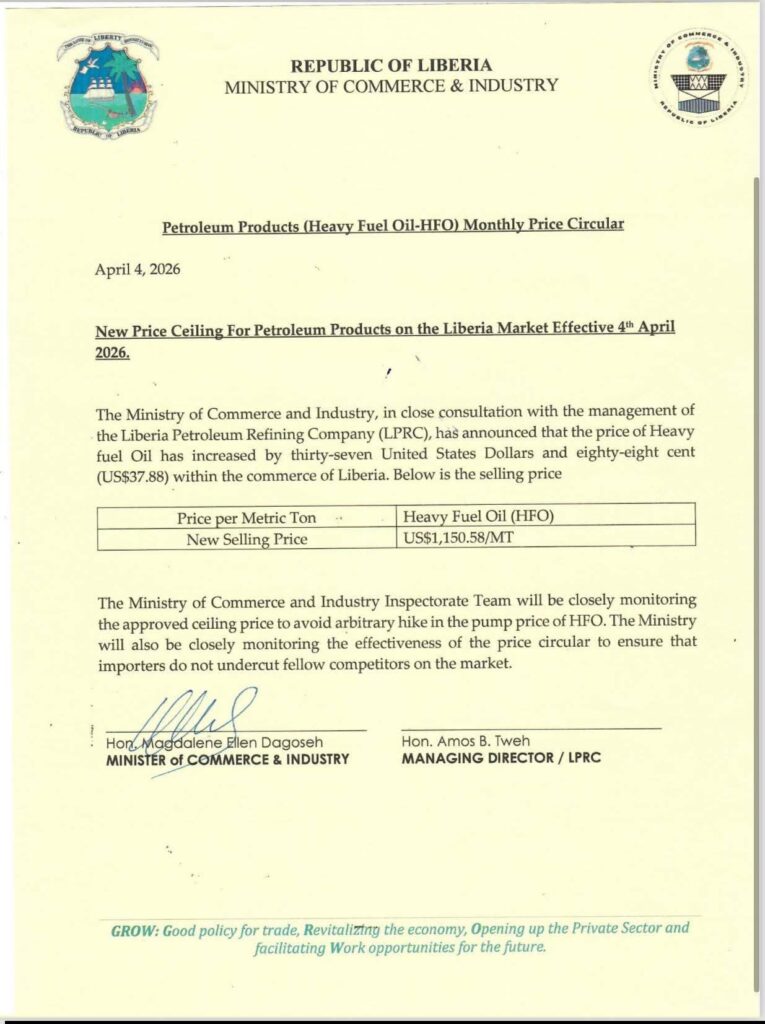
Jet fuel (Jet A-1) has also been adjusted upward, now selling at US$8.01, while heavy fuel oil (HFO) has climbed significantly by US$37.88, bringing its new price to US$1,150.58 per metric ton, according to the official circular.
Continued Upward Trend
The latest increase follows a similar adjustment in mid-March 2026, when authorities cited prevailing market conditions and global oil volatility as key drivers behind rising petroleum costs.
At that time, gasoline prices rose by US$0.85 and fuel oil by US$0.90, reflecting mounting pressure on Liberia’s import-dependent fuel market.
Recent reports indicate that the current hike—though smaller for some products—continues this upward trajectory, with gasoline increasing by US$0.22 and fuel oil by US$0.77.
Government Moves to Stabilize Market
Authorities say the price adjustments are necessary to reflect international pricing realities while ensuring stability in domestic supply.
The Ministry has mandated its Inspectorate Team to closely monitor compliance with the approved ceiling prices, warning against arbitrary increases at fuel pumps and unfair market practices.
Officials also emphasized that oversight measures will be strengthened to prevent importers from undercutting competitors or engaging in hoarding—practices that could further destabilize the market.
Broader Economic Implications
The increase in fuel prices is expected to have ripple effects across Liberia’s economy, particularly in transportation, electricity generation, and the cost of goods and services.
As a country heavily reliant on imported petroleum products, Liberia remains vulnerable to fluctuations in global oil prices. Recent efforts by the LPRC to directly import petroleum products are part of a broader strategy to stabilize supply and improve energy security.
However, with global oil markets facing persistent volatility, consumers and businesses alike are likely to continue feeling the impact of rising energy costs in the months ahead.
Follow The Liberian Post on Facebook and X (formerly twitter)