MONROVIA, Ma Tenneh’s life tells a powerful story of resilience, growth, and transformation.
Once a hand-to-mouth farmer struggling to make ends meet, she is now the proud founder of “Ma Tenneh Natural Forest Honey,” a certified organic brand recognized across Monrovia, Lofa Bridge, Bo Waterside, and surrounding communities.
Her journey, however, did not begin with success. It started with uncertainty, limited tools, and a small cluster of 50 beehives.
Everything changed when she was selected as one of ten entrepreneurs under the UNDP Liberia Growth Accelerator Programme through the European Union-funded Leh Go Green Project.
Before joining the Growth Accelerator Programme, Ma Tenneh’s honey production was rudimentary and risky. Her hives were placed directly on bare ground, leaving them vulnerable to ants, lizards, and heavy rains. Her harvesting method, which involved squeezing honeycombs by hand into cut plastic containers, often compromised product quality and hygiene.
“Before the Accelerator, my honey was full of smoke residue, and my prices were low and unstable. The EU-funded Leh Go Green Project did not just give me an opportunity to access a grant under the Growth Accelerator, but it gave me eyes to see what I was doing wrong and a road to move forward,” she recalled.
A Turning Point
What Ma Tenneh received was far more than financial assistance—it was a pathway to transformation.
A US$10,000 grant, combined with hands-on mentorship and business development support, marked a turning point in her journey from subsistence production to sustainable enterprise growth.
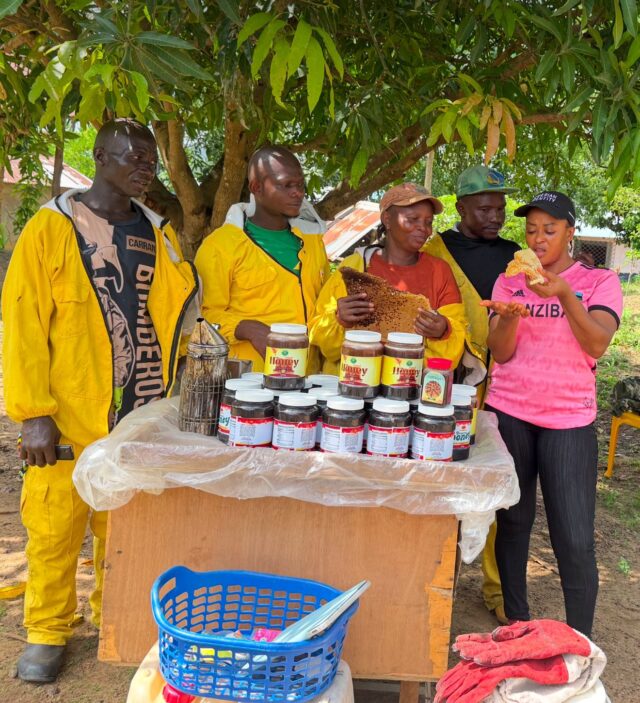
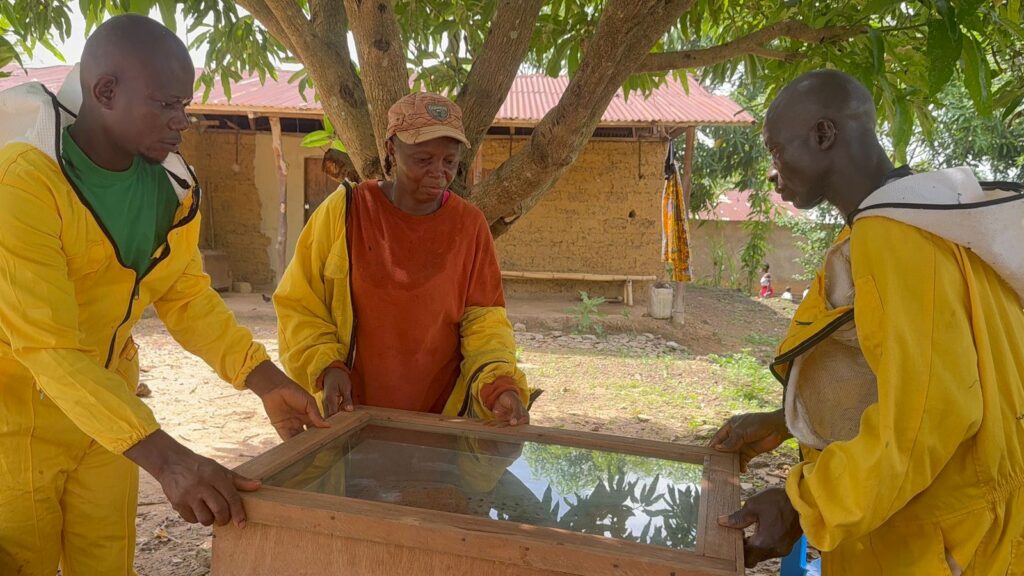
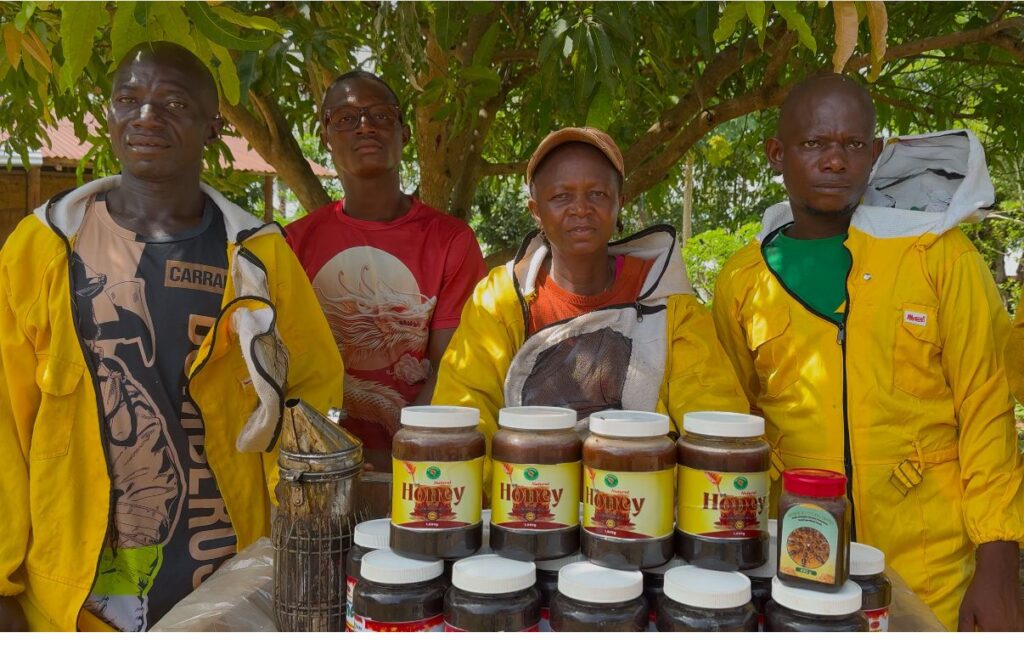
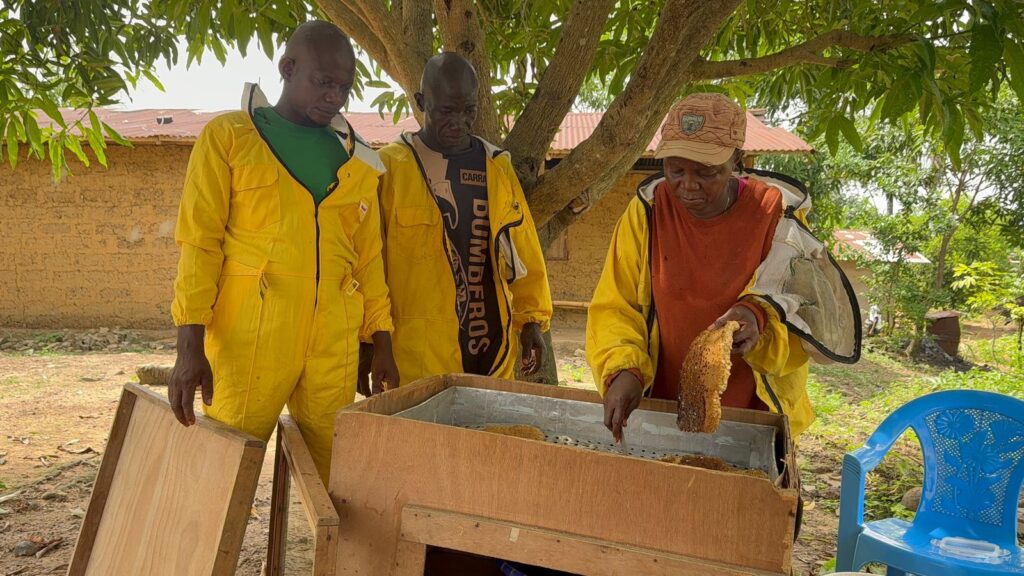
Within months, she upgraded her entire operation. Elevated beehive stands protected her colonies from pests and flooding, while proper honey strainers improved product quality by eliminating contaminants. She also invested in protective equipment for herself and her workers, improving safety and efficiency.
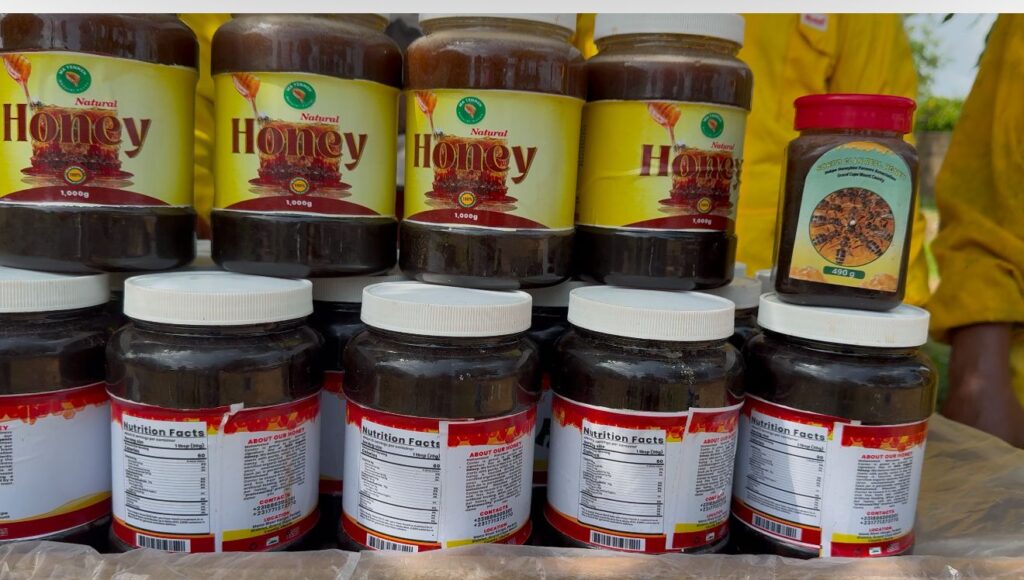
Branding became another milestone in her success story. With support from the project’s design coach, her product was reintroduced to the market as “Ma Tenneh Natural Forest Honey,” complete with professional packaging and a distinctive label featuring her own portrait.
For the first time, her honey not only met quality standards but also looked ready for commercial shelves.
Breaking Into New Markets
The breakthrough came just five months after joining the programme.
Ma Tenneh secured supply agreements with resorts and eco-lodges along the Cape Mount coastline in Robertsport. Within four weeks, she sold 180 kilograms of honey—more than she had sold during the previous two years combined.
Her monthly earnings climbed to more than US$330, representing a tenfold increase in income.
Today, her honey is stocked in major retail outlets in Monrovia and served at popular eco-tourism destinations, signaling her successful entry into premium markets.
Empowering Others
Ma Tenneh’s achievements extend well beyond personal success.
Using proceeds from her growing business, she expanded from 50 to more than 105 beehives, significantly increasing production capacity.
She has also emerged as a mentor and community leader, employing three women through her cooperative and training more than 20 beekeepers, including young mothers seeking new economic opportunities.
Her operations now span three communities in the Mano River region, transforming her enterprise into a platform for economic empowerment and skills development.
“A queen bee does not eat all the honey herself,” she said. “She lays eggs so the hive grows. She protects and she leads. That is what I try to do now.”
Driving Rural Enterprise Growth
The collaboration between the EU-funded Leh Go Green Project and the UNDP Growth Accelerator Programme was designed to help rural micro-enterprises scale sustainably through mentorship, low-cost technology, access to finance, and improved market opportunities.
For Ma Tenneh, the impact has been life-changing.
“My hive is not just wood and wax,” she said. “My hive is a workforce of Liberian women and youth who wake up every morning knowing their work matters.”
Looking Ahead
Despite her remarkable achievements, Ma Tenneh believes her journey is only beginning.
Later this year, her cooperative plans to acquire a manual honey extractor to be shared among three villages, along with a solar-powered warming cabinet designed to preserve honey quality and improve production efficiency.
These innovations are expected to enhance output while maintaining the natural purity that has become the hallmark of her brand.
She hopes her story will inspire other women entrepreneurs across Liberia.
“To any woman in Liberia selling something from the forest—whether honey, palm oil, cassava, or snails—take your business seriously and apply to programs like this,” she urged. “You might not become a millionaire overnight, but you can become a respected businesswoman. And no one can take that from you.”
From a struggling smallholder farmer to a successful entrepreneur, mentor, and community leader, Ma Tenneh’s remarkable journey demonstrates how access to knowledge, opportunity, and support can transform lives, strengthen communities, and create lasting economic change across rural Liberia.
Follow The Liberian Post on Facebook and X (formerly twitter).