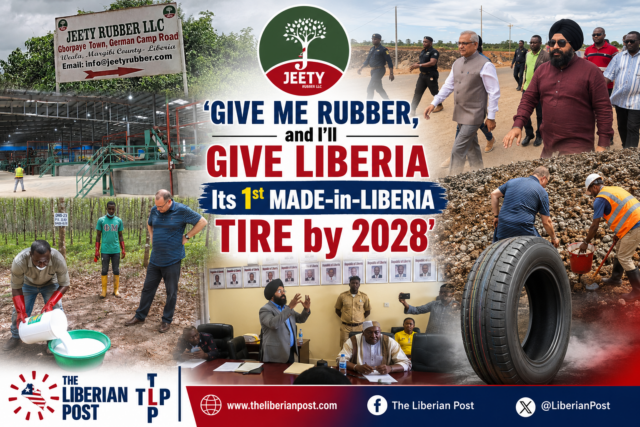
-Industrialist Says Country Has Historic Opportunity to Move Beyond Raw Exports as He Renews Call for Increased Rubber Production to Drive Manufacturing, Jobs and Value Addition
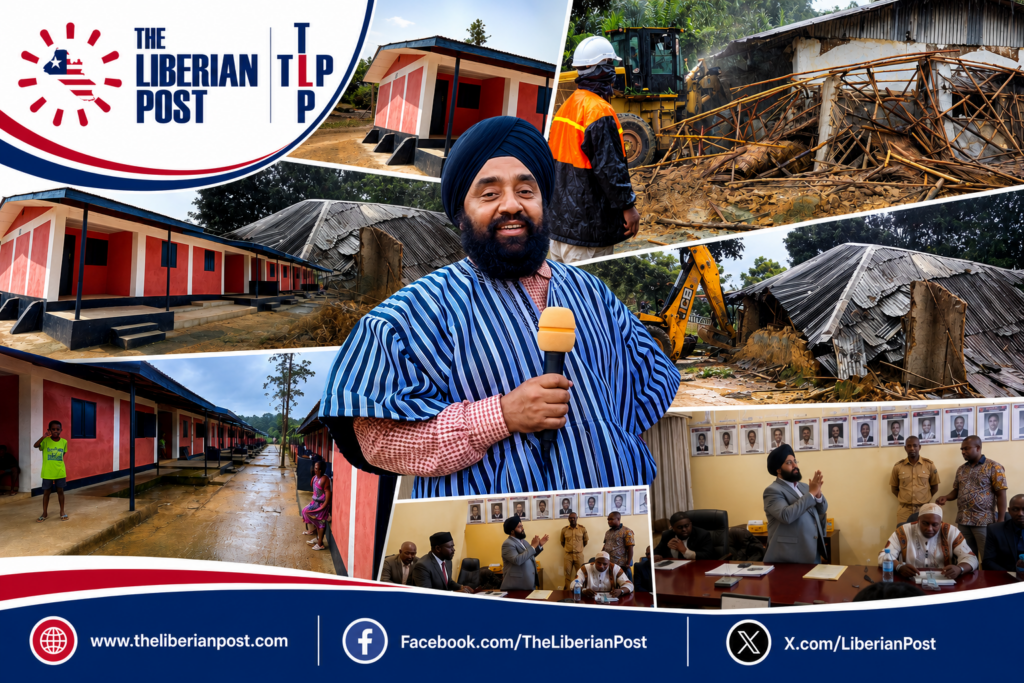
MONROVIA – Indian-Liberian industrialist and philanthropist Upjit Singh Sachdeva, popularly known as Jeety, has renewed his ambitious pledge to manufacture Liberia’s first-ever locally made tire by 2028, telling lawmakers that the country’s century-old dream of transforming its rubber sector into a true manufacturing industry depends on one critical ingredient: more rubber.
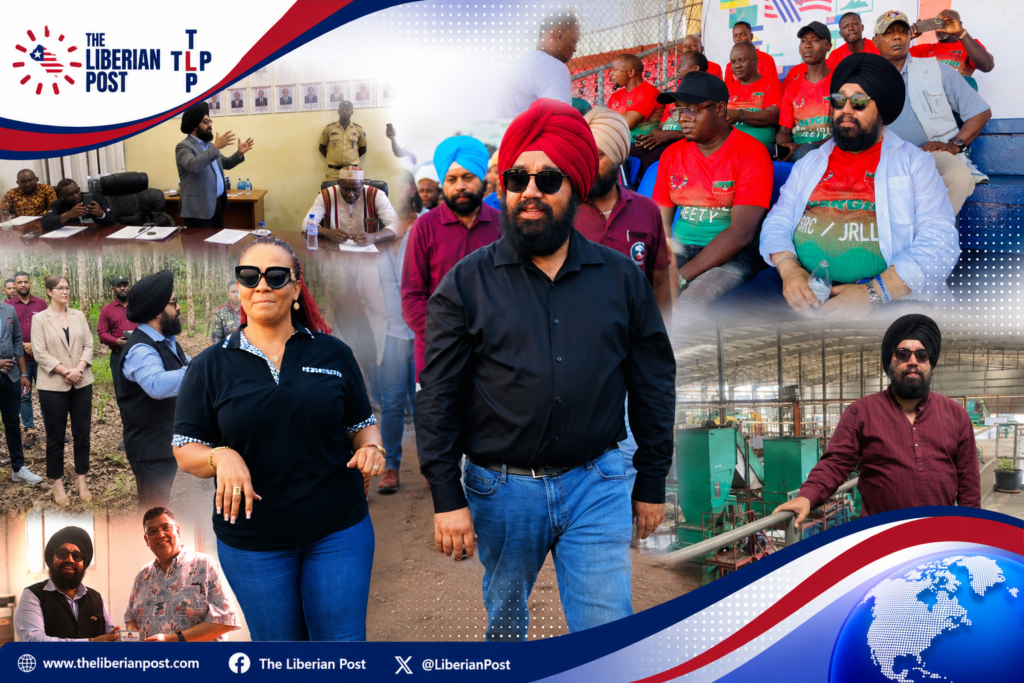
Appearing before the House of Representatives alongside Agriculture Minister Dr. J. Alexander Nuetah to discuss key issues affecting agriculture and investment, Jeety challenged legislators to help unlock Liberia’s industrial future by increasing domestic rubber production.
“I challenge everybody—give me rubber,” Jeety told lawmakers.
“By 2028, I will give you the first tire in Liberia. I only need rubber.”
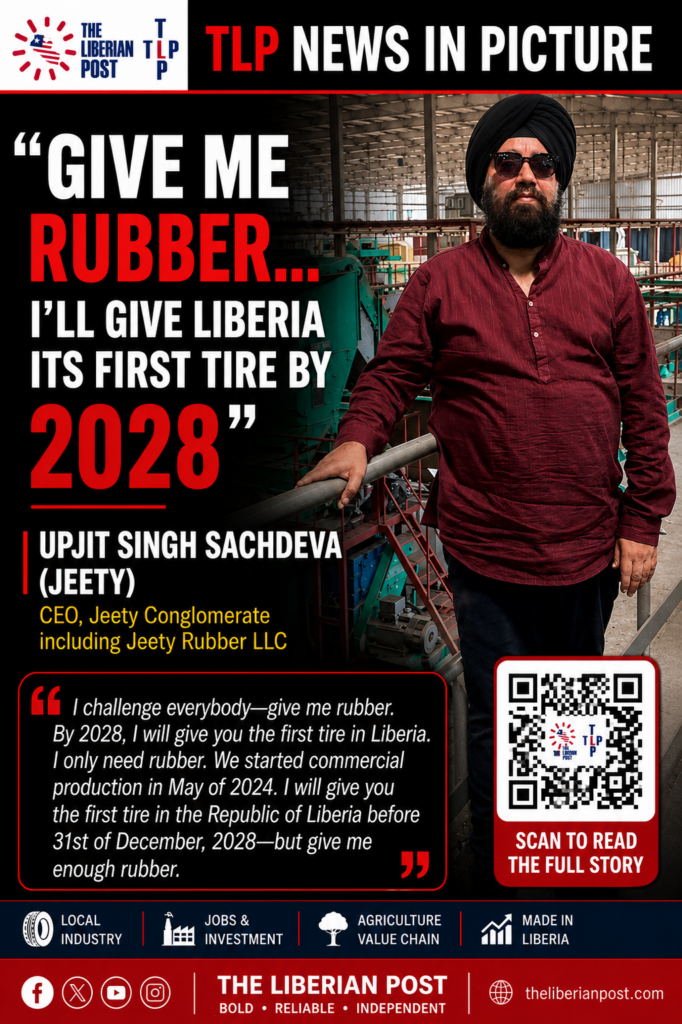
His remarks underscored a message he has delivered consistently over the past several months: Liberia has exported raw rubber for more than a century, yet has never produced a single commercial tire despite being one of Africa’s historic rubber-producing nations.
For Jeety, that paradox can—and should—come to an end.
A Promise Anchored in an Investment Agreement
Responding to a question from one of the lawmakers during the legislative engagement, Jeety reminded lawmakers that his commitment is not merely aspirational but forms part of the investment incentive agreement signed with the Government of Liberia.
According to him, the agreement requires the company to begin tire production within five years of commencing commercial operations.
He noted that commercial production at Jeety Rubber officially began in May 2024, placing the company firmly on track to meet its contractual obligation before the end of 2028.
“We started commercial production in May of 2024,” he said.
“I will give you the first tire in the Republic of Liberia before 31st of December, 2028—but give me enough rubber.”
Why Rubber Supply Matters
Jeety explained that manufacturing tires is far more complex than processing natural rubber.
According to him, specialized machinery must be designed around the specific characteristics and quality of the rubber available for production.
“The machines have to be ordered based on the kind of rubber you are producing because you have to mix the rubber to get the tire,” he told lawmakers, stressing that consistent access to quality raw material is indispensable before the manufacturing phase can begin.
Industry experts note that tire manufacturing requires carefully blended rubber compounds, making the quality, consistency and volume of raw rubber a decisive factor in determining the type of equipment and production systems required.
A Long-Standing Call for Value Addition
Jeety’s appeal to lawmakers is the latest in a series of public calls urging Liberia to stop exporting wealth in its rawest form and instead build industries capable of transforming natural resources into finished products.
Earlier this year, he challenged the Government to ensure a steady supply of between 500 and 550 metric tonnes of wet rubber daily, arguing that such volumes are necessary to sustain commercial tire manufacturing. He has repeatedly warned that without adequate raw materials, Liberia risks remaining an exporter of jobs rather than a creator of industrial employment.
His position is rooted in a broader economic philosophy that value addition—not raw commodity exports—is the key to accelerating Liberia’s industrial transformation.
“When you export raw materials, you export jobs,” Jeety has argued previously, maintaining that every tonne of unprocessed rubber shipped abroad represents manufacturing opportunities lost to foreign economies.
Building an Industrial Ecosystem
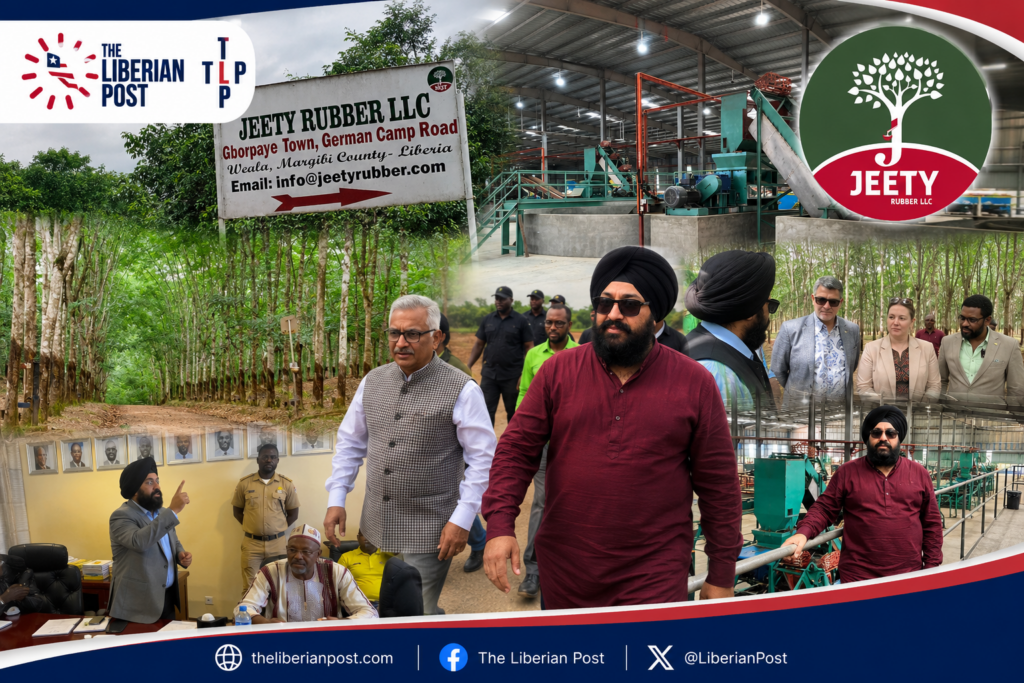
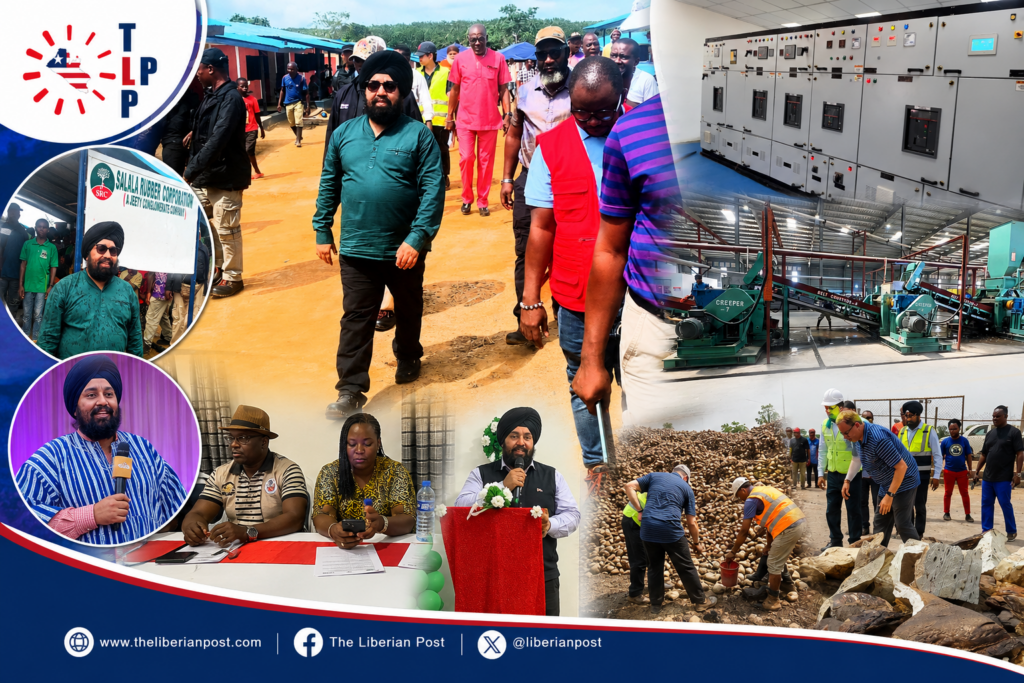
The renewed commitment comes as Jeety Rubber continues expanding its operations in Weala, Margibi County.
The company is undertaking an estimated US$18 million second-phase expansion that will significantly increase processing capacity and lay the groundwork for downstream manufacturing. Once completed, the upgraded facility is expected to nearly double existing production capacity while positioning Liberia to enter a manufacturing space it has never occupied before.
Beyond passenger vehicle tires, feasibility studies have already been completed for the production of truck tires, motorcycle tires and tricycle tires, signaling plans for a diversified manufacturing operation capable of serving both the Liberian market and neighboring countries in the Mano River Union.
A Test of Liberia’s Industrial Ambition
Jeety’s presentation before lawmakers also highlighted the close relationship between agriculture and industrialization.
Liberia remains one of Africa’s oldest rubber-producing countries, yet much of its production continues to leave the country in raw or semi-processed form.
Successive governments have emphasized value addition as a national priority, but progress toward manufacturing finished rubber products has remained limited.
Agriculture Minister Dr. J. Alexander Nuetah has likewise called for expanded rubber production, arguing that higher output is essential to support industrial processing, create jobs and strengthen Liberia’s economy.
For Jeety, the opportunity is both economic and symbolic.
Producing the country’s first “Made-in-Liberia” tire would represent a historic milestone—transforming Liberia from a supplier of raw materials into a manufacturer of finished industrial goods.
It would also demonstrate that the country can move beyond its traditional role in global commodity supply chains and begin capturing more value from its own natural resources.
Whether that ambition becomes reality, Jeety insists, will depend less on factory construction than on the nation’s ability to produce enough rubber to keep the production lines running.
His message to lawmakers was therefore as simple as it was emphatic:
“Give me enough rubber,” he said, “and I will give Liberia its first tire.”
For breaking news, in-depth analysis, and exclusive reports from Liberia and around the world, follow The Liberian Post on Facebook (https://web.facebook.com/profile.php?id=61576017166570) and X, formerly Twitter (https://x.com/LiberianPost).