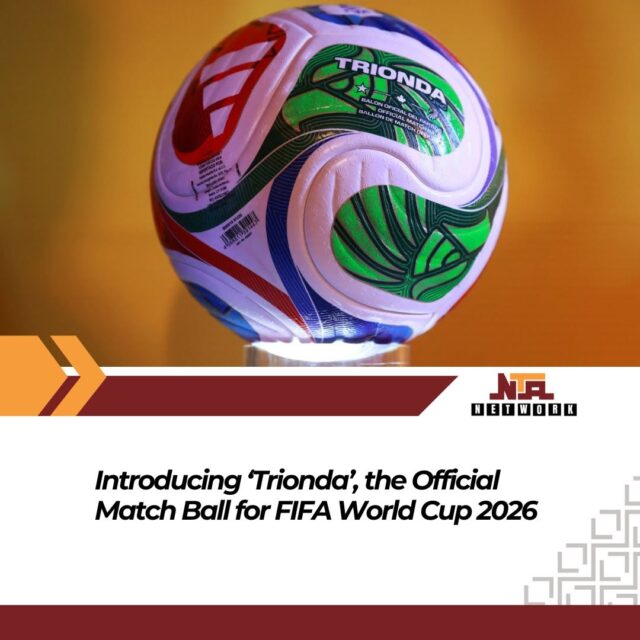
MONROVIA, Liberia – FIFA and Adidas have unveiled the official match ball for the 2026 FIFA World Cup, introducing a technologically advanced football that is expected to play a significant role in the tournament’s officiating and gameplay.
Named “Trionda,” the ball pays tribute to the three nations hosting the 2026 FIFA World Cup—the United States, Canada, and Mexico. The name combines “tri,” representing the three host countries, and “onda,” the Spanish word for “wave,” symbolizing the unity and shared energy of the first FIFA World Cup to be hosted by three nations. The ball’s design features a striking red, green, and blue color scheme inspired by the national identities of the tournament’s hosts.
But beyond its appearance, the Trionda is being hailed as one of the most technologically sophisticated footballs ever used at a World Cup.
At the heart of the ball is Adidas’ latest “connected ball technology,” which incorporates a 500Hz motion sensor capable of transmitting ball movement data to match officials and the Video Assistant Referee (VAR) system 500 times every second. The technology is designed to provide real-time information on touches, deflections, handball incidents, and offside situations, helping referees make quicker and more accurate decisions during matches.
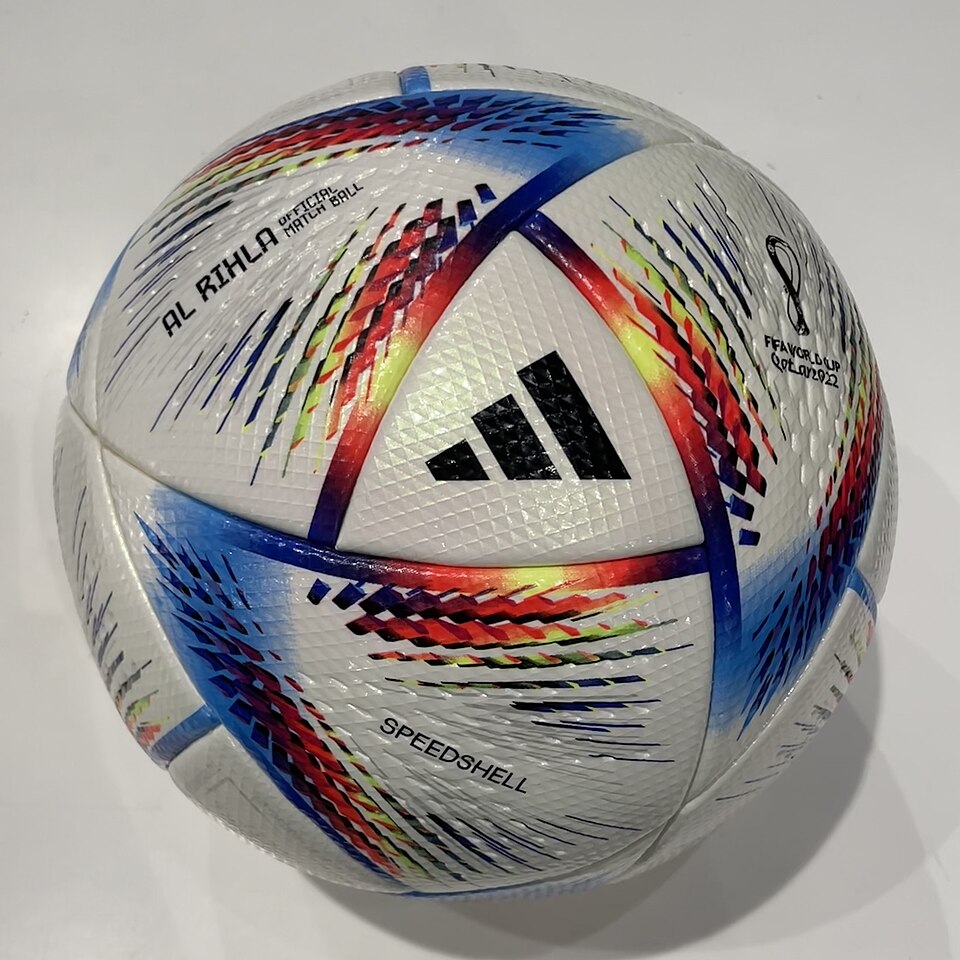
Unlike the Al Rihla, the official ball used during the 2022 FIFA World Cup in Qatar, the Trionda contains a rechargeable battery that powers its internal sensor system. The battery reportedly lasts up to six hours of active play before requiring a recharge.
The ball also introduces a revolutionary four-panel construction—the fewest panels ever used in a FIFA World Cup match ball. Adidas says the streamlined design improves flight stability, ball control, and aerodynamic consistency while maintaining precision under varying playing conditions. The seamless thermally bonded surface is intended to provide players with improved touch and a more predictable trajectory.
Continuing a Tradition of Innovation
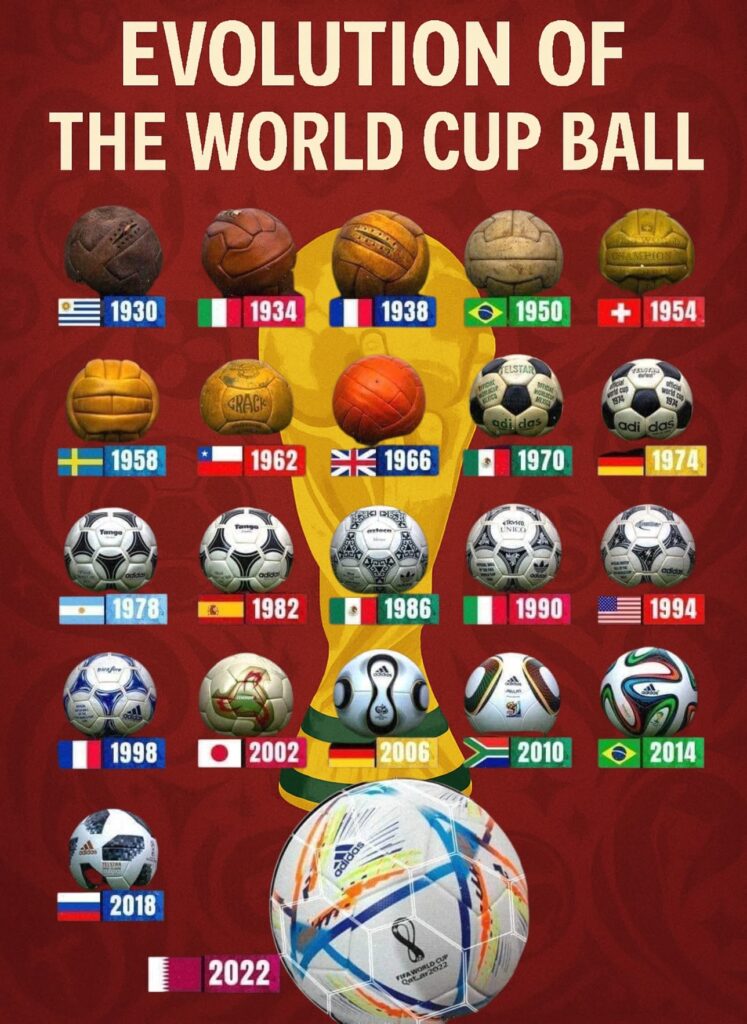
The Trionda joins a long list of iconic World Cup match balls that have become part of football history.
Adidas has supplied every FIFA World Cup match ball since the 1970 tournament in Mexico. Over the decades, several World Cup balls have gained legendary status among players and fans alike.
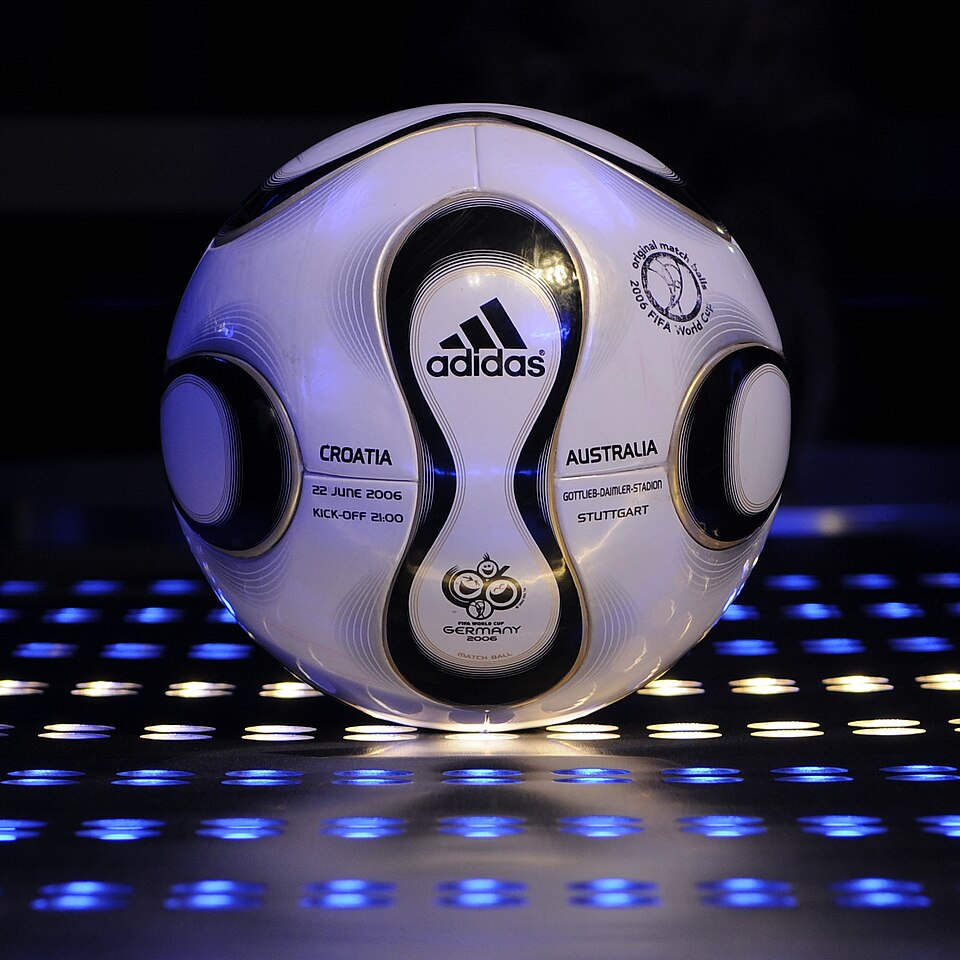
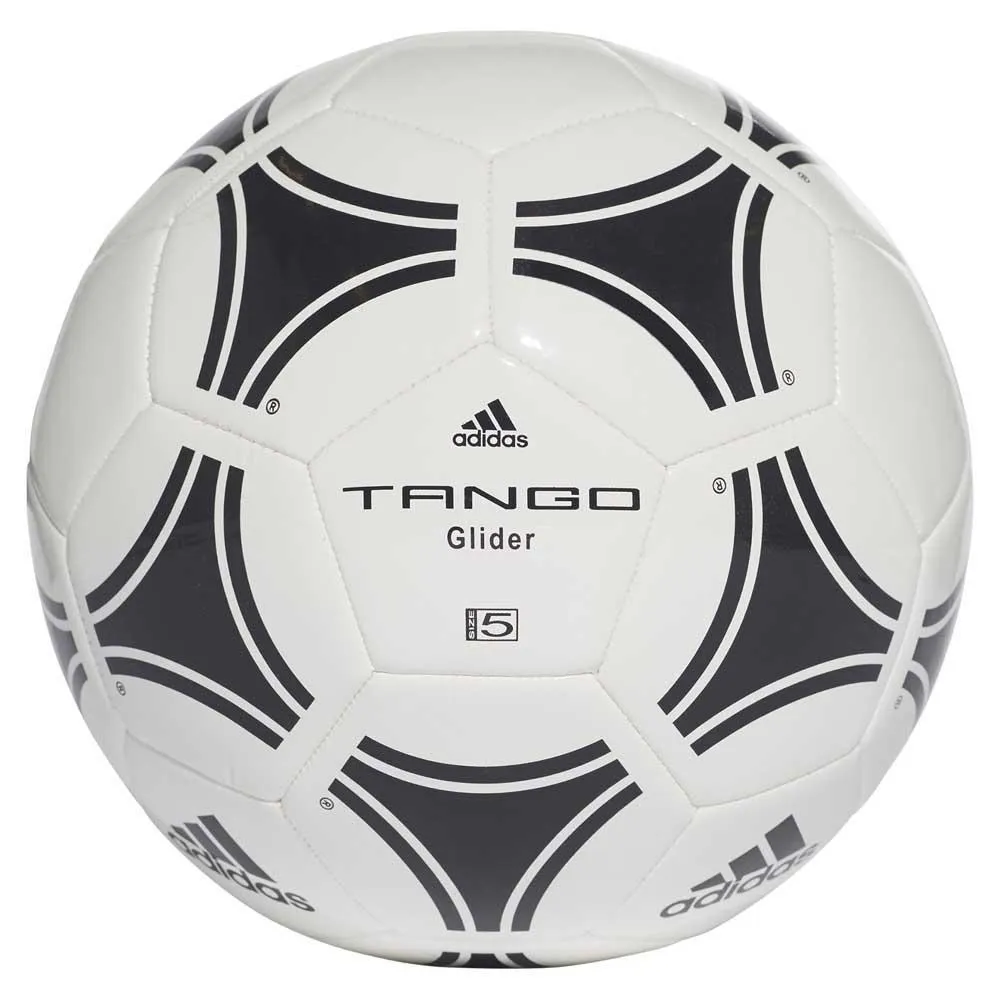
The Telstar, introduced in 1970, became the first black-and-white World Cup ball and remains one of the most recognizable football designs ever produced. The Tango series dominated World Cups from 1978 through 1998, while the Teamgeist of Germany 2006 introduced a radically different panel design intended to improve ball performance.
Perhaps the most controversial World Cup ball was South Africa 2010’s Jabulani, which drew criticism from players and goalkeepers who complained about its unpredictable flight characteristics. In response, Adidas introduced the highly acclaimed Brazuca for Brazil 2014, a ball widely praised for its consistency and control. The Telstar 18 used in Russia 2018 became the first World Cup ball to feature embedded digital technology, paving the way for the connected-ball systems now found in the Trionda. The Al Rihla in Qatar 2022 further expanded the use of sensor technology to assist match officials.
A Historic World Cup
The Trionda will make its competitive debut at what is already expected to be the biggest World Cup in football history.
The 2026 FIFA World Cup will be the first edition to feature 48 national teams, an expansion from the traditional 32-team format used between 1998 and 2022. The tournament will be jointly hosted by the United States, Canada, and Mexico, marking the first time three countries have shared hosting duties for a FIFA World Cup.
Mexico will become the first nation to host World Cup matches on three separate occasions, having previously hosted the tournaments in 1970 and 1986. The United States hosted the 1994 World Cup, while Canada hosted the FIFA Women’s World Cup in 2015 but will be staging men’s World Cup matches for the first time.
The tournament is scheduled to begin on June 11, 2026, at Mexico City’s iconic Estadio Azteca, while the final will be played on July 19, 2026, at MetLife Stadium in New Jersey, United States.
With 104 matches set to be played across 16 host cities, the 2026 FIFA World Cup is expected to attract millions of spectators and billions of television viewers worldwide. The introduction of the Trionda reflects FIFA’s continuing effort to combine football tradition with cutting-edge technology as the world’s most popular sporting event enters a new era.
Follow The Liberian Post on Facebook and X (formerly twitter)