–Anti-Corruption Commission Acknowledges Petition as Scrutiny Intensifies Over Funding and Procurement of Multimillion-Dollar Regional Center
MONROVIA, Liberia – The Liberia Anti-Corruption Commission (LACC) has formally acknowledged a request by the opposition Alternative National Congress (ANC) seeking an investigation into the controversial Mano River Union (MRU) Center for Regional Peace and Development project in Foya, Lofa County, signaling the beginning of what could become one of the most closely watched governance inquiries of the Boakai administration.
In a communication dated June 4, 2026, addressed to ANC Chairman Cllr. Lafayette O. Gould, LACC Executive Chairperson Cllr. Alexandra K. Zoe confirmed receipt of the complaint and informed the opposition party that the Commission would conduct a preliminary assessment to determine whether sufficient grounds exist for a full-scale investigation.
“The LACC will undertake a preliminary assessment of the information provided to determine whether sufficient grounds exist to warrant further inquiry or a formal investigation under applicable laws and regulations,” the Commission stated.
The anti-corruption body emphasized that any action taken would be guided by facts, evidence, due process, and legal standards governing its operations.
The acknowledgment comes amid growing public and political debate surrounding the construction, financing, procurement, and management of the MRU Center project, which has become one of the most discussed government initiatives in recent months.
ANC Raises Questions Over Transparency
The controversy escalated after the ANC formally petitioned the LACC in late May, arguing that recent public disclosures, government statements, and media reports had raised serious concerns about the legality, transparency, accountability, and constitutional compliance of the project.
The opposition party requested what it described as an independent and comprehensive investigation into the project’s financing, procurement, authorization, and implementation.
According to the ANC, several key questions remain unanswered regarding how the project was approved, how funds were mobilized, and whether established procurement and public financial management procedures were followed.
The party further argued that the matter extends beyond partisan politics and touches on broader issues of public accountability and good governance.
From “National Secret” to National Debate
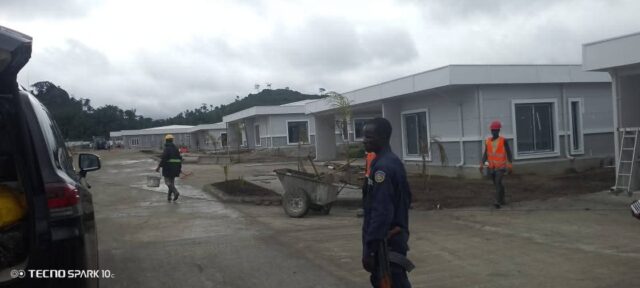
The MRU Center project first captured national attention after reports emerged that construction had commenced under conditions of unusual confidentiality, with some critics describing it as a “national secret” project.
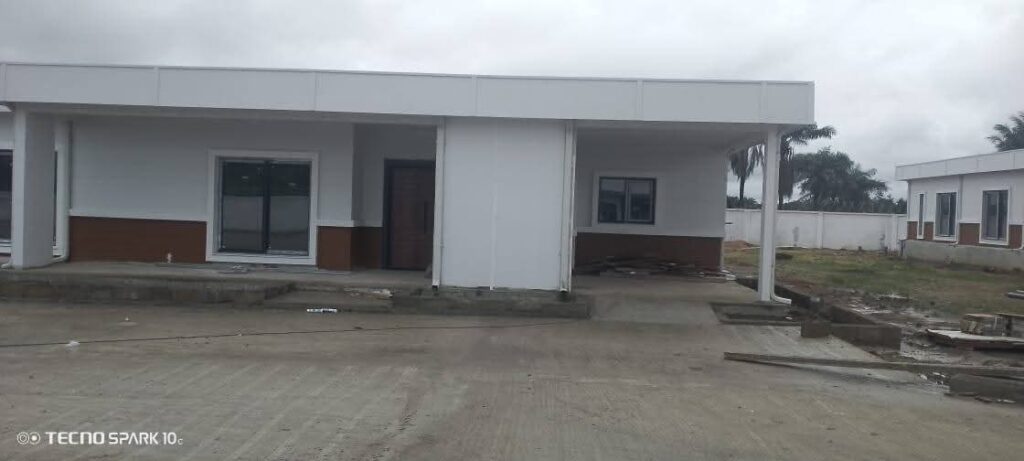
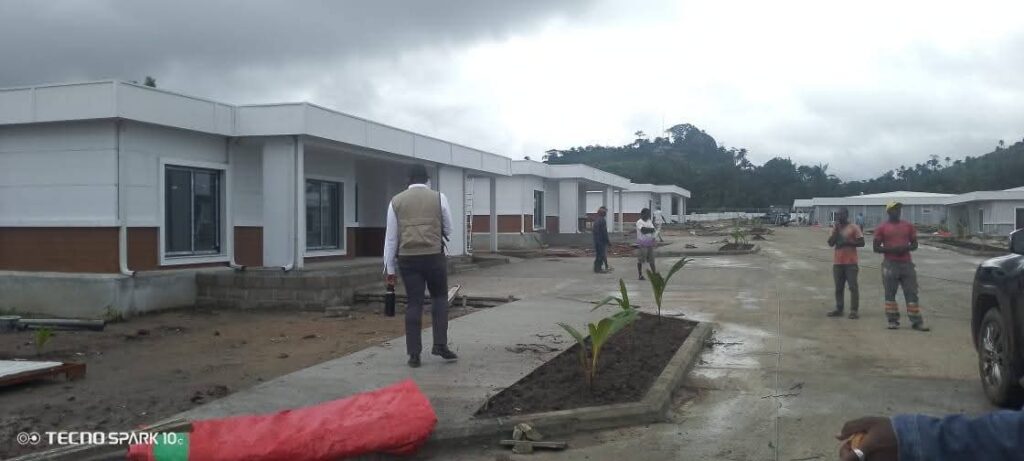
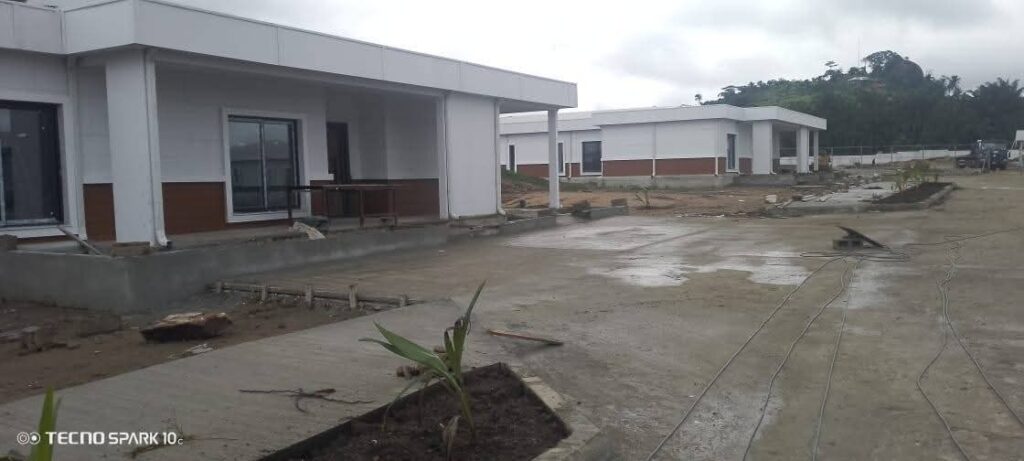
Questions intensified after drone footage and photographs of the facility surfaced on social media, prompting demands for greater transparency regarding its purpose, ownership, cost, and funding sources.
The Government of Liberia later acknowledged the project and issued an official explanation defending both its purpose and the confidentiality surrounding its construction.
According to the government, the facility is a strategic national asset designed to host regional and international peace, security, mediation, and development conferences.
Officials have described the center as a future hub for conflict resolution, diplomacy, and regional integration within the Mano River Union basin, which comprises Liberia, Sierra Leone, Guinea, and Côte d’Ivoire.
Government Defends Project
The government has consistently maintained that the MRU Center is fully owned by the Republic of Liberia and is intended to strengthen Liberia’s leadership role in regional peacebuilding and diplomacy.
Located in Foya District near the borders of Sierra Leone and Guinea, the facility reportedly includes a 500-seat conference center and residential accommodations for visiting dignitaries. The government has estimated the project’s value at approximately US$6.1 million.
Officials have argued that Foya was selected because of its strategic location at the intersection of the Mano River Union countries and its longstanding role in cross-border peace initiatives.
Government spokespersons have also defended the project’s confidentiality, asserting that security considerations required limited public disclosure during the construction phase.
Focus Turns to Funding and Procurement
Despite those explanations, critics continue to question how the project was financed and whether the expenditure complied with Liberia’s Public Financial Management Act and Public Procurement and Concessions Commission (PPCC) regulations.
Public discussions have centered on reports that several state-owned enterprises contributed resources toward the construction effort.
The ANC and other critics have called for a detailed accounting of all financial transfers, procurement arrangements, contracts, and approvals associated with the project.
The opposition party has further requested that investigators identify all government officials, contractors, intermediaries, and institutions involved in executing the project.
LACC Promises Independent Review
In its response, the LACC sought to reassure the public that it would handle the matter professionally and impartially.
The Commission noted that citizen participation and stakeholder engagement remain important tools in strengthening accountability and combating corruption in Liberia.
“The Commission wishes to emphasize that all matters brought before it are handled independently, impartially, and in accordance with due process,” the letter stated.
LACC further indicated that additional information may be requested as part of its assessment process before a determination is made on whether a formal investigation is warranted.
For now, the Commission’s acknowledgment does not constitute a finding of wrongdoing. Rather, it represents the first procedural step in reviewing allegations raised by the ANC and other concerned stakeholders.

A Major Governance Test
Political observers say the preliminary review is likely to attract significant public interest given the prominence of the project and the broader questions it has generated about transparency, accountability, and public expenditure.
Whether the LACC ultimately launches a full investigation or closes the matter following its assessment, the Commission’s handling of the case is expected to be closely monitored by political actors, civil society organizations, development partners, and ordinary Liberians alike.
For many, the outcome could become an important test of the country’s anti-corruption institutions and their ability to independently examine issues involving high-profile government projects.
Follow The Liberian Post on Facebook (https://web.facebook.com/profile.php?id=61576017166570) and X, formerly twitter (https://x.com/LiberianPost).