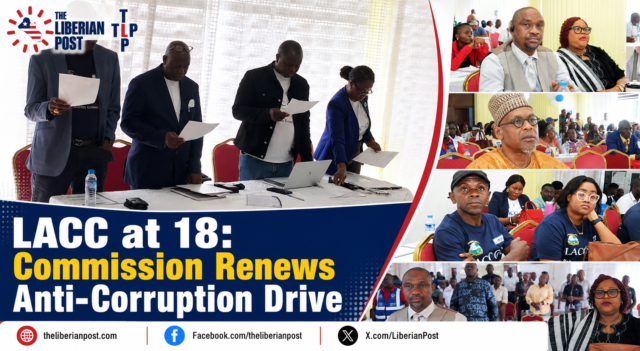
–Zoe Says LACC Has ‘No More Excuses’ as Commission Pushes Enforcement, Asset Recovery, Prevention and Decentralization
MONROVIA, Liberia — The Liberia Anti-Corruption Commission (LACC) has marked its 18th anniversary with a renewed pledge to strengthen enforcement, accelerate asset recovery, expand corruption prevention and rebuild public confidence, while acknowledging that inadequate funding, limited personnel and institutional bottlenecks continue to constrain the fight against corruption.
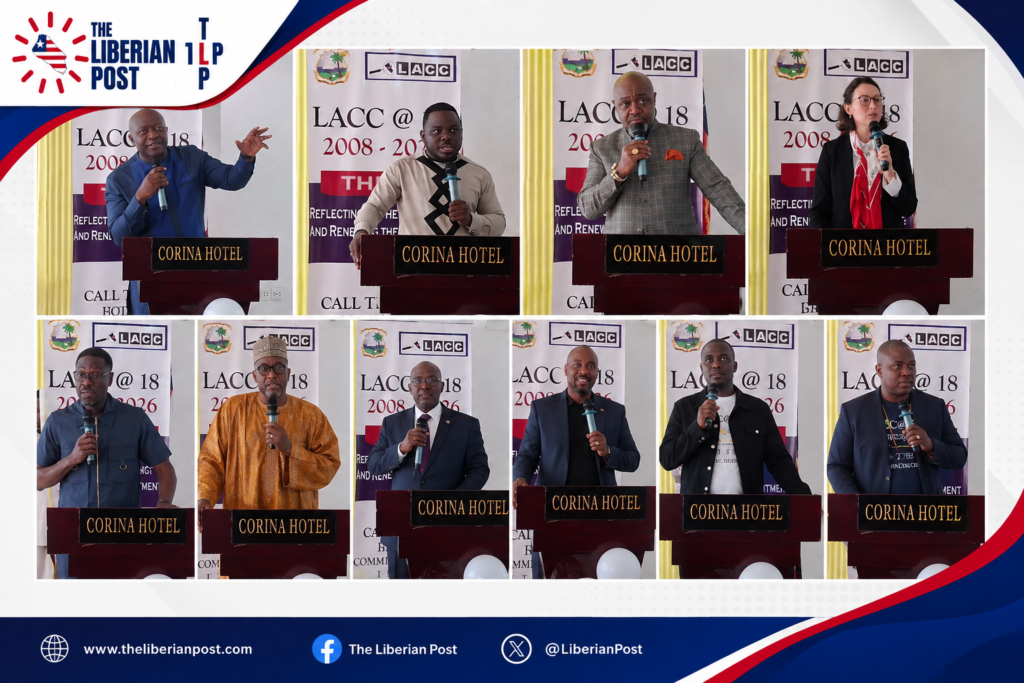
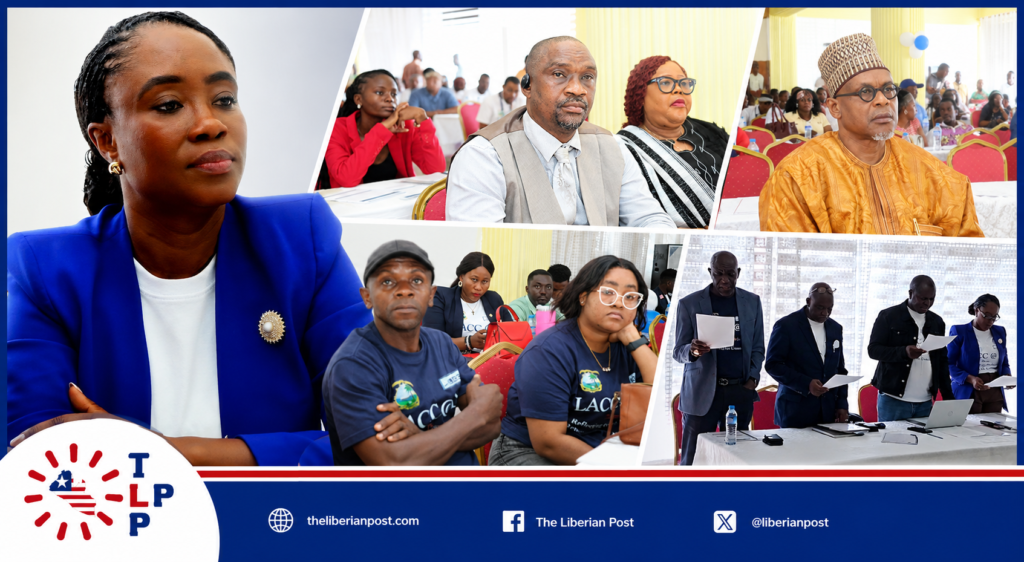
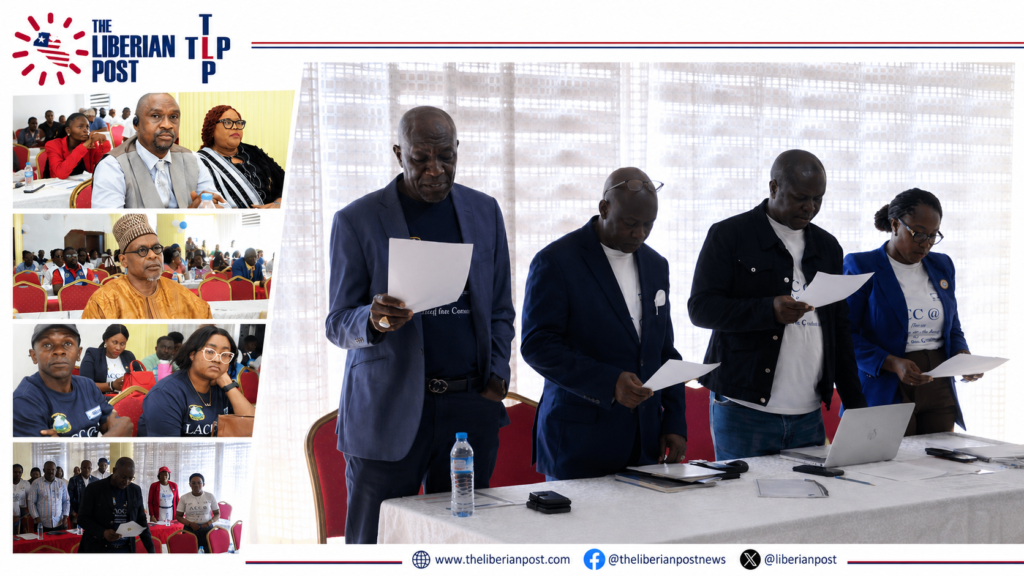
The Commission’s anniversary program brought together government officials, development partners, civil society actors, members of the diplomatic community, journalists and other stakeholders to reflect on the institution’s 18-year journey and examine the challenges confronting Liberia’s anti-corruption campaign.
At the center of the celebration was a message from LACC Executive Chairperson Cllr. Alexandria Zoe, who said the Commission had reached a point where it must move beyond explaining its limitations and focus more aggressively on delivering results.
“We don’t need to be making excuses anymore,” Zoe said. “The public has our attention. Now is the time to build trust. Now is the time to build confidence.”
Her remarks framed the anniversary not simply as a celebration of the Commission’s past, but as a turning point for an institution facing heightened public expectations over prosecutions, asset recovery and accountability.
From Post-War Crisis to Anti-Corruption Institution
Zoe traced the origins of the LACC to Liberia’s post-war reform process, arguing that corruption and the erosion of public confidence in government were among the issues that contributed to the country’s devastating civil conflict.
She said recommendations emerging from Liberia’s post-war reconciliation and governance reform processes identified the need for stronger systems and policies to prevent corruption from becoming entrenched.
The National Anti-Corruption Strategy subsequently called for the creation of an independent and autonomous institution dedicated to leading the fight against corruption.
The LACC was established in 2008, following the declaration of corruption as a public enemy.
According to Zoe, the Commission has since evolved from a relatively small institution into an organization with expanded investigative, prosecutorial, preventive and asset-recovery responsibilities.
Legal Powers Expanded, Court Still Needed
A major milestone in the Commission’s institutional development was the amendment of its governing legislation to give the LACC direct prosecutorial authority.
Zoe said the original arrangement created delays because the Commission investigated cases but had to forward them to the Ministry of Justice for prosecution.
Under the previous system, the Ministry of Justice was given a specified period to prosecute cases before the LACC could resume jurisdiction.
Zoe said the arrangement contributed to delays and concerns about selective prosecution, prompting the push for direct prosecutorial powers.
But she said a major gap remains: although the LACC now has prosecutorial authority, Liberia still lacks a specialized court dedicated to corruption cases.
The Commission is therefore backing efforts to establish a National Anti-Corruption Court, which Zoe believes would speed up trials and ultimately improve asset recovery.
“When this court is established, what it does is that it will create speeded trial,” she said, adding that faster trials would contribute to the recovery of assets allegedly obtained through corruption.
Zoe said the LACC intends to intensify its engagement with lawmakers to advance legislation establishing the specialized court.

3,804 Asset Declarations Recorded
The Commission reported significant activity in the area of public officials’ asset declaration.
Zoe said 3,804 public officials, elected officials and government employees declared their assets between 2024 and 2025, describing the figure as a major achievement in the Commission’s efforts to strengthen compliance.
But she said the LACC is no longer satisfied with simply collecting declarations.
The Commission has begun physically verifying declarations, particularly those involving institutions and officials considered high-risk.
So far, Zoe said, 55 asset declarations have been verified, with some matters referred to the Commission’s monitoring and investigation department for further action.
She said the verification process involves collaboration with institutions including the Liberia Revenue Authority, Financial Intelligence Agency, banking institutions and the national document-registration authority.
Zoe stressed that verification is intended to determine whether declared assets correspond with an official’s income and existing holdings.
She also announced that the Commission expects to publish an asset-verification report later in the year.

81 Cases Investigated and Concluded
The LACC also reported that 81 cases were investigated and concluded between 2013 and 2025.
Zoe said the cases have produced different outcomes, including prosecutions, restitution, unsuccessful cases and matters in which the Commission retains authority to pursue further recovery.
On prosecution, she said the Commission recorded 23 indictments over the period covered by its presentation, while nine corruption-related cases were active before the courts as of the second quarter of 2026.
The figures, she said, demonstrate both the Commission’s progress and the scale of the workload facing its investigative and prosecutorial teams.
More Than 100 Audit Reports Under Review
The Commission’s investigative workload is also being driven by findings contained in government audit reports.
Zoe said the LACC currently has more than 100 General Auditing Commission audit reports under review as investigators analyze the findings and determine which matters warrant further investigation.
She said the Commission has a little over 20 investigators working on these and other cases, highlighting the pressure placed on the institution’s relatively small investigative team.
The LACC currently has 87 employees, reflecting significant growth from its early years, but Zoe said the institution still needs more investigators, prosecutors, verification officers and forensic specialists.
Funding Remains Critical Challenge
Despite improvements in its budgetary allocation in recent years, Zoe identified financing as one of the Commission’s most persistent challenges.
She said the LACC remains heavily dependent on government funding, with the Government of Liberia accounting for 99.3 percent of its budget.
According to Zoe, delays in releasing approved funds can severely disrupt the Commission’s operations.
“Sometimes we get the money. We get the allotment. But to release the money is a problem,” she said.
She argued that predictable financing is particularly important for an institution whose mandate includes investigating and prosecuting public officials and other actors.
The LACC, she said, will continue working with development partners, including the International Monetary Fund, to promote reforms that would provide the Commission with more predictable and adequate financing.
‘We Have the Law’
Zoe said Liberia’s central anti-corruption problem is increasingly less about the absence of legislation and more about effective implementation.
“We have the law,” she said. “The implementation of the law is what we need to focus on now.”

She called for stronger coordination among anti-corruption institutions, the courts, the Executive and Legislature to ensure that laws are effectively enforced.
She also stressed that corruption cases must respect constitutional guarantees of due process, noting that delays in the courts can involve motions, legal challenges and other procedural requirements.
Prevention Takes Center Stage
While prosecution and asset recovery remain important, the LACC said its long-term strategy is increasingly focused on prevention.
“Prevention is the way,” Zoe emphasized.
The Commission has partnered with the Ministry of Education to develop anti-corruption textbooks intended for use in primary schools.
Zoe said distribution has been limited by funding constraints, but the LACC is working with partners to reproduce more copies and expand the program into rural communities.
She said preventing corruption among younger generations is essential if Liberia is to reduce the number of corruption cases requiring investigation and prosecution in the future.
Taking Anti-Corruption Fight Beyond Monrovia
The LACC also announced plans to deepen its presence outside the capital.
Zoe said a survey conducted across five counties in 2025 showed strong public demand for the Commission to expand its awareness and services into rural Liberia.
Through collaboration with UNDP and other partners, the Commission has begun using social accountability volunteers to help gather information and report suspected wrongdoing from rural communities.
The Commission now wants to establish regional and county-level service presence capable of supporting not only public education but also investigations and prosecution.
Zoe acknowledged that the current arrangement—where investigators travel from Monrovia to counties—can disrupt operations in the capital because the same personnel are responsible for cases nationwide.
LACC Embraces Digitization
Technology is another major component of the Commission’s modernization agenda.
Zoe disclosed that the LACC is working with the World Bank to strengthen its digital infrastructure, including the digitization of its asset-declaration system.
The Commission hopes to complete the digitization of the asset-declaration regime by the second quarter of 2027.
The move is expected to make it easier for investigators to access, compare and verify information while strengthening case and evidence management.
Media Praised as Anti-Corruption Partners
Zoe also singled out the media for praise, describing journalists as important partners in exposing corruption and bringing potential cases to the attention of investigators.
“The media, you are one of the champions of the fight against corruption,” she told journalists.
She said a significant portion of media reports alleging corruption ultimately provide credible leads for LACC investigations.
“I always say 90% of the time when the media reports and we go in and investigate, it is true,” Zoe said.
She encouraged the media to continue reporting suspected corruption while helping to educate citizens about their role in promoting accountability.
Public Trust Under Pressure
Perhaps the most significant challenge identified during the anniversary was public confidence.
Zoe acknowledged that citizens increasingly expect visible prosecutions and recovery of public assets.
She said public confidence in the anti-corruption process was stronger in 2024 but that expectations and perceptions changed in 2025.
“At the end of the day, what the public wants to see is prosecution and recovery,” she said.
Zoe said the Commission must respond to those expectations while explaining that corruption cases are subject to due process and cannot be resolved instantly.
Still, she acknowledged that the LACC must do more to demonstrate tangible results.

Five Priorities Through 2030
As the Commission enters its next phase, Zoe outlined five strategic priorities under the LACC’s 2026–2030 strategic plan.
They are:
- Strengthening enforcement;
- Scaling up asset declaration and verification;
- Decentralizing LACC services;
- Mobilizing additional resources; and
- Building public trust.
The Commission also plans to strengthen specialized capacity, improve digital systems, expand partnerships and develop stronger mechanisms for tracing and recovering stolen assets.
Zoe said the LACC’s next chapter will require sustained political will, predictable financing, stronger systems, specialized personnel and active citizen participation.
A Fight Bigger Than LACC
The anniversary ultimately produced a message that the anti-corruption campaign cannot be left solely to the institution mandated to lead it.
Zoe repeatedly stressed that citizens, the media, government agencies, development partners and the courts all have roles to play.
“It’s not something that LACC can do alone,” she said. “We all have a role in this.”
After 18 years, the Commission says its challenge is no longer simply to establish itself as Liberia’s lead anti-corruption institution.
It is now under pressure to prove that the laws, powers, investigations, prosecutions, asset declarations and partnerships can translate into measurable accountability and recovered public resources.
And for Zoe, the measure of the Commission’s next chapter will ultimately be whether it can turn institutional reforms into something citizens can see, understand and trust.
The LACC’s 18th anniversary, therefore, was less a celebration of an institution that has arrived than a declaration that the harder phase of the anti-corruption fight may only be beginning.
For more information, follow The Liberian Post on Facebook (https://web.facebook.com/profile.php?id=61576017166570) and X, formerly twitter (https://x.com/LiberianPost).