–Former President Calls Jewel Howard-Taylor’s Charges “Bogus,” Says Liberia Is “in Shambles,” While Election Records Contradict His Claim of a Less-Than-3,000-Vote Defeat
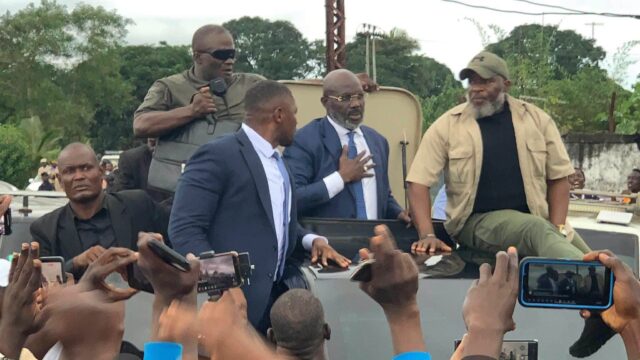
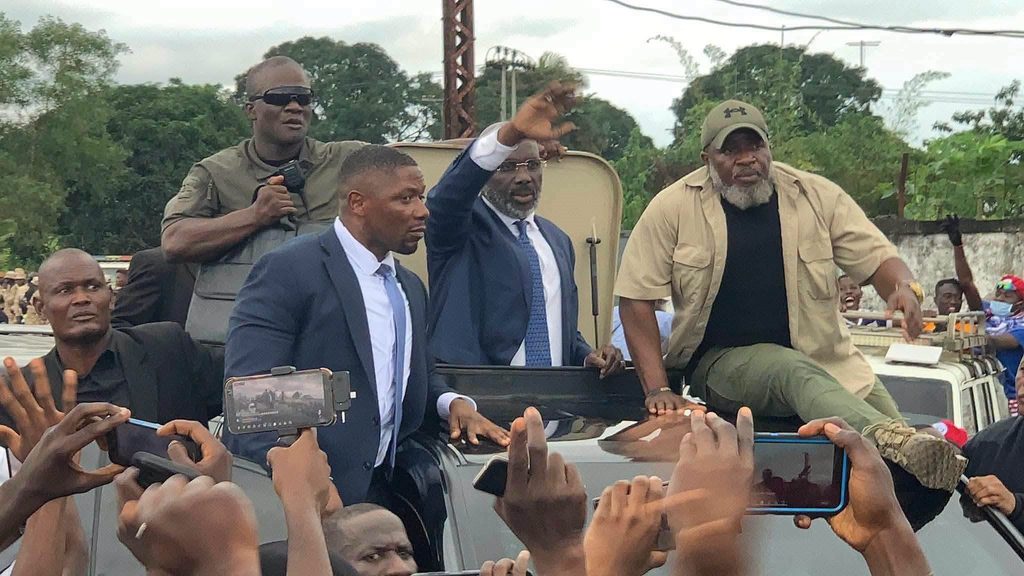
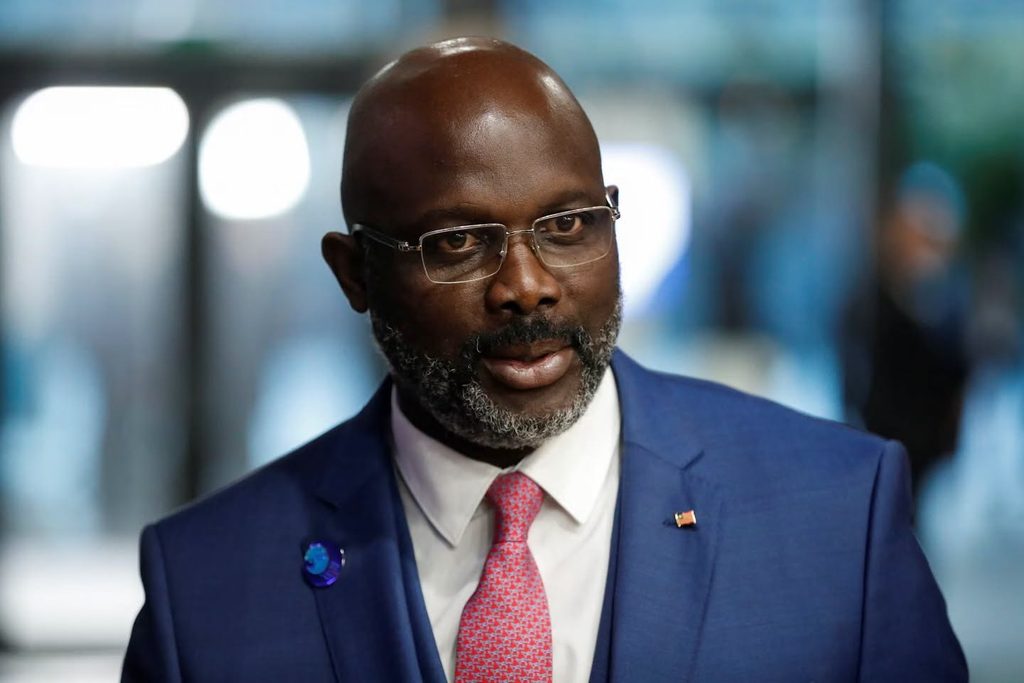
MONROVIA, Liberia — Former President and opposition leader George Manneh Weah returned to Liberia Wednesday after months abroad and immediately plunged himself back into the country’s increasingly tense political debate, accusing President Joseph Nyuma Boakai’s administration of undermining the rule of law, abusing state power and pursuing his former Vice President, Jewel Howard-Taylor, for political reasons.
Speaking to journalists at his Rehab residence shortly after his arrival, Weah portrayed his return as a moment for Liberians to stand up for democracy and promised to work with opposition leaders to challenge what he described as a dangerous direction under the Boakai administration.
“We’ve all been monitoring. I think the rule of law is being tampered with,” Weah declared.
He was responding to questions about the criminal charges facing Howard-Taylor, who was arrested at Roberts International Airport on August 19 and subsequently charged in connection with the government’s investigation into an alleged transnational narcotics network. The government has accused her of offenses including controlled-drug importation, conspiracy, criminal facilitation, solicitation and money laundering.
Weah rejected the allegations against his former Vice President as “bogus” and condemned her detention.
“I believe that what is going on with my former VP, I mean, they’re all bogus and it’s unacceptable,” he said.
“You can’t, you can’t, in our true democracy, you can’t behave in this way. It’s wrong.”
The former President’s return comes at an unusually charged moment for Liberia, with Howard-Taylor’s criminal case, a massive narcotics investigation, heightened political confrontation between the government and opposition, and renewed discussion about the 2029 presidential contest all converging around his homecoming.
Weah: “Tampering With Justice Is Wrong”
Weah went further, accusing the government of interfering with the justice system.
“You know, tampering with justice is wrong,” he said. “And I believe that the justice system, there will come a time that we have to protect it.”
He did not provide specific evidence during the press conference to substantiate his allegation that the justice system was being deliberately manipulated.
Instead, he pointed to the prosecution of Howard-Taylor and questioned the government’s handling of the case.
The government, however, has maintained that the former Vice President is being prosecuted as part of an ongoing narcotics investigation and that the case should be determined through the courts.
The Justice Ministry formally charged Howard-Taylor on August 19, saying the charges arose from evidence presented by the Joint National Security Investigative Team.
Howard-Taylor has not been convicted of any offense, and the allegations against her remain subject to judicial determination.
Her preliminary examination has also been delayed amid developments involving both the prosecution and her defense. As of Wednesday, the Monrovia City Court had reassigned the proceeding to Friday, September 4, after her lawyers raised medical concerns and sought access to medical records and an independent evaluation.
“We Have to Stop It”
Against that backdrop, Weah presented his return as a call for political restraint and democratic resistance.
“This is a country that’s been through wars and chaos. We need to stop it,” he said.
“We need to believe in peace.”
The former President said his objective was not to promote instability but to ensure that Liberia’s democratic institutions remain functional.
“That’s why we’ll get together,” he said. “You know, when I said the other time that I’ll be back and we’ll all meet, it’s to make sure that democracy works in our society.”
“We’ll all meet to make sure that we impose democracy in this country.”
The phrase “impose democracy” is likely to attract attention given Liberia’s history of political conflict and Weah’s promise before returning to rally opposition forces.
The CDC had previously announced plans for an opposition leaders’ roundtable following Weah’s return, with discussions expected to focus on Liberia’s political, economic, security and governance challenges.
Weah Says Liberia Is “in Shambles”
Asked why he had called opposition leaders together, Weah said Liberia’s problems had reached a point requiring collective political action.
“We’re all stakeholders,” he said. “It’s the voice of the people, the opposition. And we need to listen to each other and find a way to move forward.”
Then came one of his starkest assessments of the current administration:
“Our country is in shambles.”
“We have to make sure that we find a way that democracies can be built. And that’s why the meeting is called.”
The proposed meeting could become an important test of whether Liberia’s fragmented opposition can develop a common political strategy ahead of 2029.
Weah remains the political leader of the Congress for Democratic Change (CDC), the country’s main opposition party, and his return places him physically back inside Liberia at a moment when opposition mobilization is intensifying.
But Weah’s “Less Than 3,000 Votes” Claim Is Wrong
One of the most striking claims Weah made during his remarks concerned the 2023 presidential election.
“We just came from the elections and you saw what happened,” he said.
“You know, less than 3,000 votes.”
The statement appears to refer to the closeness of the election between Weah and Boakai.
But the official National Elections Commission results do not support that figure.
The NEC’s final results show that Boakai received 804,087 votes, representing 50.89 percent, while Weah received 775,940 votes, representing 49.11 percent, in the November 2023 runoff.
That produced a margin of 28,147 votes in Boakai’s favor.
The NEC’s results portal records the first-round figures at 796,961 votes for Boakai and 804,087 for Weah in the presidential election data presented on its platform, while reporting around the runoff documented Boakai’s final victory margin at more than 28,000 votes.
Weah himself conceded the election in November 2023 and called Boakai to congratulate him.
At the time, Weah said:
“The Liberian people have spoken, and we have heard their voice.”
He also said the election’s closeness demonstrated a divided country.
His claim Wednesday that the election was decided by less than 3,000 votes therefore does not match the official runoff result.
The distinction matters because Weah was using the closeness of the election as part of his broader argument about the strength of his political support.
“I Know How Much Liberians Love Me”
Despite the electoral correction, Weah was emphatic that his welcome demonstrated that he remains politically relevant.
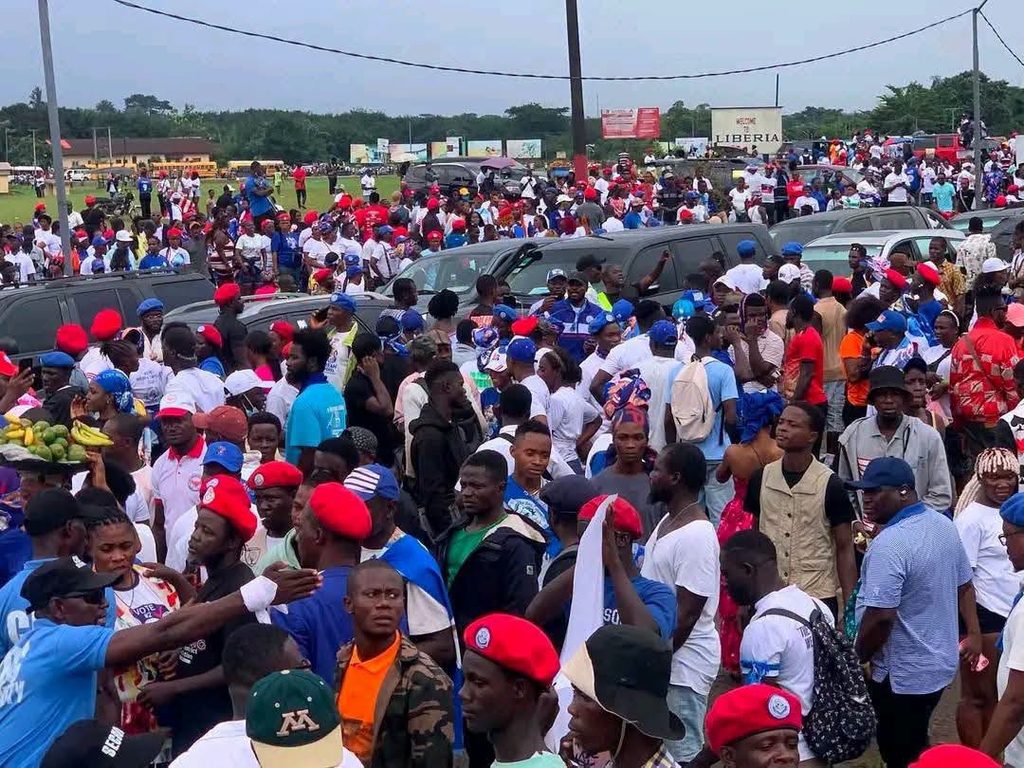
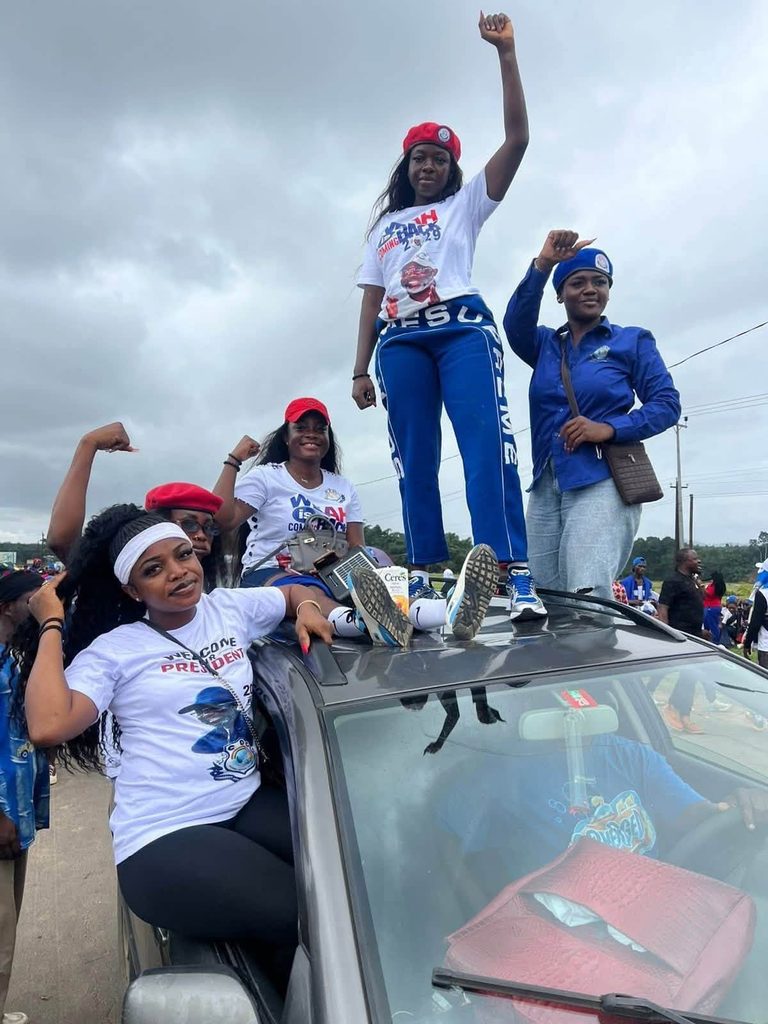
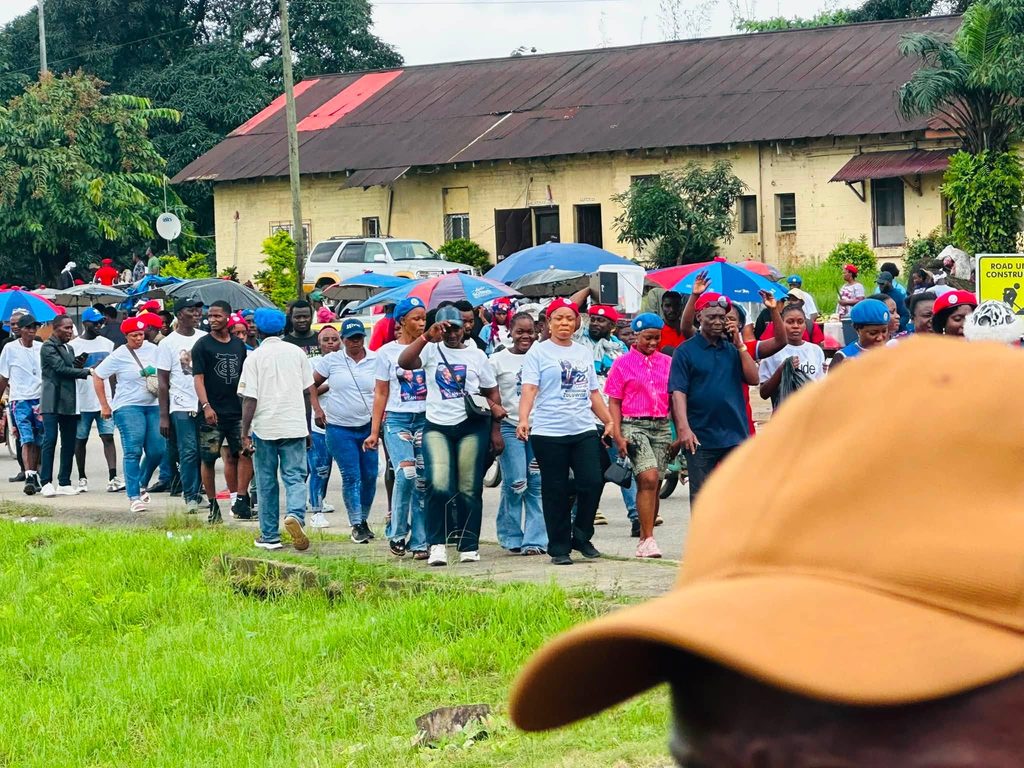
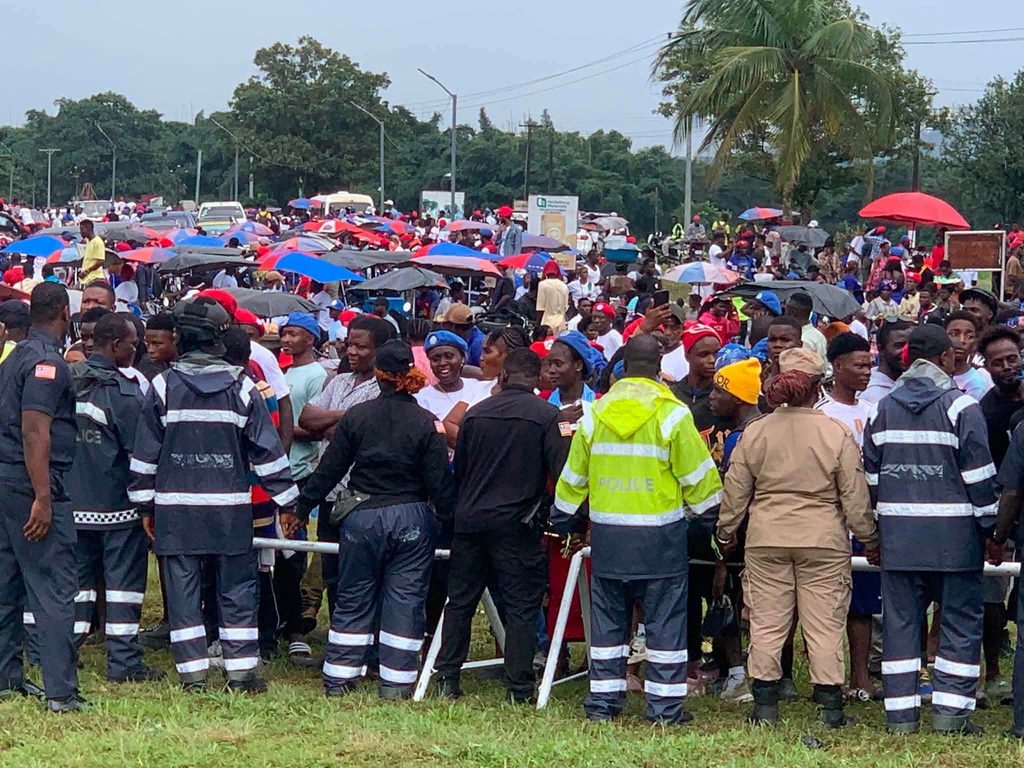
Asked about the large number of people who gathered to welcome him, he said he was not surprised.
“There’s love for me in this country,” Weah said.
“I’m not surprised.”
“I know how much Liberians love me. I love Liberians very much.”
He described Liberia as his home and rejected any suggestion that his long absence meant he was avoiding the country.
“This is my home. So I will be safe,” he said.
Then he delivered another pointed statement:
“I’m a decent citizen. Come on, president. You say I can’t come to my country? Where am I running from? This is wrong.”
The remarks appear to respond to speculation within opposition circles that Weah could face arrest upon his return.
But the Boakai administration publicly dismissed those reports before Weah arrived.
Information Minister Jerolinmek M. Piah said the government had no plan to arrest Weah, describing the reports as unfounded.
That denial is significant because the arrest speculation had become part of the political atmosphere surrounding Weah’s homecoming.
“I Went to the World Cup”
Weah also addressed questions about his extended absence from Liberia, explaining that his travels had included professional and football-related engagements.
“I went to the World Cup,” he said.
“I had a lot of meetings.”
“I delivered my speech to the Adrian Bar Association.”
The reference appears to be to the Nigerian Bar Association, where Weah delivered the keynote address at the association’s 66th Annual General Conference in Port Harcourt on August 23.
The NBA itself confirms that Weah delivered the keynote address at the conference, which carried the theme “Beyond Limits.”
Weah used the Nigerian legal gathering to deliver a message strikingly similar to the one he brought home Wednesday—warning against executive overreach and defending judicial independence.
“A tyrant with a certificate of return is still a tyrant,” Weah told the Nigerian lawyers during his keynote address.
He has now returned to Liberia amid circumstances that make those earlier remarks appear particularly relevant to his domestic political message.
Weah to Visit Jewel in Prison
Following his press conference, Weah said he intended to visit Howard-Taylor at the Monrovia Central Prison to show solidarity with his former running mate.
The former President’s relationship with Howard-Taylor is politically significant.
She served as Vice President throughout Weah’s 2018–2024 presidency and remains a prominent figure within the CDC’s political establishment.
Her arrest transformed Liberia’s drug investigation into an even more politically explosive issue because of her position as a former Vice President and former First Lady.
The government, meanwhile, insists that the investigation is about alleged criminal conduct rather than political affiliation.
The charges against Howard-Taylor remain allegations, and she has not been convicted.
Weah’s Biggest Political Message: CDC Is Still “the Party of the People”
Beyond the Jewel Howard-Taylor case, Weah used his return to revive the political identity that carried him to the presidency in 2017.
Asked what message he had for supporters, he attacked the current administration and contrasted it with the political movement he said he created.
“We brought a true revolution,” he declared.
“A revolution of the people.”
“We are the party of the people.”
He said the CDC was created to produce new leaders and provide young Liberians with opportunities to participate in national leadership.
“We brought a revolution that will bring new leaders with new ideas,” he said.
“Ideas of development. Ideas of giving young people the opportunity to become leaders.”
Weah then accused the current administration of producing “chaos all over the place.”
His comments effectively marked his return not merely as a former President coming home, but as a political leader seeking to reassert the CDC’s relevance.
The 2029 Question Is Now Back in the Room
Weah’s return also reopens a question that has hovered over Liberian politics since he left office: Will he seek the presidency again in 2029?
Recent reporting has indicated that Weah has told CDC supporters he intends to position himself for another presidential run.
His remarks Wednesday did not formally announce a candidacy.
But his language was unmistakably political.
He called for opposition leaders to meet.
He attacked the sitting government.
He described Liberia as being “in shambles.”
He promised to defend democracy.
And he insisted that the CDC remains “the party of the people.”
That combination makes his return one of the most politically consequential developments in Liberia’s current political cycle.
A Homecoming at a Dangerous Political Moment
Weah’s arrival also coincides with another extraordinary development: Liberia’s political and justice systems are simultaneously dealing with the country’s massive narcotics investigation.
The government says Howard-Taylor is one of several people facing charges arising from an investigation into a transnational drug network.
Reuters reported that the investigation followed the seizure of cocaine valued at approximately US$317 million, with authorities pursuing multiple suspects.
The case has already produced fierce political disagreement.
The government says it is pursuing evidence and enforcing the law.
The opposition argues that the investigation is being used selectively against political opponents.
Weah’s return now places the country’s most powerful opposition figure directly inside that confrontation.
From Ex-President to Opposition Commander
George Weah left office in January 2024 after conceding defeat to Boakai.
Nearly three years later, he has returned to Liberia not as a retired statesman but as an active opposition political leader.
His message Wednesday was therefore less about nostalgia and more about confrontation.
He accused the government of undermining democracy.
He rejected the criminal case against his former Vice President.
He described Liberia as being in “shambles.”
He called for opposition unity.
And he promised to continue fighting for what he called democratic governance.
But some of his assertions already face factual challenges.
His claim that the 2023 election was decided by fewer than 3,000 votes is contradicted by official election figures showing a margin of more than 28,000 votes.
His claim that the government may have sought to arrest him was publicly rejected by the government before his arrival.
And while he accused the government of “tampering with justice,” the criminal case against Howard-Taylor remains before the courts, where guilt or innocence has yet to be determined.
The Political Test Begins Now
For Weah, the size and enthusiasm of his welcome will be interpreted as evidence that he remains a formidable political force.
For the Boakai administration, the challenge is different.
It must now govern while facing a rejuvenated opposition leader who has returned at precisely the moment when questions about drugs, justice, democratic institutions and political accountability are dominating national debate.
The CDC will also have to demonstrate whether the energy surrounding Weah’s homecoming can be transformed into sustained political organization beyond rallies and emotional displays.
And Weah himself faces the harder test of converting the enormous personal popularity he claims into a coherent opposition strategy capable of challenging the government on policy, governance and national development.
His return has therefore changed the political temperature in Liberia.
As Weah put it himself:
“This is a country that’s been through wars and chaos. We need to stop it.”
But his return also raises a question Liberia’s political class will now have to answer:
Will Weah’s homecoming deepen Liberia’s democratic debate—or intensify the political confrontation already gripping the country?
For now, one thing is certain: George Weah is back in Liberia, and Liberia’s opposition politics has entered a new phase.
For breaking news, in-depth analysis, and exclusive reports from Liberia and around the world, follow The Liberian Post on Facebook (https://web.facebook.com/profile.php?id=61576017166570) and X, formerly Twitter (https://x.com/LiberianPost).