
–LRA Says Government Could Cross Billion-Dollar Domestic Revenue Threshold This Month as Ngafuan Pushes Stronger Mobilization to Finance Roads, Health, Education and Agriculture
MONROVIA, Liberia — Liberia is edging closer to a potentially historic milestone in its public finances, with the government reporting that domestic revenue collections have reached US$954.7 million, leaving just US$45.3 million to cross the US$1 billion mark.
The latest figure, announced Wednesday by Liberia Revenue Authority (LRA) Commissioner-General James Dorbor Jallah, places the government within striking distance of its billion-dollar domestic revenue milestone and reinforces what officials describe as a rapidly strengthening domestic resource mobilization drive.
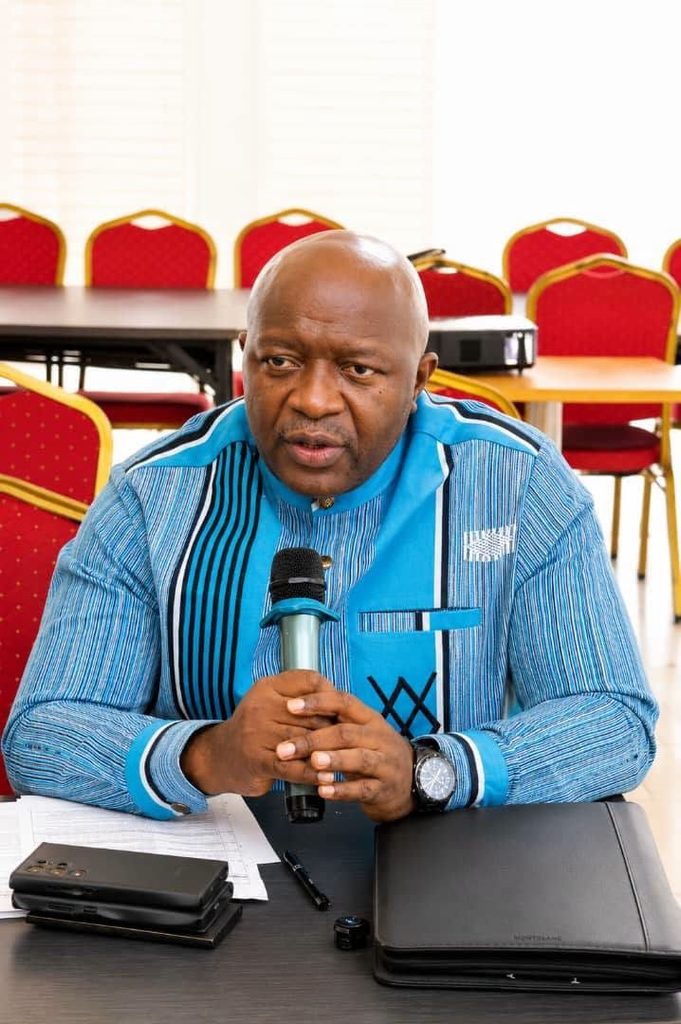
Jallah made the disclosure during a Revenue Performance and Revenue Measures and Policies Review Meeting in Monrovia, attributing the strong performance to continued collaboration between the LRA, the Ministry of Finance and Development Planning (MFDP), and other government institutions.
“As of this morning, we can report that we have raised US$954.7 million in revenue, thanks to the collaboration we continue with the Ministry of Finance and Development Planning and other entities,” Jallah said.
The announcement represents the latest jump in a revenue trajectory that has accelerated sharply over the past two years.
Liberia’s domestic revenue collections rose from approximately US$699 million in 2024 to US$848 million in 2025, according to LRA figures. By August 18, 2026, collections had already reached US$904.7 million, meaning the latest US$954.7 million figure represents an increase of about US$50 million in just over two weeks.
The increase also means that Liberia has already collected roughly US$107 million more than the US$847.7 million in domestic revenue recorded for 2025, according to figures cited by President Joseph Nyuma Boakai and the LRA.
From US$699 Million to Nearly US$1 Billion
The numbers point to a significant transformation in Liberia’s domestic resource mobilization capacity.
In 2024, the LRA collected approximately US$699 million. The figure climbed to about US$848 million in 2025, setting a new record after the authority surpassed its approved US$804.6 million domestic revenue target.
The LRA has attributed the improvement to stronger taxpayer compliance, modernization of revenue administration, technology-driven reforms, expanded taxpayer engagement and increased digitization.
The authority’s latest performance suggests that the upward trajectory has continued into 2026.
In August, the LRA reported collections of US$893 million as of August 12—already US$45 million above the entirety of its 2025 domestic revenue collection at that point in the fiscal year.
Just days later, the figure rose to US$904.7 million, and it has now reached US$954.7 million.
That leaves Liberia only US$45.3 million short of US$1 billion.
‘The Year of the Billion’
The development fulfills, at least in part, a revenue ambition that the LRA publicly branded months ago.
In November 2025, Commissioner General Jallah described 2026 as “the year of the billion,” as the government prepared a national budget heavily dependent on resources generated domestically.
The draft FY2026 budget submitted to the Legislature was valued at approximately US$1.211 billion, with domestic resources expected to finance the overwhelming majority of the budget.
Since then, the government’s revenue ambitions have expanded, with officials now working toward a US$1.3 billion domestic revenue target for 2026.
The US$1 billion figure, therefore, should not be confused with the government’s full-year revenue target.
Rather, it represents a major intermediate milestone in Liberia’s effort to build a stronger domestic fiscal base.
At US$954.7 million, the government has already achieved approximately 73.4 percent of the US$1.3 billion target, leaving roughly US$345.3 million still to be mobilized to reach the full-year objective.
That makes the remaining months of 2026 critical for the LRA and other revenue-generating institutions.
Digital Push to Close Revenue Leakages
Behind the revenue numbers is a broader effort by the government to modernize Liberia’s tax administration system.
One of the major reforms involves the deployment of Electronic Fiscal Devices (EFDs) designed to capture business transactions electronically and transmit relevant information to the LRA.
The system is intended to strengthen the government’s ability to monitor transactions, reduce tax leakages, improve compliance and make it more difficult for taxable economic activity to remain outside the formal revenue system.
According to LRA documentation, the devices can record sales transactions, issue fiscal receipts and transmit transaction information to the authority for monitoring, auditing and data matching.
The LRA has increasingly placed digital transformation at the center of its revenue strategy.
At the launch of its 2025–2029 Corporate Strategic Plan, Jallah said the authority’s revenue growth must ultimately be translated into greater fiscal independence and improved public services rather than treated simply as a collection statistic.
The LRA has also emphasized making tax compliance easier for businesses and individuals, improving taxpayer services, increasing transparency and reducing the complexity associated with meeting tax obligations.
Ngafuan: Revenue Must Translate Into Development
Finance and Development Planning Minister Augustine Kpehe Ngafuan has welcomed the revenue gains while warning government officials not to become complacent.
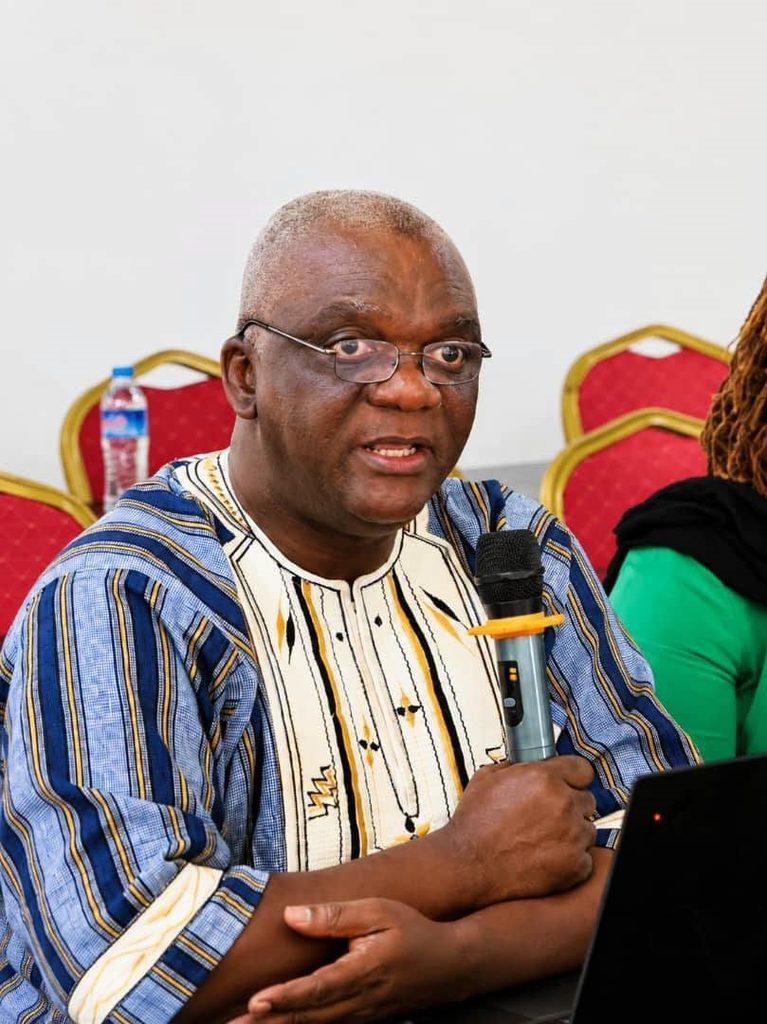
Speaking during Wednesday’s review meeting, Ngafuan stressed that stronger domestic revenue is fundamental to financing the government’s development priorities and reducing Liberia’s dependence on external resources.
He urged the LRA and other revenue-generating institutions to maintain the momentum through stronger compliance, improved administration and deeper engagement with taxpayers.
But the Finance Minister also issued a broader challenge: collecting more money is only meaningful if the resources are converted into tangible development outcomes.
“We have to keep the focus because the more we do, the more we are challenged to do because the expectations of our people are high.”
Ngafuan pointed to the first-year implementation report of the ARREST Agenda for Inclusive Development (AAID) as evidence that the government is making progress in sectors including roads, health, education and agriculture.
“We have done much, but there is much more we must do and will do,” he said.
The minister reaffirmed the government’s commitment to strengthening resource mobilization as a foundation for fiscal sustainability and implementation of the AAID.
His comments echo a broader message he delivered during the AAID’s first National Steering Committee review, where he argued that improving economic indicators must ultimately translate into jobs, better public services and measurable improvements in the lives of Liberians.
The Billion-Dollar Question: What Happens Next?
For Liberia, crossing US$1 billion in domestic revenue would carry considerable symbolic and fiscal significance.
It would represent another major step away from the country’s historic dependence on external assistance to finance government operations and development programs.
But the milestone would also raise expectations.
The Liberian Post previously reported that the significance of the billion-dollar threshold lies not simply in the size of the collection figure, but in what the government does with the resources.
The LRA has similarly argued that the ultimate value of stronger domestic revenue lies in its capacity to finance schools, healthcare, roads and other essential public services.
That creates a two-part test for the Boakai administration.
The first is whether the government can sustain the revenue momentum and reach its broader US$1.3 billion target.
The second—and potentially more important—is whether the additional fiscal space produces visible improvements in the lives of ordinary Liberians.
Revenue Growth Meets Rising Expectations
The revenue surge comes as the government simultaneously faces pressure to demonstrate results under the AAID.
Ngafuan has previously acknowledged that Liberia’s macroeconomic performance has improved, with real GDP growth rising from 4 percent in 2024 to 5.1 percent in 2025 and projected at 5.5 percent for 2026. Domestic revenue has also risen sharply, while public debt as a share of GDP has declined.
But he has repeatedly cautioned that economic stability alone is not enough.
For citizens, the question is increasingly whether stronger government revenue will translate into better roads, improved healthcare, expanded educational opportunities, agricultural development, jobs and other services.
That challenge becomes even more significant as international development assistance comes under pressure and Liberia is encouraged to finance more of its own development.
Development partners have similarly urged Liberia to diversify its financing base by strengthening domestic revenue, attracting private investment and making more strategic use of available resources.
A Historic Milestone Within Reach
With US$954.7 million already collected, Liberia is now only US$45.3 million away from the US$1 billion domestic revenue threshold.
If the current momentum continues, the government could cross the landmark before the end of September, as projected by Commissioner-General Jallah.
But crossing US$1 billion will not end the government’s revenue challenge.
Instead, it will mark a new stage in Liberia’s fiscal story—one in which the focus shifts from proving that the country can collect more revenue to demonstrating that stronger domestic resources can sustainably finance development and improve living standards.
For the Boakai administration, the billion-dollar milestone could therefore become more than a headline figure.
It could become a test of whether Liberia can turn stronger revenue mobilization into stronger government performance—and stronger government performance into tangible results for its people.
For breaking news, in-depth analysis, and exclusive reports from Liberia and around the world, follow The Liberian Post on Facebook (https://web.facebook.com/profile.php?id=61576017166570) and X, formerly Twitter (https://x.com/LiberianPost).