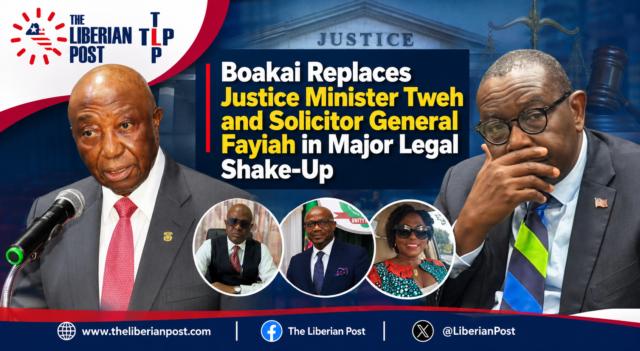
–President Names Betty Lamin-Blamo Justice Minister, Abraham Boimah Sillah Solicitor General as Liberia Faces High-Profile Drug, Corruption and Justice Challenges
MONROVIA, Liberia — President Joseph Nyuma Boakai, Sr. has abruptly reshuffled the leadership of Liberia’s justice system, replacing Justice Minister and Attorney General Cllr. Natu Oswald Tweh, Sr. and Solicitor General Cllr. Augustine C. Fayiah in a move that puts new leadership at the helm of the country’s principal prosecutorial institution.
The changes were announced Wednesday, September 2, 2026, by the Office of the Presidential Press Secretary at the Executive Mansion as part of a broader set of government appointments affecting the Ministries of Justice and Gender, Children and Social Protection, the Ministry of Local Government, the Public Procurement and Concessions Commission (PPCC) and the National Transit Authority (NTA).
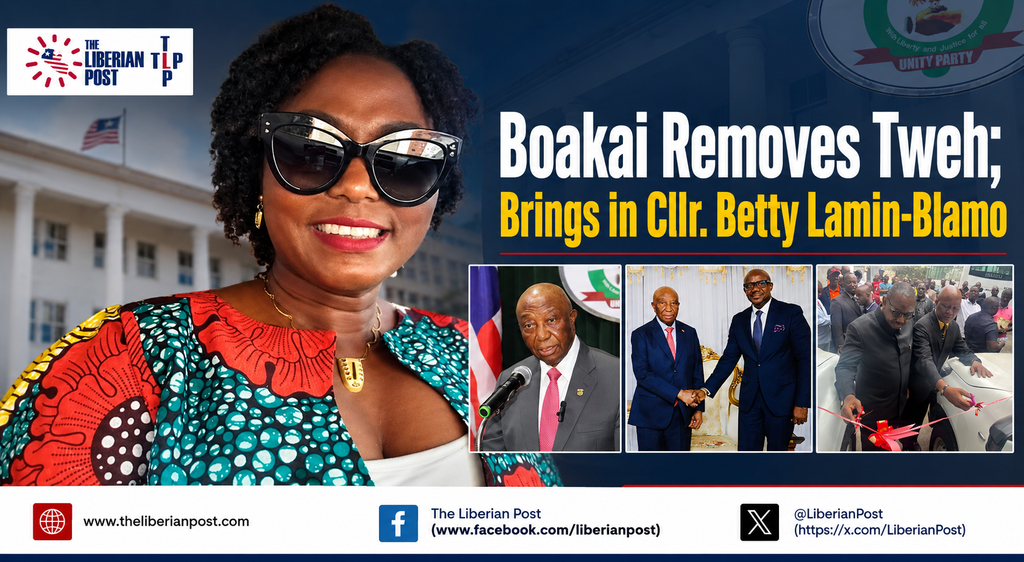
Under the changes, Cllr. Betty M. Lamin-Blamo has been appointed Minister of Justice, while Cllr. Abraham Boimah Sillah, Sr. has been appointed Solicitor General.
The Executive Mansion said outgoing Justice Minister Tweh and outgoing Solicitor General Fayiah “are to be reassigned to other levels of government.”
The announcement does not provide a reason for the changes and does not characterize the two outgoing officials as having been dismissed.
But the replacement of Liberia’s two most senior prosecutorial officials represents one of the most consequential changes to the government’s legal team since President Boakai assumed office.
A New Legal Team Takes Charge
Cllr. Betty M. Lamin-Blamo returns to the Ministry of Justice in a far more senior capacity.
She is not a newcomer to the Ministry or Liberia’s prosecutorial system.
Lamin-Blamo previously served as Solicitor General of Liberia, having been appointed to that position by former President Ellen Johnson Sirleaf in 2014. Historical records from Liberia’s Judiciary show her appearing before the Supreme Court as Solicitor General in major cases, including cases in which she represented the Government of Liberia.
Her return places a lawyer with previous experience at the highest level of the government’s litigation and prosecution structure at the head of the Ministry of Justice.
She will now assume responsibility for an institution whose statutory mandate includes enforcement of Liberia’s laws, prosecution of violations, representation of the Republic in civil and criminal proceedings, legal advice to the President and government agencies, and oversight of enforcement of the country’s drug laws.
Sillah Takes Over Prosecution
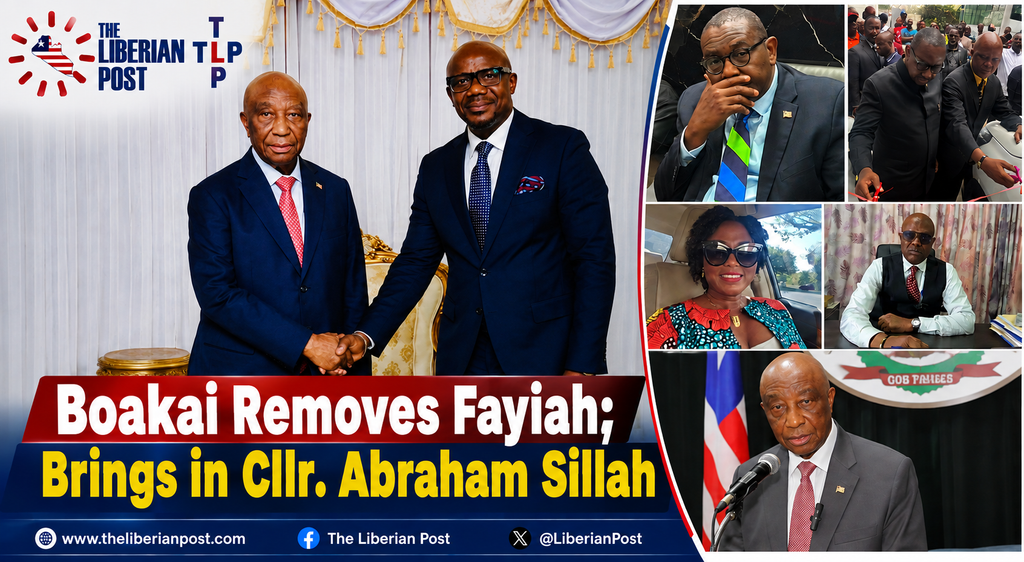
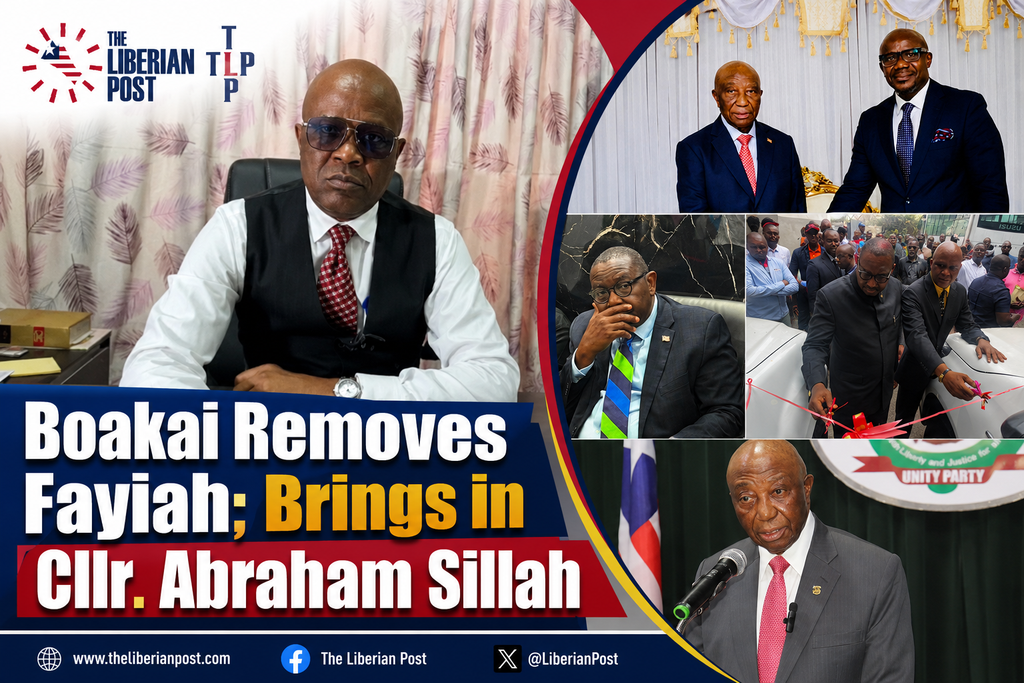
At the same time, President Boakai has appointed Cllr. Abraham Boimah Sillah, Sr. as Solicitor General.
The Solicitor General occupies a critical position within the Ministry of Justice’s prosecutorial structure.
The Ministry’s Prosecution Department is responsible for criminal prosecutions and civil suits in which the Republic of Liberia is a party, with its work extending across litigation, taxation, sexual and gender-based violence, county attorneys and city solicitors.
Sillah therefore takes over the government’s principal prosecutorial office at a moment when Liberia’s justice system is facing intense public scrutiny.
Tweh’s Two-and-a-Half-Year Tenure Ends
Cllr. Natu Oswald Tweh was appointed Minister of Justice and Attorney General by President Boakai in February 2024.
According to Liberia Revenue Authority records, Tweh entered government after more than three decades of legal practice, including his work as managing partner at Brumskine & Associates and later as co-founder of Pierre, Tweh & Associates. He also taught law at the University of Liberia.
During his tenure, Tweh became one of the most visible figures in the Boakai administration’s justice and accountability agenda.
He repeatedly defended the government’s prosecution of corruption cases and insisted that political influence should not shield individuals from criminal accountability.
In May, for example, Tweh strongly defended the prosecution of former senior officials in the controversial US$6.2 million corruption case, describing the prosecution as an important institutional test for Liberia’s justice system.
He praised the prosecution team led by Fayiah after the trial produced a mixed verdict, while also acknowledging that the Ministry needed to learn from the case and conduct an internal review of its handling of complex prosecutions.
Fayiah Leaves as Prosecution Chief
Fayiah’s departure is equally significant.
Appointed Solicitor General by President Boakai, Fayiah has overseen the government’s prosecution machinery during several high-profile cases and investigations.
Only weeks ago, he was publicly addressing prosecutors about professional conduct, evidence and the responsibilities of state lawyers.
At a three-day prosecution training workshop in Ganta in August, Fayiah urged prosecutors to work without fear or outside interference and emphasized the need to carefully assess evidence before proceeding with criminal cases.
He warned against corruption and kickbacks and said public confidence in Liberia’s justice system depends on prosecutors maintaining integrity and professionalism.
His replacement therefore comes at a particularly interesting moment for Liberia’s prosecution service.
Shake-Up Comes Amid Intensifying Drug Investigation
The leadership changes also come against the backdrop of Liberia’s increasingly intense fight against international drug trafficking.
The government is currently pursuing a major narcotics investigation following the seizure of approximately 237.6 kilograms of cocaine at Roberts International Airport on June 8, 2026.
The case triggered a joint national-security investigation involving the Liberia Drug Enforcement Agency, Liberia National Police, National Security Agency and other institutions, including the Ministry of Justice.
The investigation has since generated considerable public debate, including allegations and counter-allegations involving government officials and individuals linked to the broader drug investigation.
Tweh had repeatedly defended the government’s insistence that criminal investigations must be based on evidence rather than radio commentary, social-media accusations or political speculation.
“We do not build cases on rumors, speculation, or political commentary. We build cases on facts, evidence, and the law,” Tweh said during an August briefing.
The Justice Minister also recently warned that the government would not arrest people simply because their names were mentioned publicly.
The leadership change comes at a time when the Ministry is therefore deeply involved in one of the most politically sensitive criminal investigations of the Boakai presidency.
The Executive Mansion, however, has not linked Tweh’s reassignment to the drug investigation.
Justice Ministry Under Pressure to Deliver
The Ministry of Justice is arguably one of the most consequential institutions in the Liberian government.
Its statutory responsibilities include not only prosecution but also criminal-law enforcement, representation of the Republic in court, legal advice to the government, corrections and enforcement of drug laws.
The Ministry’s own mission calls for effective legal and public-safety services, promotion of the rule of law, protection of public safety and safeguarding the interests of the Liberian people and government.
Its stated core values include integrity, discipline, professionalism, accountability and transparency.
That makes the new leadership team responsible for an extraordinarily broad portfolio.
Among the immediate challenges will be maintaining continuity in ongoing criminal prosecutions, strengthening prosecutorial capacity, managing major narcotics investigations, supporting anti-corruption cases and maintaining public confidence in the justice system.
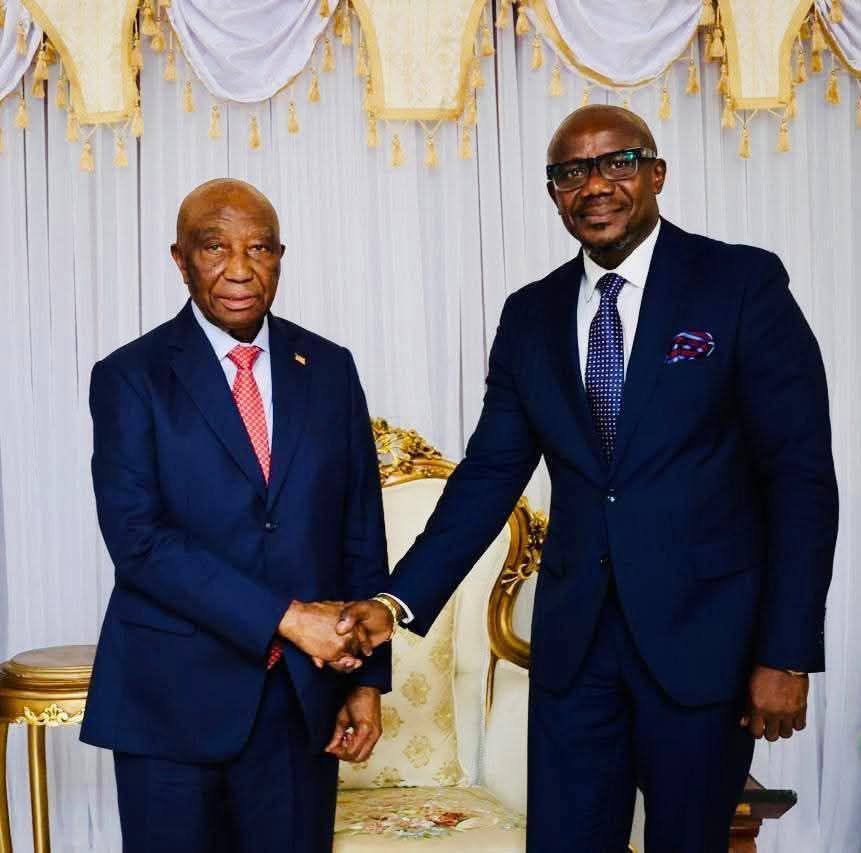
Tweh Had Defended the Government’s Prosecution Record
Tweh leaves office after publicly defending the Justice Ministry’s record in several politically sensitive cases.
His most prominent recent defense came following the mixed verdict in the US$6.2 million corruption trial involving former Finance Minister Samuel D. Tweah and other former government officials.
Tweh described the acquittal of some defendants as evidence of an independent judiciary rather than a failure of the prosecution.
He also credited the prosecution team, led by Fayiah, with successfully navigating complicated legal challenges surrounding national security and presidential directives.
The Minister had nevertheless acknowledged that the government needed to improve its prosecutorial strategy, promising an internal review of the investigation, evidence presentation and jury-management aspects of the case.
New Minister Inherits a Complicated Portfolio
For Lamin-Blamo, returning to the Ministry of Justice as Minister and Attorney General means assuming leadership of an institution confronting multiple pressures simultaneously.
She inherits a prosecution system handling major criminal cases while the government is under growing public pressure to demonstrate that its campaign against corruption and narcotics trafficking can produce successful prosecutions.
She also takes over at a time when Liberia’s justice institutions are being challenged to demonstrate that the rule of law applies equally to powerful officials and ordinary citizens.
The Ministry itself says its mission is to maintain a Liberia where the rule of law prevails and justice is accessible to all.
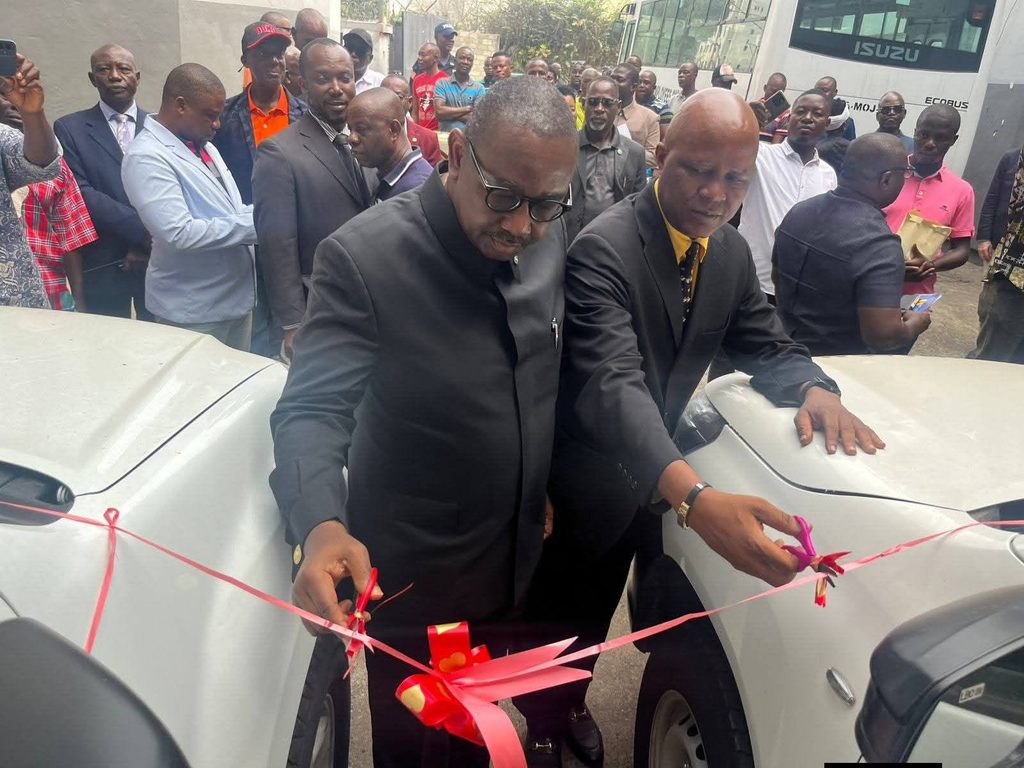
Broader Government Reshuffle
The changes at Justice were part of a wider round of appointments announced by President Boakai.
At the Ministry of Gender, Children and Social Protection, Angel M. Morris has been appointed Deputy Minister for Public Affairs, while Harrison K. Sorsor has been appointed Assistant Minister for Research, Policy and Planning.
At the Public Procurement and Concessions Commission, Alex Chersia Grant has been appointed Commissioner.
At the Ministry of Local Government, Christopher Ben Bailey has been appointed Superintendent of Grand Gedeh County.
And at the National Transit Authority, Benedict Yeke Harleysion, Sr. has been reappointed Chairman of the Board.
The Executive Mansion said the appointments are part of President Boakai’s continuing efforts to strengthen key government institutions and improve public-service delivery.
What Does Boakai’s Move Signal?
The President has not publicly explained why he decided to replace Tweh and Fayiah at this particular moment.
That leaves the political and institutional significance of the decision open to interpretation.
What is clear, however, is that President Boakai has chosen to put a new leadership team in charge of the government’s legal machinery at a time when the country is demanding stronger results from its justice institutions.
The timing is especially notable because the administration is simultaneously fighting a major narcotics problem, pursuing corruption cases, strengthening prosecution capacity and facing growing calls for equal application of the law.
The Ministry of Justice itself has emphasized that prosecution must be grounded in evidence and fairness rather than political pressure.
The new leadership will now have to demonstrate that those principles remain firmly intact during the transition.
A New Chapter for Liberia’s Justice System
For Tweh and Fayiah, the Executive Mansion’s announcement brings an end to their current leadership roles at the Ministry of Justice, although the President says both men will be reassigned elsewhere in government.
For Lamin-Blamo and Sillah, it marks the beginning of what could become one of the most demanding chapters of their legal careers.
They take charge as Liberia confronts questions about drug trafficking, corruption, prosecutorial effectiveness, institutional independence and public confidence in the rule of law.
And with the country’s justice system under an unusually bright public spotlight, the new leadership will face a simple but demanding expectation:
turn Liberia’s laws into credible enforcement, ensure that evidence—not influence—drives prosecution, and demonstrate that the rule of law applies equally to everyone.
President Boakai’s decision has changed the faces at the top of Liberia’s legal establishment.
The next question is what the new faces will do differently.
For breaking news, in-depth analysis, and exclusive reports from Liberia and around the world, follow The Liberian Post on Facebook (https://web.facebook.com/profile.php?id=61576017166570) and X, formerly Twitter (https://x.com/LiberianPost).