TRADITIONALLY, A WITCH-HUNT or a witch purge is a search for people who have been labelled “witches” or a search for evidence of witchcraft, and it often involves a moral panic or mass hysteria. The classical period of witch-hunts took place in the Early Modern Period or about 1450 to 1750, spanning the upheavals of the Reformation and the Thirty Years’ War, resulting in an estimated 35,000 to 100,000 executions. The last executions of people convicted as witches in Europe took place in the 18th century.
IN OTHER REGIONS, like Africa and Asia, contemporary witch-hunts have been reported from Sub-Saharan Africa and Papua New Guinea, and official legislation against witchcraft is still found in Saudi Arabia and Cameroon today. However, in current language, “witch-hunt” metaphorically means an investigation that is usually conducted with much publicity, supposedly to uncover subversive activity, disloyalty, and so on, but with the real purpose of intimidating political opponents. It was frequently written of a “Stalinist witch-hunt” or a “McCarthyite witch-hunt”, “Erdoganist witch-hunt”. In these cases, the word “witch-hunt” is used as a metaphor to illustrate the brutal and ruthless way in which political opponents are denigrated and persecuted.
IN A POLITICAL context, a “witch-hunt” is often used to refer to situations in which an individual or group of individuals is targeted and investigated for political purposes. “Witch-hunt” has had metaphorical and political currency for more than a hundred years. It’s been drawn into many 20th century debates, including racial politics in Canadian elections (1900) and, perhaps most famously, US Senator Joseph McCarthy’s (1940s-1950s) campaign against communism.
IN LIBERIA, MOST former officials of government use the word “witch-hunt” to dissuade public interests in situations or cases that link them to alleged corrupt activities while serving in government of public places. And, whenever a current government tries to hold these former official accountable for their service to government and the people they would allege “witch-hunt” on the part of the sitting government just to dissuade public interests in their alleged dubious dealings when they were in public service.
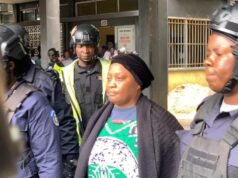
ONE OF SUCH examples comes from former Foreign Affairs Minister, Dee-Maxwell Saah Kemayah, who hours following his release from detention at the Monrovia Central Prison condemned the Government of Liberia over what he described as his “unlawful arrest and detention,” along with that of several other senior officials from the administration of former President George Weah.
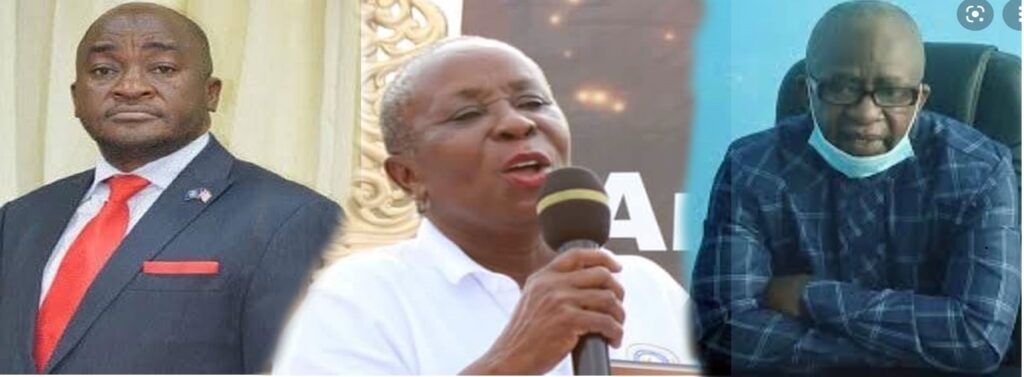
THE FORMER FOREIGN minister’s criticism follows corruption charges brought against him and others by the Ministry of Justice and the Assets Recovery and Property Retrieval Task Force, which he argues are politically motivated.
KEMAYAH, WHO SPOKE to reporters on last Thursday following his release from the Monrovia Central Prison, accused President Joseph Boakai’s Administration of weaponizing the justice system to go after political opponents under the pretext of anti-corruption. He maintained that the charges levelled against him are baseless and are to tarnish his reputation and weakening opposition figures aligned with the previous government.
KEMAYAH IS ONE of over a dozen former officials who have been indicted by Special Grand Jurors of Montserrado County for their alleged role in the mismanagement of a humanitarian donation from the Kingdom of Saudi Arabia.
THE DONATION, MADE in 2023 through the King Salman Humanitarian Aid and Relief Centre, included 29,412 bags of rice intended for disaster victims across Liberia. Valued at over US$425,918, the rice was meant to support vulnerable communities affected by floods, fire outbreaks, and other natural disasters.
HOWEVER, ACCORDING TO the indictment filed at Criminal Court “C” at the Temple of Justice in Monrovia, 25,054 of those bags were allegedly diverted by former officials for unauthorized purposes. The indictment claims that instead of being distributed to intended beneficiaries, the rice was unlawfully repurposed, with no records of end-user receipts or audit trails. The court documents accuse the officials of colluding and scheming to interfere with the lawful distribution of the rice, depriving needy citizens and the state of the aid’s intended use.
NAMED IN THE sweeping indictment are several prominent figures from the former government, including former Minister of Internal Affairs Varney Sirleaf, former General Services Agency Director-General Mary T. Broh, former Executive Director of the National Disaster Management Agency (NDMA) Henry O. Williams, former Deputy Foreign Minister for Administration Thelma Duncan Sawyer, and multiple senior officials from the NDMA and the GSA.
THE PROSECUTION ALLEGES that between February 21 and April 2025, the indicted individuals were summoned by the Assets Recovery Task Force and subjected to interrogation. They were reportedly informed of their constitutional rights, represented by legal counsel throughout the process, and formally charged with a range of offenses including theft of property, economic sabotage, criminal conspiracy, misapplication of entrusted property, and misuse of public money and records.
A WRIT OF arrest issued by Criminal Court “C” on June 25, 2025, and signed by Clerk of Court Knowles W. Shain, authorized law enforcement officers to apprehend the defendants and bring them before the court for trial. The document instructed that an official return be made on the execution of the writ.
THE INDICTMENT FURTHER alleges that the accused officials, while in public service, failed to maintain legal documentation explaining their handling of the donated rice and, in some cases, directly facilitated its transfer to unknown individuals and locations.
THE ALLEGED MISAPPROPRIATION, the government argues, reflects a gross abuse of office and is a breach of public trust. The case has been brought under various provisions of Liberia’s penal code relating to corruption, including sections covering theft, sabotage, and misuse of government property.
REACTING TO THE allegations, Kemayah insisted on his innocence and questioned the credibility and fairness of the process. “There is no fear when you know your hands are clean,” he said. “All we ask for is an impartial and professional judicial process. We will go through it and come out vindicated.”
IN THE WAKE of accusation and counter-accusation of opposition politicians being and/or not being witch-hunted, The Liberian Post likes to inform and educate on what a ‘witch-hunt’ is. A “witch hunt” is a politically-motivated, often vindictive investigation that feeds on public fears. The term has since come to be used more broadly to describe any situation in which individuals are targeted and persecuted without justification.
USE IN POLITICS: In a political context, a witch-hunt is often used to refer to situations in which an individual or group of individuals is targeted and investigated for political purposes. For example, a politician might be accused of corruption or wrongdoing, and then targeted by their political opponents in order to damage their reputation or career.
THIS OFTEN LEADS to situation in which the individual is unfairly targeted and persecuted, even if there is no evidence to support the accusations against them. Additionally, a “witch-hunt” can also refer to situations in which a group of individuals is targeted and persecuted based on their beliefs or opinions.
BUT IN THE case of the ongoing court cases involving former Foreign Affairs Minister Dee-Maxwell Saah Kemayah and others, the prosecution have accused and indicted them for alleged corrupt activities while serving in public office, relative to the Saudi Arabia rice saga.
THE ONUS IS now on the prosecution to present their pieces of evidence in court to bring a guilty verdict against the accused former officials. While the accused have stated their innocence, the prosecution has on the other hand, stated they have compelling pieces of evidence to substantiate their accusation against the former officials and convict them. The Ministry of Justice and the Assets Recovery and Property Retrieval Task Force have brought corrupt charges against the former officials following a series of investigation, charges which the accused must strive to exonerate themselves from legally instead of crying “witch-hunt”.
WHEN A PERSON is elected or appointed to public office, he/she is held accountable for their actions or inactions while serving in that public office. Crying and using “witch-hunt” as a tactic to escape accountability should not be accepted by Liberians, because that has the proclivity to dissuade public interests on cases involving alleged corruption activities in public offices. When public officials are not held accountable for their service in office when there is an alleged wrong doing, how does the nation grow and the people benefit?
WHAT SHOULD BE cardinal is that people or persons accused of alleged corruption activities during their time in public office must be accorded every inch of the processes and procedures required for judication of a case for them to have their day in court to exonerate themselves or otherwise. Therefore, The Liberian Post reiterates that prosecution of alleged corruption cases is not a “witch-hunt” as being propagated by people accused of allegedly abusing public office during their time of service to the nation. Accountability in public is a must for Liberia to develop and grow.