MONROVIA – When Unity Party’s (UP) presidential candidate Joseph Nyuma Boakai was contesting the Liberian presidency, one of his campaigns promises was that if elected, his administration would do all within its constitutional power to clamp down on corruption in government and public places.
Candidate Boakai then acknowledged though, that the fight against corruption in government and public places would be a Herculean task as those who are allegedly involved in corrupt activities in government and public offices have the tendencies to fight back with intensity with the objective to dilute the corruption fight.
And so, based on one his campaign promises which is to clamp down on corruption, including other promises like building roads, establishment of the War and Economic Crimes Court, investment in agriculture, among others, Liberians elected him over former President George Weah of the Coalition for Democratic Change (CDC) in November of 2023 in the Presidential Run-off Election.
One of the promises made during his campaign in 2023, candidate Boakai assured Liberians that his government would audit the government of the CDC that was headed by former President George Weah. And true to his after ascending to state power as president, the Boakai Administration initiated a series of clampdowns in the fight against corruption.
Former officials of the CDC government, including former Finance and Development Planning Minister Samuel Tweah, and others were indicted and are currently in court for alleged corruption activities during their time of service in government.
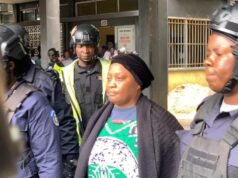
And few days ago, former officials of the CDC regime and some current officials of the UP-led Administration were brought before the court to answer to charges of alleged corruption, with the most famous being former Foreign Affairs Minister Dee-Maxwell Kemayah, former GSA and Acting City Mayor Mary Broh, and array of others.

And as the corruption intensifies in government, a damning report from the General Auditing Commission (GAC) has raised serious concerns about the financial accountability of the Liberia Immigration Services (LIS), revealing that over US$27 million in reported salary expenditures from 2017 to 2022 could not be substantiated with any detailed documentation.
According to the GAC’s audit of LIS’s financial operations from July 1, 2017 to December 31, 2022, there was “no evidence” to support salary expenditures totaling US$27,577,477.56, as reflected in the Fiscal Outturn Reports. This period is when former President Weah was in charge of the running the state of affairs.
The audit further found that LIS processed its payroll without using an automated payroll management system, raising concerns of fraudulent activities or gross mismanagement.
The 2025 GAC report highlights a series of alarming discrepancies, including:
L$27.3 million in unexplained transactions in LIS operational accounts held at the Central Bank of Liberia, which could not be traced to the general ledger.
US$551,547.92 in employee contributions to the National Social Security and Welfare Corporation (NASSCORP) that were not supported by evidence of actual remittance.
US$84,115.99 in payments made to vendors without proper documentation, including valid business registration or tax clearance certificates.
A US$1.1 million variance between the Fiscal Outturn Reports and LIS financial statements.
US$774,425 in payments issued in the names of employees instead of directly to vendors or service providers.
US$8.5 million discrepancy between the Ministry of Finance and Development Planning’s (MFDP) Integrated Financial Management Information System (IFMIS) ledgers and LIS’s own financial statements.
A US$106,060.99 procurement of fuel with no accompanying consumption reports or usage logs.
No quarterly or annual budget performance reports were prepared during the entire six-year period under review.
The complete absence of bank reconciliation statements for the duration of the audit period.
The GAC is now demanding that LIS Management from July 2017 to December 2022 be made to fully account for the financial discrepancies, unexplained disbursements, and the substantial variances between its internal expenditure reports and the Fiscal Outturn Reports.
This latest GAC’s discovery of financial indiscretions at the Liberia Immigration Service (LIS) between the period of July 2017 to December 2022 has intensified the fight against corruption in high places in government.
At the same time some opposition politicians are tagging the fight against corruption as being a witch hunt only intended for former officials of government during the regime of President George Weah, while the current government of President Boakai is being selective in the corruption fight.
But political and financial experts have viewed the corruption fight in government as a standing procedure for any government to follow after taking over from a previous government, as an audit will give it a true picture of what state the country was in when it was inherited.