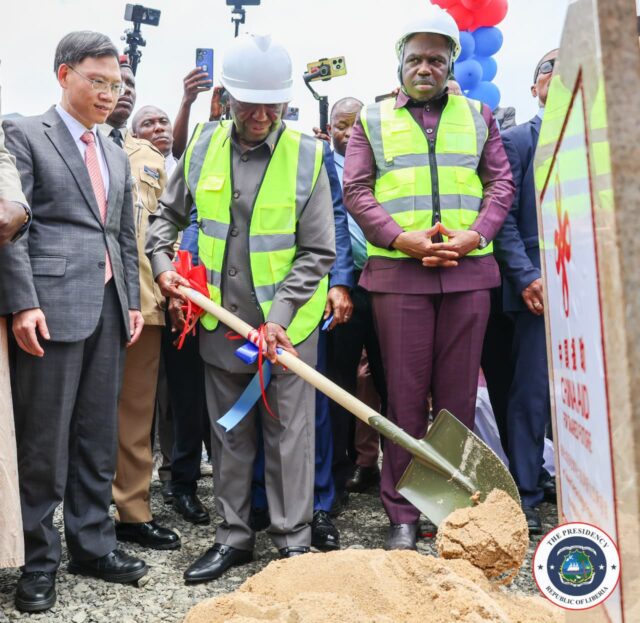
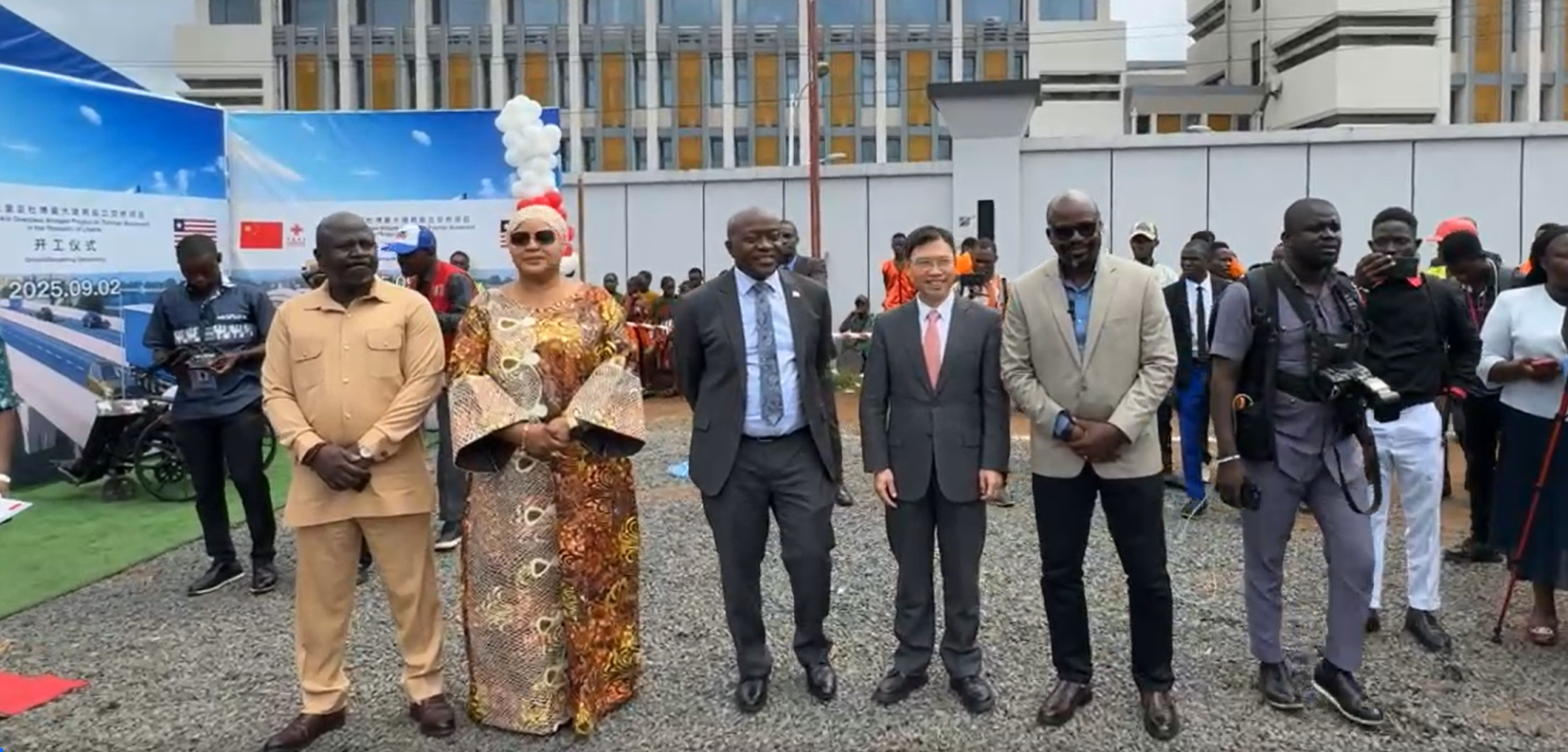
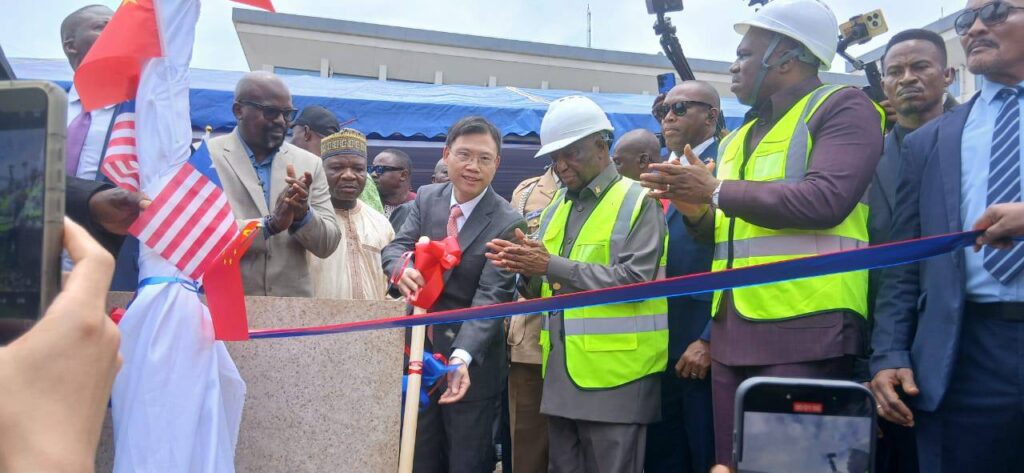
MONROVIA – President Joseph Nyuma Boakai officially broke ground Tuesday, September 2, on two major overpass bridge projects along Tubman Boulevard, funded by the People’s Republic of China. The President hailed the initiative as a tangible solution to Monrovia’s congestion and a catalyst for economic activity.
“This is the power of road infrastructure: it shortens distances, lowers costs, and enhances economic growth. Once these bridges are completed, there will be a visible sign of our government keeping its promises,” said President Boakai during the ceremony.
Project Overview and Impact
The two overpasses—one near the Ministerial Complex and the other at SKD Boulevard—are expected to significantly reduce travel delays, enhance safety, lower transportation costs, and enable quicker emergency response. The President assured that the project will also create hundreds of jobs and stimulate small business growth, all while being integrated into Liberia’s broader ARREST Agenda for Development.
From Inception to Implementation
These twin overpass projects stem from a US$54 million Chinese grant, negotiated during the 2018 Forum on China–Africa Cooperation (FOCAC) in Beijing, with President George Weah playing a key role in finalizing the agreement. However, diplomatic sources reveal that discussions for this grant began during former President Ellen Johnson Sirleaf’s administration and were part of earlier developmental frameworks.
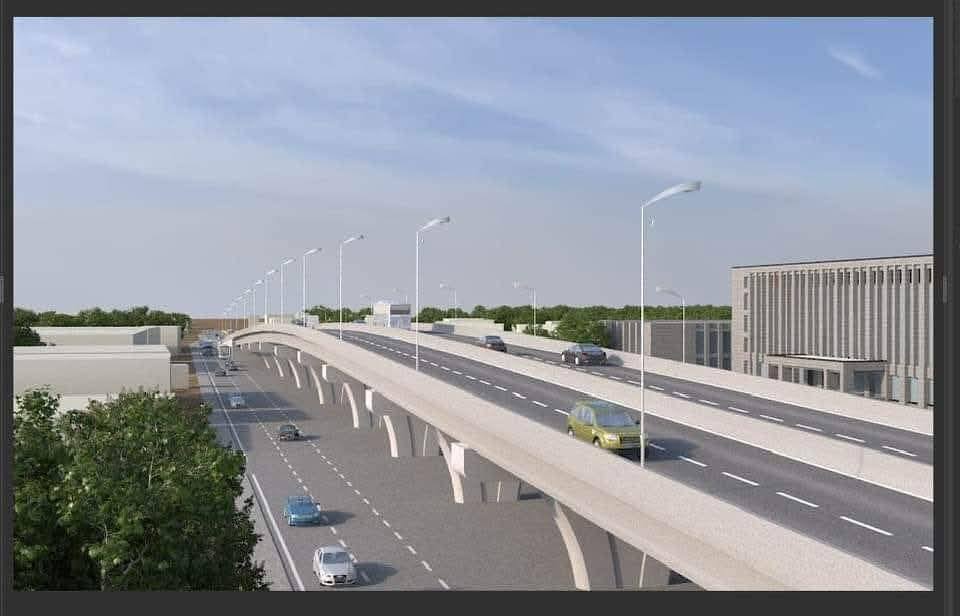
The Implementation Agreement formalizing construction was signed on June 8, 2021, between Liberia’s Ministry of Public Works and China’s Ministry of Commerce, based on an exchange of letters dating back to September 9, 2019. The project is valued at roughly CNY 261.7 million (approximately US$41 million) and includes detailed technical specifications for both overpasses, auxiliary roads, and ramps.
Ties to the Belt and Road Initiative (BRI)
Liberia formally joined China’s Belt and Road Initiative (BRI) in May 2019, signing an MoU at the Second BRI Forum in Beijing. The initiative aims to enhance infrastructure development, regional connectivity, and economic cooperation worldwide. Since then, Liberia and China have aligned the country’s national development strategy—known as ARREST Agenda for Inclusive Development (AAID)—with BRI objectives.
High-profile Chinese-funded projects, such as the Ministerial Complex, Roberts International Airport terminal, and the Fendall campus of the University of Liberia, underscore China’s longstanding infrastructure investment in the country—a hallmark of the BRI’s approach to facilitating development through visible, localized projects.
Diplomatic Endorsements and Strategic Significance
At Tuesday’s event, Chinese Ambassador Lin Chengwu emphasized that the groundbreaking marks a “new chapter” in Sino-Liberian relations and represents mutual development objectives under the ARREST Agenda and BRI.
“This project reflects not only the traditional friendship between China and Liberia but also serves as a vivid illustration of our continuously deepening strategic partnership,” said Ambassador Lin.
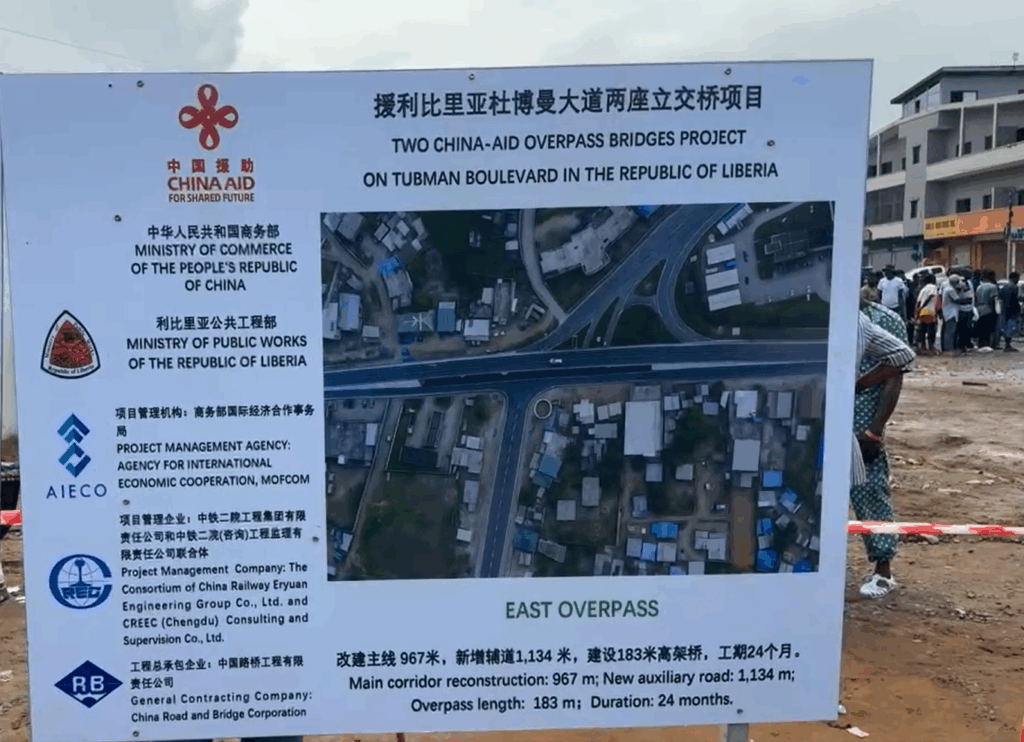
The project will be executed by China Road and Bridge Corporation (CRBC) following a transparent bidding process, with an expected 24-month completion timeline.
Looking Ahead
As Liberia embarks on this infrastructural leap, the overpasses are seen as a strategic bridge—both literal and symbolic—linking Monrovia’s transport network to broader economic opportunities. The initiative reflects not only a strengthening partnership between Liberia and China but also represents a concrete example of Liberia’s integration into global development frameworks, including the BRI.