By Daniel Henry Smith, PhD
The role of a university president is one of the most complex and demanding in public life. It is a position that requires the dexterity of a diplomat, the acumen of a CEO, the vision of a pioneer, and the empathy of a community builder. This individual is not merely an administrator but the central nervous system of a sprawling, intricate organism. The health and future of the institution rest squarely on their shoulders, defined by their ability to navigate a labyrinth of responsibilities. These functions can be distilled into six cardinal areas: the governance of physical and financial assets; the stewardship of the academic environment, including faculty, staff, and students; the management of internal stakeholders and their competing interests; the engagement of external stakeholders from government to civil society; the drive for institutional and academic development; and the relentless pursuit of fundraising.
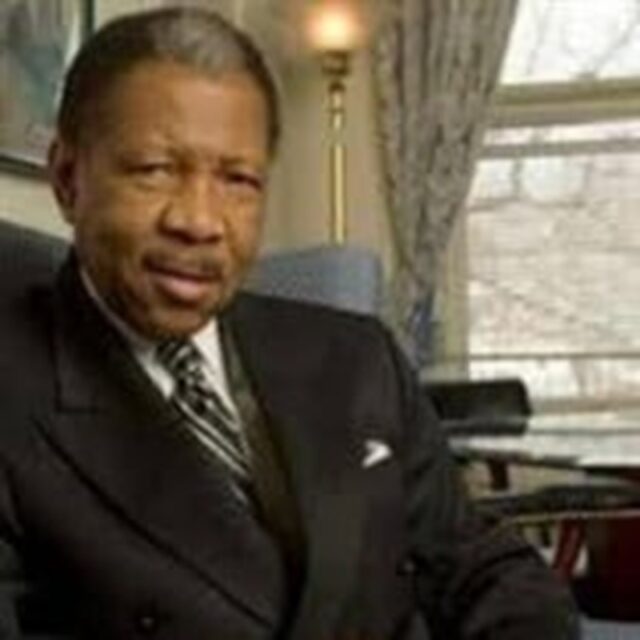
One person who embodied a masterful understanding of these multifaceted duties was the late Dr. Emmet A. Dennis, the 13th President of the University of Liberia (UL). His tenure, which began in 2008, is not just a chapter in the university’s history; it is a masterclass in post-conflict institutional reconstruction. To remember Dr. Dennis is to remember what is possible when leadership is defined not by the scale of the challenges, but by the magnitude of the vision and the tenacity of the will.
When Dr. Dennis took the helm, the University of Liberia was a shell of its former self, a microcosm of a nation ravaged by 14 years of civil war. The task before him was not one of mere improvement, but of resurrection. The campuses on Capitol Hill and Fendell were in ruins. Buildings stood as skeletal reminders of a more glorious past, their walls scarred, and their interiors gutted. The learning environment was a public health crisis; bathrooms were infested, and classrooms were contaminated with lead pollution, creating a hazardous space for both students and faculty.
The human dimension was just as dire. With limited classroom space, students were crammed into overcrowded rooms, many forced to stand at windows, craning their necks to catch fragments of a lecture. This desperate scramble for knowledge was further undermined by a compromised academic culture. With salaries scarce and unreliable, a “pamphlet market” thrived, where faculty members sold handouts to students, replacing rigorous instruction with a transactional exchange that eroded the very foundation of academic integrity. The university was an institution on its knees.
In the face of this monumental decay, Dr. Dennis did not complain. He did not ask for patience or make excuses. Instead, he confronted these challenges with the ferocity of a lion attacking a prey twice its size. He understood that leadership in a crisis is not about explaining the problems, but about galvanizing a community to solve them. His initial actions set a precedent that would define his presidency: a bias for action, a commitment to consultation, and an unwavering focus on restoring the dignity of Liberia’s premier institution of higher learning.
Forging a Vision from the Rubble
A leader’s vision is only as powerful as their ability to rally people around it. Dr. Emmet A. Dennis inherited a deeply fractured and cynical university community, yet within a remarkably short period, he transformed that skepticism into a collective will for change. While he may not have been universally liked in his first few weeks, within six months, he was widely respected and even loved. This transformation was not accidental; it was the direct result of a clear, consultative, and inspiring leadership strategy.
Dr. Dennis knew that a university is not a corporate entity where a CEO can issue top-down directives. It is a commonwealth of ideas and interests, a place where consultative leadership is the only path to sustainable success. He did not retreat into an executive bubble. Instead, he waded directly into the complex ecosystem of internal stakeholders. He engaged the University of Liberia Faculty Association (ULFA), the University of Liberia Staff Association (ULSA), and the student government (ULSU), treating them not as adversaries or troublemakers, but as essential partners in the rebuilding effort. He understood that to drive the change he envisioned, he had to work through people, not around them.
This approach was a stark contrast to the micromanagement or extreme executive control that often paralyzes academic institutions. Dr. Dennis embraced a strategy of “loose coupling,” empowering colleges and departments to operate with a degree of independence. This fostered a healthy competition for excellence and allowed deans and faculty to take ownership of their specific domains, rather than waiting for permission from the president’s office for every minor decision. He built a coalition for progress, ensuring that every major constituency felt heard and had a stake in the university’s revival.
His vision was tangible and communicated with clarity. In about seven months, everyone—from the students protesting for better conditions to the faculty struggling for a living wage—knew that the UL had a president endowed with a formidable ability to manage a post-war institution. He addressed the immediate crises head-on. The dilapidated buildings began to see repairs, the sanitation issues were tackled, and a plan was put in motion to reclaim the campuses from the makeshift structures and chaos that had proliferated.
Perhaps his most significant early achievement was in restoring academic integrity. By working to stabilize salary payments and simultaneously cracking down on the pamphlet trade, he sent an unequivocal message: the currency of the University of Liberia would once again be knowledge, not photocopied notes. He began the arduous process of rebuilding the faculty’s profile, recognizing that the quality of the university could never exceed the quality of its instructors. This foundational work laid the groundwork for one of his most enduring legacies: under his leadership, the University of Liberia produced the highest number of PhDs in its modern history, investing in the human capital that would secure its future.
Building Bridges and Securing the Future
Dr. Dennis’s leadership extended far beyond the university’s campuses. He was a master of managing external stakeholders, artfully navigating the complex political landscape of Liberia while simultaneously building a global network of support. He understood that the university’s budget, which was far below what was needed, could not be the sole source of funding for the ambitious transformation he envisioned. He needed to become the university’s chief advocate and fundraiser-in-chief.
He cultivated a professional and productive relationship with the executive and legislative branches of government, making a compelling case for increased investment in higher education as a cornerstone of national recovery. He worked closely with the Ministry of Education, ensuring the university’s strategic goals were aligned with national policy. But his genius lay in his ability to look beyond government coffers. He tirelessly courted international development partners, leveraging his credibility and vision to attract unprecedented support.
The list of partners he brought to the table is a testament to his global reach and persuasive power. He attracted donations from the Trustees for Donation and secured major funding and technical assistance from the World Bank and USAID, particularly through the Excellence in Higher Education for Liberian Development (EHELD) program. The United Nations, through its mission in Liberia (UNMIL), became a key partner in infrastructure projects. He forged partnerships with a global consortium of universities for Africa and secured support from the European Union.
This influx of external support yielded dramatic and visible results. The destroyed science complex at Fendell was renovated. Safe drinking water was made available on a campus that previously had none. The dilapidated GH and GD buildings on the main campus were renovated. His fundraising prowess was perhaps most spectacularly demonstrated through the construction of the UL College in Sinje, Bomi County, a project made possible by a private donor whom Dr. Dennis personally cultivated. He did not just rebuild the old university; he expanded its footprint and its promise to a new generation of Liberians.
His engagement also transformed the nature of student activism. While protests did not disappear entirely—a sign of a healthy and engaged student body—their frequency and destructive nature were tremendously minimized. By providing student leaders with international exposure tours to observe how student governance functions in stable academic environments, he empowered them to become more effective advocates. The student and faculty leaderships evolved from perennial antagonists into progressive partners, engaged in a shared mission of institutional advancement.

A Legacy as a Yardstick for Today
The tenure of Dr. Emmet A. Dennis is more than a fond memory; it is a living benchmark against which university leadership in Liberia must be measured. His success was not born of favorable circumstances. He inherited a far worse situation than any of his successors, with dilapidated facilities, an abysmal budget, irregular salaries, and constant unrest. Yet, he demonstrated that a leader’s first seven months are a critical window—not to solve every problem, but to establish a clear direction, build trust, and inspire hope.
This makes the current state of affairs at the University of Liberia particularly concerning. Seven months into a new presidency, the question echoes: What is the vision, and who has been rallied to support it? Reports of the current president being unaware of long-standing issues like salary disparity, which were meticulously documented in the handover report from the previous interim administration, are deeply troubling. That report should have been the foundational guide for any new leader. To ignore it is to discard institutional memory and repeat avoidable mistakes.
Furthermore, actions such as unilaterally increasing the salaries of select cronies and hiring new staff in an already overstaffed environment, all while faculty protest for fair compensation, betray the consultative spirit that Dr. Dennis championed. It breeds resentment and deepens the very fractures a new leader is meant to heal. The university is not a private fiefdom; it is a public trust.
Most alarming is the proposed vision to manage costs by forcibly retiring faculty and staff who reach the age of 60. This is not a vision; it is a profound misunderstanding of academia. Seasoned, 60-year-old faculty in good health are not liabilities; they are assets. They are mentors, institutional historians, and reservoirs of wisdom. In the United States, Europe, and across Africa, experienced academics are cherished, not discarded. To propose such a policy is to signal a turn toward a managerial ethos that is fundamentally at odds with the nature of a university.
Dr. Emmet A. Dennis will always be remembered as arguably the most successful post-war president of the University of Liberia because he understood these truths intimately. He demonstrated that true leadership is about confronting problems, not complaining about them. It is about building coalitions, not consolidating personal power. It is about attracting resources, not just managing scarcity. It is about honoring experience, not disposing of it.
His legacy calls on the entire university community—faculty, students, staff, and alumni—to hold current and future leaders to a higher standard. It reminds us that excuses are the currency of mediocrity, while results are the hallmark of greatness. Dr. Dennis rebuilt the University of Liberia by inspiring its people to believe in a shared, better future. That is the timeless role of a university president, and it is the enduring lesson of his remarkable life and work.