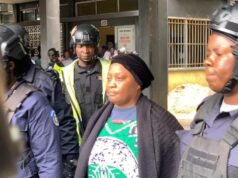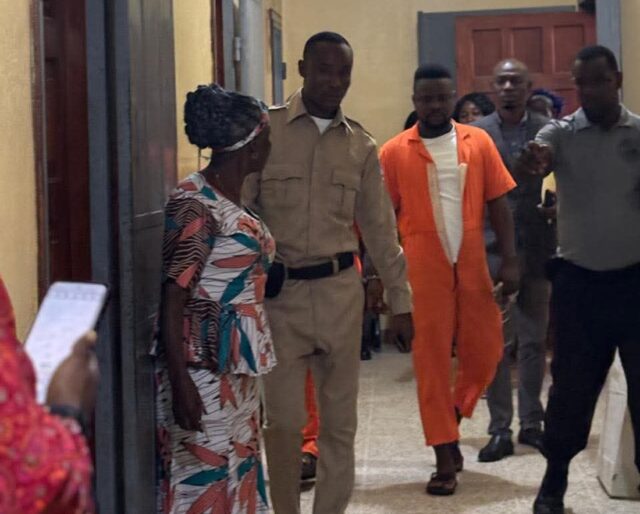
MONROVIA – In a landmark ruling, Criminal Court “B” has found Bill Jallah guilty on all three charges of the indictment—Murder, Criminal Attempt to Commit Murder, and Aggravated Assault—for the killing of Princess Zoe Wesseh, which took place in December 2024.
Presiding Judge Wesseh A. Wesseh delivered the verdict on Thursday, September 11, 2025, stating that evidence presented at trial demonstrated beyond reasonable doubt that Jallah’s actions were premeditated and deliberate. Though Jallah pleaded guilty and expressed remorse, the Prosecution argued—and the court agreed—that the crime was planned. The fatal stabbing, according to court records, involved seven separate blows.
Incident and Trial Details

- The killing occurred on Saturday, December 21, 2024, outside Fast Nickel, a popular entertainment center on Duport Road, Paynesville.
- According to testimonies, the altercation began earlier that evening at Princess Zoe’s workplace in Oldest Congo Town. After being disturbed at work, she contacted Jallah’s father for help. Jallah’s sister, Komassah Jallah, intervened to mediate by taking them to Fast Nickel, but the dispute escalated.
- As Princess Zoe attempted to leave, Jallah reportedly followed her with a silver knife and stabbed her in the chest, arm, neck, and back. The wounds proved fatal.
During cross‑examination, Jallah said he could not recall what happened that night. He admitted that the deceased was a close friend, asked for forgiveness from her family and from the government, and expressed remorse. Despite these statements, eyewitness testimony and Jallah’s own confession reinforced the Prosecution’s claim that the murder was not spontaneous, but intentional.
Next Steps: Sentencing and Background Check
Before issuing a sentence, the court has ordered the Clerk to liaise with the Ministry of Justice Probation Services to conduct a background check on Jallah. The findings of that report will guide the severity of the sentence, as the law allows for consideration of character, prior record, and mitigating or aggravating factors.
With sentencing pending, the public is watching closely. The case is seen by many as a test of Liberia’s judicial capacity to deal firmly with violent crime and public safety.
Broader Context: Murder Charges, Legislation, and Sentencing Norms
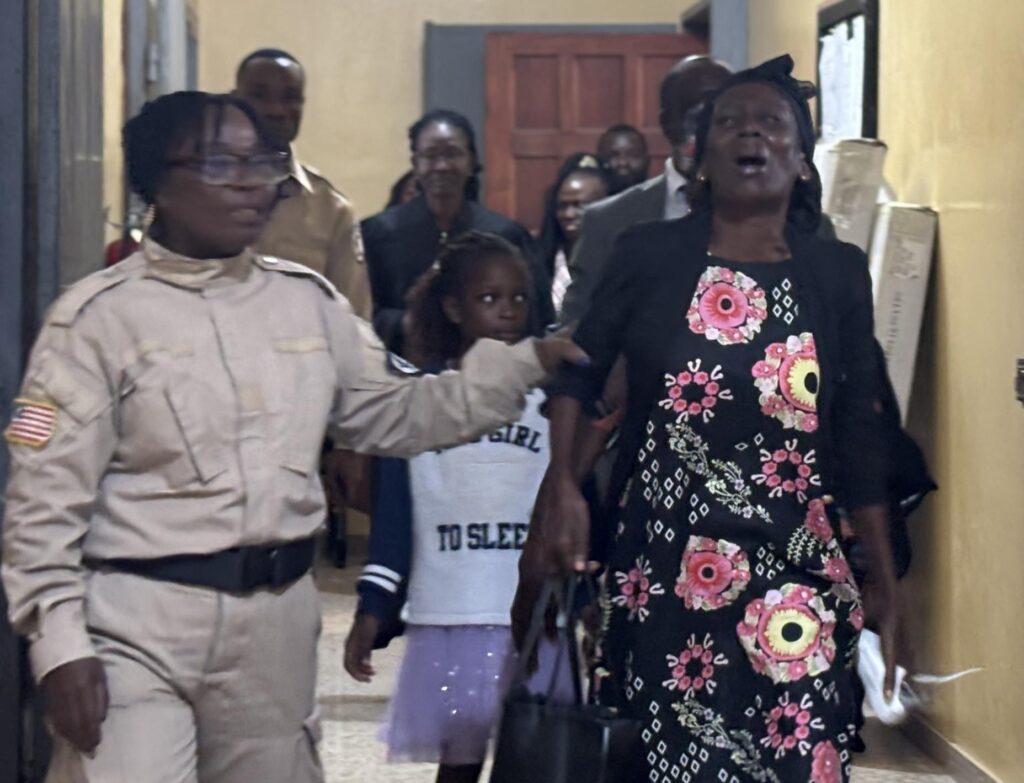
Legal framework: Under Liberian law, murder is a felony of the first degree. Conviction on such a charge carries significant penalties, often life imprisonment. However, Liberia is considered “abolitionist in practice”—while the death penalty remains on the books, it has not been carried out for many years.
Recent legal reforms: There have been ongoing debates about sentencing laws in Liberia, particularly surrounding the death penalty. In 2022, the Senate passed a bill aiming to abolish capital punishment.
The conversation around reform reflects Liberia’s treaty obligations under the Second Optional Protocol to the International Covenant on Civil and Political Rights (ICCPR), which mandates abolition of the death penalty.
What This Ruling Means
Jallah’s conviction sends a strong signal about the country’s judicial resolve. It suggests that courts are increasingly willing to act decisively—not only when crimes affect the public conscience, but even when defendants plead guilty yet argue for lesser culpability. It also underscores the value of eyewitness accounts, forensic corroboration, and rigorous cross‑examination—even in cases where defendants express remorse. For many Liberians, growing rates of violent crime have eroded trust in institutions. A transparent process and clear verdict, such as this one, may help rebuild confidence—provided the sentence is just and the law is applied consistently.