
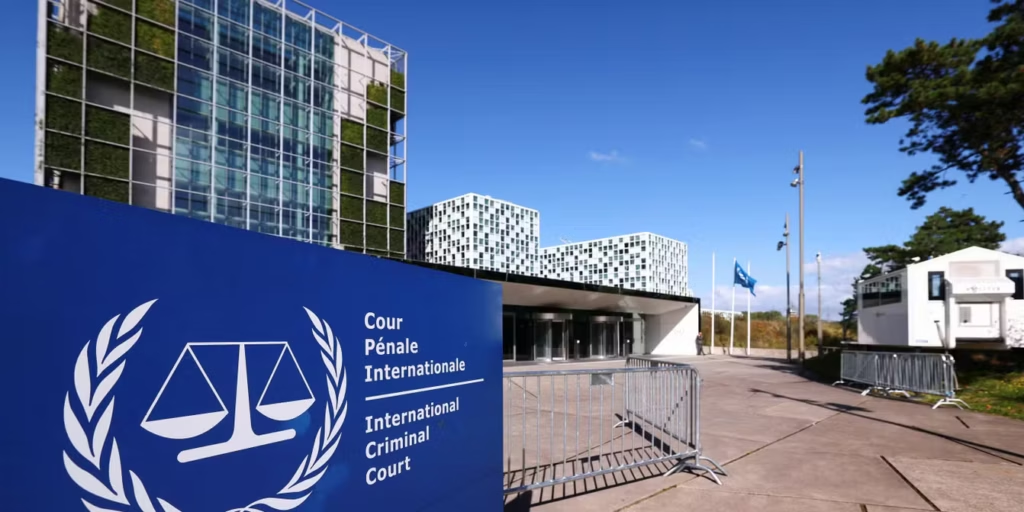
MONROVIA – In a significant shift in West African geopolitics, the military-led governments of Mali, Burkina Faso, and Niger have announced their withdrawal from the International Criminal Court (ICC), denouncing it as a “neo-colonial” institution. The three nations, which have been under military rule following recent coups, have also unveiled plans to establish a regional judicial body aimed at addressing crimes within the Sahel region.
Withdrawal from the ICC
The decision to exit the ICC was made collectively by the three countries, which have been members of the court for over two decades. In a joint statement, they criticized the ICC for what they perceive as selective justice and an instrument of neocolonial repression. The statement did not provide specific examples of the court’s alleged failures but emphasized the need for a justice system that reflects the region’s values and sovereignty.
This move aligns with the broader trend of the three nations distancing themselves from Western institutions. They have previously withdrawn from the Economic Community of West African States (ECOWAS) and have been seeking closer ties with countries like Russia. The withdrawal process from the ICC is expected to take at least a year, during which the countries will continue to fulfill their obligations under the Rome Statute.
Establishment of the Sahelian Court
In place of the ICC, the three countries have announced plans to establish their own regional court. The proposed Sahelian Court aims to handle cases of war crimes, crimes against humanity, and other serious offenses committed within the region. The court is expected to operate under the legal frameworks of the Alliance of Sahel States (AES), a confederation formed by Mali, Burkina Faso, and Niger in 2024.
The establishment of this court is seen as a move towards greater regional autonomy in judicial matters. It reflects the AES’s broader goals of enhancing regional cooperation and reducing reliance on external institutions. However, the success of the Sahelian Court will depend on its ability to gain international recognition and credibility, which could be challenging given the region’s current political dynamics.
Regional and International Reactions
The withdrawal from the ICC and the establishment of a new regional court have elicited mixed reactions. Supporters argue that this move allows the Sahel countries to take control of their judicial processes and address crimes more effectively within their context. Critics, however, express concerns about the potential for biased rulings and the lack of independent oversight.
International human rights organizations have called for caution, emphasizing the importance of accountability and transparency in the justice system. The success of the Sahelian Court will likely depend on its ability to operate impartially and uphold international human rights standards.
Implications for the Sahel Region
This development marks a significant shift in the Sahel region’s approach to justice and international cooperation. While it underscores a desire for greater sovereignty and self-determination, it also raises questions about the future of international legal norms and the protection of human rights in the region.
As the situation evolves, the international community will be closely monitoring the establishment and operation of the Sahelian Court to assess its impact on regional stability and justice.