The Liberia Revenue Authority (LRA) has taken a historic step in reshaping how Liberians understand taxation. By bringing editors and talk show hosts into the fold as “Tax Ambassadors,” the Authority is not only investing in the media but also in the future of national development.
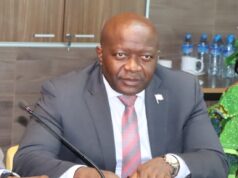
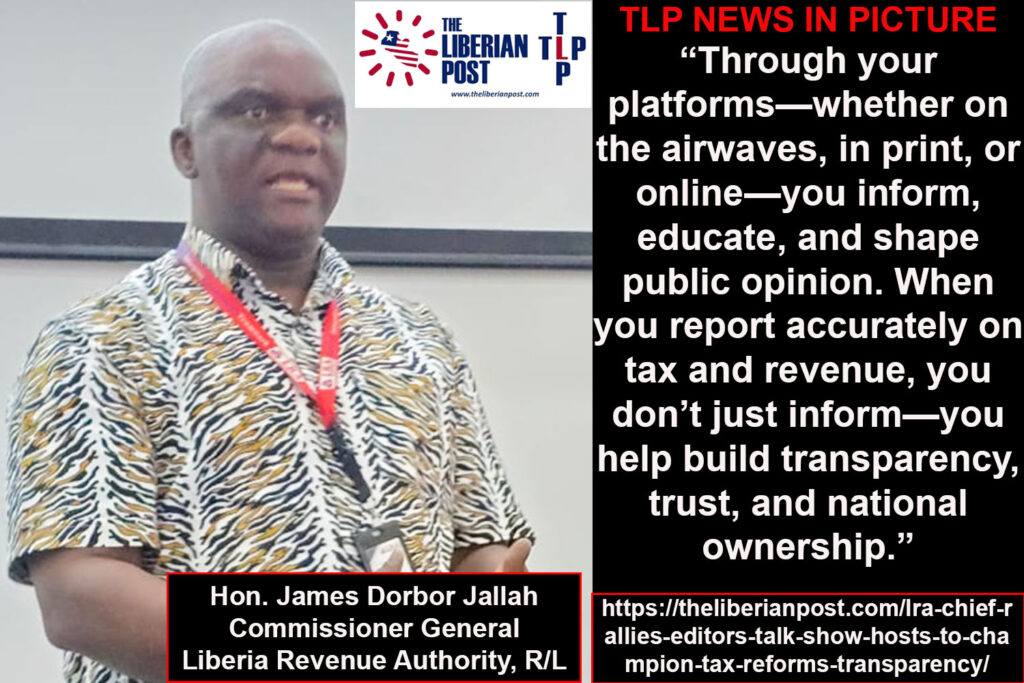
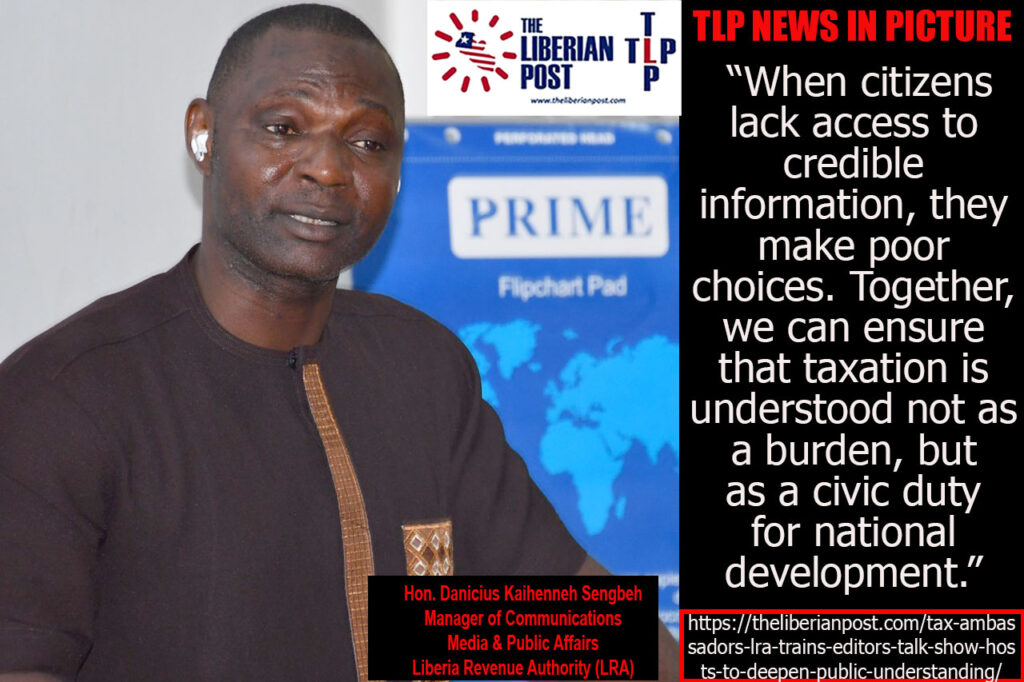
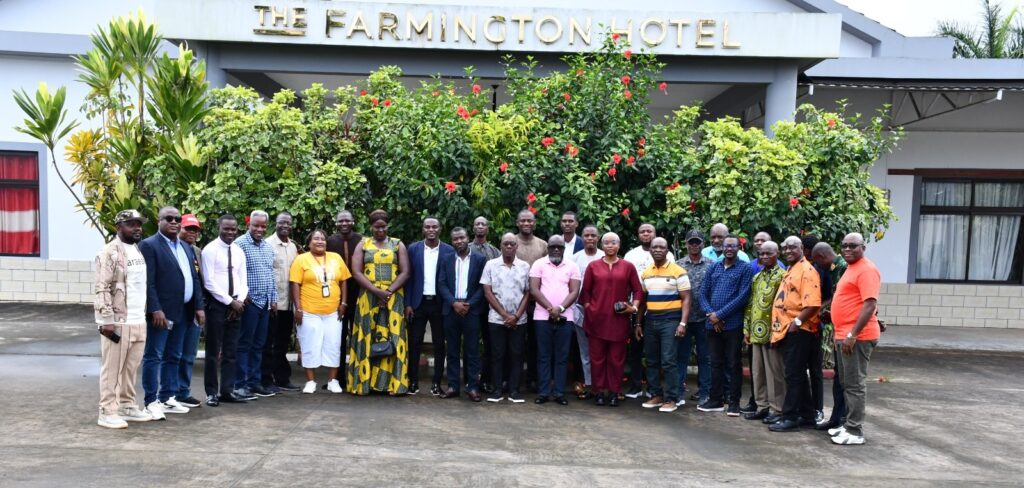
At the Farmington Hotel in Margibi County, Commissioner General James Dorbor Jallah and LRA Communications Manager Danicius Kaihenneh Sengbeh delivered messages that go beyond technical tax reforms—they spoke of partnership, responsibility, and the power of communication to shape the destiny of a nation.
Sengbeh, himself a veteran journalist, reminded participants that the media is not a public relations tool for the LRA but rather a trusted partner in explaining complex tax issues. “You are here to be empowered as Tax Ambassadors—trusted voices who can interpret, analyze, and explain taxation for the good of the people,” he told his fellow media colleagues. His words underscored a fundamental truth: when we media folks inform responsibly, citizens are better equipped to embrace their civic duties.
Commissioner General Jallah expanded on this vision by linking the work of the media directly to Liberia’s development agenda. He stressed that taxation is “the lifeblood of government,” providing schools, hospitals, roads, and other essential services. But he also warned that reforms—such as the transition to a Value Added Tax (VAT), real property tax reforms, and sweeping digital innovations—will only succeed if Liberians understand them and trust the institutions driving them. “Together, we can counter falsehoods with facts, suspicion with clarity, and mistrust with transparency,” he told participants.
This The Liberian Post’s editorial believes the synergy between Sengbeh’s call for professional empowerment and Jallah’s vision for transformative reforms should not be overlooked. One speaks to capacity—the ability of journalists to report accurately, fairly, and deeply. The other speaks to vision—the need for citizens to buy into reforms that will reshape how Liberia funds its growth.
The danger of misinformation and disinformation is real. Too often, the vacuum left by poor reporting is filled by myths, rumors, and half-truths that undermine public trust. Taxation, already viewed with suspicion, cannot afford such distortions. That is why the LRA’s decision to invest US$16,000 in this training is not a luxury—it is a necessity.
As Sengbeh aptly reminded us, his colleagues, a single mis-framed headline can erode public confidence in an institution. And as the LRA’s CG reinforced, public confidence is the foundation upon which compliance is built. Without compliance, Liberia risks losing billions needed for its schools, hospitals, and roads.
This new partnership should not end at the Farmington Hotel. It must expand into newsrooms across the country, creating a new generation of journalists, who see taxation not as a political football but as a pillar of state-building. The media must rise to this challenge—not as cheerleaders for the LRA, but as guardians of truth and facilitators of civic education.
Liberia needs both tax collectors and truth tellers. When the LRA opens its doors to transparency, and when the press embraces professionalism in reporting, the people of Liberia are the ultimate winners. In empowering the press and strengthening revenue, Liberia is not just collecting taxes—it is building trust, accountability, and a stronger nation. At the end of the day, the country wins!