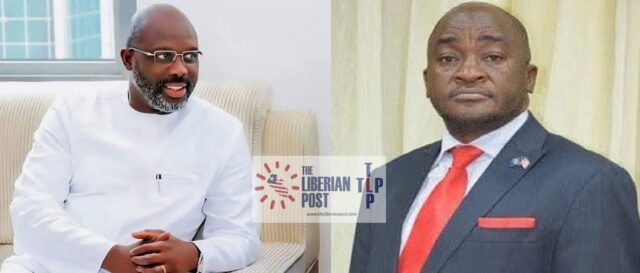
MONROVIA — On Unity Day, 6 October 2025, Germany’s Ambassador to Liberia, Dr. Jakob Haselhuber, framed a pivotal chapter in Liberia’s diplomacy: the role of former President George Manneh Weah and former Foreign Minister Dee-Maxwell Saah Kemayah in steering Liberia’s bid for a United Nations Security Council seat for the 2026–2027 term. According to Haselhuber, the candidacy was conceived under the Weah administration and his Foreign Minister, Kemayah, and then advanced through consultations with the African Union and ECOWAS before an official announcement. Haselhuber noted that Liberia’s bid was carried forward after a change in government by President Joseph Nyuma Boakai and Foreign Minister Sara Beysolow-Nyanti, culminating in Liberia’s election with a broad mandate.
In Haselhuber’s account, Liberia’s UNSC pursuit sits at the convergence of history, diplomacy, and a shared sense of global responsibility. He recalled the long arc of Germany–Liberia relations, from the 1855 Treaty of Trade and Friendship to the Bong Mines era, and tied that history to today’s ambitions: a credible, constructive role for Liberia on a world stage and a climate that invites private investment and development cooperation.
The numbers and the moment
The German envoy conveyed the substantive outcome: Liberia secured election to the UN Security Council for the 2026–2027 two-year term, after a vote that reflected strong international support. Haselhuber highlighted the collaborative leadership that made this possible, naming Weah and Kemayah as pivotal in laying the groundwork and rallying partners across Africa and beyond. The campaign, he suggested, stood on a foundation built by consistent policy messaging, continued engagement with regional bodies, and durable domestic political support.
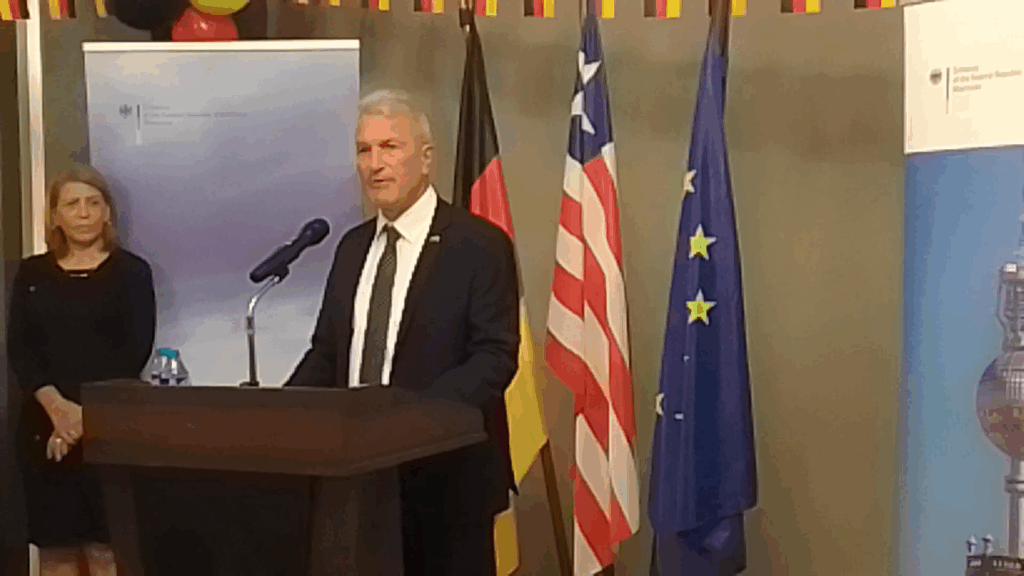
Historic Context and Forward-looking Vision Haselhuber reminded the audience that Unity Day is not only a commemoration of Germany’s reunification but also a moment to reflect on enduring partnerships. He described Liberia’s path as one of resilience and renewal, noting Liberia’s UNSC bid as a testament to the country’s evolving role in global governance. The ambassador cited Liberia’s UNSC campaign planning as a case study in how leadership continuity—Weah to Boakai—can translate into sustained international engagement, with Foreign Ministers Kemayah and Beysolow-Nyanti bridging administrations and keeping diplomacy on course.
Investment climate, growth, and the role of youth Beyond the Security Council narrative, Haselhuber touched on Germany’s ongoing interests in supporting Liberia’s development agenda. He highlighted German business activity in Liberia and pressed for a climate of investment grounded in legal security, anti-corruption measures, and a robust social environment for workers and families. He reiterated Germany’s stance that sustainable growth hinges on a strong domestic base—education, vocational training, and private-sector development—driven by a partnership that includes the Liberian diaspora and responsible investment.
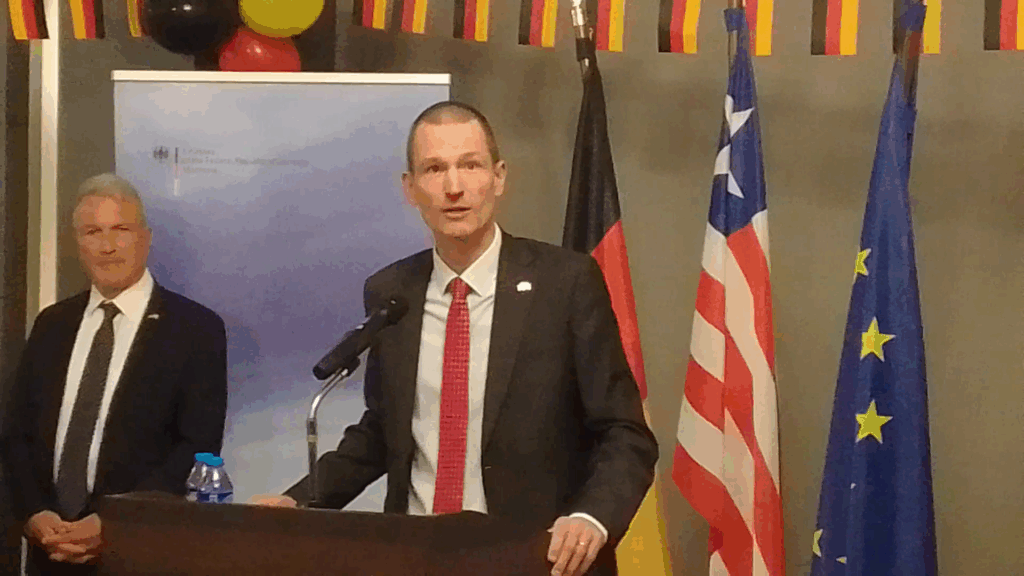
A Visiting German Foreign Office Official
Also, weighing in on the roles of both Liberian statesmen, Germany’s UN Director at the Federal Foreign Office, Florian Laudi, delivered remarks that placed former President George Manneh Weah and former Foreign Minister Dee-Maxwell Saah Kemayah at the core of Liberia’s successful bid for a United Nations Security Council seat for the 2026–2027 term. Laudi described the achievement as the culmination of years of steady, concerted diplomacy carried forward.
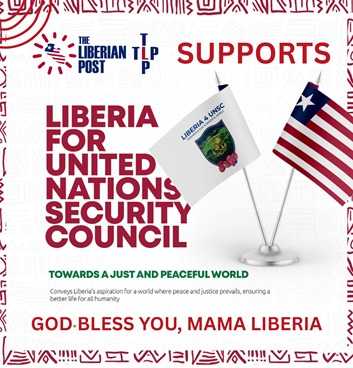
In his address, Laudi spoke to the personal dimension of multilateral campaigning — the “cumbersome work” that underpins a two-year UNSC tenure. He offered a frank appreciation for the long road to 181 votes, a figure he characterized as a precedent-setting milestone in Liberia’s UN engagement. “I know, and I speak from my own personal experience, how much cumbersome work that implies over a long period. I really feel you can be proud that you achieved 181 votes that set the precedent,” Laudi said, acknowledging the hours of negotiation behind the victory.