When outgoing Mines and Energy Minister Wilmot J.M. Paye told his staff that “titles are borrowed coats,” he may not have intended to provoke national reflection — yet his metaphor perfectly captures the delicate, often humbling reality of public service in Liberia.
Under the Liberian Constitution, the President wields the authority to hire and fire appointed officials at will. It is a power as old as our republic, couched in the familiar expression: “Every appointed official serves at the will and pleasure of the President.” In practice, this means no title, however impressive, is permanent. Every appointment — whether Minister, Managing Director, or Ambassador — is a borrowed coat. The wearer is entrusted to keep it clean, use it well, and be ready to surrender it when the owner demands it back.
Paye’s dismissal, along with two other officials, therefore falls within the clear constitutional prerogative of the President. Yet his metaphor raises deeper questions about how we as a nation understand service, loyalty, and integrity in public office. For in the world of politics, borrowed coats are not only taken away — they are often stained by suspicion, ambition, or misunderstanding long before they are returned.
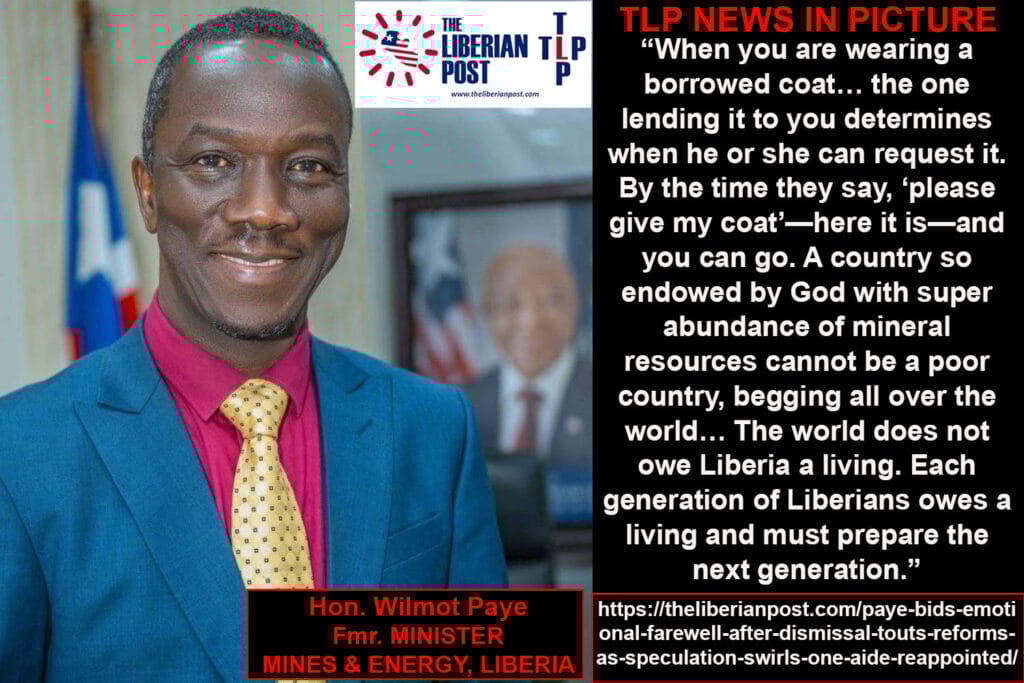
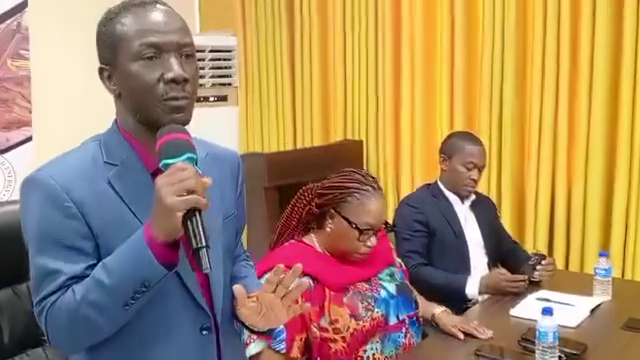
What made Paye’s analogy resonate beyond the Ministry of Mines and Energy was not just its humility, but its implicit challenge. He seemed to suggest that public office is not ownership but stewardship — and that integrity, not tenure, is the true measure of one’s service. His farewell remarks carried neither bitterness nor self-pity, only a calm acknowledgment of duty fulfilled and a reminder that positions do not define character.
Still, the aftermath of his dismissal has stirred public speculation. Some have argued that his removal had less to do with performance and more to do with unseen tensions within the administration. Others see it as the natural rotation of coats in a government still defining its balance between reform and politics. Whatever the case, the President’s constitutional right remains unquestioned — but the moral obligation to exercise that power fairly, transparently, and with national interest at heart remains just as binding.
In truth, Paye’s “borrowed coat” analogy speaks not only to those who are dismissed, but to those who remain. Every official now serving under the Boakai administration wears a coat borrowed from the Liberian people through the President’s trust. The weight of that garment should remind them that power is temporary, but the legacy of service is enduring.
The challenge for both leaders and subordinates, therefore, is to wear the coat with integrity — not as a symbol of privilege, but as a tool for purpose. To serve not for applause, but for impact. To understand that when the coat is taken back, what truly remains is the imprint one leaves on the system, the people, and the conscience of the nation.
In the end, borrowed coats come and go. What endures is the example of those who wore them with dignity, left them unstained, and walked away unburdened.