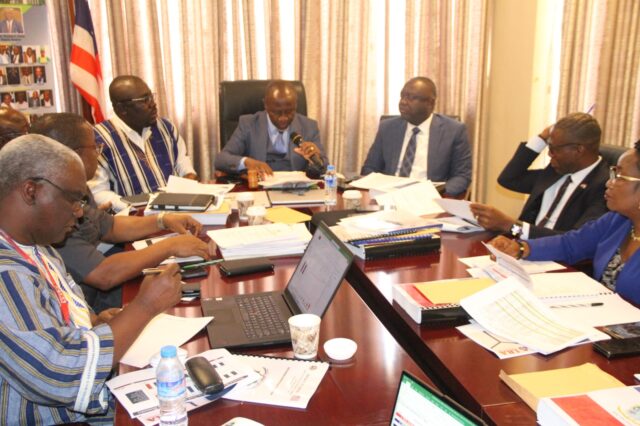
MONROVIA – The House Committee on Ways and Means officially opened hearings today on the revenue component of the Draft FY2026 National Budget, which stands at a staggering US$1.211 billion the largest budget in Liberia’s history.
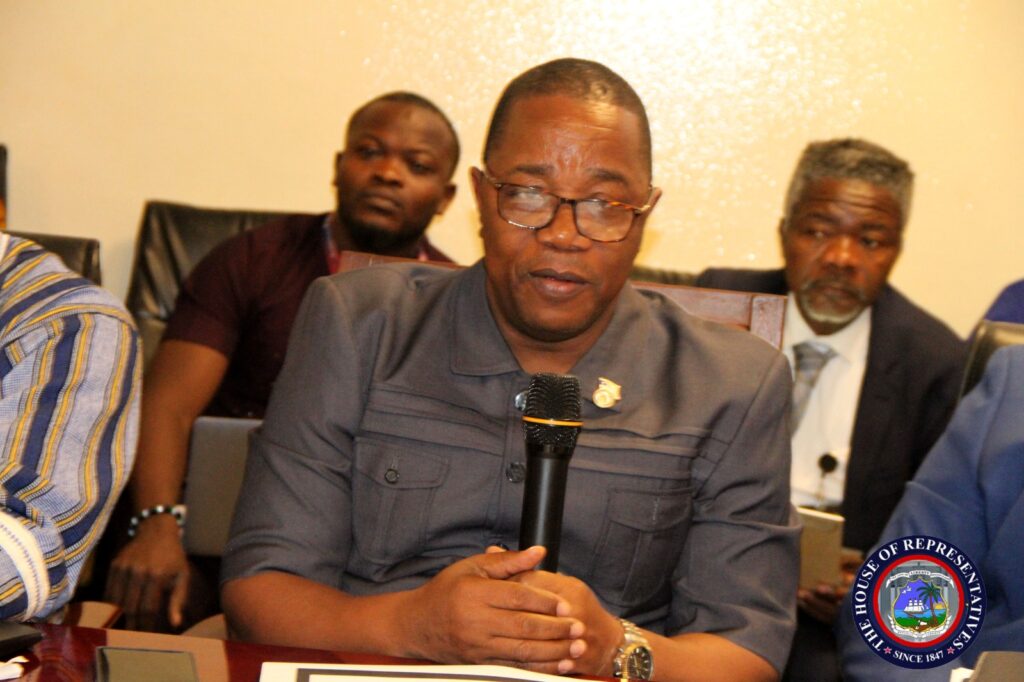
In a pivotal moment for the country, Chairman Hon. P. Mike Jurry welcomed distinguished colleagues, members of the executive branch , civil society representatives, media, and citizens at the Capitol Building, emphasizing the significance of these hearings in the context of transparency and civic responsibility.
“This budget is not just a number; it is a mandate for bold action,” Jurry declared in his opening speech.
He underscored the need for rigorous oversight of revenue assumptions and projections, calling on members of the committee to scrutinize various revenue sources, including domestic and external contributions, in order to align the budget with the needs of ordinary Liberians.
The FY2026 budget anticipates US$1.14 billion in domestic revenue alongside US$72 million in external resources.
While this ambitious target serves as a testament to Liberia’s potential on the path to becoming a middle-income country, the details surrounding its execution require thorough examination.
A key area of focus during the hearings will be the US$200 million ArcelorMittal Signature Bonus, which is earmarked for development initiatives.
Lawmakers have stressed the importance of transparency in the allocation and disbursement of these funds, insisting that measurable impacts be established to ensure accountability.
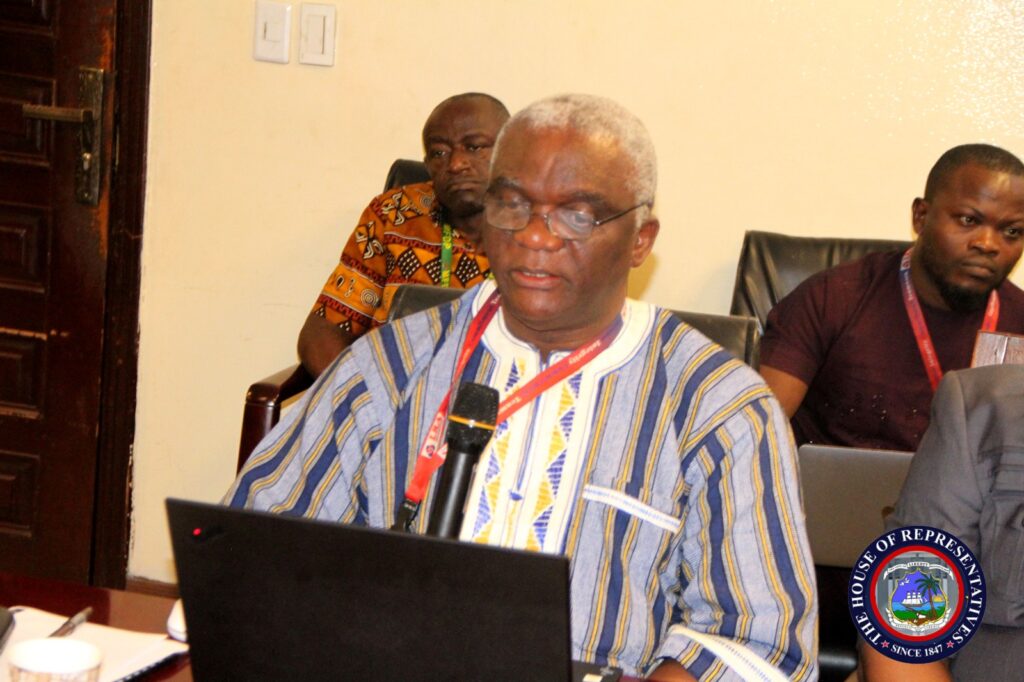
Additionally, Commissioner General of the Liberia Revenue Authority (LRA), James Dorbor Jallah, presented an optimistic outlook regarding revenue collection for the upcoming fiscal year.
Despite challenges in meeting domestic revenue targets last year, the LRA successfully collected US$715.3 million as of November 17, 2025.
“We are confident that we will surpass the FY 2025 domestic revenue target,” Jallah stated, reinforcing the competitive capabilities of the LRA in achieving fiscal goals with adequate support and funding.
Jallah also addressed the persistent underperformance of State-Owned Enterprises (SOEs) in meeting their revenue commitments, highlighting this as a significant obstacle to meeting fiscal targets.
He urged support from lawmakers to foster a national conversation geared towards enhancing SOE compliance, which he referred to as a “national priority.”
Amidst the excitement surrounding the record budget, the committee expressed concern toward the sustainability of debt obligations and the potential risks associated with aggressive borrowing plans.
Members were adamant that fiscal prudence must prevail, with expected outcomes being accountable to the Liberian populace.
As the committee pushes forward, it plans to demand detailed county-level revenue breakdowns to ensure equitable distribution of resources across regions, promote digital transparency tools, and advocate for performance-linked funding mechanisms.
They also called upon the Legislative Budget Office for independent analysis to further inform deliberations.
The transformative possibilities for Liberian infrastructure were highlighted, with visions of fully paved roads connecting economic hubs from Cape Mount to Cape Palmas, representing hope for future development based on the commitment to uphold fiscal accountability.
The participation of civil society, academia, and the media in revenue conversations was encouraged, signaling a strategic invitation for national collaboration.
“Let us democratize the budget conversation,” Jurry urged, showcasing an inclusive approach to fiscal policy in the pursuit of national development.
As the hearings unfold, stakeholders in Liberia remain hopeful that the findings and recommendations from this process will lead to tangible benefits for citizens, ensuring that each dollar allotted from the ambitious FY2026 budget furthers progress towards a sustainable and prosperous Liberia. The hearings will continue over the coming weeks, with a commitment from committee members to engage constructively and uphold their legislative responsibilities.