From Ganta, Nimba County, a clear message has gone out to West Africa’s political class: the continent’s young people are no longer content with being mascots of the future. They are ready to lead now. The only real question is whether the older generation – especially those in power – is prepared to trust them, share authority, and finally make room for fresh blood.
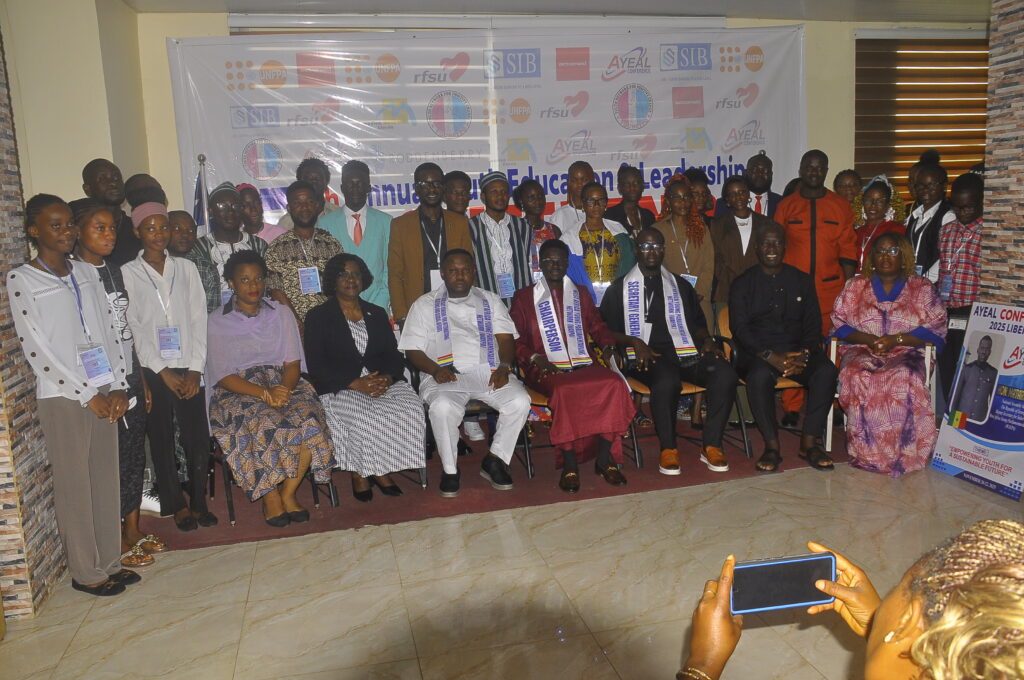
The 7th Annual Youth Education and Leadership Conference (AYEALC) and the launch of the West Africa Young Parliamentarians Network (WAYPA) brought together an unusual mix: UN officials, seasoned diplomats, sitting ministers, and elected young MPs from The Gambia and Sierra Leone, alongside youth advocates from across Liberia, Nigeria and beyond. Across five powerful speeches, a single thread emerged: Africa’s demographic reality demands a political transition that is not just generational in age, but transformational in mindset.
A Generation Treated as a Risk, Not a Resource
UNFPA Resident Representative Dr. Mady Biaye reminded the region of the scale of the opportunity at stake. Over 64% of the population of West and Southern Africa is under 25; 33% are adolescents and youth aged 10–24, far above the global average of 24%.
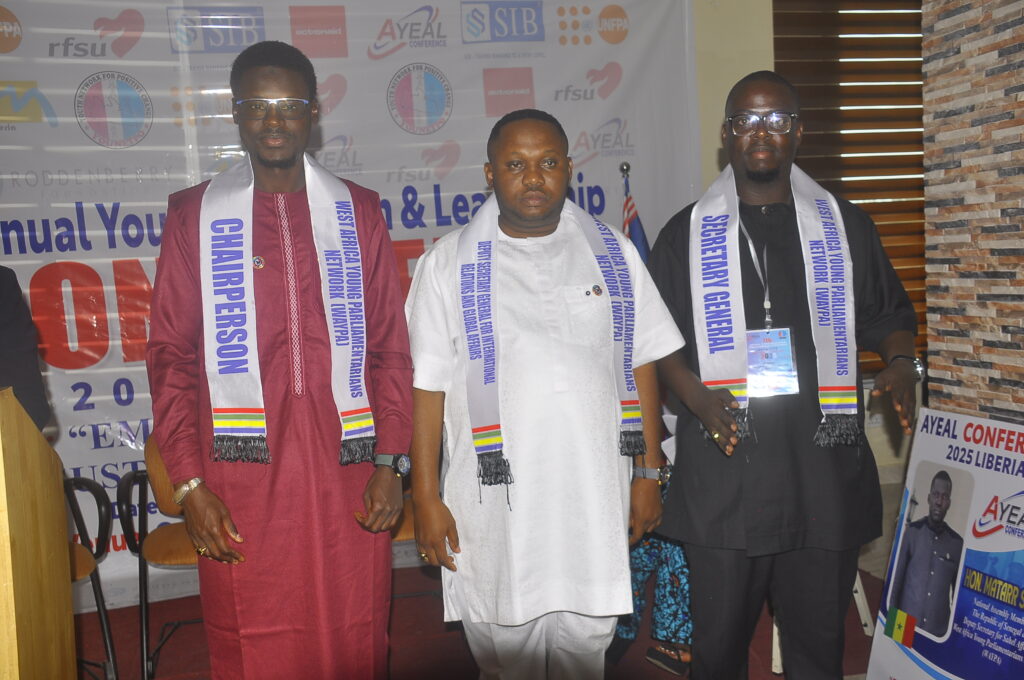
Yet those numbers have not translated into power. As WAYPA Chairperson Rep. Abdoulie Njai put it bluntly:
“Despite constituting over 60% of Africa’s population, young people remain systematically excluded from the decision‑making tables where our futures are determined. This representation gap is not just a statistical anomaly; it is a fundamental failure of governance.”
For too long, West Africa’s elders have treated this majority as a problem to be managed, a risk to be contained, or at best a crowd to be mobilized at election time – not as partners in leadership. The speeches in Ganta challenged that posture head‑on.
“We Are the Leaders of Today”
Dr. Leo E. Tiah, Chief Convener of the conference and Secretary‑General of WAYPA, rejected the tired cliché that youth are “leaders of tomorrow.”
“I believe that if the future is now, then definitely we are the leaders of today and the leaders of the change we want to see tomorrow,” he declared. “We deserve a seat at every table… We should have our voices being heard, not just having a seat at the table.”
Tiah was not speaking in abstractions. He recalled how, on International Youth Day last year, hundreds of Liberian youth marched peacefully to the Executive Mansion to petition for a youth advisor in the President’s office. President Boakai did not grant that exact request, but he did something symbolically and practically important: he appointed youth leaders to the National Youth Advisory Council.
That was a small but telling example of what happens when demand meets even modest political will: youth moved themselves from the street to the advisory room. The lesson for the region is that this shift should not be exceptional – it should be the norm.
From Tokenism to an Intergenerational Compact
Rep. Njai pushed the conversation further. He did not call for generational war, but for an “intergenerational compact” built on mutual respect and shared power.
“Our mission is not one of defiance against our elders,” he said. “We need their guidance, their counsel, and their support; it is the compass that can help us navigate challenges they know all too well.
But guidance must be a dialogue, not a monologue. We must move beyond the tokenistic inclusion of youth where a single young person on a panel fulfills a quota without transferring any real influence.”
Njai’s formulation is critical. Young people are not asking elders to disappear. They are asking them to stop using their history as a permanent veto over the future. They seek a partnership in which mentorship comes with real delegation of authority, and in which “youth wings” and “youth desks” become pathways to influence, not holding pens.
This is where the older generation has, so far, failed. Too many leaders are comfortable praising youth energy in speeches while guarding power with clenched fists.
Even Friends of Youth Must Confront the Hard Question
To her credit, Ambassador Ethel Davis – speaking for Foreign Minister Sara Beysolow‑Nyanti – did not shy away from the reality that peace, stability and progress now depend on a different kind of leadership mix.
“In a region where more than 60% of our population is under the age of 30, inclusive leadership is not optional, it is a necessity,” she said. “Peace is built when young people are trained, empowered, and trusted with responsibility. Peace is sustained when they are not observers, but architects of national and regional transformation.”
Trust is the key word. It is the missing ingredient in too many capitals.
Africa has never lacked for youth‑targeted slogans: “youth empowerment,” “next generation,” “demographic dividend.” But trust is more than a slogan; it is expressed in appointments, in party lists, in budget lines, in who chairs powerful committees and who is allowed to fail and learn without being told to “wait your time.”
When older leaders only feel secure with young people outside the room or at the very margins of decision‑making, it betrays a deep fear: fear of fresh scrutiny, fear of new ideas, fear that long‑held positions will finally be questioned by those who must live with their consequences.
A Different Kind of Elder Leadership Is Possible
Dr. Biaye’s intervention showed what responsible elder leadership can look like. She did not speak down to youth; she spoke directly to those in power.
“You are the custodian of policy,” she reminded ministers and MPs. “You must translate international and regional commitments such as the ECOWAS Youth Policy and the African Youth Charter from paper to practice.”
Similarly, Acting Deputy Youth Minister F. Alphonso Belleh framed Liberia’s ARREST Agenda as something that must be judged by youth outcomes, not just by speeches.
“In every policy, every program, and every partnership, let us ask: does this empower young women and men to shape their own destinies? Does it open doors rather than close them?” he asked. “Youth are not the future of development, but its present force when they are empowered, engaged, and equipped with opportunities.”
These are not radical positions. They are simply honest acknowledgments that the old model—where elders monopolize formal power while youth hustle on the margins—is no longer sustainable.
Why the Elders Must Move
There are at least three hard reasons why the older generation, particularly those occupying high office, must now make way for fresher leadership.
First, legitimacy. A system where decisions affecting a youth‑majority population are made almost entirely by a small, aging elite will eventually lose legitimacy, no matter how eloquent its justifications. When young citizens see few of their peers in parliament, cabinet, or key regulatory bodies, they will conclude—correctly—that the system is not built for them.
Second, relevance. Many of today’s defining issues—digital economies, climate resilience, new forms of work and organizing—are being shaped in real time by young people. Governance that does not understand or reflect those realities will simply be governing yesterday’s world.

Third, stability. A youth bulge treated as a permanent underclass is a recipe for unrest. The choice, as Njai rightly put it, is whether this demographic reality becomes “our engine for prosperity, or a source of perpetual instability.”
What Making Way Actually Means
“Making way” does not mean scattering a few young faces across the cabinet for optics. It means systemic, measurable shifts, including:
- Lowering age and experience barriers that effectively lock youth out of serious candidacy or appointment;
- Introducing and enforcing youth quotas or reserved seats in legislatures and on key boards;
- Funding youth‑driven mentorship and leadership pipelines like WAYPA’s proposed “Next Leaders” program, not as side projects but as core governance infrastructure;
- Ensuring advisory councils, like Liberia’s National Youth Advisory Council, have teeth—access to principals, the right to review and recommend on specific policies, and budgets.
It also means older politicians, many of whom have served decade after decade, must confront their own incentives. As Barack Obama bluntly told African leaders in his final AU address—quoted approvingly by Tiah—“Your country is even better off if you have new blood and fresh ideas.”
That is the uncomfortable but necessary truth hanging over Ganta’s hopeful rhetoric: new blood cannot flow into a system whose arteries are blocked by leaders who will not step aside.
The Youth Have Done Their Part
What the Ganta conference showed is that young Africans are not waiting idly. They are organizing regionally; they are getting elected against the odds; they are building networks, drafting roadmaps, and proposing concrete mechanisms for change.
WAYPA’s stated intention to work with parliaments on actual bill drafting, to run mentorship programs, and to institutionalize youth town halls is exactly the kind of maturity elders often demand as a precondition for inclusion. That excuse is gone: the maturity is here.

As Tiah said, it “has not been easy, and it will never ever be easy,” but the youth are prepared to “fight constructively, engage constructively… to be allies, partners, and at the table—and not only at the table, but meaningfully contribute to what happens at the table.”
The ball is now squarely in the elders’ court.
Time to Trust, Share and Step Aside
If the continent’s older leaders truly believe their own rhetoric—that young people are “the future,” that they are “the hope of Africa”—then they must act like it. That means trusting them with real portfolios, supporting their campaigns instead of sabotaging them, and, yes, choosing to retire while their wisdom can still be shared freely, rather than clung to as a justification for endless incumbency.
The youth of West Africa are not asking for charity. They are asking for justice: for a share of power commensurate with their share of the population and their stake in the future.
The speeches in Ganta have drawn the lines clearly. The region has a generation ready to lead, backed by committed partners in agencies like UNFPA and by reform‑minded officials within government itself. What remains is the courage of the elder generation to let go—gracefully, deliberately, and soon.
History will be unforgiving to those who refused to trust their own children with the house they claimed to be building for them.