MONROVIA Liberia has been re‑elected to the International Maritime Organization (IMO) Council in Category A, securing one of the most coveted seats in global shipping governance and reaffirming its position as a leading maritime nation.
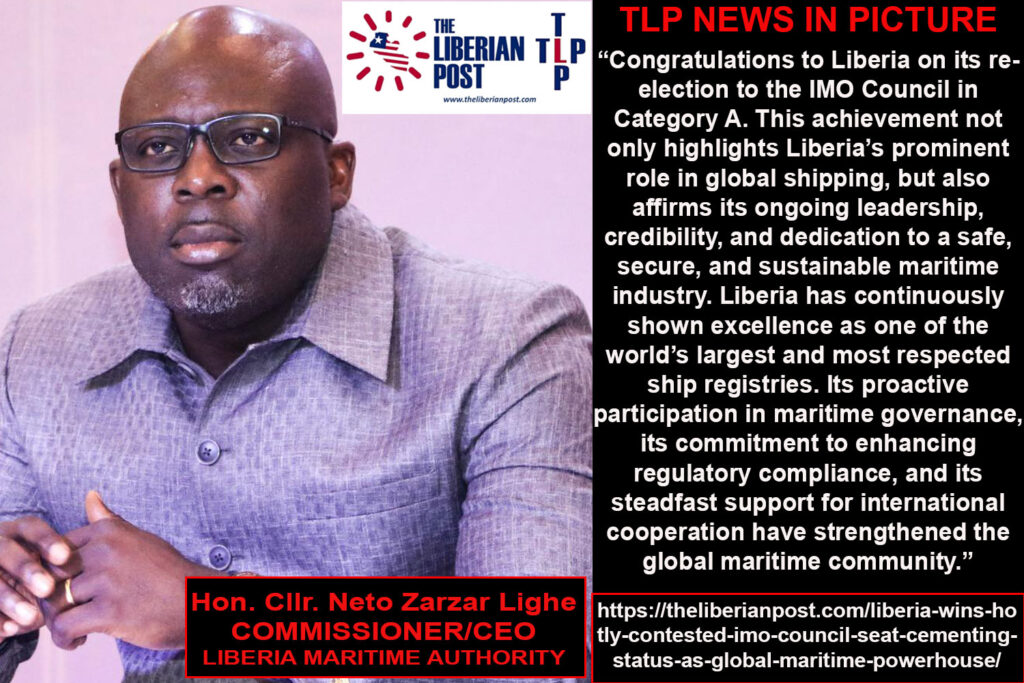
The announcement was made Friday, November 28, by Cllr. Neto Zarzar Lighe, Commissioner and CEO of the Liberia Maritime Authority (LiMA), following elections at the IMO headquarters in London.
“Congratulations to Liberia on its re‑election to the IMO Council in Category A,” Cllr. Lighe said in a statement. “This achievement not only highlights Liberia’s prominent role in global shipping, but also affirms its ongoing leadership, credibility, and dedication to a safe, secure, and sustainable maritime industry.”
Category A of the IMO Council is reserved for states with the largest interest in providing international shipping services. Liberia again joins a small group of maritime giants that shape global rules for safety, security, and environmental protection at sea.
“All You Do Is Win”: Foreign Minister Hails Boakai, Lighe
Liberia’s Foreign Minister Sara Beysolow‑Nyanti took to social media to celebrate the victory and credit the Boakai administration’s diplomacy and the maritime team’s efforts.
“JNB, all you do is win win win win win win win win win. IMO seat was hotly contested but Liberia got it!! Neto Lighe thanks o;” she posted, referring to President Joseph Nyuma Boakai, Sr. by his initials.
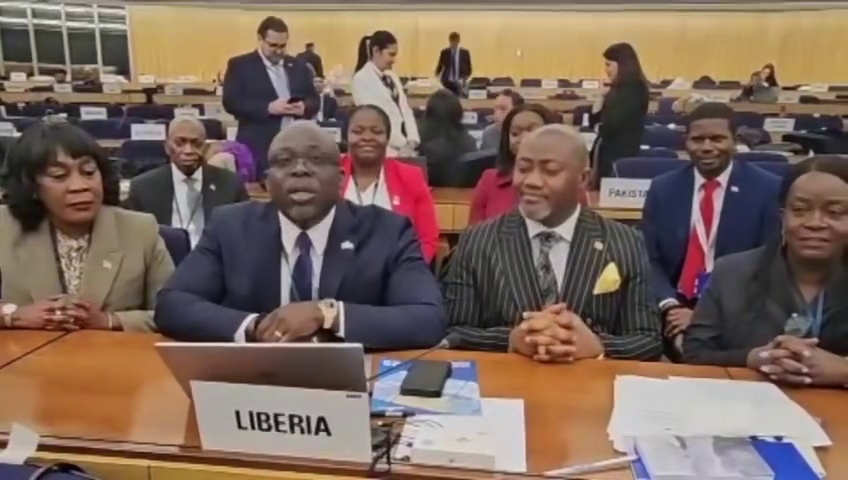
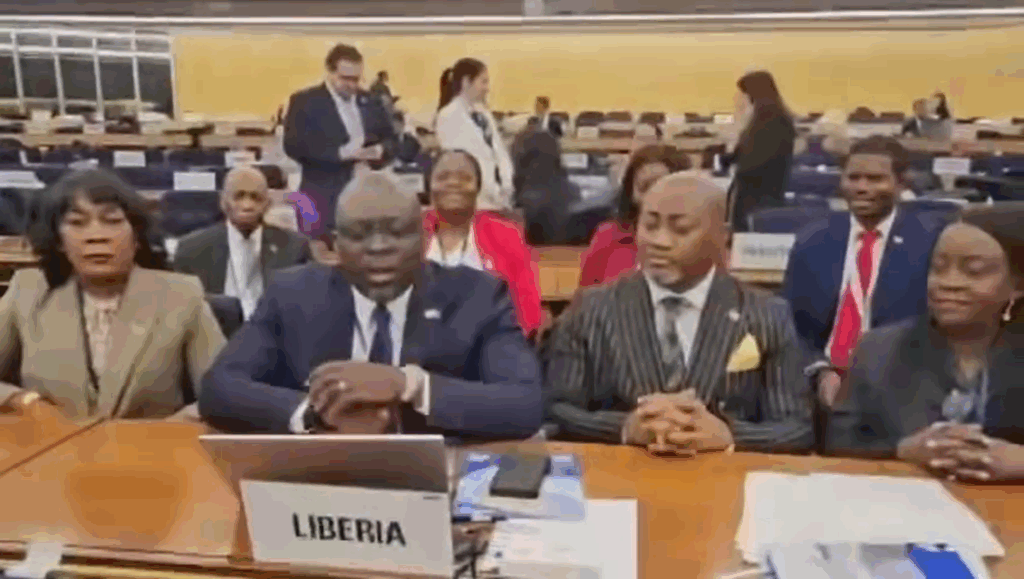
The message underlined how competitive the election was, with multiple countries vying for limited seats on the Council—especially in Category A.
A Vote of Confidence in Liberia’s Registry and Governance
Liberia’s re‑election comes on the back of the Liberian International Ship & Corporate Registry (LISCR)—one of the largest and most respected open registries in the world.
Administered from offices in the United States and Europe, the Liberian Registry currently records:
- Thousands of vessels flying the Liberian flag;
- Roughly 200 million gross tons in its fleet, consistently placing Liberia among the top three ship registries globally.
The Registry is known for high safety and compliance standards, active participation in port state control regimes, and early adoption of digital tools for ship registration, crew documentation and compliance monitoring.
Cllr. Lighe said Liberia’s council victory is inseparable from the performance of its registry and the reforms pushed in recent years.
“Liberia has continuously shown excellence as one of the world’s largest and most respected ship registries,” he noted. “Its proactive participation in maritime governance, its commitment to enhancing regulatory compliance, and its steadfast support for international cooperation have strengthened the global maritime community.”
What Category A Re‑Election Means
In his statement, the Maritime Commissioner said Liberia’s renewed mandate recognizes broad contributions to the sector:
- Advancing maritime safety and environmental protection;
- Modernizing ship registry services, including digital platforms;
- Championing seafarers’ welfare;
- Promoting innovation and digital transformation across the industry.
“Re‑election to Category A… recognizes Liberia’s broad contributions advancing maritime safety and environmental protection, modernizing ship registry services, championing seafarers’ welfare, and promoting innovation and digital transformation,” Lighe said.
“This renewed mandate reflects the trust and confidence that member states have in Liberia’s vision for the future of global shipping. It reaffirms the country’s role as a leading voice in shipping policies that promote fair, efficient, and forward‑looking maritime governance.”
As a Category A member, Liberia will continue to sit at the core of IMO decision‑making—helping to craft conventions and regulations on issues ranging from greenhouse‑gas emissions and ballast‑water management to seafarer safety, cyber‑security, and autonomous shipping.
Maritime Revenues and National Development
Liberia’s maritime program is also a major source of national revenue, with income from ship registration and corporate services supporting the national budget and funding critical public services.
Under President Boakai, the government has repeatedly said it wants to leverage the maritime portfolio more strategically, linking it with broader economic and diplomatic goals—an approach that appears to be paying dividends on the international stage.
Cllr. Lighe framed the IMO result as both a diplomatic and economic win.
“As Liberia continues its vital work, may this achievement inspire even greater progress—strengthening partnerships, raising global standards, and guiding the maritime industry towards a more resilient and sustainable future,” he said. “The international maritime community eagerly anticipates our ongoing leadership on the IMO Council.”
Acknowledgments to Government and Partners
The Commissioner extended special thanks to national stakeholders and diplomatic missions who backed Liberia’s candidacy.
“We would like to congratulate the President of Liberia, His Excellency Joseph Nyuma Boakai, Sr.; Foreign Minister, Her Excellency Sara Beysolow‑Nyanti; the Chairman and Members of the Board of Directors of the Liberia Maritime Authority; the Liberian Embassy to the Court of St. James; the Permanent Representatives of the Liberia Permanent Mission and staff; and the Liberian Registry for their unflinching support towards Liberia’s historic re‑election,” he said.
Maritime industry observers say Liberia’s success in a “hotly contested” election is a sign that, despite intense competition from rival registries, the country’s blend of technical credibility, strong registry performance, and active diplomacy continues to resonate with IMO member states.
For now, Liberia’s maritime team is basking in the win—but the harder work lies ahead: using its renewed seat on the Council to help steer global shipping through a turbulent era of climate imperatives, technological disruption and shifting trade patterns, while ensuring that the benefits of its maritime success continue to flow back home.