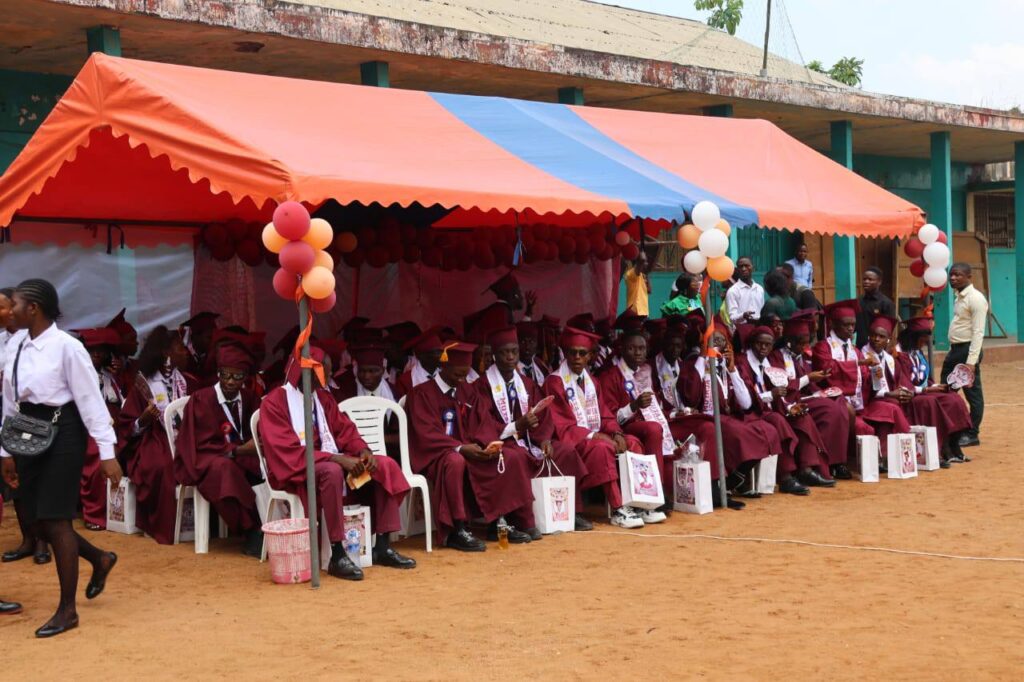
When Finance and Development Planning Minister Augustine Kpehe Ngafuan stood on the dusty pitch of Boatswain Senior High School on Friday, November 28, and told graduates that “poverty is not a prison”, he did more than deliver a feel‑good commencement line.
He issued a challenge—to the students sitting before him, to the public‑school system that shaped him, and to the government he now helps lead.
The danger, as always in Liberia, is that such a powerful message will be remembered as poetry, not policy.
It doesn’t have to be.
A Story That Mirrors Million
Ngafuan’s story is painfully familiar to many Liberians: parents who never finished school; long walks from Logan Town to Jamaica Road because there was no money for transport; children crowding a neighbor’s porch to watch television through a half‑open door until the owner’s son slammed it shut.
“That’s the time we knew we were very poor,” he told the graduates. “I never blamed my father. I never blamed my mother. My late father hustled. He knew how to use his nickels and dimes.”
Boatswain Senior High School graduates
That humility matters. Liberia is saturated with leaders who speak about poverty as if it were an abstract statistic in a donor report. It is not. It is a lived memory for most of the country—and still a daily reality for many in the congregation at Boatswain.
So when the minister says, “Poverty is not a prison. It is not a death sentence,” he is not romanticizing hardship; he is testifying that circumstance needs not be destiny.
But testimony alone does not build classrooms, hire teachers, or create jobs.
Words That Must Become Budgets
To his credit, Ngafuan did not leave the message at self‑help. He tied it explicitly to the work of government.
He promised a 60% increase in the Monrovia Consolidated School System (MCSS) budget in the FY2026 draft and dedicated funds “for renovation and refurbishment of MCSS schools” and to bring volunteer teachers onto the payroll. He announced a program—backed by the World Bank and the Ministry of Education—to build or rehabilitate over 100 primary schools across Liberia.
He also went beyond rhetoric by awarding 10 scholarships to Boatswain graduates to attend the University of Liberia and other public institutions.
These are not small gestures. They are signals that the Boakai administration is at least attempting to align its ARREST Agenda with the lived experiences of public‑school students.
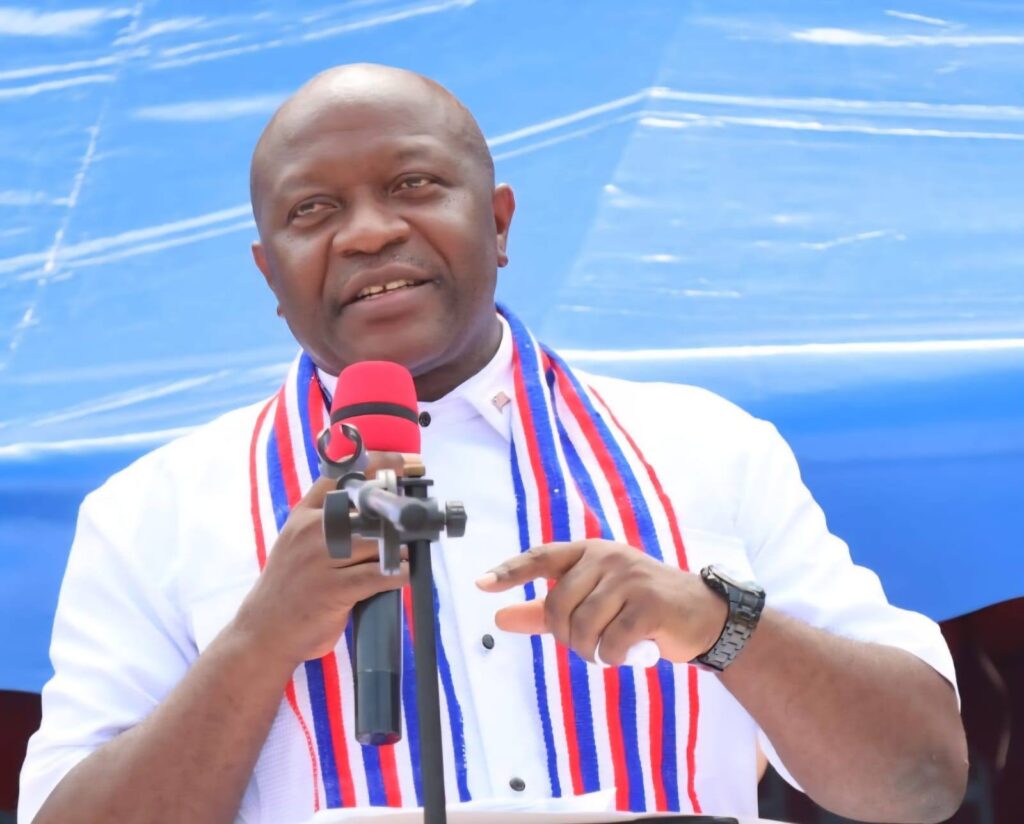
Finance Minister Augustine Kpehe Ngafuan at Boatswain graduation
But the central question of this editorial is simple: Will these promises survive the budget process, the procurement maze, and the everyday leakages that have swallowed so many good intentions before?
Because if “poverty is not a prison,” then:
Ghost teachers must become real teachers in real classrooms.
School “rehabilitation” must mean functioning toilets, roofs, and labs—not repainted walls and inflated contracts.
Scholarships must be awarded transparently and tracked so that talent, not connection, drives opportunity.
If these things do not happen, the message to that graduating class will be stark: poverty may not be a prison, but the system is.
Public Schools Deserve More Than Nostalgia
Ngafuan’s proud insistence that he is a product of public schools—A.B. Tolbert, Boatswain, BWI, the University of Liberia—should not be dismissed as sentimental.
It is a vital reminder that Liberia’s public‑education system once produced leaders who could compete anywhere. That system has been battered by war, corruption, neglect, and politicization. The result is a brutal irony: today’s poor students must often buy private education to access what yesterday’s poor students received in public classrooms.
If the minister’s words are to mean anything, this cycle must be broken.
That requires more than one‑off graduation speeches. It demands:
A national standard for what every public school must provide—qualified teachers, textbooks, safe buildings, electricity or solar, and basic digital access.
Regular, public reporting on how MCSS and county education offices actually spend their money.
Stronger partnerships with communities so that parents become watchdogs, not bystanders, in their children’s education.
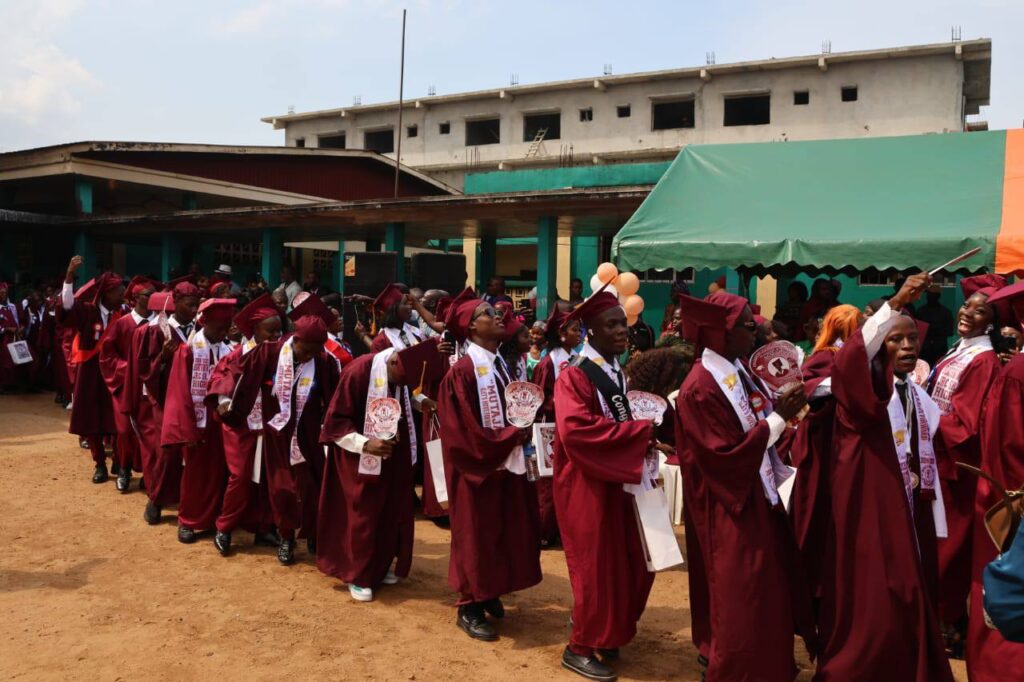
Boatswain graduates marching in
Ngafuan has the portfolio and the personal story to drive such a shift. The country should hold him to it.
The Other Half of the Equation: Jobs
The minister was right to warn that education without opportunity is its own kind of cruelty.
“You’re born, you’re up to about 24, you’re going to school… in these kinds of countries it takes you about 4, 5, 6 years to find jobs until you go to 30,” President Boakai told a group of Liberians under a centrism movement, a day later. “By the time you reach 50… you got bills to pay. How long a life do you wait when you can’t find a job?”
The Boatswain graduates heard a similar subtext: work hard, but also recognize that government has a duty to grow the economy, not simply distribute slogans.
Here, again, Ngafuan has been talking the right talk—about private‑sector investment, about moving beyond aid, about infrastructure and energy as the rails on which jobs must run. But the graduating class—and the thousands like them—will judge his tenure on outcomes:
How many young people find decent work in the next five years?
How many public‑school graduates can afford to stay in school beyond 12th grade?
How many scholarships go to the truly needy, not the well‑connected?
If those numbers do not move, “poverty is not a prison” will ring hollow.
What Young Liberians Must Hear—and Do
Still, there is a crucial part of Ngafuan’s message that must not be lost in our rightful demand for policy.
He did not tell students to wait for rescue; he told them to refuse resignation.
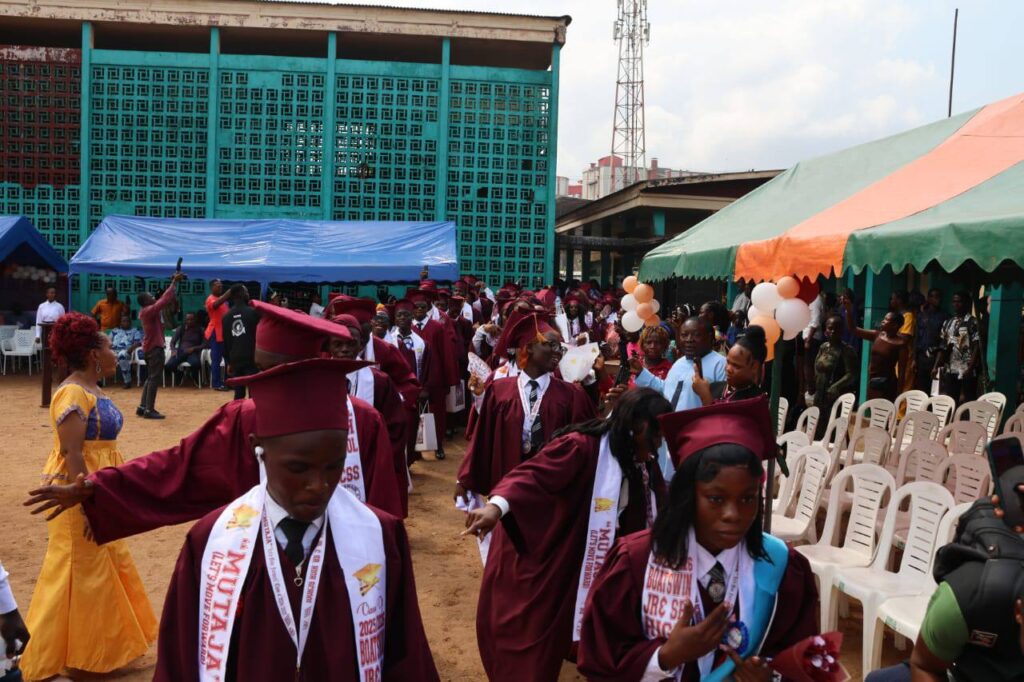
Boatswain graduates marching towards their seats during their graduation ceremony on Friday, November 28
“Don’t let your circumstances jail you,” he said. “You can come from Logan Town or New Kru Town or West Point and sit one day where I sit today—if you refuse to surrender to your present condition.”
That mindset is not a substitute for reform. But without it, even the best policies will fail. Liberia needs a generation that:
Demands clean governance and refuses shortcuts.
Uses social media to expose corruption and to share knowledge.
Organizes not only for candidates, but for causes: school improvement, community clean‑ups, reading clubs, business cooperatives.
Ngafuan’s own trajectory—watching TV through a doorway, then one day managing a billion‑dollar budget—proves that personal resilience is real. But his current job proves something else: individual grit must eventually collide with systems. If the system does not change, too many will still be left behind.
Turning a Line Into a Legacy
“Poverty is not a prison” is a powerful line. It deserves to become more than a Facebook quote under a graduation photo.
It should be the measuring stick by which we judge the Boakai‑Ngafuan era:
Are fewer children shut out of school because of fees and distance?
Are more graduates in meaningful work before 30, not hustling indefinitely in the informal shadows?
Is the public‑school classroom, once again, a ladder up and out—not a waiting room for disappointment?
If the answer to those questions is “yes” by the time today’s Boatswain graduates are standing where Ngafuan now stands, then his words will have become something rare in Liberian politics: