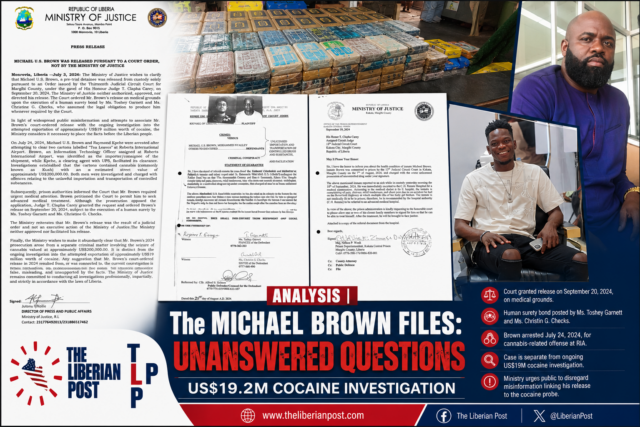
—Long Before Police Named Him in Liberia’s Biggest Cocaine Case, Michael U.S. Browne Had Already Been Arrested, Charged, Released on Medical Grounds, and Ordered to Return to Court. The Documents Reveal a Timeline That Raises Fresh Questions About the Country’s Fight Against Transnational Drug Trafficking
MONROVIA, Liberia – As Liberia’s reported US$19.2 million cocaine trafficking case continues to unfold inside the courtroom and dominate national conversation, one name has increasingly emerged as the investigation’s most enigmatic figure: Michael U.S. Browne, also known in police documents as Rahim or Raheem Bah.
To many Liberians, Browne appeared to enter the public spotlight only after the Liberia National Police (LNP) announced criminal charges against five individuals allegedly linked to the attempted exportation of approximately 237.6 kilograms of cocaine through Roberts International Airport (RIA).
But a review of official court documents, Ministry of Justice records, and police filings paints a far more complex picture.
Those documents reveal that Browne was already known to Liberia’s criminal justice system nearly a year before the current investigation, having been arrested, prosecuted, imprisoned, and later released under a court order based on reported medical grounds.
Taken together, the records raise important questions—not only about Browne’s alleged role in the latest investigation—but also about the broader challenges confronting Liberia’s efforts to combat organized narcotics trafficking.

A Criminal Case Before the Cocaine Investigation
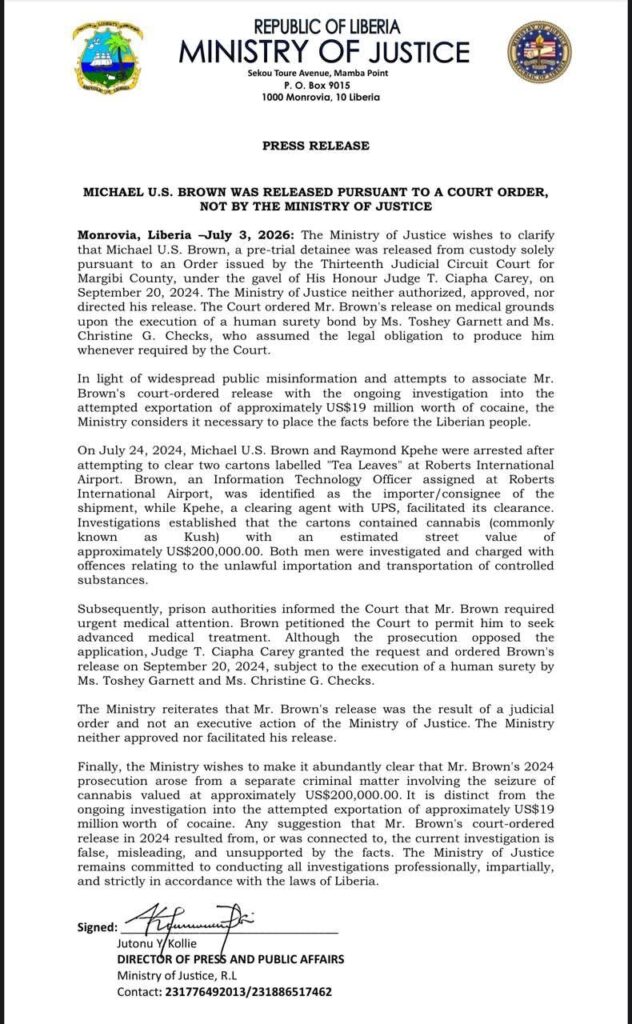
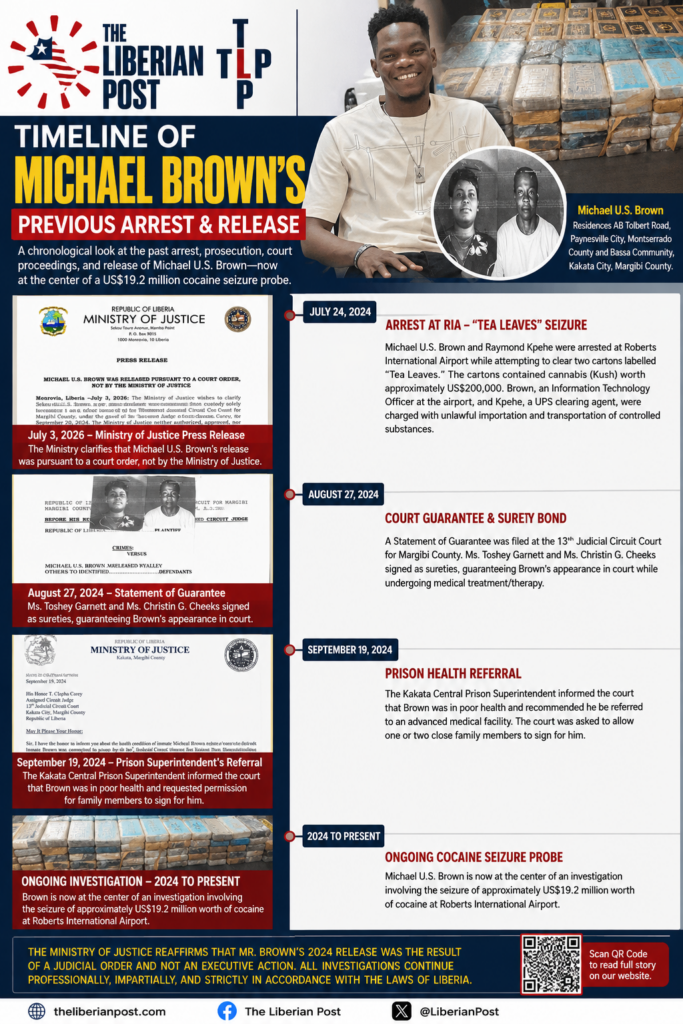
One of the most significant revelations comes from a July 3, 2026 press release issued by the Ministry of Justice.
In that statement, the Ministry sought to clarify widespread public speculation concerning Browne’s earlier release from detention.
According to the Ministry, Browne and another individual, Raymond Kpehe, were arrested on July 24, 2024, after attempting to clear two cartons labeled “Tea Leaves” at Roberts International Airport.
Investigators later alleged that the cartons contained cannabis, commonly known as Kush, with an estimated street value of approximately US$200,000.
The Ministry stated that Browne, who was then employed as an Information Technology Officer assigned to Roberts International Airport, was identified as the importer and consignee of the shipment, while Kpehe allegedly facilitated its clearance.
Both men were subsequently charged with offenses relating to the unlawful importation and transportation of controlled substances.
The Ministry emphasized that the 2024 prosecution involved a completely separate criminal matter from the ongoing US$19.2 million cocaine investigation.
The Medical Release
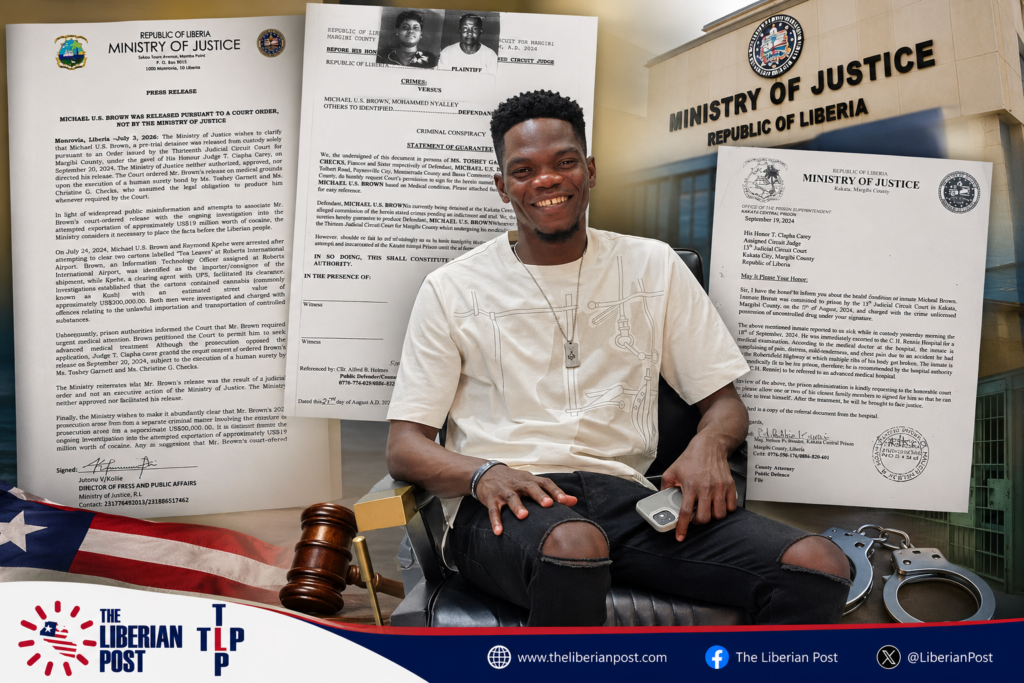
Perhaps the most important document is not the Ministry’s press release itself, but the court records explaining how Browne was released from custody.
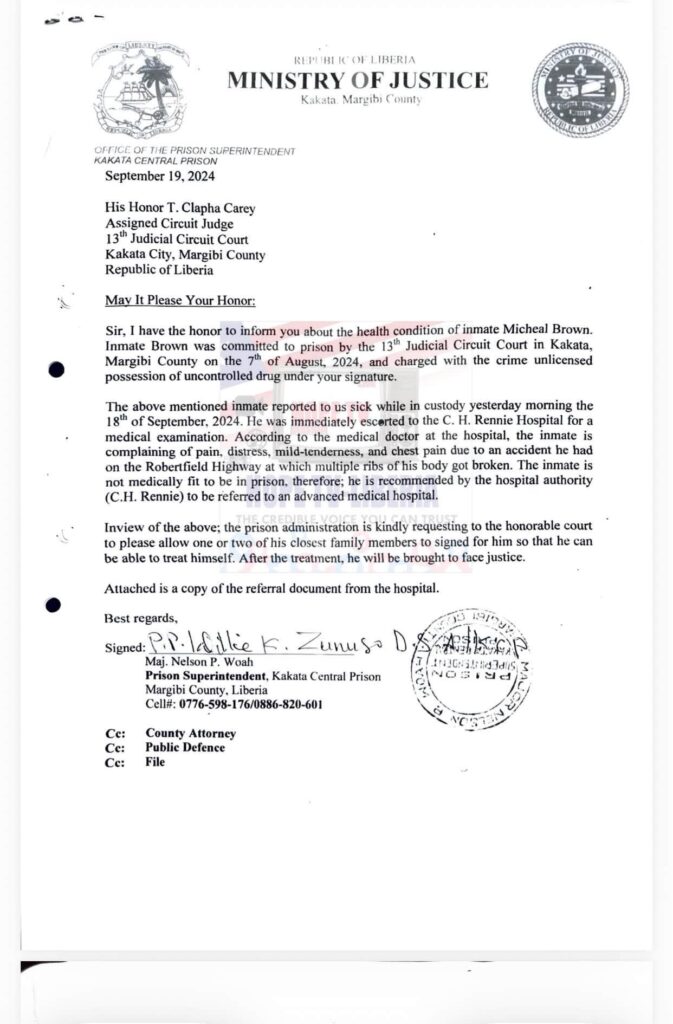
According to a letter dated September 19, 2024, the Superintendent of Kakata Central Prison informed Judge T. Ciapha Carey that Browne had complained of severe pain, chest tenderness, distress, and complications allegedly resulting from an earlier traffic accident on the Robertsfield Highway.
The Superintendent wrote that Browne had been transported to C.H. Rennie Hospital, where medical personnel reportedly concluded that he was not medically fit to remain in prison and recommended advanced medical treatment.
Based upon that recommendation, prison authorities requested that the court allow Browne’s temporary release for treatment.
The following day, according to the Ministry of Justice, Judge Carey granted the request.
Released by the Court—Not the Executive
The Ministry’s July 3 statement appears designed to answer one of the most persistent public claims surrounding Browne’s case.
Officials stressed that the Ministry neither approved, authorized, nor directed Browne’s release.
Instead, the Ministry says the decision was made exclusively by the Thirteenth Judicial Circuit Court for Margibi County under the authority of Judge Carey.
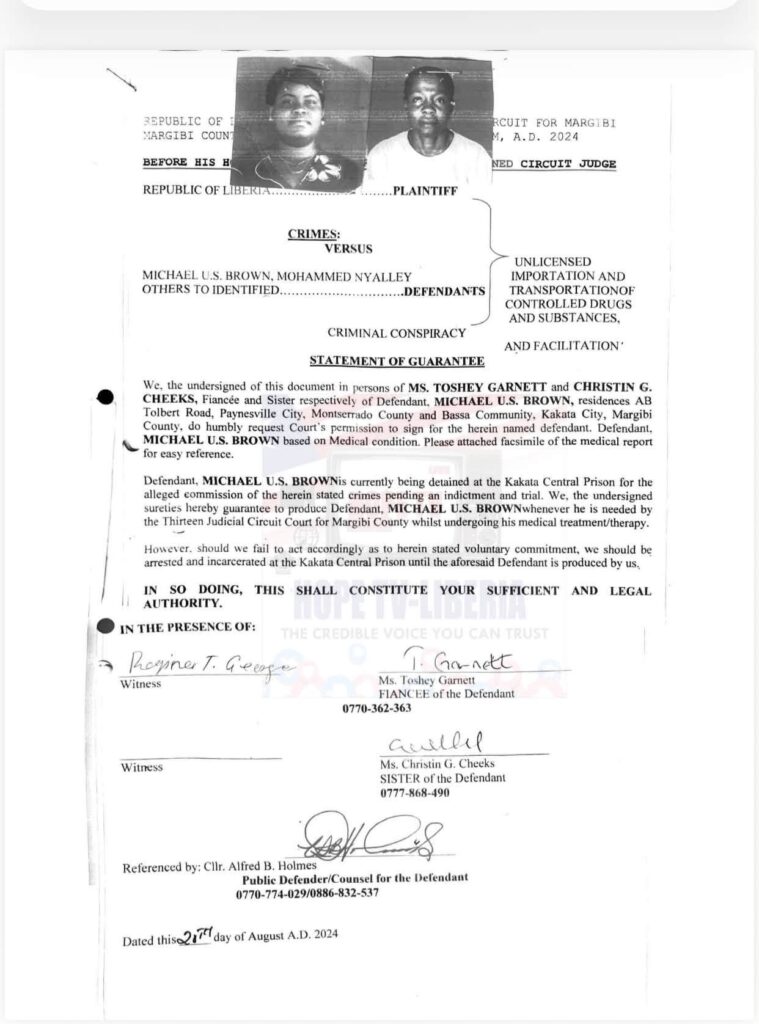
According to the statement, Browne’s release was conditioned upon the execution of a human surety bond signed by his fiancée, Ms. Toshey Garnett, and his sister, Ms. Christine G. Cheeks, both of whom accepted legal responsibility to produce him whenever required by the court.
The Ministry rejected suggestions circulating on social media that Browne’s release resulted from executive interference or was connected to the current cocaine investigation.
It described such claims as “false, misleading, and unsupported by the facts.”
The Human Surety
Court documents reviewed by The Liberian Post show that Browne’s release was far from unconditional.
In the guarantee submitted to the court, Garnett and Cheeks formally pledged to ensure Browne’s appearance whenever required by the judiciary.
The document further states that, should they fail to produce him, they themselves could face legal consequences, including possible arrest and detention until Browne was produced before the court.
Legal experts say such arrangements are designed to balance humanitarian concerns with the state’s interest in ensuring that criminal defendants remain available for trial.

Then Came the Cocaine Investigation
Nearly ten months after Browne’s medical release, his name resurfaced in dramatically different circumstances.
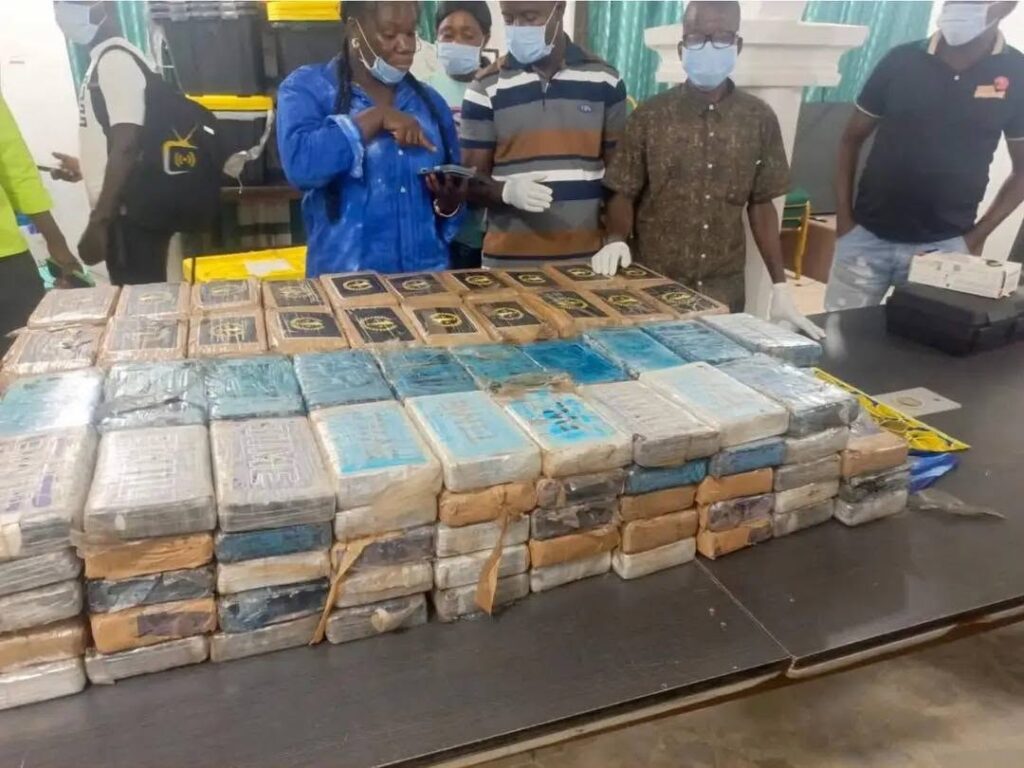
This time, investigators alleged he played a role in an attempted exportation of approximately 237.6 kilograms of cocaine, reportedly valued at US$19.2 million.
According to the Liberia National Police charge sheet, Browne—identified as Michael U.S. Browne alias Rahim or Raheem Bah—is alleged to have participated in coordinating the shipment, communicating with co-defendants, and attempting to facilitate the movement of six boxes that had been declared as ordinary cargo but were later discovered to contain suspected cocaine.
Police have since charged Browne alongside Paul Jamaal King, Oscar Browne, Emmanuel Kpah, and Usman Ali, among others, with multiple offenses under Liberia’s Controlled Drugs and Substances Act, including illicit drug trafficking, unlawful exportation, criminal conspiracy, criminal facilitation, and solicitation.
Those allegations remain before the courts, and Browne, like every defendant, is presumed innocent unless and until proven guilty.
The Missing Link
What makes Browne’s case particularly significant is not simply that he has been charged.
Rather, it is that investigators appear to regard him as an important link in the alleged trafficking network.
Police documents indicate that the individual known to Paul Jamaal King as “Rahim” was later identified as Michael Browne after investigators traced the telephone number used in communications surrounding the shipment.
If prosecutors ultimately establish those allegations, Browne could become one of the central figures in explaining how the alleged trafficking operation was organized.
The Timeline Raises Difficult Questions
The newly available documents also leave several important questions unanswered.
If Browne was released under judicial supervision in September 2024, what became of the earlier Kush prosecution?
Did he continue complying with the conditions of his medical release?
Was he regularly reporting to the court?
When did investigators first begin connecting him to the current cocaine investigation?
And perhaps most importantly, when did authorities lose track of his whereabouts?
Neither the Ministry of Justice nor the Liberia National Police has publicly answered those questions.
Public Confidence and Institutional Accountability
The Browne documents also highlight a broader issue confronting Liberia’s justice system.
The Ministry of Justice’s unusual decision to issue a detailed public clarification suggests officials recognized growing public concern over Browne’s previous release and the perception that it might have facilitated his alleged involvement in a subsequent narcotics investigation.
Whether those concerns are ultimately justified is a separate matter.
However, the case underscores the importance of transparency in high-profile criminal investigations, particularly those involving transnational drug trafficking.
As President Joseph Nyuma Boakai has repeatedly declared, “nobody will be spared” if evidence establishes involvement in the cocaine network.
Likewise, Information Minister Jerolinmek Matthew Piah has challenged anyone with credible evidence implicating government officials or influential individuals to present that information to investigators rather than rely on speculation.
Those commitments have raised public expectations that the investigation will extend beyond those already charged and identify everyone allegedly involved—from financiers and coordinators to facilitators and any public officials who may have aided the operation.
A Case That Extends Beyond One Man
Ultimately, the story of Michael U.S. Browne is no longer simply about one defendant.
It is about how Liberia’s criminal justice institutions manage repeat allegations involving narcotics trafficking, how judicial decisions intersect with public confidence, and whether one of the country’s most consequential drug investigations will succeed in dismantling an entire criminal network rather than prosecuting only a handful of individuals.
For now, Browne remains one of the investigation’s most consequential missing figures.
Whether he eventually appears before a Liberian court—or remains beyond the reach of investigators—may significantly influence how the country ultimately understands the full scope of the alleged US$19.2 million cocaine trafficking operation.
The documents now available provide important pieces of that puzzle.
But they also demonstrate that the biggest questions surrounding Michael U.S. Browne—and the network police allege operated around him—have yet to be answered.
For breaking news, exclusive investigations, and in-depth analysis from Liberia and around the world, follow The Liberian Post on Facebook (https://web.facebook.com/profile.php?id=61576017166570) and X, formerly Twitter (https://x.com/LiberianPost).