–Says False Claims About Diplomatic Cargo Undermine Drug Investigation, Threaten Liberia’s Global Standing and Relations with International Partners
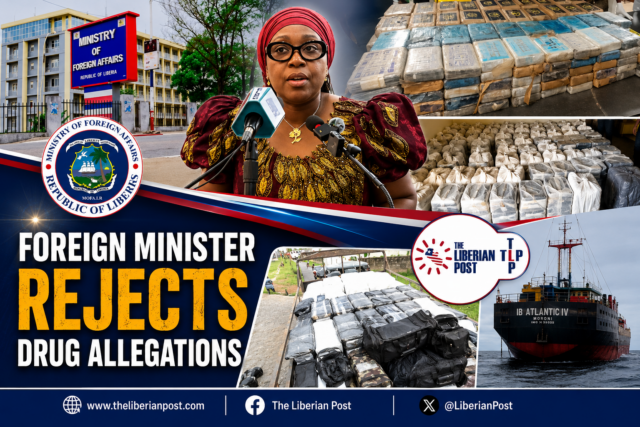
MONROVIA, Liberia – Foreign Minister Sara Beysolow-Nyanti has forcefully rejected allegations linking Liberia’s Ministry of Foreign Affairs to the country’s widening narcotics investigation, warning that unsubstantiated accusations against diplomatic channels risk undermining both Liberia’s international reputation and one of the most significant anti-drug operations in the nation’s history.
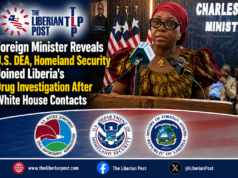
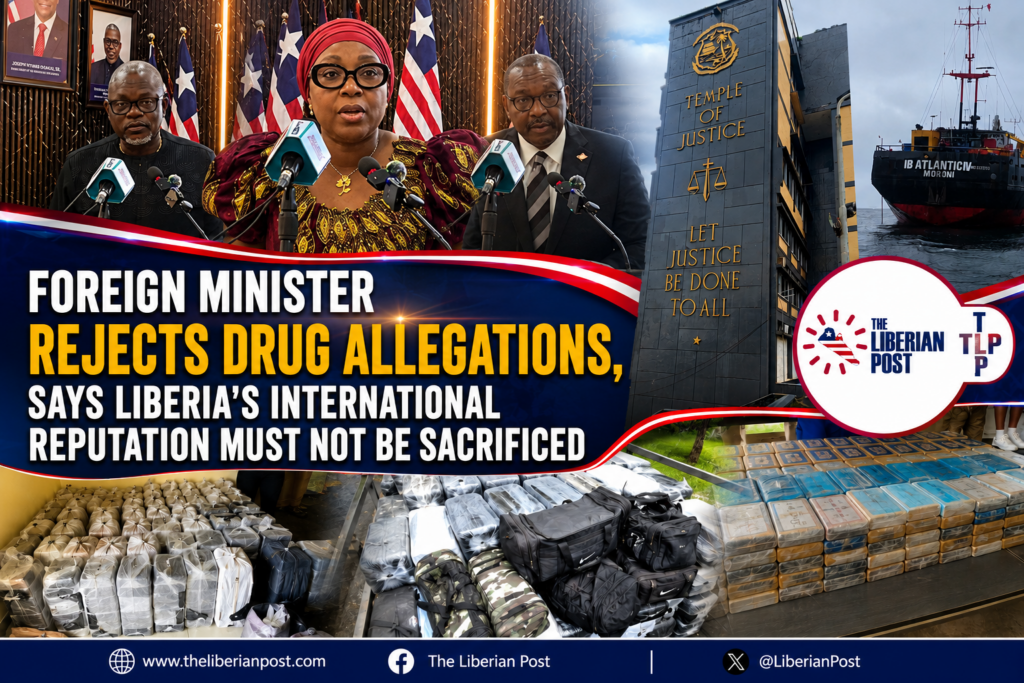
Appearing Thursday at the Ministry of Information’s regular press briefing alongside Justice Minister Counselor Natu Oswald Tweh, Beysolow-Nyanti said she was compelled to publicly address allegations because they have evolved beyond personal attacks and now threaten Liberia’s credibility with international partners assisting in the government’s campaign against transnational drug trafficking.
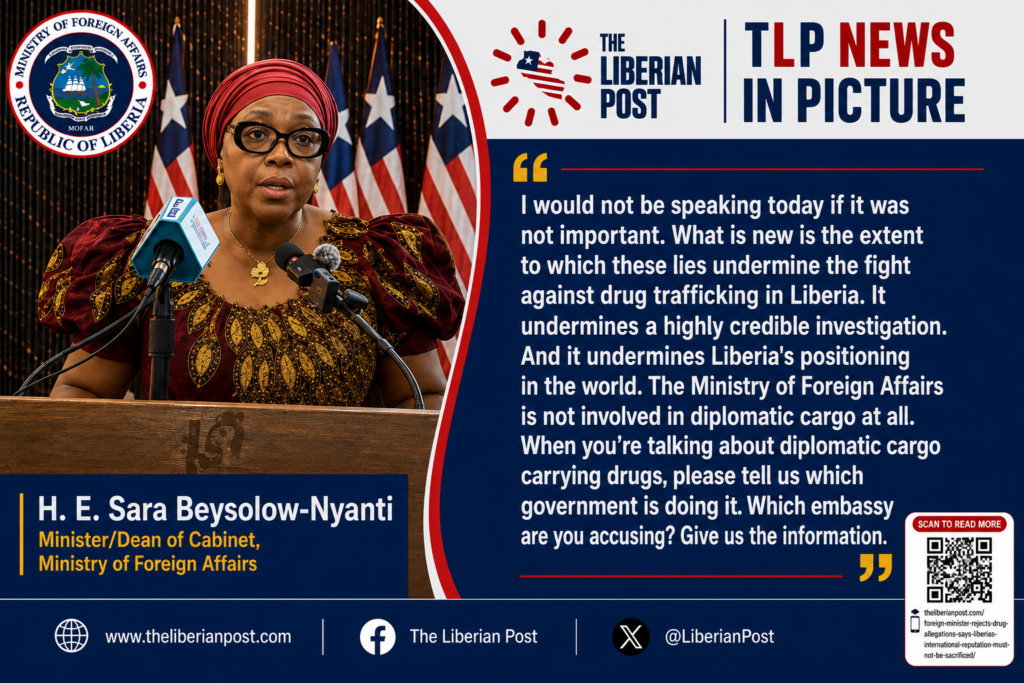
“I would not be speaking today if it was not important,” the Foreign Minister said. “What is new is the extent to which these lies undermine the fight against drug trafficking in Liberia. It undermines a highly credible investigation. And it undermines Liberia’s positioning in the world.”
Clarifies Diplomatic Cargo Procedures
Responding directly to allegations circulating on social media regarding diplomatic cargo and diplomatic pouches, Beysolow-Nyanti categorically denied that the Ministry of Foreign Affairs has any operational involvement in the shipment or handling of diplomatic cargo.
She explained that under the Vienna Convention on Diplomatic Relations, embassies accredited in Liberia are entitled to duty-free diplomatic cargo, but the Ministry’s role is limited strictly to verifying the diplomatic status of accredited missions and forwarding the documentation to the Liberia Revenue Authority (LRA) for tax exemption purposes.
According to her, diplomatic missions independently arrange their shipping, and the Ministry neither handles, inspects nor controls the contents or movement of diplomatic consignments.
“The Ministry of Foreign Affairs is not involved in diplomatic cargo at all,” she stressed, challenging those making allegations to identify the specific embassy they believe is abusing diplomatic privileges.
“When you’re talking about diplomatic cargo carrying drugs, please tell us which government is doing it. Which embassy are you accusing? Give us the information.”
Calls for Evidence, Not Speculation
The Foreign Minister urged members of the public and political actors to support Liberia’s anti-drug campaign by providing credible information to investigators instead of spreading unverified accusations that could damage the country’s diplomatic relationships.
She said Liberia has been working closely with several international partners—including the United States, the United Kingdom, Germany, Belgium, the Netherlands, Morocco and Rwanda—as part of a coordinated effort to dismantle international narcotics trafficking networks.
According to Beysolow-Nyanti, making allegations against diplomatic missions without evidence not only targets Liberia’s foreign partners but could also weaken the international cooperation that has become critical to the ongoing investigation.
“If you know that there’s something that has happened, give us the evidence so that we can solve it,” she said. “Give it to the Joint Security. Give it to the National Security Council. But let’s work together to solve this problem together.”
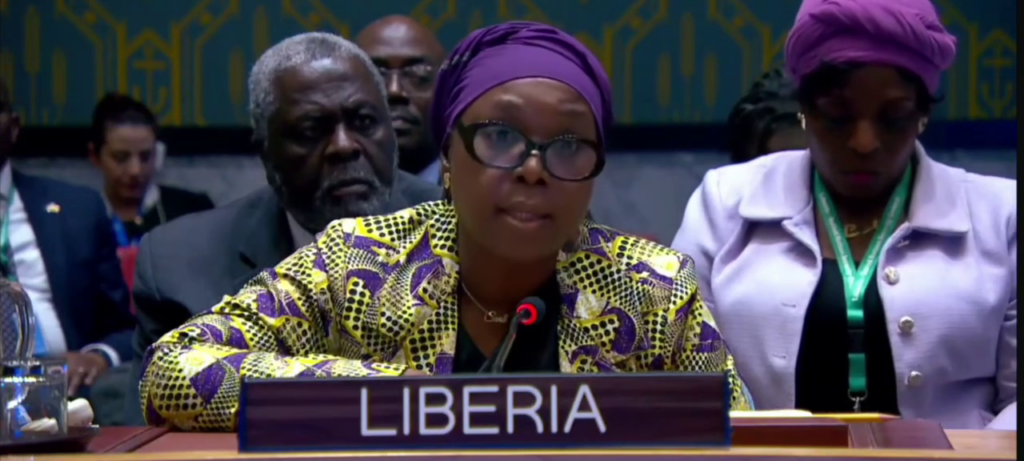
Highlights Liberia’s Growing Diplomatic Influence
Beyond responding to the allegations, Beysolow-Nyanti used the occasion to highlight what she described as Liberia’s growing influence on the international stage.
She noted that Liberia currently coordinates the African Three (A3) on the United Nations Security Council and is leading the E10, the bloc of elected non-permanent members of the Council.
The Foreign Minister said Liberia is playing a significant role in international peace and security discussions, engaging with world leaders on issues ranging from Sudan and the Sahel to broader global security challenges.
She described Liberia’s current diplomatic position as one of the country’s most significant international achievements in decades and cautioned that reckless public allegations could undermine years of diplomatic progress.
“We’re not the same Liberia we used to be,” she said. “Be proud of the Liberia we have today. Be proud of President Boakai’s leadership. And be proud of what Liberia is doing in your name.”
Foreign Ministry Helped Secure International Assistance
The Foreign Minister also disclosed that the Ministry of Foreign Affairs has played an active but largely behind-the-scenes role in Liberia’s anti-drug campaign.
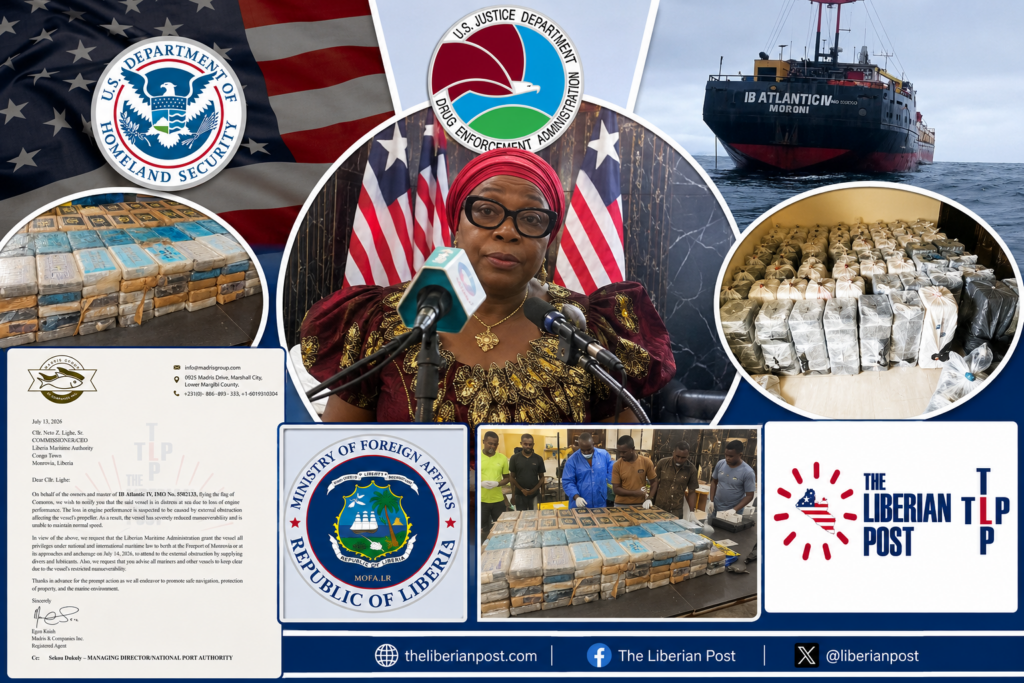
She revealed that following the interception of approximately US$19 million worth of cocaine at Roberts International Airport, she personally contacted senior United States officials, resulting in support from the U.S. Drug Enforcement Administration (DEA) and other American agencies.
According to Beysolow-Nyanti, that cooperation reflects the confidence Liberia’s international partners have in the government’s determination to dismantle organized drug trafficking networks rather than protect politically connected individuals.
Background
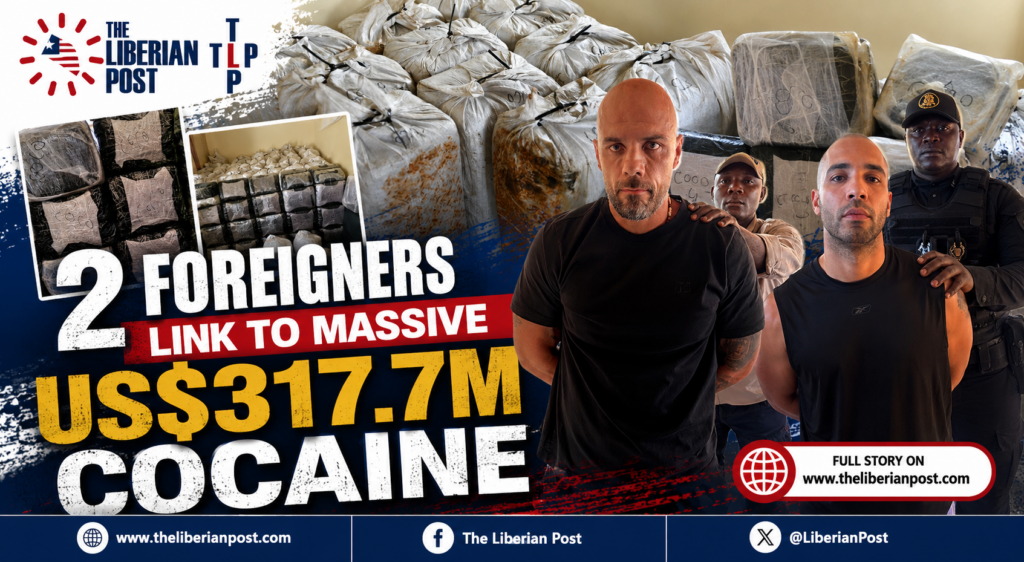
Liberia is currently conducting what authorities describe as the country’s largest-ever anti-narcotics investigation following the seizure of approximately 237.6 kilograms of cocaine valued at more than US$19 million at Roberts International Airport. Subsequent operations uncovered an additional 3,971 plates of cocaine, bringing the estimated combined street value of narcotics seized during the broader investigation to approximately US$317.68 million.
The investigation has led to the dismissal, suspension and prosecution of several government officials and security personnel, while President Joseph Nyuma Boakai Sr. has repeatedly pledged that there will be “no sacred cows” in the government’s campaign against organized drug trafficking.
Beysolow-Nyanti said the investigation should remain focused on credible evidence rather than misinformation, emphasizing that protecting Liberia’s international reputation is essential to sustaining the foreign partnerships helping authorities combat transnational narcotics trafficking.
For breaking news, in-depth analysis, and exclusive reports from Liberia and around the world, follow The Liberian Post on Facebook (https://web.facebook.com/profile.php?id=61576017166570) and X, formerly Twitter (https://x.com/LiberianPost).