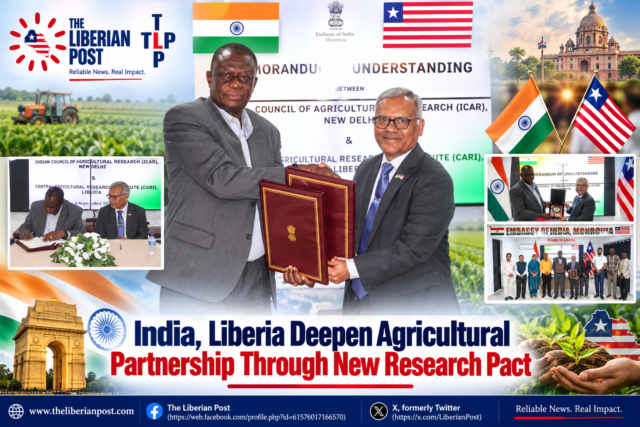
–ICAR-CARI Agreement Targets Research, Training, Technology Exchange and Agricultural Productivity
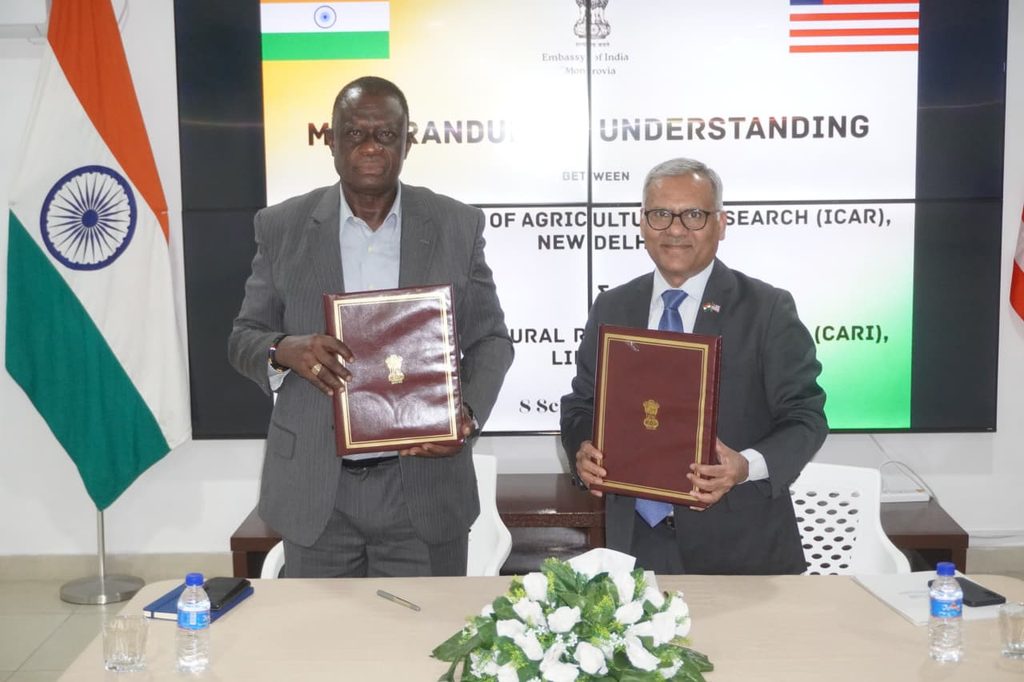
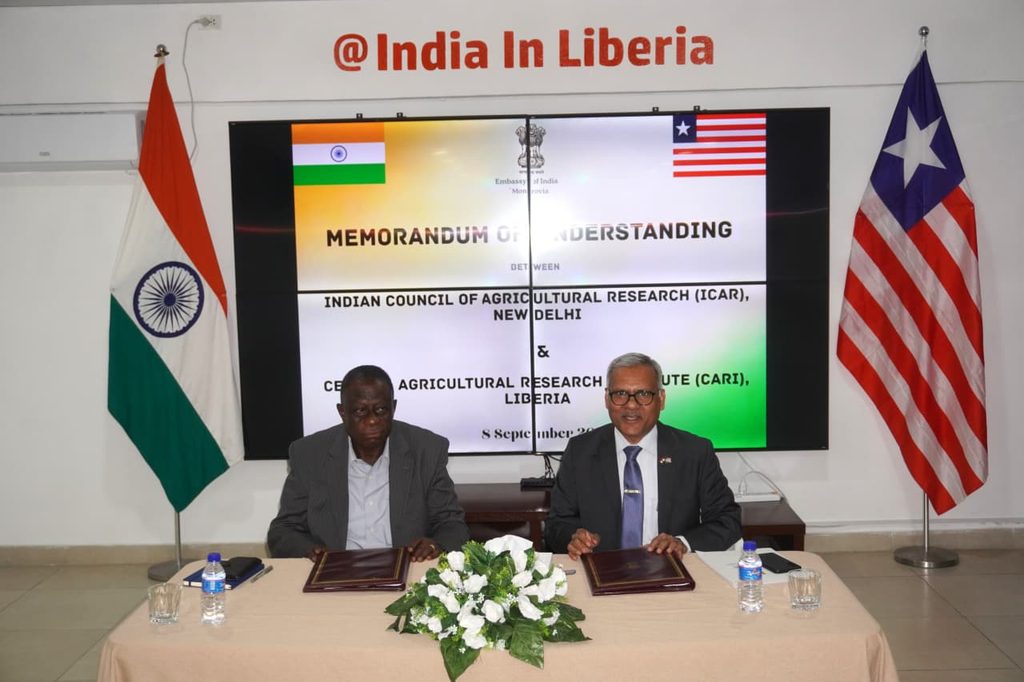
MONROVIA, Liberia — India and Liberia have taken a significant step toward strengthening agricultural research, education and capacity building with the signing of a new Memorandum of Understanding (MoU) between the Indian Council of Agricultural Research (ICAR) and Liberia’s Central Agricultural Research Institute (CARI).
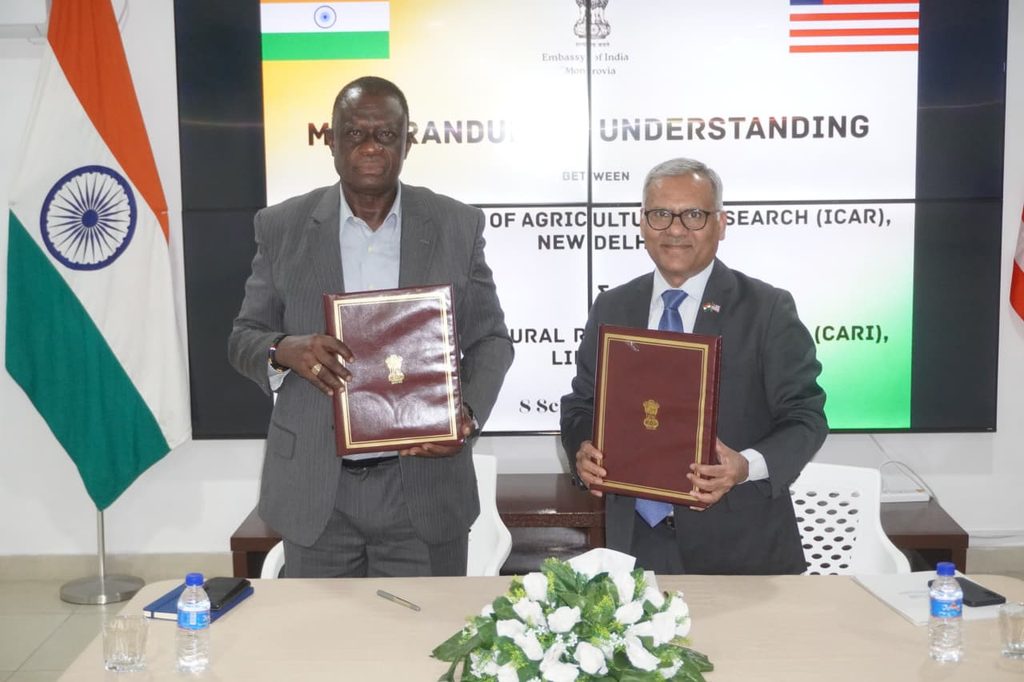
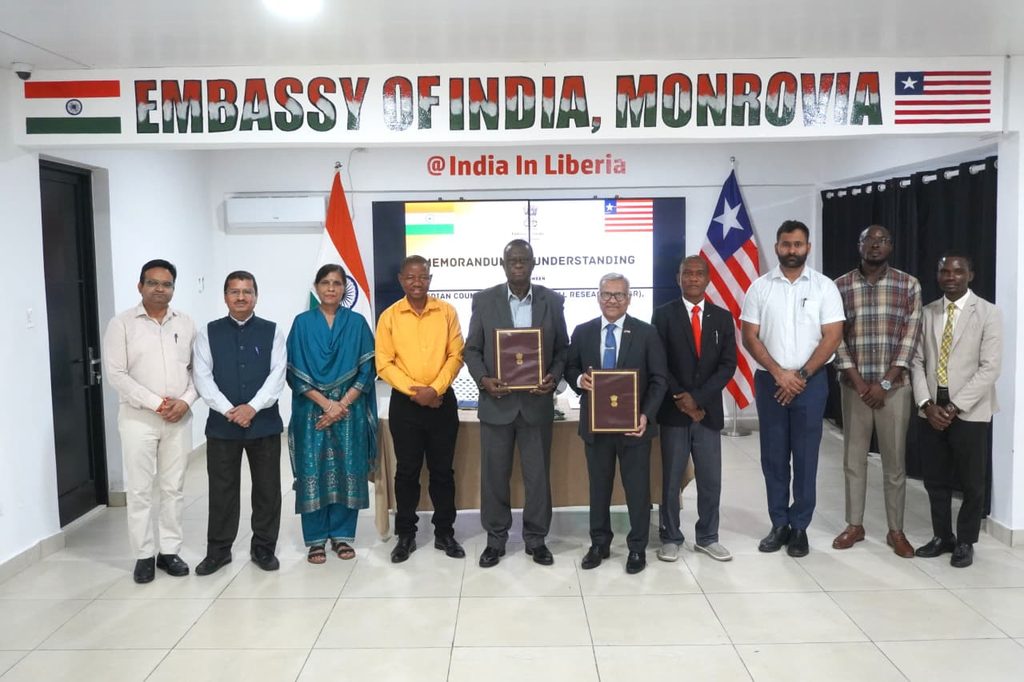
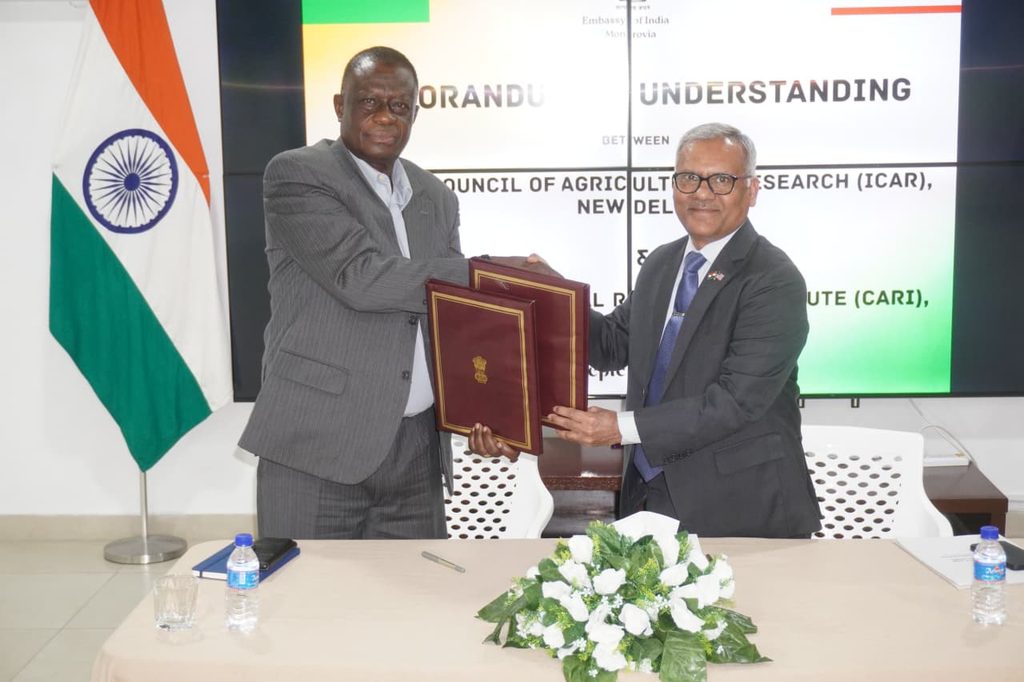
The agreement, signed on September 8, 2026, at the Embassy of India in Monrovia, establishes an institutional framework for expanded cooperation between the two countries’ agricultural research institutions.
ICAR Director General Mangi Lal Jat signed the agreement on behalf of the Indian institution, while CARI Director General Dr. Arthur Bob Karnuah signed for Liberia.
The partnership comes as Liberia continues efforts to strengthen agricultural productivity, food security, research capacity and the adoption of technologies that can directly benefit farmers.
Research, Training and Knowledge Exchange
Under the agreement, ICAR and CARI will collaborate through exchanges of scientists, technologists and agricultural experts, as well as the sharing of scientific literature, information, methodologies and research materials.
The MoU also provides for the exchange of germplasm and breeding materials, collaborative research, training and mentoring, and capacity building for agricultural research personnel.
A major component of the partnership will involve India sharing its experience in agricultural extension, including through Krishi Vigyan Kendras (KVKs), India’s frontline agricultural extension system.
The experience could offer Liberia additional approaches for strengthening the connection between agricultural research institutions and farmers, particularly in translating scientific research into practical technologies and farming methods.
Focus on Crops, Fisheries and Food Systems
The cooperation will cover a broad range of agricultural and fisheries priorities considered relevant to Liberia.
These include cassava and other tropical crops, rice, maize, vegetables, banana, oil palm and cocoa. The partnership will also encompass fisheries, aquaculture, post-harvest management, food safety and value addition.
The two institutions are expected to explore joint research, training and knowledge-sharing opportunities across these areas.
The breadth of the agreement is particularly significant for Liberia, where agricultural development extends beyond increasing crop yields to improving processing, reducing post-harvest losses, strengthening food safety and creating greater value from agricultural production.
Building Liberia’s Research Capacity
The agreement is also designed to strengthen the institutional capacity of Liberia’s agricultural research sector.
CARI, which serves as Liberia’s national agricultural research institution, has been expanding its focus on applied and adaptive research designed to generate technologies and practices that farmers can adopt. Recent work at the institute has included research into improved crop varieties, climate-smart agriculture, soil management, pest surveillance, mechanization, aquaculture and post-harvest processing.
The new partnership with ICAR is therefore expected to give Liberian researchers additional opportunities to access expertise, research methodologies and international scientific networks.
The Embassy of India said the partnership is intended to create opportunities for researchers and scientists from both countries to learn from each other and develop practical solutions suited to local conditions.
Biennial Work Plans to Drive Cooperation
The cooperation will not remain limited to the signing of the agreement.
According to the MoU, ICAR and CARI will develop joint biennial Work Plans identifying specific activities to be undertaken and the respective contributions of the two institutions.
That mechanism could provide a structured basis for moving the partnership from broad commitments to measurable programs involving research, training, technology transfer and field-level agricultural interventions.
Supporting Food Security and Agricultural Transformation
The Embassy of India described the agreement as another addition to the growing India-Liberia relationship and said it is expected to deepen engagement between agricultural research and training institutions in both countries.
The partnership is also intended to contribute to sustainable agriculture, food security, human-resource development and improved agricultural productivity in Liberia.
For Liberia, where agriculture remains central to rural livelihoods and national food-security ambitions, the success of the agreement will ultimately depend on how effectively research findings are transferred from laboratories and research institutions to farmers.
The ICAR-CARI partnership provides a new platform for that process, combining India’s extensive agricultural research and extension experience with Liberia’s local research priorities and agricultural needs.
If effectively implemented, the agreement could strengthen Liberia’s agricultural research ecosystem while opening new opportunities for scientists, researchers and farmers to benefit from international knowledge exchange.
For breaking news, in-depth analysis, and exclusive reports from Liberia and around the world, follow The Liberian Post on Facebook and X, formerly Twitter.