–Criminal Court ‘A’ Convicts Ten Defendants in Landmark Human Trafficking Case After Dozens of Victims Were Lured with False Promises of Jobs in Canada, Confined, Abused and Financially Exploited
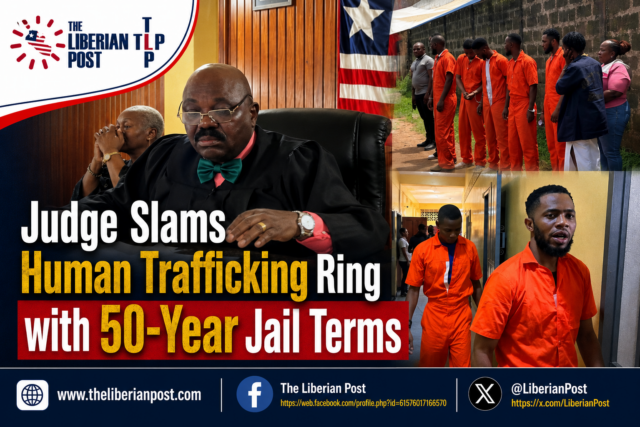
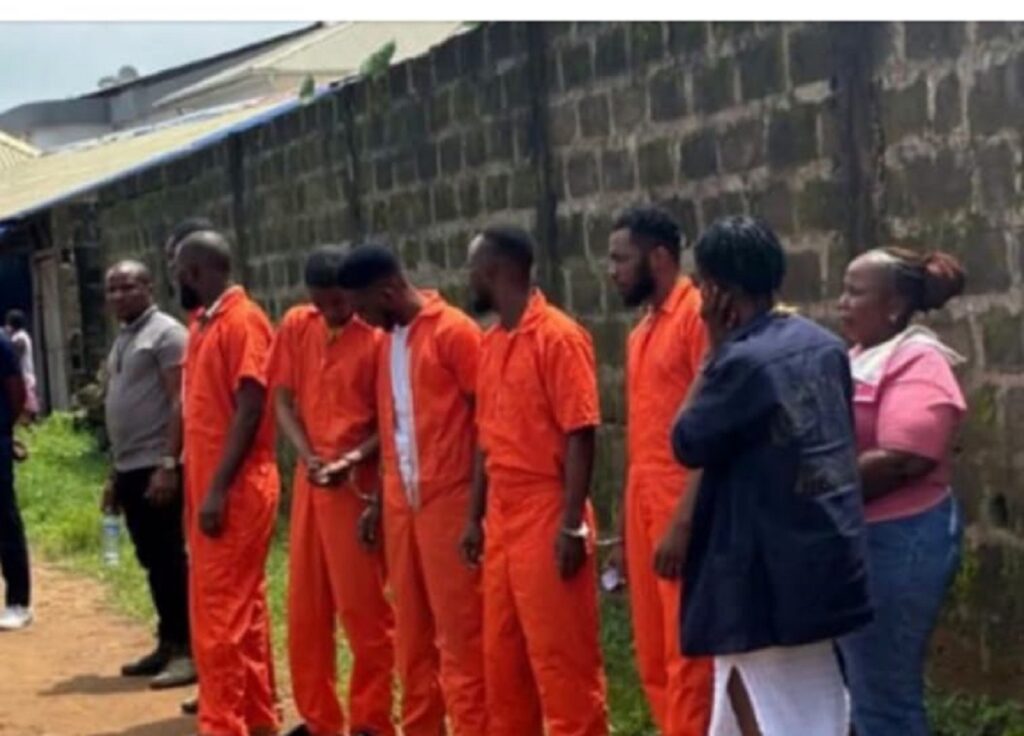
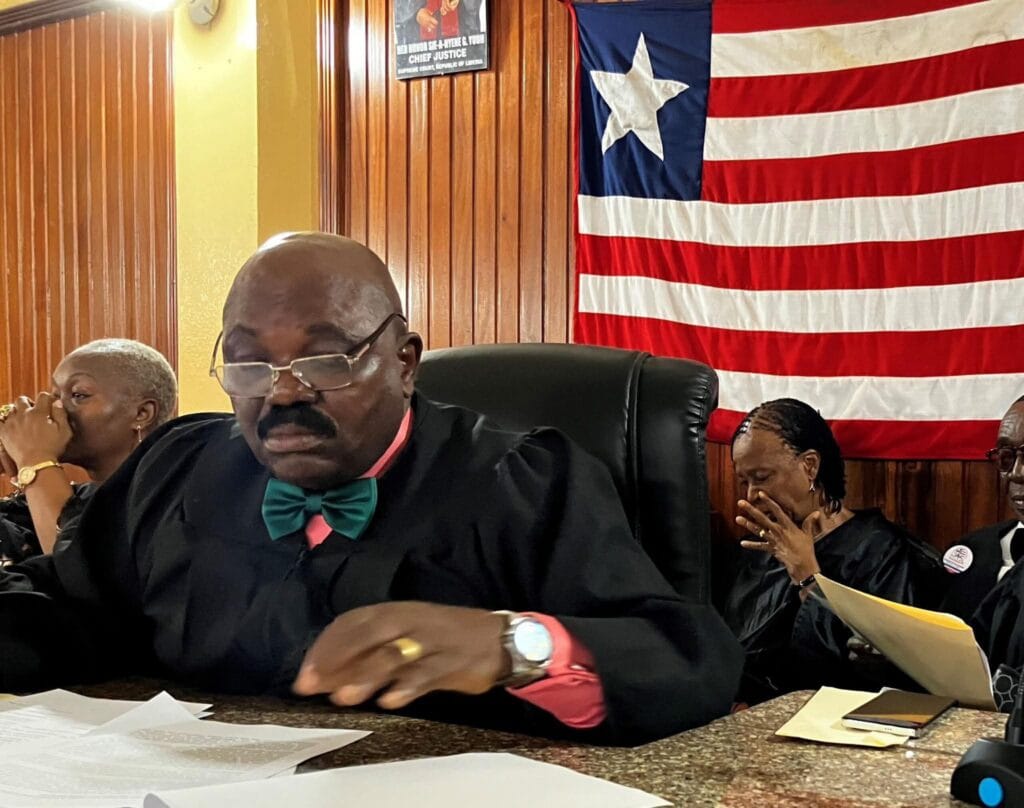
MONROVIA – In one of Liberia’s most significant human trafficking convictions in recent years, Criminal Court “A” Resident Circuit Judge Roosevelt Z. Willie has sentenced seven members of a human trafficking syndicate to 50 years’ imprisonment each after finding them guilty of orchestrating an elaborate scheme that preyed on the dreams and desperation of dozens of vulnerable Liberians seeking better opportunities abroad.
The lengthy prison terms followed a unanimous guilty verdict returned by the trial jury and subsequently affirmed by the Court, which ruled that prosecutors had proven beyond a reasonable doubt that the defendants recruited, deceived, confined and exploited approximately 57 victims under the false promise of securing employment in Canada.
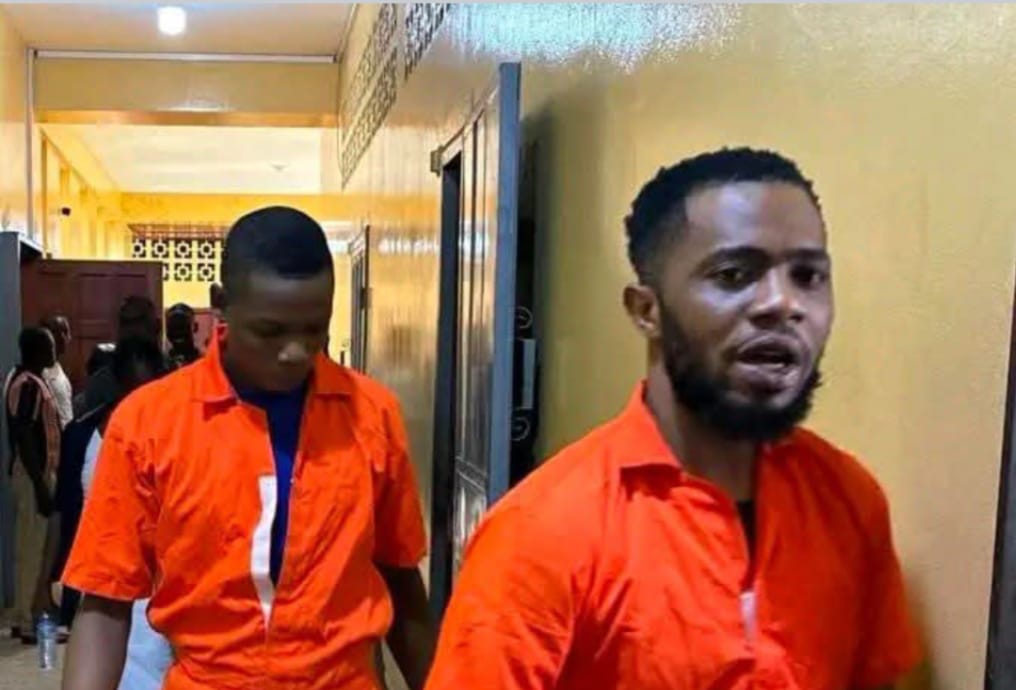
The seven defendants sentenced to 50 years each are Wuo Zegarsco Garteh, Daylue Kargo, Rudolph S. Flomo, Bill Plato, Stanley Wonanbaye, Jerome Genseh, and Alexander Plato.
The sentence was imposed pursuant to Section 5 of Liberia’s Amended Trafficking in Persons Act of 2021, which prescribes a minimum prison sentence of 20 years for individuals convicted of trafficking in persons. Judge Willie, however, imposed substantially longer sentences after considering the gravity of the crimes, the suffering inflicted on the victims, and the need to deter similar offenses.
In delivering his judgment, Judge Willie revealed that the Court also relied on a report from the Probation Office, which found that several of the convicted defendants were repeat offenders. The Court ruled that their criminal histories weighed heavily in determining the enhanced prison terms.
“This Court has a responsibility not only to punish those who prey upon vulnerable citizens but also to send a strong message that human trafficking will not be tolerated in Liberia,” the judgment emphasized.
A False Promise of a Better Life
Court records presented during the trial painted a disturbing picture of an organized criminal enterprise that targeted hopeful job seekers from across Liberia.
According to the prosecution, approximately 57 victims from Nimba, Grand Gedeh, Bong, Bomi and Lofa Counties were persuaded to travel to Monrovia after being promised lucrative employment opportunities in Canada.
Believing they were embarking on legitimate overseas careers, victims reportedly paid between US$950 and US$4,500 to members of the trafficking network for what they believed were travel processing fees, visa arrangements and employment documentation.
Instead of beginning a journey abroad, prosecutors said, the victims found themselves trapped inside a fenced compound in Gbangba Town along the Robertsfield Highway, where their freedom quickly disappeared.
The Court heard that once inside the compound, victims had their mobile phones confiscated, were prevented from leaving the premises, and were placed under constant surveillance.
Rather than preparing them for international travel, the traffickers allegedly subjected the victims to systematic financial exploitation, coercion and abuse.
Confinement, Abuse and Humiliation
Witnesses who testified before the Court described harrowing conditions inside the compound.
According to their testimony, victims were repeatedly pressured to contact relatives and friends across Liberia to solicit additional money, which members of the trafficking operation collected.
Those unable or unwilling to comply allegedly faced degrading and inhumane punishment.
Evidence presented during the trial showed that victims were forced to kneel under the scorching sun for prolonged periods, pump vehicle tires as punishment, drink excessive quantities of water, endure verbal abuse, go without food, and suffer various forms of physical mistreatment.
Several female victims also testified that they were sexually assaulted while being held against their will, allegations the Court considered among the most disturbing aspects of the case.
Judge Willie concluded that the abuse formed part of a deliberate system of coercion designed to intimidate victims and compel them to continue sending money to the criminal enterprise.
Key Roles in the Criminal Enterprise
The Court found that Marthaline Y. Tompia exercised a supervisory role within the operation.
According to witness testimony, she oversaw disciplinary measures imposed on victims who failed to raise additional funds, ordering or administering humiliating punishments that included forcing victims to kneel under the blazing sun, balance chairs on their hands and endure other degrading treatment intended to break their resistance.
The Court also determined that Preston Godfrey played an active role in recruiting victims, collecting money and participating in the punishment of those who failed to meet the syndicate’s financial demands.
Although Maxi Wonlebaye, Marthaline Y. Tompia and Preston Godfrey pleaded guilty during the proceedings, Judge Willie ruled that their admissions did not diminish their criminal liability.
Instead, he held that testimony from numerous prosecution witnesses independently established their direct involvement in the trafficking scheme.
Q-Net Defense Rejected
One of the central arguments advanced by the defense was that the operation constituted a legitimate network marketing business operating under the name Q-Net.
While acknowledging that Infinitive Millennials Star Platinum Limitless, Inc. had been legally incorporated, the Court rejected the argument that the defendants were engaged in lawful commercial activity.
Judge Willie ruled that the purported business structure merely served as a cover for an organized human trafficking operation that relied on deception, coercion and exploitation.
The Court held that victims were recruited through false promises of overseas employment rather than genuine business opportunities, making the enterprise criminal regardless of its corporate registration.
Clarifying Liberia’s Human Trafficking Law
In a significant legal interpretation, Judge Willie emphasized that victims do not have to be transported outside Liberia before the offense of trafficking in persons is complete.
He explained that under Liberia’s Amended Trafficking in Persons Act of 2021, the crimes of recruitment, deception, harboring, coercion and exploitation are sufficient to establish the offense when supported by credible evidence.
The Court also convicted the defendants of Criminal Conspiracy, finding that they acted together under a common unlawful purpose.
Judge Willie cited coordinated recruitment efforts across several counties, the collection of substantial sums of money, the confinement of victims at a single location, the confiscation of communication devices and the organized system of punishment as compelling evidence of a sophisticated criminal enterprise operating with shared intent.
A Strong Message Against Human Trafficking
Concluding the case, Judge Willie ruled that the prosecution overwhelmingly established the defendants’ guilt beyond a reasonable doubt.
He said the lengthy prison sentences reflected not only the gravity of the offenses but also the profound physical, emotional and financial suffering inflicted upon dozens of innocent Liberians whose dreams of a better future were manipulated for criminal gain.
The ruling represents one of Liberia’s strongest judicial responses to human trafficking in recent years and underscores the Judiciary’s commitment to enforcing the country’s anti-trafficking laws.
Human trafficking remains a serious concern across West Africa, with criminal networks frequently exploiting vulnerable people through false promises of overseas employment, education and better economic opportunities. Liberia has strengthened its legal framework in recent years through amendments to the Trafficking in Persons Act while working alongside international partners to improve victim protection, strengthen prosecutions and dismantle trafficking networks.
Legal observers say the judgment sends a clear warning that those who exploit vulnerable Liberians for profit will face severe consequences under the law.
For more credible, balanced and impactful news, analysis and special reports, follow The Liberian Post on Facebook (https://web.facebook.com/profile.php?id=61576017166570) and on X, formerly Twitter (https://x.com/LiberianPost).