-ANC Political Leader Says Liberia’s Escalating Drug Crisis Reflects Weak Governance, Calls for Independent Investigations, Stronger Institutions, And Long-Term Investments in Youth to Break the Cycle of Narcotics Abuse and Organized Crime
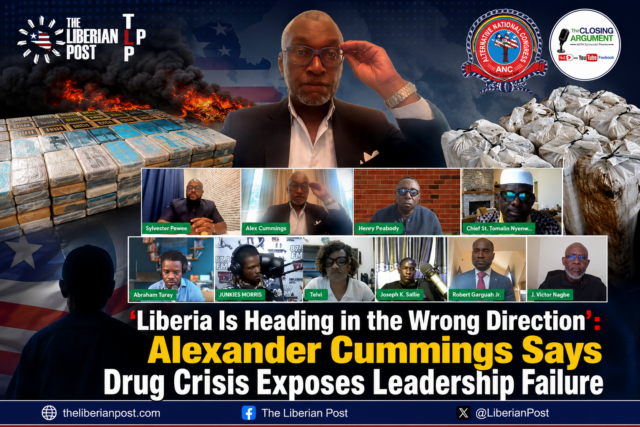
MONROVIA, Liberia – Alternative National Congress (ANC) Political Leader Alexander Benedict Cummings has issued one of his strongest criticisms yet of the Boakai administration’s handling of Liberia’s worsening narcotics crisis, warning that the country risks becoming a hub for international drug trafficking unless the government confronts the problem with transparency, professionalism and unwavering political will.
Speaking on The Closing Argument (TCA) on Tuesday, August 4th evening, Cummings said the recent multi-million-dollar cocaine seizures and the subsequent arrests, dismissals and investigations involving senior security officials point to a deeper governance problem that cannot be solved through isolated enforcement actions alone.
According to him, Liberia’s growing drug problem is symptomatic of institutional weaknesses, corruption and years of inadequate investment in law enforcement, border security and opportunities for young people.
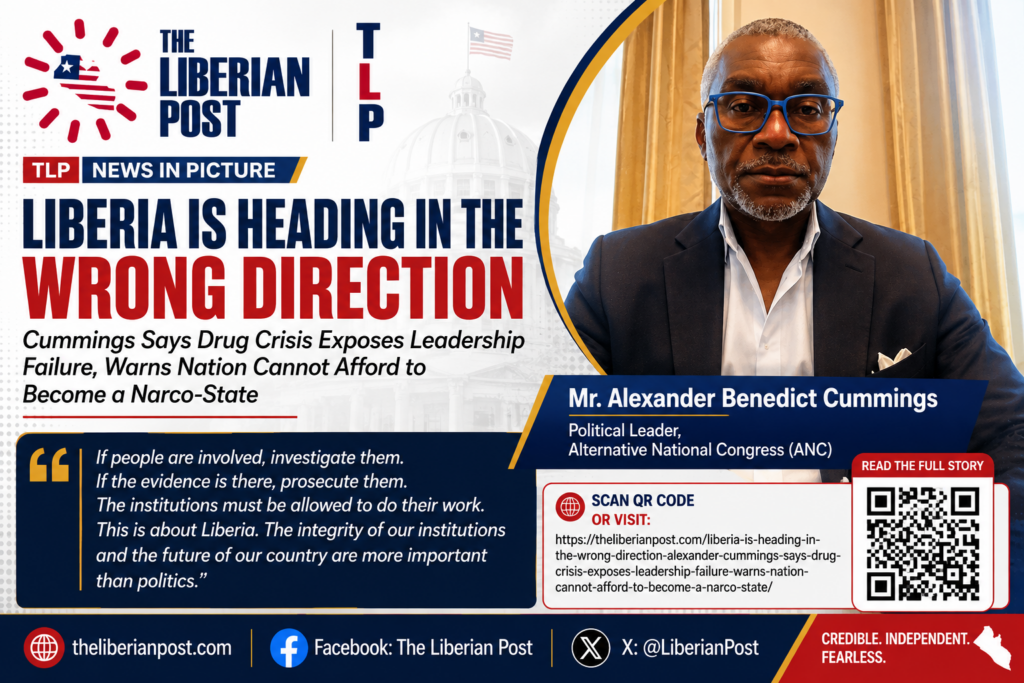
‘This Is Bigger Than One Administration’
Cummings acknowledged the unprecedented scale of the recent cocaine seizures but argued that the crisis extends beyond any single shipment or administration.
He said the government’s response must not be driven by politics or public relations but by an uncompromising commitment to uncovering everyone involved, regardless of social status or political affiliation.
“If people are involved, investigate them. If the evidence is there, prosecute them,” Cummings said, emphasizing that the credibility of the process will ultimately depend on whether the law is applied fairly and consistently.
He stressed that Liberians will judge the investigation not by the number of press conferences held but by whether those responsible are successfully prosecuted through the courts.
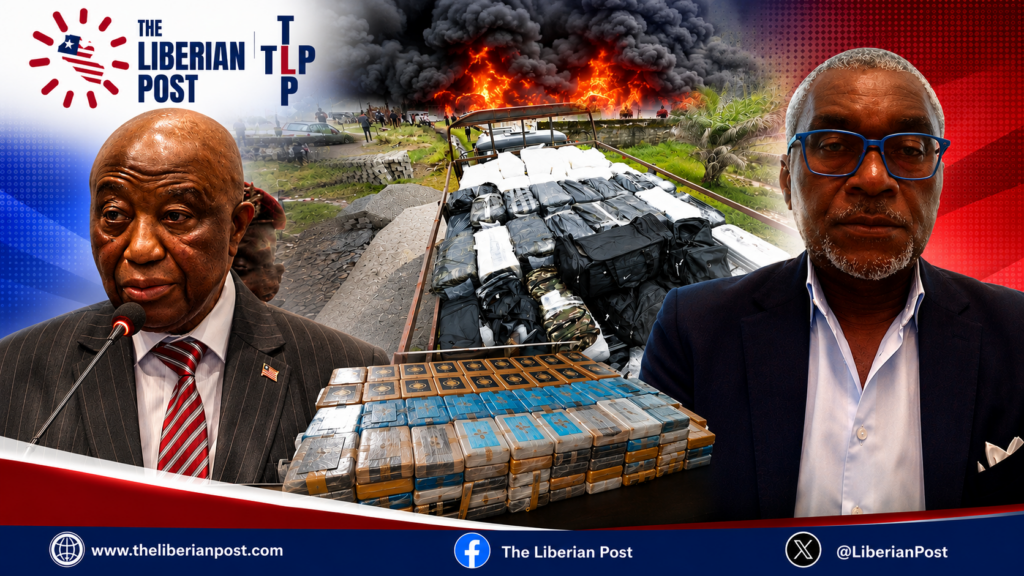
Calls for Independent and Credible Investigations
The ANC leader urged the government to ensure that all investigations into the country’s recent narcotics cases remain independent and insulated from political influence.
He cautioned against selective justice, arguing that public confidence would quickly erode if investigations appeared designed to protect influential individuals while targeting only lower-ranking actors.
“The institutions must be allowed to do their work,” he said, adding that no one should be considered above the law if credible evidence links them to criminal activity.
Cummings maintained that strengthening the integrity of investigative institutions is essential not only for the current cocaine cases but also for restoring broader public trust in Liberia’s justice system.
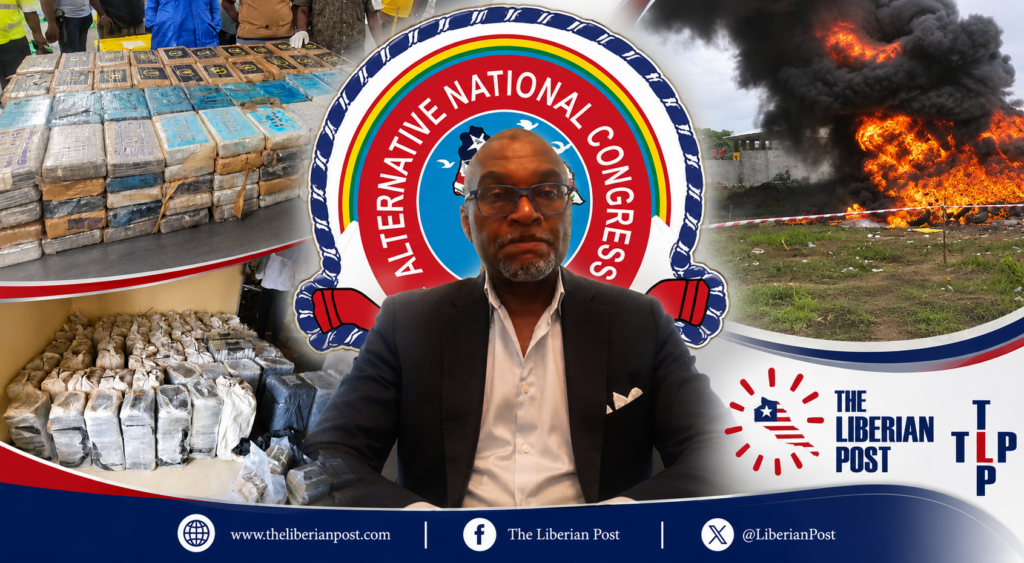
Drug Trafficking Thrives Where Institutions Are Weak
Beyond the immediate investigation, Cummings argued that international drug trafficking organizations naturally exploit countries where governance systems are weak and accountability mechanisms are ineffective.
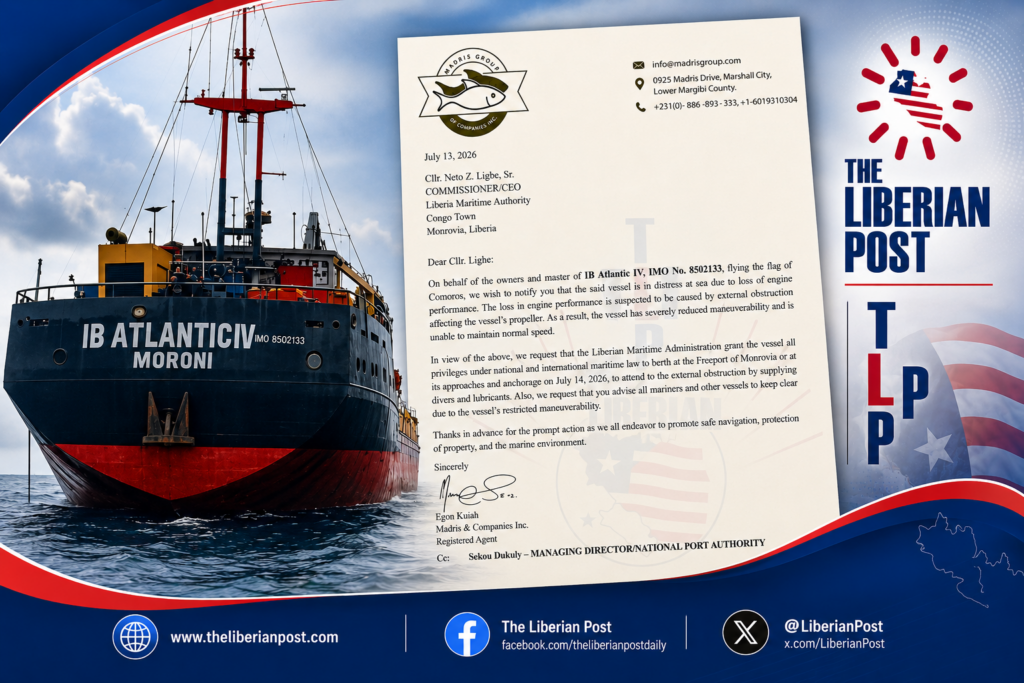
He said Liberia must strengthen customs, airport security, maritime surveillance and intelligence coordination if it hopes to prevent organized criminal networks from using the country as a transit point.
According to him, fighting drug trafficking requires more than arrests—it requires building institutions capable of detecting, disrupting and dismantling sophisticated criminal organizations.
Youth Must Be Part of the Solution
Cummings also warned that Liberia’s response should not focus exclusively on traffickers while ignoring the growing problem of drug abuse among young people.
He said increasing narcotics consumption among the youth poses serious long-term risks to national development and requires sustained investments in education, skills training, employment opportunities and rehabilitation services.
“If young people have no opportunities, they become vulnerable,” he observed, arguing that economic empowerment should form part of any comprehensive national anti-drug strategy.
He called for greater collaboration among government agencies, civil society, religious institutions and communities to reduce both drug trafficking and drug addiction.
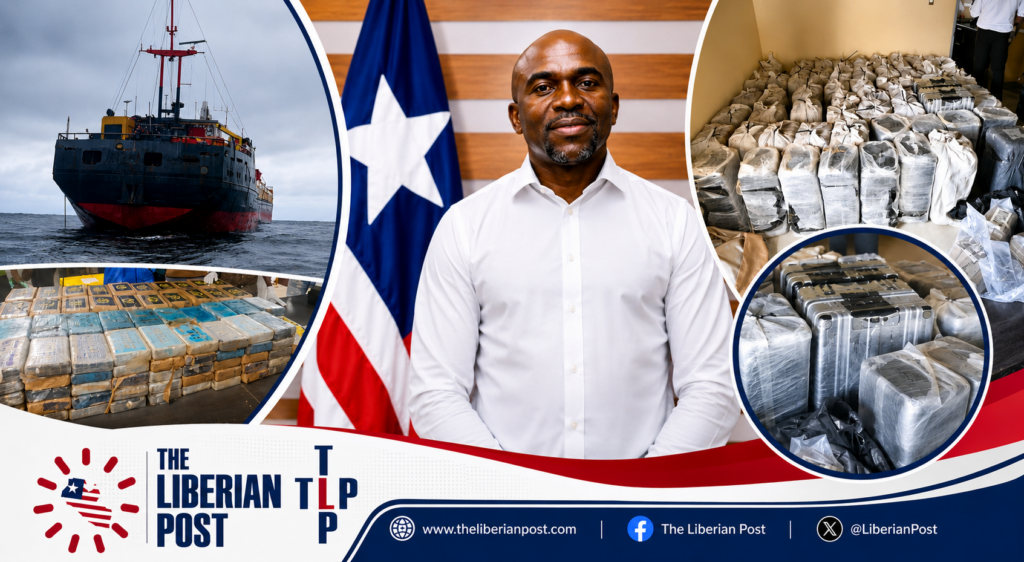
A Crisis That Has Shaken the Nation
Cummings’ remarks come as Liberia continues grappling with the fallout from the country’s largest-ever narcotics investigations.
In June, security authorities intercepted 198 plates of cocaine weighing approximately 237.6 kilograms, valued at more than US$19 million, concealed inside cargo destined for the United Kingdom through Roberts International Airport.
Subsequent investigations led to additional operations in which authorities seized 3,971 plates of cocaine, bringing the estimated combined street value of the confiscated narcotics to approximately US$317.68 million.
The investigations have triggered the dismissal, suspension and arrest of several officials from the Liberia National Police, National Security Agency, Liberia Drug Enforcement Agency, Roberts International Airport, and other government institutions, as investigators seek to dismantle what they believe are organized trafficking networks operating within Liberia.
President Joseph Nyuma Boakai Sr. has repeatedly vowed that there will be “no sacred cows” in the investigation, insisting that anyone found culpable will face the full weight of the law.
Politics Must Not Overshadow Justice
Although sharply critical of the government’s broader governance record, Cummings said the national drug investigation should not become another arena for partisan political battles.
Instead, he urged all political actors to support a transparent process capable of producing credible outcomes.
“This is about Liberia,” he said. “The integrity of our institutions and the future of our country are more important than politics.”
He argued that successfully dismantling organized drug trafficking networks would require sustained institutional reforms long after the current investigations conclude.
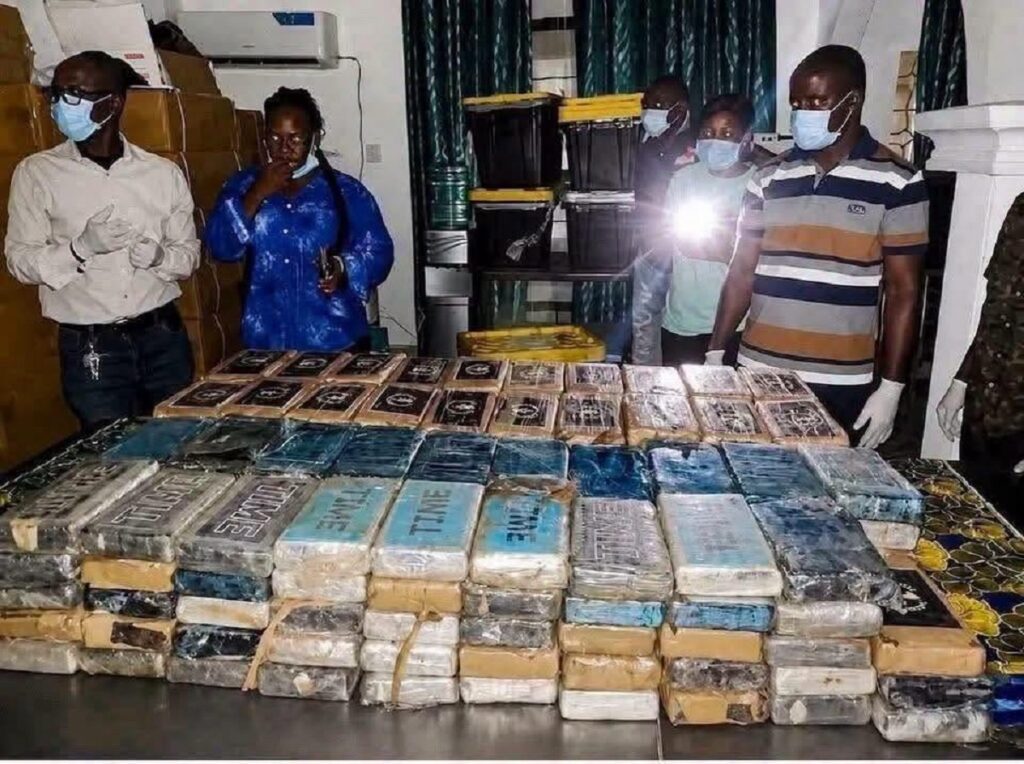
A Test of Liberia’s Institutions
For Cummings, the country’s response to the cocaine scandal represents more than a criminal investigation—it is a test of Liberia’s democratic institutions and its commitment to the rule of law.
He warned that if investigations fail to reach their logical conclusion or appear compromised by political considerations, the consequences could extend far beyond the current cases, affecting investor confidence, national security and Liberia’s international reputation.
Conversely, he said, a professional and impartial investigation that follows the evidence wherever it leads could mark an important step toward rebuilding public confidence in state institutions and demonstrating that no individual is beyond the reach of justice.
As Liberia’s anti-narcotics campaign continues to unfold, Cummings said the country faces a defining choice: strengthen its institutions now or risk allowing organized criminal networks to gain an even deeper foothold in the nation’s governance and economy.
For breaking news, in-depth analysis, and exclusive reports from Liberia and around the world, follow The Liberian Post on Facebook (https://web.facebook.com/profile.php?id=61576017166570) and X, formerly Twitter (https://x.com/LiberianPost).