-Legendary Liberian Cultural Icon Says the Country Continues to Bear the Psychological Scars of Civil War, Warns Against Reckless Political Rhetoric, and Laments Failure to Fully Implement Truth and Reconciliation Commission Recommendations
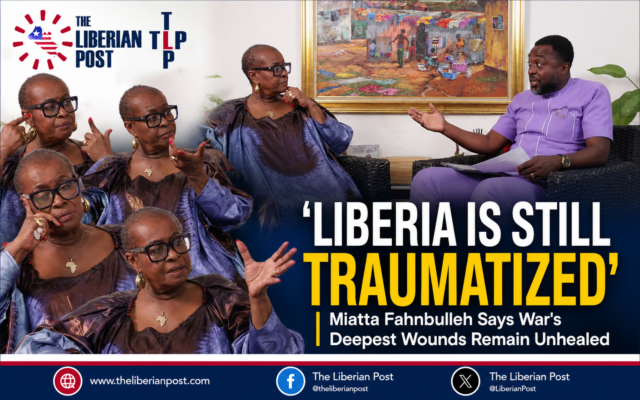
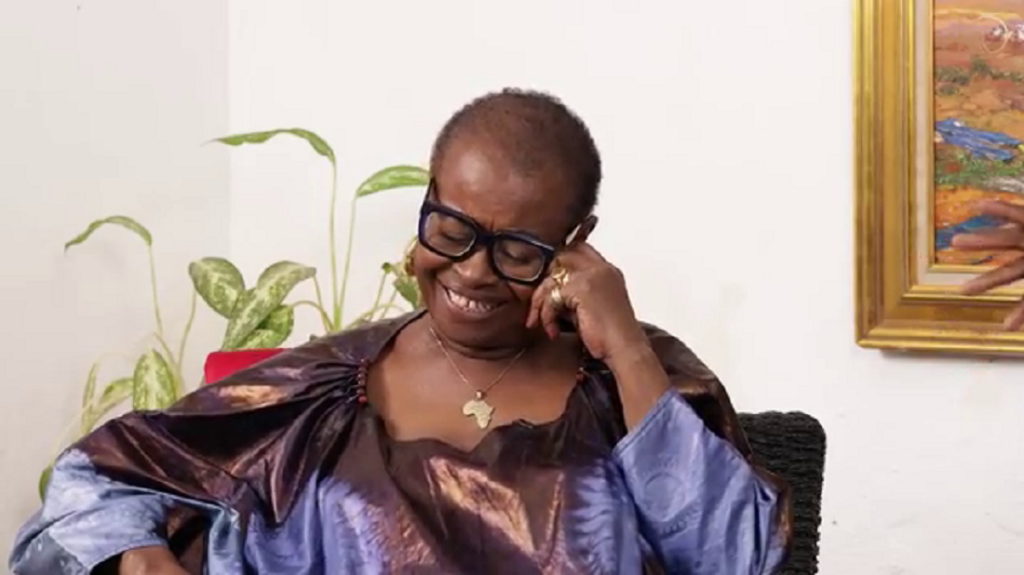
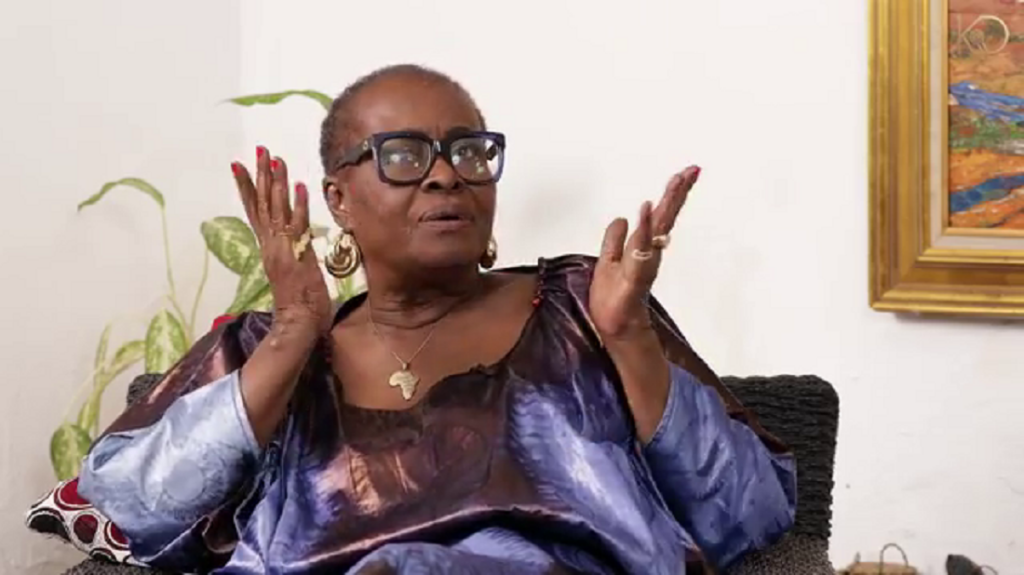
MONROVIA – More than two decades after Liberia’s guns fell silent, legendary Liberian musician, broadcaster and peace advocate Miatta Fahnbulleh says the country’s greatest struggle is no longer rebuilding roads and institutions, but healing the invisible wounds left by one of Africa’s most devastating civil conflicts.
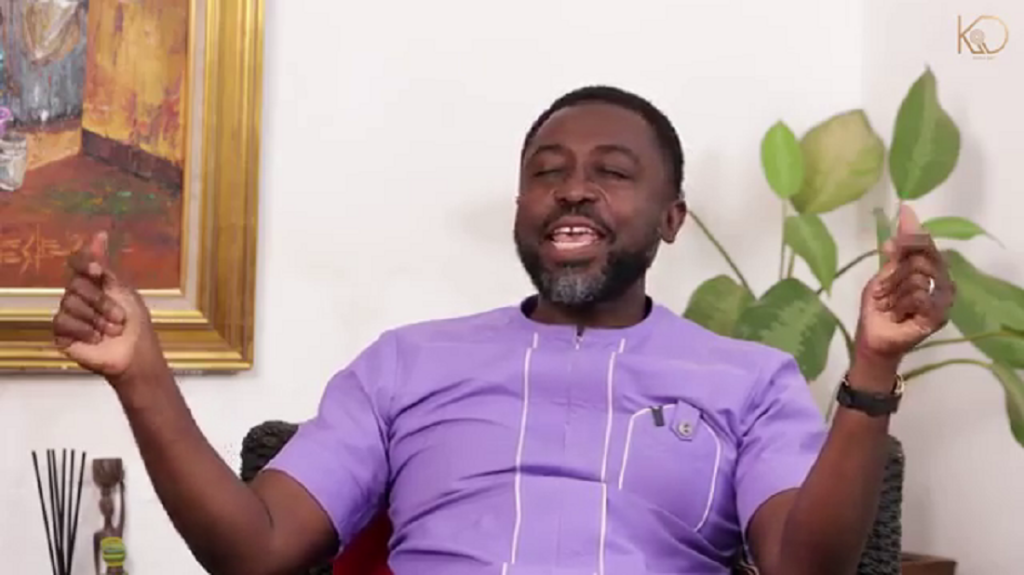
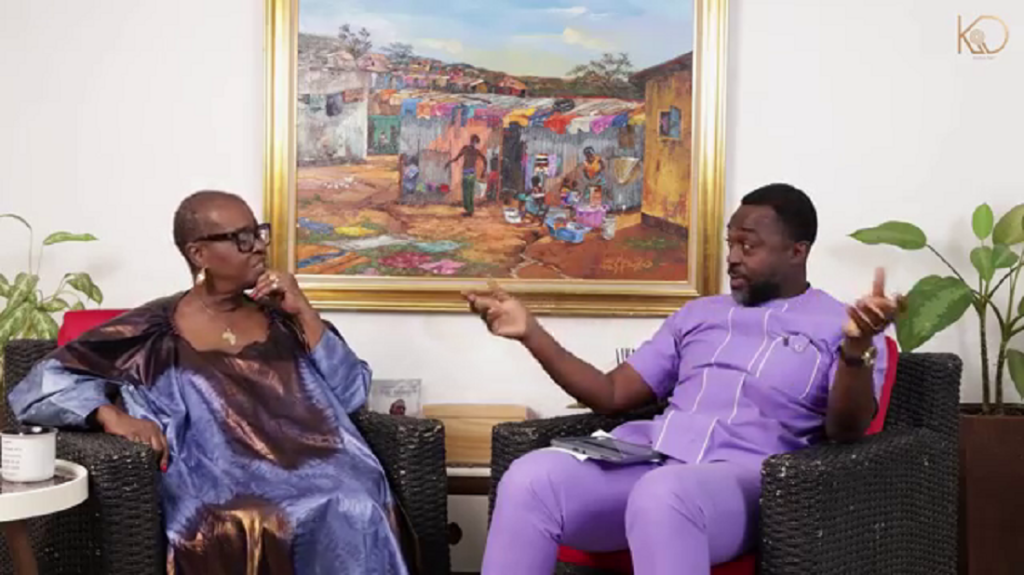
Speaking candidly during a wide-ranging interview with Ghanaian award-winning broadcaster Kafui Dey, Fahnbulleh painted a sobering picture of a nation that has achieved peace but continues to wrestle with the psychological, social and political consequences of its 14-year civil war.
According to her, Liberia may have enjoyed years without active conflict, but the trauma of war still shapes the country’s politics, institutions and relationships.
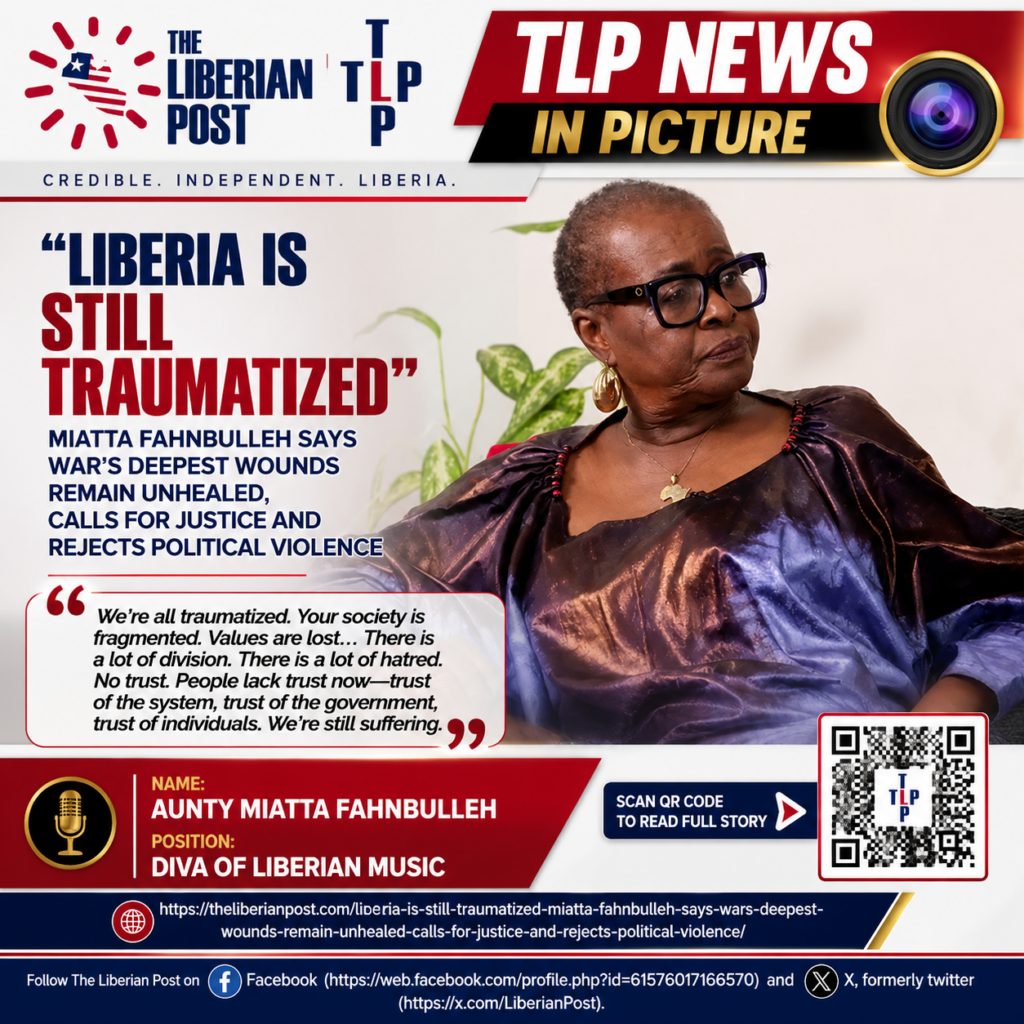
“We’re all traumatized,” Fahnbulleh said, reflecting on the lasting emotional toll of the conflict. “Your society is fragmented. Values are lost… There is a lot of division. There is a lot of hatred. No trust. People lack trust now—trust of the system, trust of the government, trust of individuals. We’re still suffering.”
For Fahnbulleh, Liberia’s recovery cannot simply be measured by the absence of gunfire.
Instead, she believes the nation continues to pay a heavy price for the destruction of communities, institutions and social values during the years of conflict.
Escaping a War She Knew Was Coming
Fahnbulleh recalled that she left Liberia months before the civil war officially erupted after receiving credible information that violence was imminent.
At the time, she was living in Monrovia but decided not to wait.
“As soon as I heard that, I said, let me get out of here. Mayhem is coming. Chaos is coming.”
She relocated to Ghana with her daughter and another child in September 1989, only months before Charles Taylor’s National Patriotic Front of Liberia launched its offensive that plunged the country into years of bloodshed.
From Ghana, she watched Liberia descend into violence while thousands of refugees fled across West Africa.
Fahnbulleh said arriving early allowed her to help fellow Liberians who escaped the war and sought refuge in Accra.
A Painful Return Home
When she returned to Monrovia during an early peace conference, Fahnbulleh said the transformation of the country was heartbreaking.
She described seeing once-prominent Liberians reduced to poverty, with even respected religious leaders struggling to survive.
“Everyone looked so sad,” she recalled. “I almost wanted to cry.”
One image has remained with her for decades.
She remembered encountering the Episcopal Bishop—once among Liberia’s most respected figures—walking the streets dressed in simple slippers and casual clothing, a sight she said illustrated how the war had stripped away dignity from every segment of society.
According to Fahnbulleh, the sadness she witnessed extended beyond physical destruction.
It was visible in people’s faces, their silence and their loss of hope.
‘The War Comes Back to You’
Although she escaped the fighting, Fahnbulleh said the conflict has never truly left those who lived through it.
“Every so often, the war comes back to you.”
She believes Liberia’s social fabric remains deeply damaged, arguing that rebuilding trust between citizens and institutions may take another generation.
Children who carried weapons during the conflict are now adults, she noted, while an entire generation grew up surrounded by violence, displacement and fear.
Until those wounds are addressed, she warned, Liberia cannot fully move beyond its past.
Mother Became a General for Peace
Fahnbulleh also reflected on the extraordinary role played by her late mother, Mary Brownell Fahnbulleh, one of Liberia’s leading peace advocates during the civil war.
She said her mother remained in Liberia while others fled and became deeply involved in efforts to end the conflict.
According to Fahnbulleh, her mother met directly with warlords—including Charles Taylor—and other armed leaders as part of efforts by Liberian women to negotiate peace.
“My mother became the general of the women’s movement.”
She credited the courage of those women with helping lay the groundwork for the eventual peace process and said their sacrifices should never be forgotten.
Each year, she noted, memorial events continue to honor the contributions of women who risked their lives to prevent Liberia’s destruction.
Rejecting the Politics of Violence
Drawing on her own experiences of war, Fahnbulleh delivered a strong warning to politicians who invoke violence during political campaigns.
She said Liberians have learned too much from the horrors of war to tolerate reckless rhetoric.
“Nobody who has gone through the war like the Liberians and Sierra Leoneans did will ever want to see war again.”
According to her, today’s Liberians are quick to reject politicians who threaten conflict.
“When a politician threatens war, he’s immediately shut down by the population.”
She argued that ordinary citizens now understand the true cost of armed conflict and refuse to allow political leaders to drag the country back into violence.
Justice Still Incomplete
Fahnbulleh also expressed disappointment that Liberia has failed to fully implement the recommendations of its Truth and Reconciliation Commission (TRC).
She said the commission provided an important opportunity for victims and perpetrators to tell their stories and begin the difficult process of reconciliation.
However, she lamented that its central recommendation—to prosecute those bearing the greatest responsibility for wartime atrocities—has largely been ignored.
“Those carrying full responsibility of the mayhem should be prosecuted… As you can see, we have not prosecuted anybody.”
She warned that many of those accused of orchestrating wartime crimes are dying before ever being held accountable.
For Fahnbulleh, justice remains an essential ingredient of genuine national reconciliation.
Military Reform Gives Her Hope
Despite her concerns, Fahnbulleh acknowledged progress in Liberia’s post-war security reforms.
She praised the decision to disband the former Armed Forces of Liberia and establish a new military after the 2003 Accra Comprehensive Peace Agreement.
According to her, the new Armed Forces have developed a healthier relationship with civilians and are contributing to national development through road construction, security operations and efforts to combat drug trafficking.
“There’s a good rapport,” she said of relations between civilians and the country’s reformed military.
A Continuing Conversation About Healing
Fahnbulleh’s reflections come as Liberia continues to debate how best to confront the legacy of its civil wars.
Successive governments have emphasized peace, reconciliation and institutional reform, while civil society organizations and victims’ groups have repeatedly called for the implementation of the Truth and Reconciliation Commission’s recommendations, including the establishment of a war and economic crimes court.
Although Liberia has remained peaceful since the end of the conflict in 2003 and has successfully conducted several democratic elections, many observers acknowledge that issues of accountability, reconciliation and historical memory remain unresolved.
For Fahnbulleh, however, one lesson stands above all others.
Liberians, she said, know better than anyone the cost of political violence—and must never allow history to repeat itself.
“Nobody who has experienced war ever wants to experience it again.”
For breaking news, in-depth analysis, and exclusive reports from Liberia and around the world, follow The Liberian Post on Facebook (https://web.facebook.com/profile.php?id=61576017166570) and X, formerly Twitter (https://x.com/LiberianPost).