WASHINGTON, D.C. — Liberia has issued a strong warning about the growing threat of climate change to its economy and population, while calling for increased international support to finance its ambitious climate agenda.
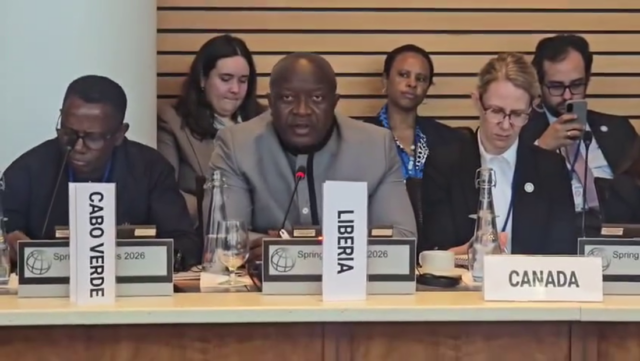
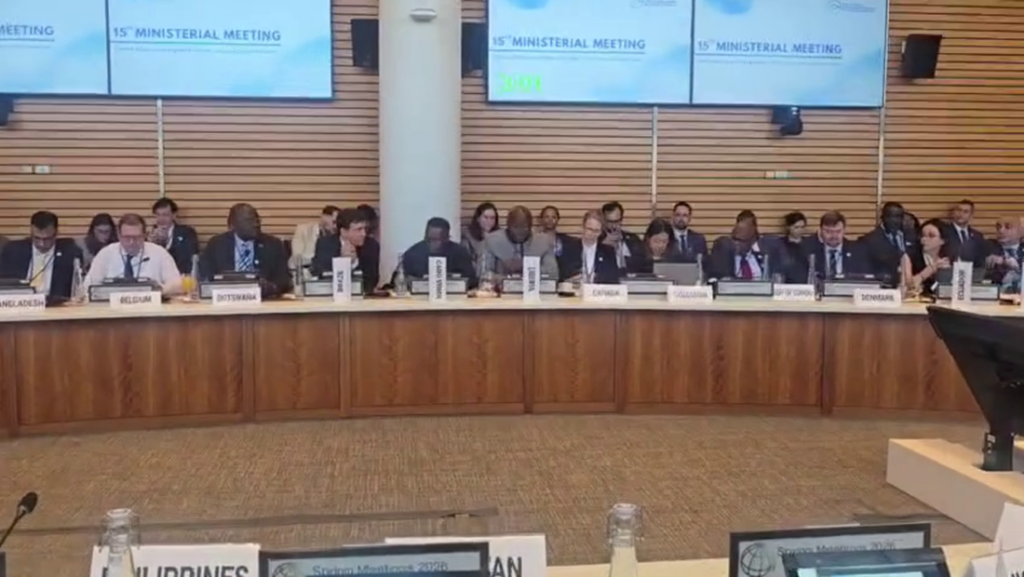
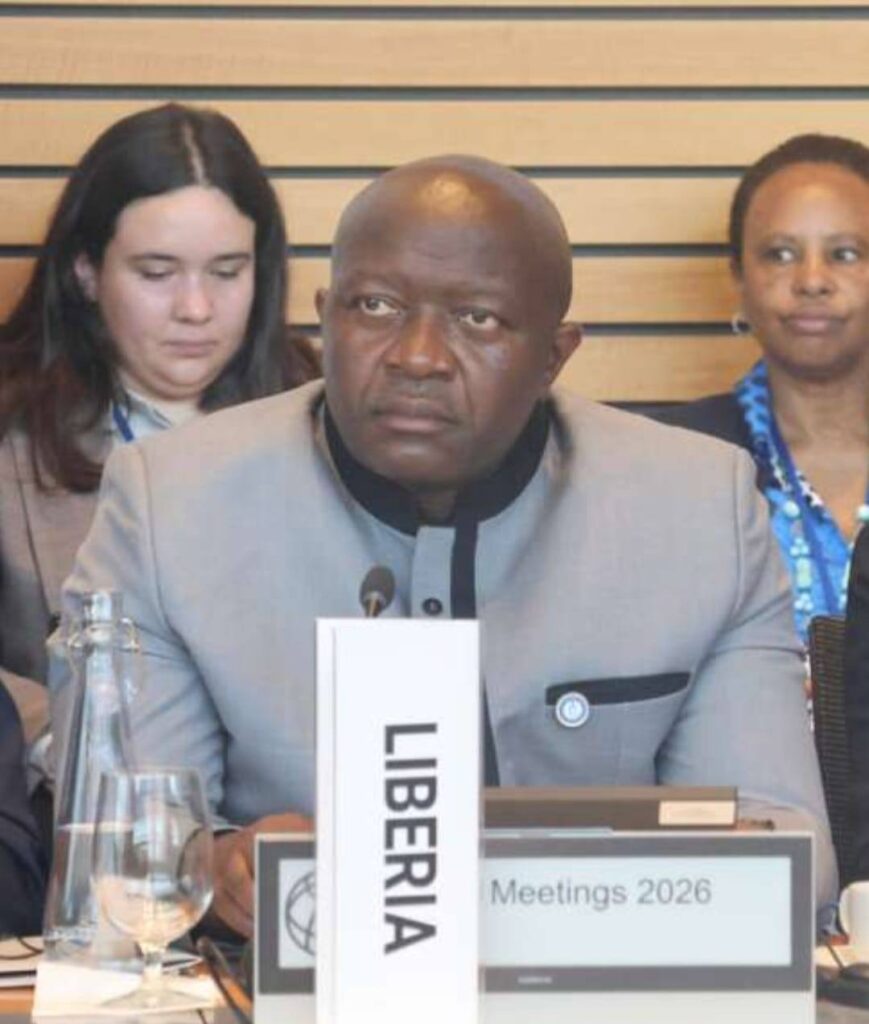
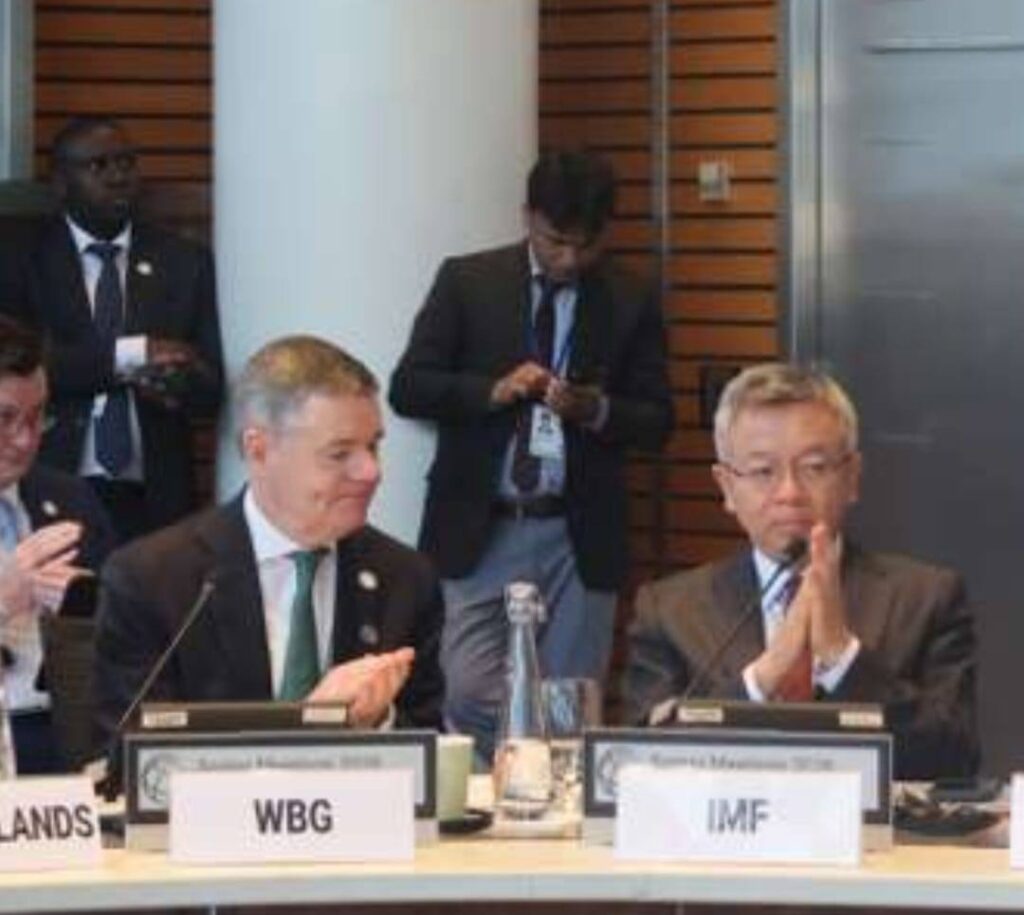
Speaking at a high-level engagement, the the 15th Ministerial Meeting of the Coalition of Finance Ministers for Climate Action, on the sidelines of the IMF/World Bank Spring Meetings, Finance and Development Planning Minister Augustine Kpehe Ngafuan described Liberia as “one of the world’s lowest emitters, but among its most climate-vulnerable nations.”
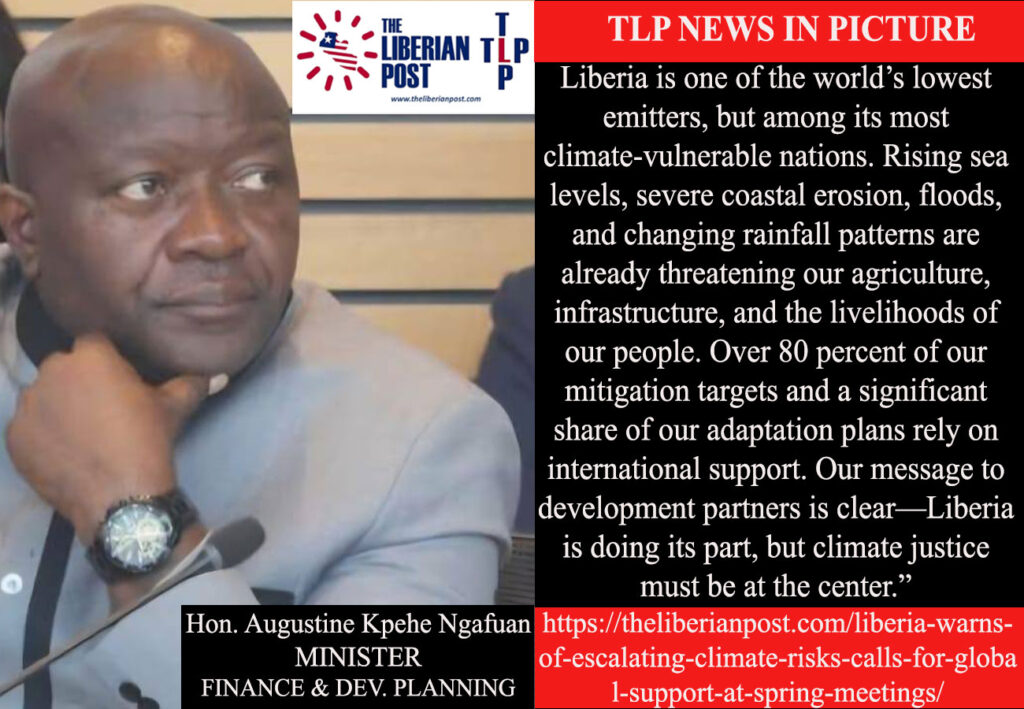
“Rising sea levels, severe coastal erosion, floods, and changing rainfall patterns are already threatening our agriculture, infrastructure, and the livelihoods of our people,” Ngafuan said.
He noted that nearly 60 percent of Liberia’s population lives along coastal areas, where extreme weather events can destroy homes and small businesses within hours, underscoring the urgency of climate adaptation measures.
Despite these vulnerabilities, Ngafuan emphasized that Liberia is taking proactive steps to address climate change, highlighting the country’s early commitment to the Paris Agreement and its leadership in protecting the Upper Guinea Rainforest—one of the world’s most critical carbon sinks.
He revealed that Liberia’s updated Nationally Determined Contributions (NDC 3.0) set an ambitious target of reducing greenhouse gas emissions by 64 percent by 2035, with a long-term goal of achieving net-zero emissions by 2050.
“This is not just a climate plan—it is a development blueprint,” Ngafuan stated, noting that the strategy integrates key sectors including energy, agriculture, transport, waste management, and health systems.
The Minister outlined ongoing initiatives such as scaling up climate-smart agriculture, expanding renewable energy access, strengthening coastal protection in vulnerable communities, and embedding gender and youth participation in climate governance.
However, he cautioned that Liberia’s climate ambitions are heavily dependent on external financing.
“Over 80 percent of our mitigation targets and a significant share of our adaptation plans rely on international support,” he said, stressing that limited fiscal space constrains the government’s ability to act independently.
Ngafuan warned that climate change poses serious macroeconomic risks, including slower economic growth, rising inequality, and increased poverty if urgent action is not taken.
He also pointed to mounting pressure from sectors such as mining, agriculture, and infrastructure development, which could exacerbate deforestation and environmental degradation without sustainable investment strategies.
“Our message to development partners is clear—Liberia is doing its part, but climate justice must be at the center,” he said.
The Minister called for predictable and accessible climate financing, increased investment in adaptation measures such as coastal defense and resilient infrastructure, and fair compensation for Liberia’s role in preserving global forest resources.
“Protecting our forests delivers benefits far beyond our borders,” he noted, urging greater access to carbon markets and innovative financing mechanisms.
Ngafuan further emphasized the need for strengthened partnerships with institutions such as the World Bank and the International Monetary Fund to support climate resilience efforts, including early warning systems, data infrastructure, and large-scale adaptation programs.
“We ask our partners to walk this path with us—in solidarity, fairness, and shared responsibility for our common future,” he concluded.
The remarks highlight Liberia’s growing push to position itself as a leader in climate action, even as it grapples with significant vulnerabilities and financing challenges.
Follow The Liberian Post on Facebook and X (formerly twitter)