–Only a Handful of Representatives Met All Accountability Benchmarks as Civil Society Group Urges Stronger Citizen Engagement
MONROVIA, Liberia – A new report released by the Naymote Partners for Democratic Development has revealed a mixed performance by members of Liberia’s House of Representatives during the 2026 Legislative Constituency Break, with only a small number of lawmakers meeting all key accountability and citizen engagement benchmarks.
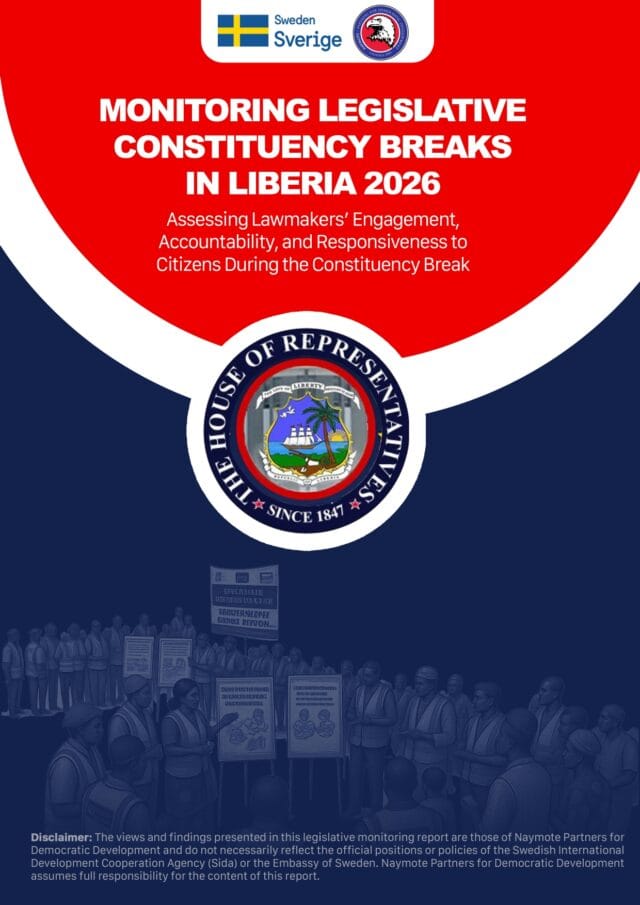
The report, titled “Monitoring Legislative Constituency Breaks in Liberia 2026: Assessing Lawmakers’ Engagement, Accountability, and Responsiveness to Citizens During the Constituency Break,” evaluated how representatives interacted with constituents during the recess period.
According to Naymote, the monitoring exercise focused on four key indicators: whether lawmakers visited their constituencies, conducted town hall meetings, appeared on radio programs, and presented formal reports to citizens on their legislative activities.
The findings underscore ongoing concerns about transparency and accountability in Liberia’s representative democracy while highlighting a handful of lawmakers who demonstrated strong commitment to public engagement.
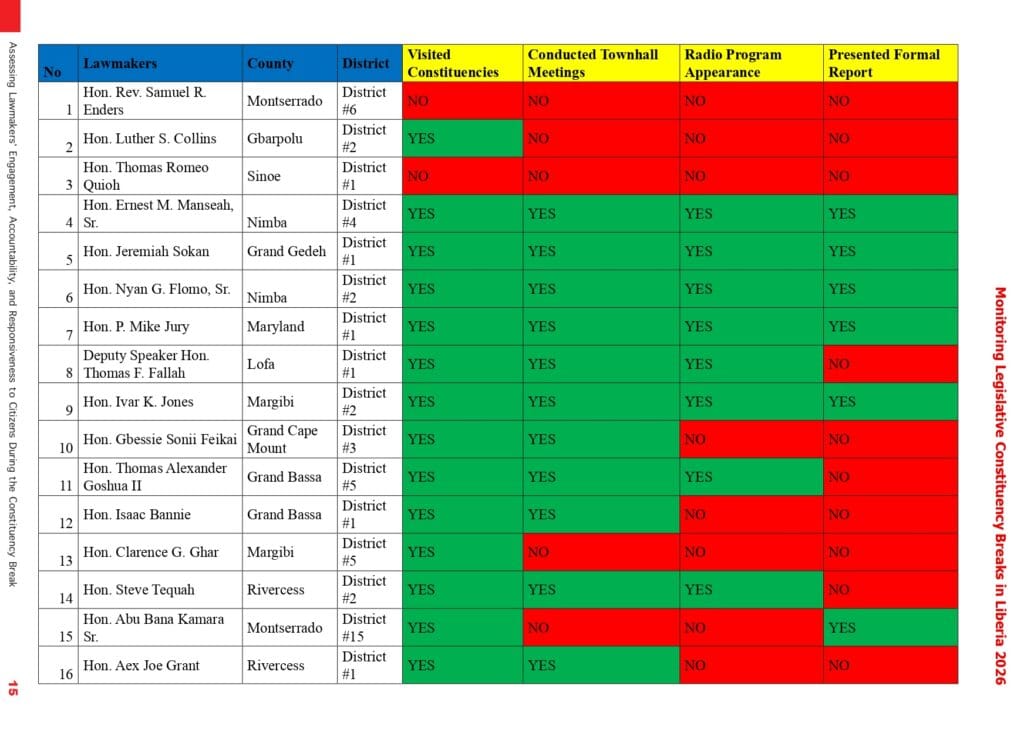
Accountability Begins with Communication
In releasing the report, Naymote emphasized that effective representation extends beyond attendance at legislative sessions in Monrovia.
“Accountability begins with communication,” the organization stated. “During the 2026 Constituency Break, some lawmakers took steps to engage citizens, report on their legislative activities, and provide updates on issues affecting their districts and counties.”
The group stressed that citizens have a right to know how their elected representatives are performing and how decisions made at the Capitol Building affect local communities.
According to Naymote, transparency and accountability are critical to strengthening democratic governance and building trust between citizens and elected officials.
Top Performers Emerge
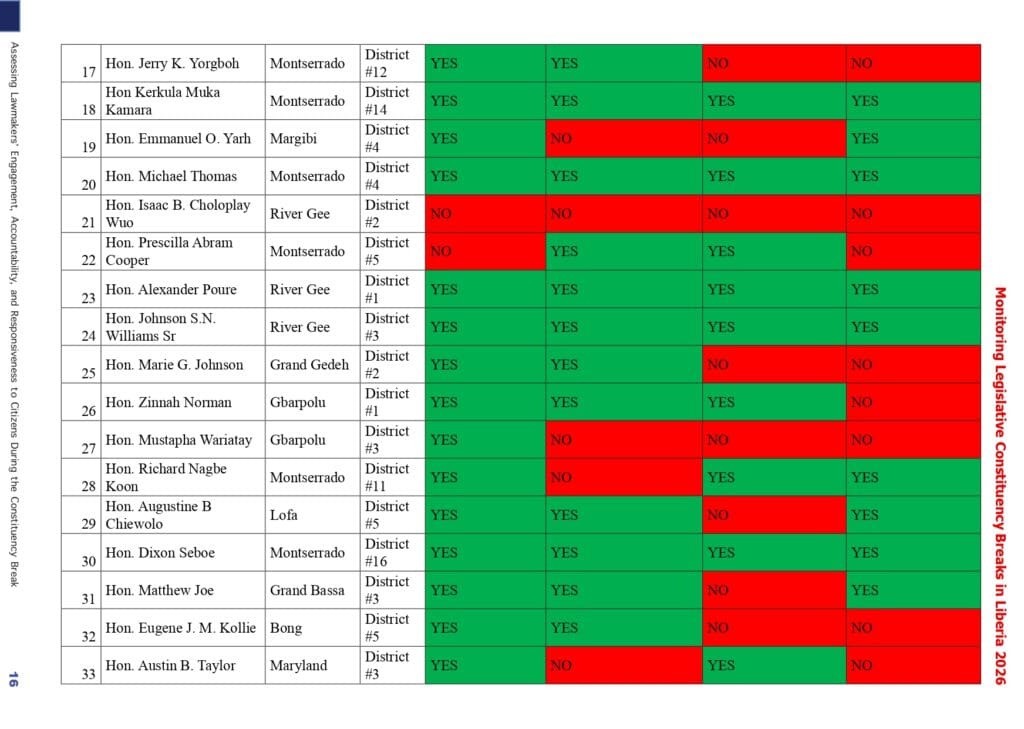
The report identified several lawmakers who successfully met all four monitoring indicators.
Among those receiving the highest marks were:
- Representative Ernest M. Manseah Sr. (Nimba County District #4)
- Representative Jeremiah Sokan (Grand Gedeh County District #1)
- Representative Nyan G. Flomo Sr. (Nimba County District #2)
- Representative P. Mike Jury (Maryland County District #1)
- Representative Ivar K. Jones (Margibi County District #2)
- Representative Alexander Poure (River Gee County District #1)
- Representative Johnson S.N. Williams Sr. (River Gee County District #3)
- Representative Kerkula Muka Kamara (Montserrado County District #14)
- Representative Michael Thomas (Montserrado County District #4)
- Representative Moima Briggs Mensah (Bong County District #6)
- Representative Anthony F. Williams (Maryland County District #2)
- Representative Yatu Rugie Barry (Montserrado County District #1)
These lawmakers were credited with visiting their constituencies, holding town hall meetings, engaging citizens through radio appearances, and presenting formal reports detailing their activities and accomplishments.
Several Lawmakers Receive Failing Marks
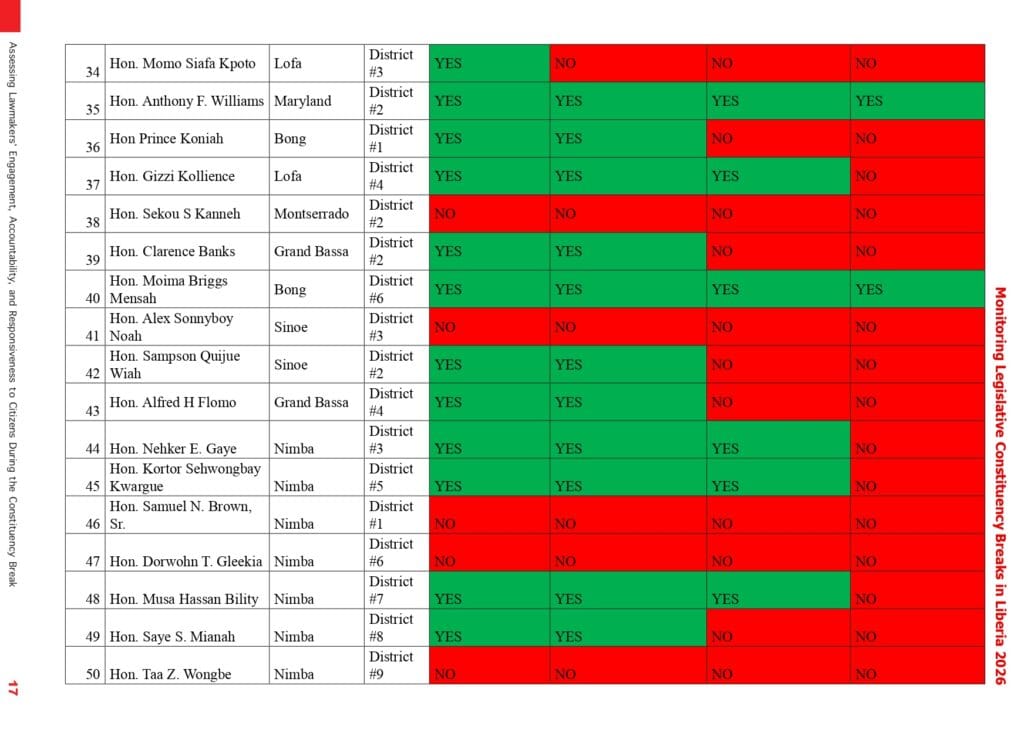
The report also identified a significant number of lawmakers who failed to meet any of the four accountability indicators monitored during the constituency break.
Among those receiving no positive assessment were:
- Representative Samuel R. Enders (Montserrado District #6)
- Representative Thomas Romeo Quioh (Sinoe District #1)
- Representative Isaac B. Choloplay Wuo (River Gee District #2)
- Representative Sekou S. Kanneh (Montserrado District #2)
- Representative Alex Sonnyboy Noah (Sinoe District #3)
- Representative Samuel N. Brown Sr. (Nimba District #1)
- Representative Dorwohn T. Gleekia (Nimba District #6)
- Representative Nathaniel N. Barway Sr. (Grand Kru District #1)
- Representative Cllr. J. Fonati Koffa (Grand Kru District #2)
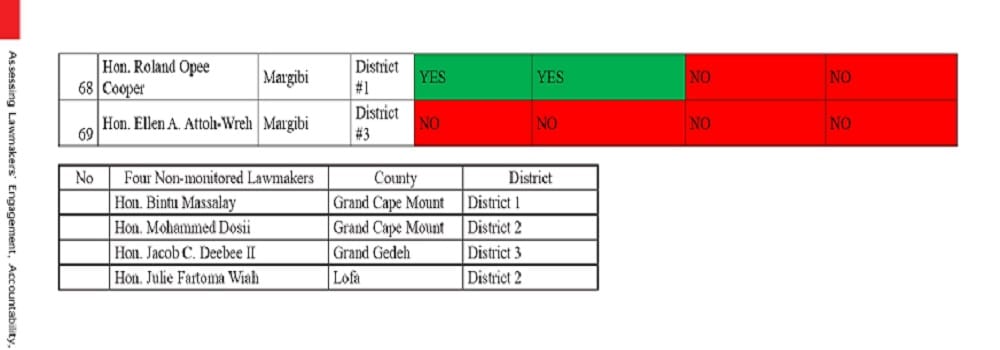
- Representative Ellen A. Attoh-Wreh (Margibi District #3)
- Representative Taa Z. Wongbe (Nimba District #9)
The report suggests that these lawmakers neither held documented public engagements nor formally reported back to constituents during the monitoring period.
Four Lawmakers Could Not Be Monitored
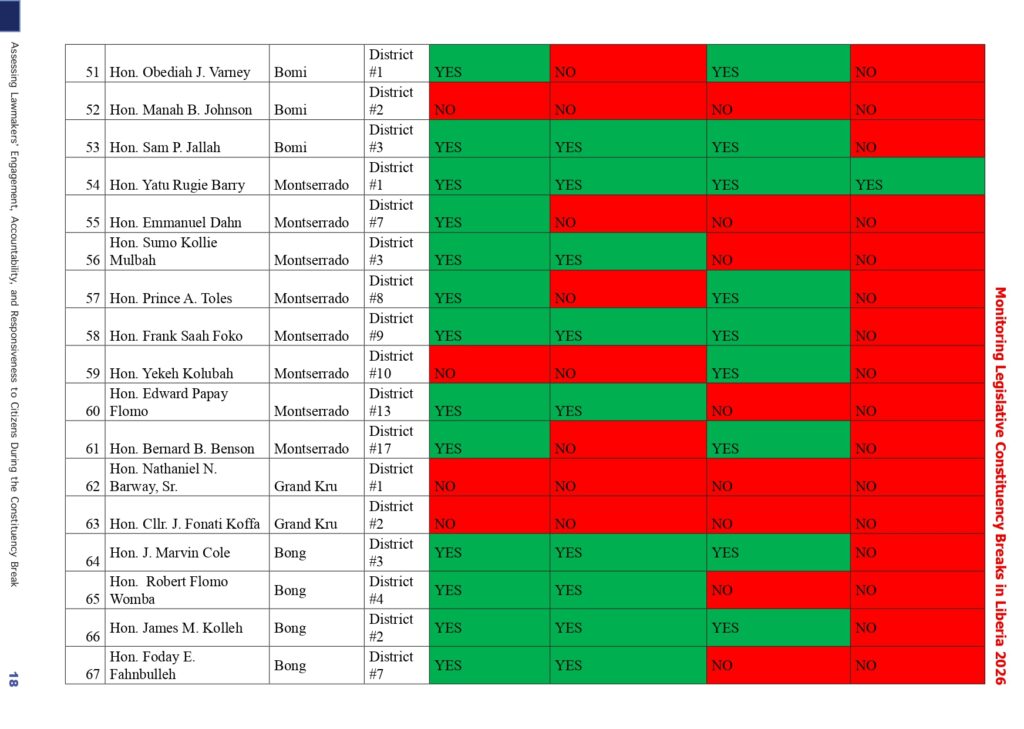
Naymote also disclosed that four lawmakers could not be assessed due to insufficient information.
They include:
- Representative Bintu Massalay (Grand Cape Mount District #1)
- Representative Mohammed Dosii (Grand Cape Mount District #2)
- Representative Jacob C. Deebee II (Grand Gedeh District #3)
- Representative Julie Fartoma Wiah (Lofa District #2)
The organization categorized them as “non-monitored lawmakers.”
Mixed Picture Across Counties
The report paints a mixed national picture.
While several representatives demonstrated a willingness to maintain contact with constituents through town hall meetings and public reporting, many others appeared to limit their engagement to constituency visits alone, with fewer taking the additional steps of hosting public discussions or presenting formal accountability reports.
One notable trend identified in the report is that the majority of lawmakers who visited their constituencies did not necessarily complete all other accountability measures, particularly formal reporting and media engagement.
Political analysts say this reflects a broader challenge within Liberia’s political culture, where constituency visits often occur without comprehensive public disclosure of legislative activities, budgetary priorities, and policy positions.
Democracy Requires Continuous Engagement
Naymote has long advocated for stronger citizen participation and accountability in governance.
The organization argues that constituency breaks should not merely be periods of political visibility but opportunities for meaningful dialogue between elected officials and the people they represent.
Democracy advocates say regular reporting helps citizens understand how lawmakers vote, what bills they sponsor, how public funds are utilized, and what development priorities they are pursuing on behalf of their districts.
The report comes at a time when public demands for transparency and accountability continue to grow amid concerns over governance, public spending, and service delivery across Liberia.
Call for Greater Transparency
Naymote urged Liberians to familiarize themselves with the report and use the findings to hold elected officials accountable.
The organization encouraged citizens to actively engage their representatives and demand regular updates on legislative activities and development initiatives.
“Explore the findings, learn how lawmakers engaged their constituents, and stay informed about the state of representative governance in Liberia,” the group urged.
As Liberia continues efforts to strengthen democratic institutions, the report serves as a reminder that accountability is not only measured by legislation passed in Monrovia but also by how effectively elected officials communicate with and remain answerable to the citizens who placed them in office.
Follow The Liberian Post on Facebook and X (formerly twitter)