–Weedor Calls for Proactive Communication to Close Information Gaps and Counter Misinformation Ahead of Liberia’s Next Electoral Cycle
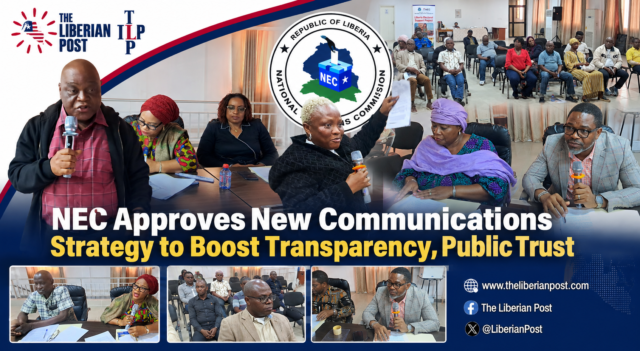
MONROVIA, Liberia — The National Elections Commission (NEC) has validated a new Communications Strategy aimed at strengthening institutional communication, improving transparency and enhancing public confidence in Liberia’s electoral processes.
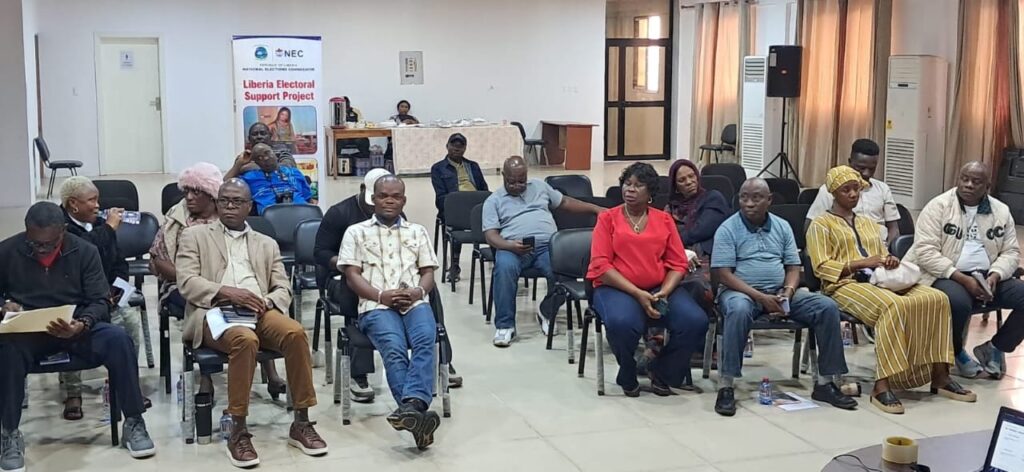
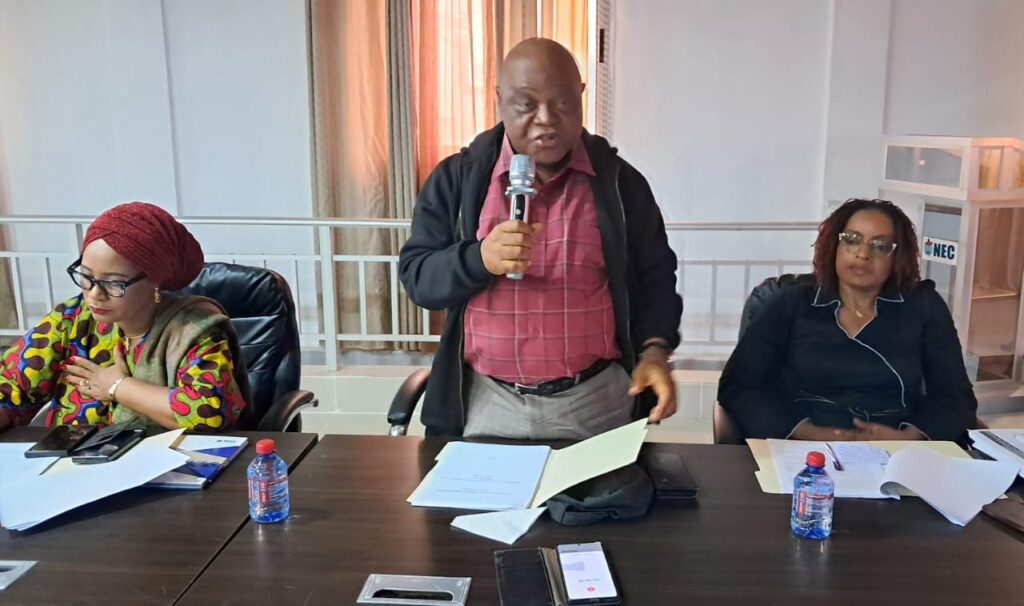
The strategy was validated on August 14, 2026, during a high-level internal workshop attended by the NEC Board of Commissioners and senior leadership of the Commission’s Secretariat.
The validation marks a significant step in the Commission’s efforts to establish a more coordinated and proactive approach to communicating with voters, political parties, the media and other electoral stakeholders throughout the electoral cycle.
Weedor Calls for Proactive Communication
Speaking during the validation exercise, NEC Chairperson Jonathan K. Weedor stressed that effective communication is essential to democratic governance and maintaining public confidence in the electoral process.
Weedor said the Commission must ensure that citizens have timely access to accurate information so that information gaps do not become fertile ground for misinformation.
“We need people to be informed about what we are doing and ensure that misinformation does not fill information gaps. Prevention is better than cure, and that requires a proactive communication strategy,” Weedor said.
The NEC Chairperson also pointed to the rapidly changing information environment, emphasizing the growing influence of social media, artificial intelligence and other digital platforms.
He said the Commission must modernize its communication systems to remain responsive to how Liberians increasingly receive and share information.
According to Weedor, NEC communication must not be limited to election periods but should continue throughout the electoral cycle, providing citizens with information and education on the Commission’s work.
He reaffirmed the Board’s commitment to making communication a core institutional function and ensuring that the NEC’s Communications Section receives the support necessary to implement the new strategy.
Stakeholders Contribute to Strategy
The Communications Strategy was developed by the NEC with technical support from the European Partnership for Democracy, through EU funding, and the Liberia Electoral Support Project (LESP).
LESP is managed by the United Nations Development Programme (UNDP) and implemented in partnership with UN Women and the Netherlands Institute for Multiparty Democracy (NIMD), with funding from the European Union, Ireland and Sweden.
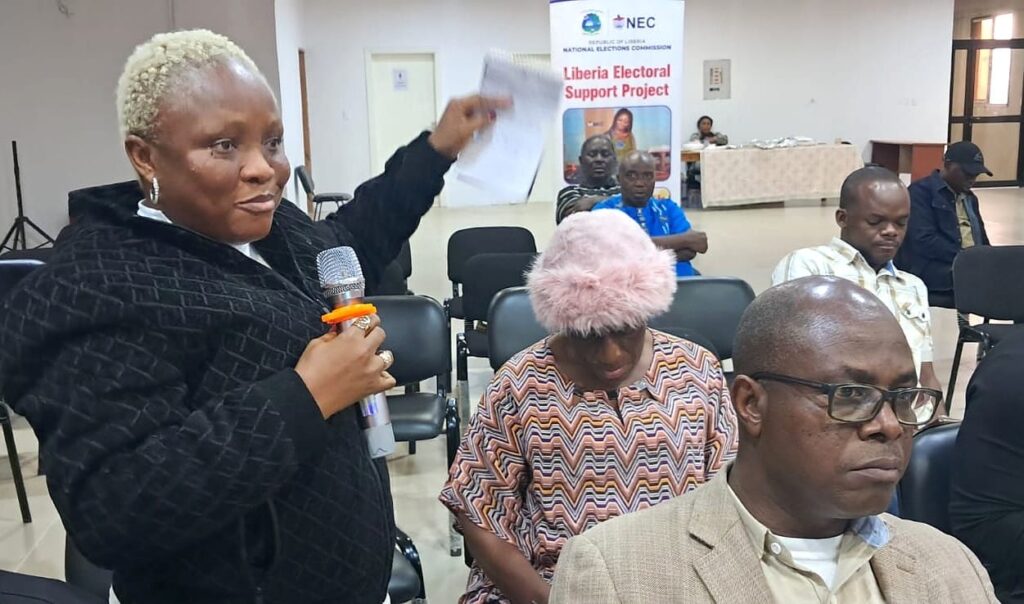
Following development of the draft strategy, LESP supported a nationwide consultation process involving media organizations and other electoral stakeholders.
The consultations were intended to ensure that the strategy reflects both stakeholder perspectives and the practical communication needs of the Commission.

‘This Is Your Document’
Samuel Cole, Deputy Director for External Relations at the NEC, urged Commissioners and Secretariat officials to take ownership of the strategy and provide candid feedback on its implementation.
“This is your document. The technical team has supported its development, but your inputs are essential to ensure that the final Strategy reflects the Commission’s priorities and institutional realities,” Cole said.
His remarks emphasized that the strategy is intended to become an operational institutional tool rather than simply a document produced through external technical assistance.
LESP: Communication Central to Electoral Management
Roosevelt Zayzay, LESP Program Officer, described effective communication as a central component of the work of every election management body.
He said timely and accurate communication enables citizens to make informed decisions, strengthens transparency and accountability, and contributes directly to confidence in electoral institutions.
“It enables citizens to access timely and accurate information, supports transparency and accountability, and contributes directly to public confidence in electoral processes,” Zayzay said.

He further described the strategy as more than a conventional communications document, saying it provides an institutional framework for determining what the NEC communicates, who receives the information, which channels are used and who is responsible for communicating it throughout the electoral cycle.
“It is an institutional framework that provides direction on what NEC communicates through all phases of the electoral cycle, to whom, through which channels, and who is responsible for communicating,” he said.
Nationwide Consultations Shaped Strategy
The validated strategy emerged from an inclusive consultation process conducted across Liberia.
Regional consultations held in Ganta, Buchanan and Monrovia brought together journalists, media organizations, election magistrates and NEC officials to examine the draft strategy and recommend improvements to the Commission’s communication systems.
The consultations provided an opportunity for stakeholders outside the Commission to identify communication challenges and propose ways the NEC could improve the delivery of electoral information.
The process also reflects an effort by the Commission to make its communications framework responsive to the realities faced by citizens and media organizations across the country.
Strategy Covers Entire Electoral Cycle
The new Communications Strategy provides a framework covering both the NEC’s internal and external communication.
Its areas of focus include stakeholder engagement, media relations, public information, internal communication and crisis communication throughout the electoral cycle.
The strategy is expected to improve the consistency and accessibility of information released by the Commission while strengthening its engagement with electoral stakeholders.
It also seeks to ensure that the NEC can respond more effectively to misinformation and emerging communication challenges, particularly in an increasingly digital information environment.

Building Public Confidence
The validation comes as Liberia’s electoral institutions continue preparations for future electoral activities and reforms ahead of the country’s next major electoral cycle.
For the NEC, the effectiveness of the new strategy will ultimately depend on its implementation—particularly whether the Commission can translate the framework into timely, accurate and accessible communication for citizens.
With the increasing role of social media, artificial intelligence and digital platforms in shaping public opinion, the Commission’s ability to communicate quickly and credibly will remain critical to protecting the integrity of electoral information.
The NEC expects the strategy to enhance transparency, improve public access to electoral information and reinforce confidence in Liberia’s democratic institutions.
The Liberia Electoral Support Project, meanwhile, continues to support national institutions and processes aimed at promoting inclusive, transparent and accountable governance.
For breaking news, in-depth analysis, and exclusive reports from Liberia and around the world, follow The Liberian Post on Facebook (https://web.facebook.com/profile.php?id=61576017166570) and X, formerly Twitter (https://x.com/LiberianPost).